




Splay Leg Side Table
A splay leg side table offers sturdy support and slender proportions, making it a versatile surface for daily use in any room.
Splay Leg Side Table
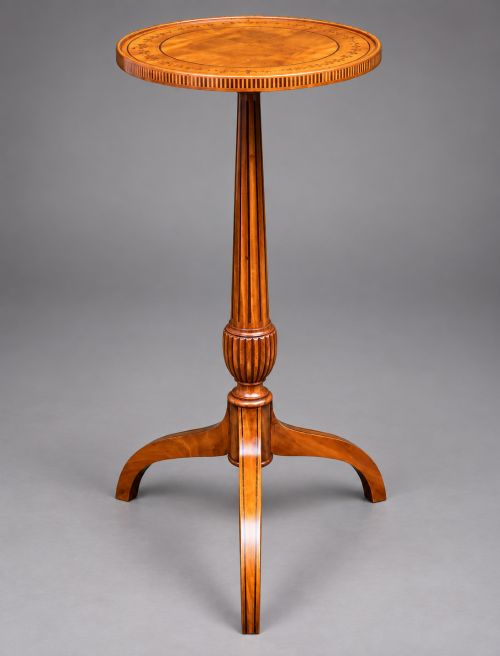
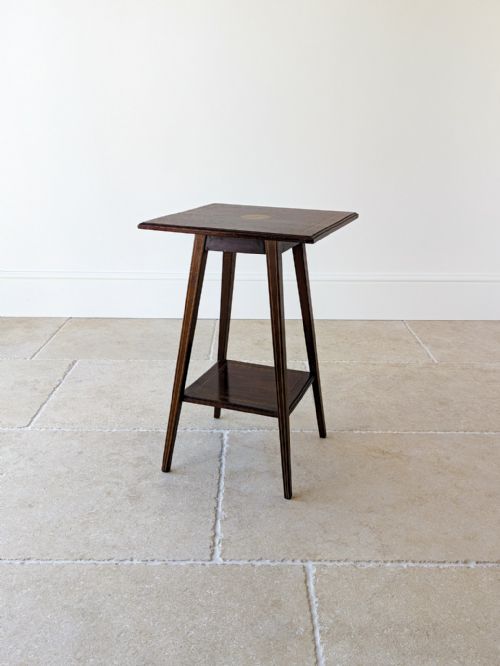
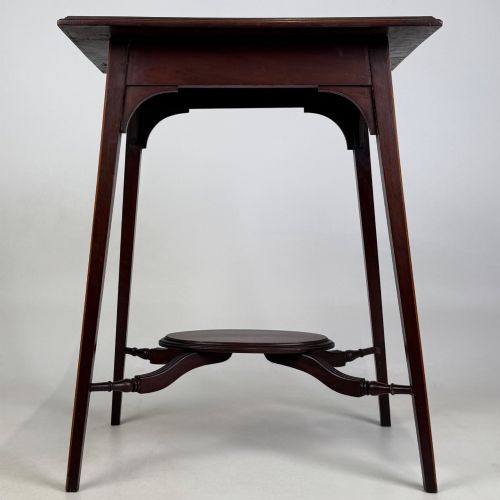
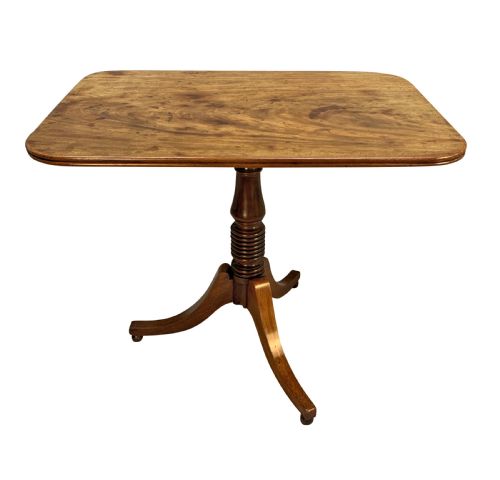
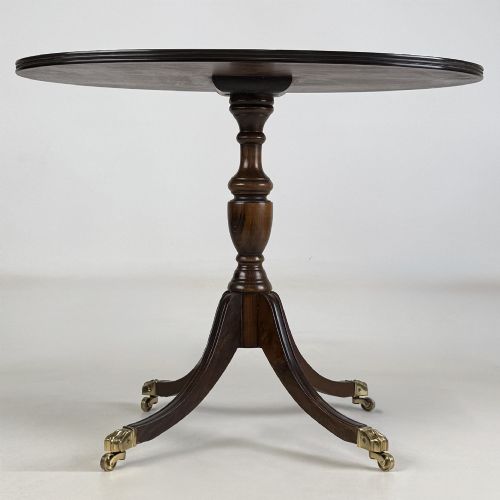
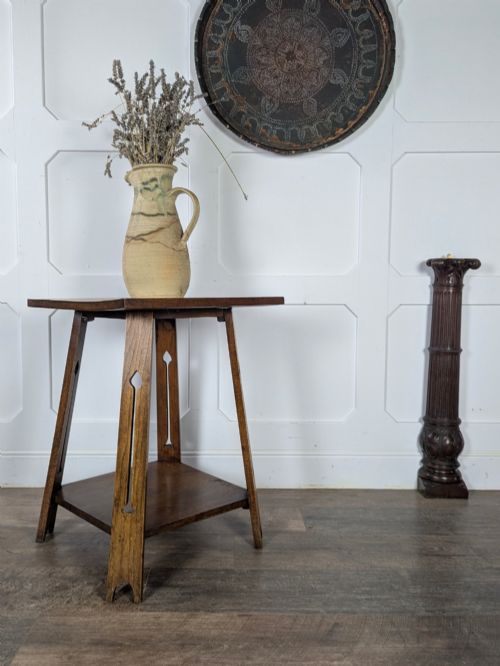
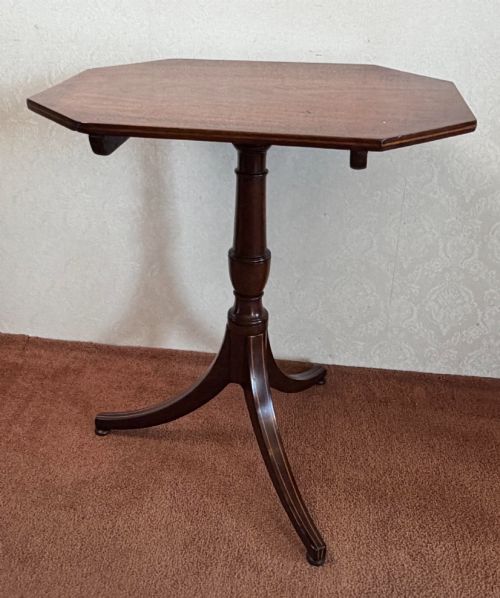
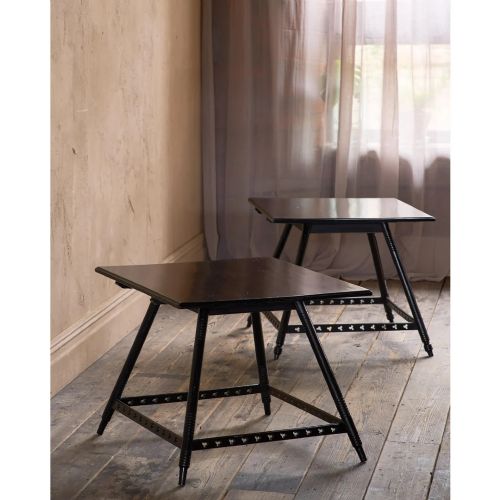
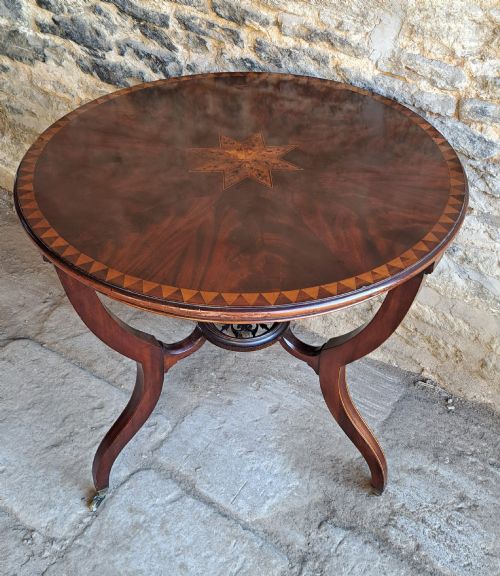
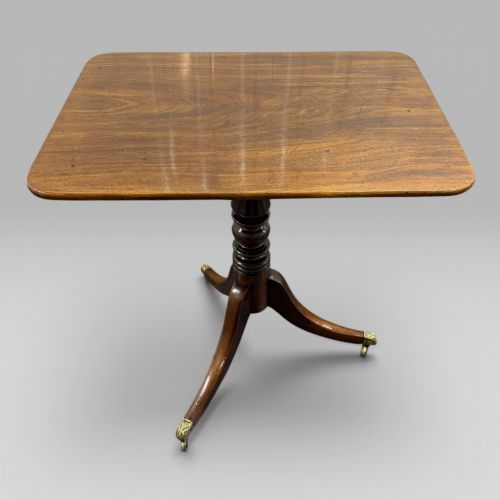
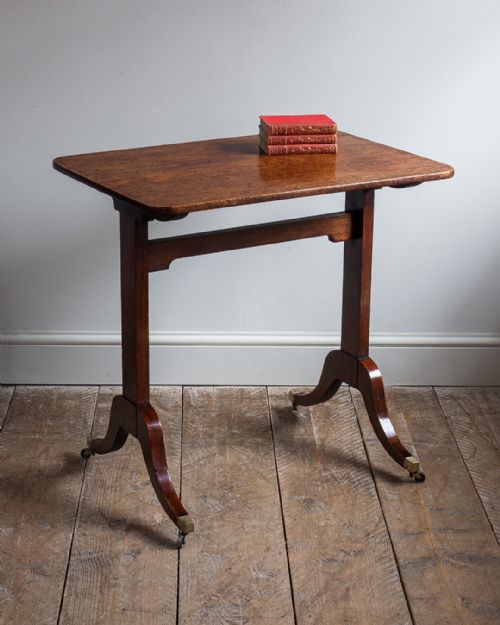
A splay leg side table is a compact furnishing designed for placement against a wall or beside seating, originating in periods ranging from the Georgian era through to the Edwardian period. The pieces appearing in these listings encompass various forms including occasional tables, tilt-top designs, drum tables, and pembroke tables, all sharing a foundational design characterised by outwardly angled supports.
The materials and aesthetic influences span multiple centuries, incorporating styles such as Regency, Sheraton Revival, and Art Nouveau. Buyers encounter woods such as mahogany, oak, and satinwood, frequently enhanced by stringing, boxwood inlay, or brass castors.
Materials and construction
Cabinet makers constructed these pieces primarily from solid hardwoods and select veneers, relying heavily on mahogany, oak, and birch. Structural stability was achieved through pegged joints, pedestals, or tripod bases, while mobility was often enhanced through the addition of brass castors.
Surface decoration frequently involved contrasting inlays of satinwood, boxwood, and ebony. Craftspeople also utilised turning, tilt-top mechanisms, and applied mouldings to add tactile and visual detail to the legs and tabletops.
Mahogany and oak dominate the material selection across these listings, accompanied by decorative accents of satinwood, boxwood, and brass.
Assessing craftsmanship
Quality in a splay leg side table rests upon the selection of timber and the precision of the joinery. Superior examples demonstrate finely figured wood grain, such as burr oak or Cuban mahogany, matched meticulously across the tabletop and legs.
The refinement of the inlay work and the integrity of moving parts, such as tilt-top mechanisms or drop leaves, distinguish standard production from exceptional cabinet work. Structural harmony in the splay of the legs ensures both physical balance and visual lightness.
Gillington of Dublin
The Splay Leg Side Table Glossary
- Splayed legs
- Supports that angle outwards from the centre of the table towards the floor. This stance provides enhanced stability while lending a lighter silhouette to the piece.
- Pembroke table
- A drop-leaf occasional table featuring hinged flaps on two opposite sides. It often includes one or two drawers and rests on legs that may angle outwards.
- Tilt-top table
- A table designed with a hinged mechanism allowing the top to pivot into a vertical position when not in use. This clever engineering saved floor space in historic interiors.
- Stringing
- A narrow strip of contrasting wood inlaid into the surface of a tabletop or leg for decorative effect. Craftsmen used materials like boxwood and ebony to create sharp linear borders.
- Drum table
- A circular library or centre table featuring a deep frieze containing drawers, supported by a central pillar and splayed tripod feet.
Splay Leg Side Table: Frequently Asked Questions
What is a splay leg side table used for?
These tables served various domestic functions throughout the Georgian and Edwardian periods, acting as convenient surfaces for holding lamps, books, or tea service. Their compact footprints made them adaptable to smaller spaces within a drawing room or hallway.
Today, they function similarly in contemporary homes as bedside surfaces, lamp tables, or decorative accent pieces that showcase woodwork and decorative inlay.
How do I identify a Georgian splay leg table?
Georgian pieces generally exhibit heavier timber choices, such as Cuban mahogany, paired with restrained classical proportions and hand-cut joinery. Look for subtle patination on the wood and traditional construction methods beneath the tabletop.
Later Victorian and Edwardian interpretations often introduce lighter veneers, satinwood banding, or more eclectic stylistic influences like Sheraton Revival while retaining the characteristic angled stance.
Are tilt-top mechanisms original?
Tilt-top mechanisms on antique tables rely on a wooden or brass catch beneath the surface that locks the tabletop horizontally. Examining the underside reveals wear patterns and block attachments consistent with the period of manufacture.
Original mechanisms show natural signs of friction and age around the pivot points, aligning with the stated age of the timber and overall style.
How should I care for an antique wood table?
Antique timber responds best to stable indoor environments away from direct heat sources and strong sunlight, which can dry out veneers and fade inlaid details. Regular dusting with a soft, dry cloth preserves the polished finish.
Occasional application of appropriate wax feeding helps nourish older hardwoods like mahogany and oak without building up heavy chemical residues.