


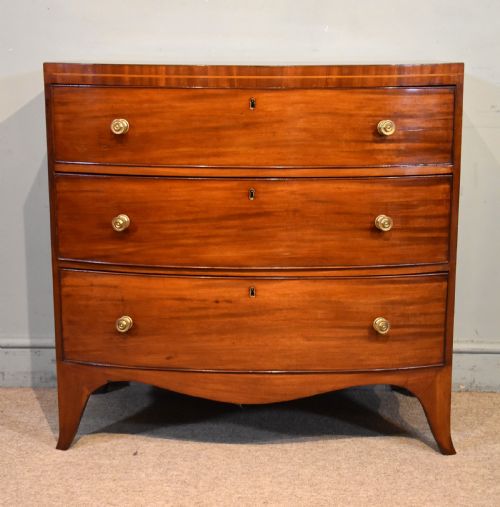

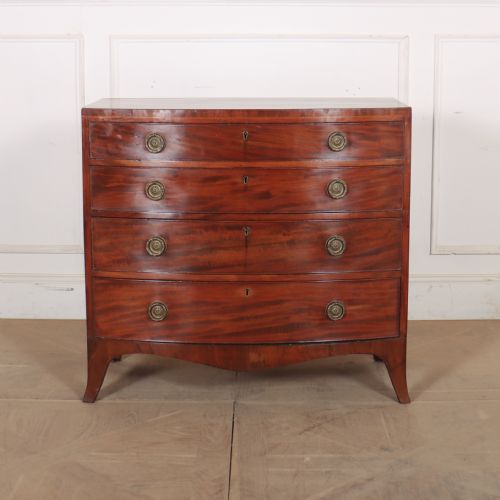


Splay Leg Chest Drawers
These splay leg chest drawers offer compact storage and graceful proportions, combining period craftsmanship with practical utility for modern interiors.
Splay Leg Chest Drawers
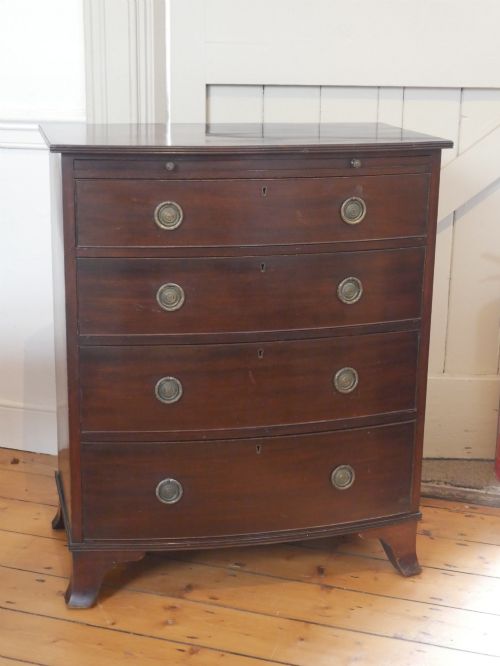
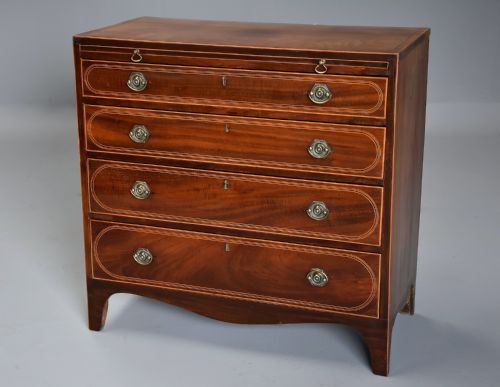
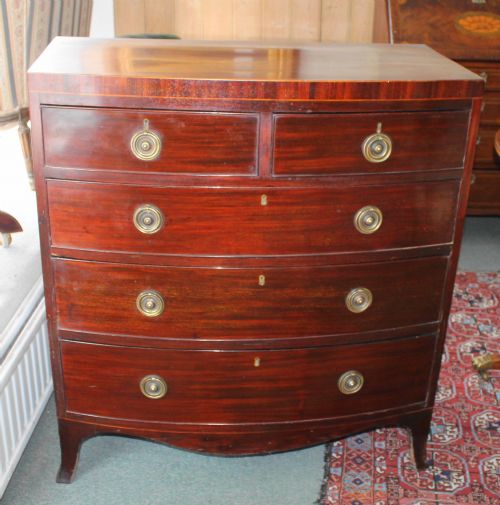
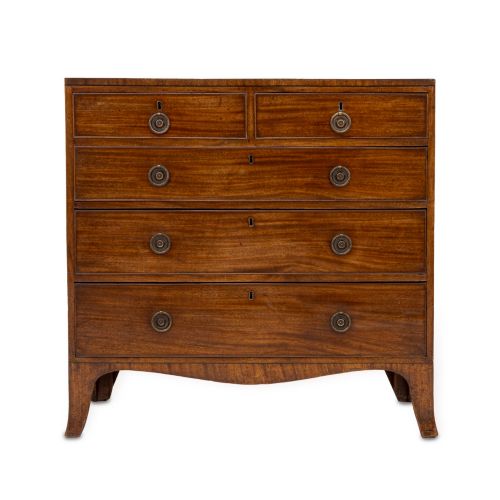
When you search for splay leg chest drawers, you encounter timber storage furniture featuring legs that angle outward for stability and aesthetic lightness. The pieces on this page span the Georgian, Regency, and nineteenth-century periods, alongside later twentieth-century interpretations.
Most examples take the form of bow front or serpentine chests of drawers, constructed primarily in mahogany with occasional satinwood, harewood, or oak elements. These items originated as functional bedroom furniture for storing garments, and their tapered or splayed supports distinguish them from standard bracket foot or plinth designs.
How They Were Made
Cabinet makers utilised solid timber and veneers, frequently selecting mahogany as the primary structural material. Surfaces were then hand-polished to develop a deep patina across the wood grain.
Inlay work incorporated contrasting timbers such as satinwood and boxwood, creating geometric or botanical borders. Drawers were constructed with traditional joinery techniques and fitted with brass handles.
Some chests hide secret drawers tucked just beneath the top moulding, requiring a hidden catch to reveal their contents.
What Varies in Quality
The sophistication of the timber figure and the crispness of the inlay define the upper tier of pieces. Grain selection across drawer fronts and the subtlety of the splayed leg profile separate standard examples from finer works.
Original hardware and consistent surface patination indicate superior preservation. The structural integrity of the drawer linings and the precision of the dovetail joints also determine the grade of the piece.
Druce & Co
The Splay Leg Chest Drawers Glossary
- Splay leg
- A furniture support that angles outward from the base for increased stability and a lighter visual profile. This design replaces traditional straight bracket feet on certain Georgian and Regency pieces.
- Bow front
- A convex curved drawer front popular during the Georgian and Regency eras. It softens the linear appearance of a chest.
- Serpentine
- A furniture front featuring a concave centre flanked by two convex curves, or the reverse. This undulating shape requires advanced cabinet making skills.
- Caddy top
- A tabletop style with a raised, moulded edge resembling the lid of a tea caddy. It appears on eighteenth and early nineteenth-century case furniture.
- Patina
- The surface sheen and colour developed by wood through age, handling, and light exposure over decades. A good patina indicates genuine period wear.
Splay Leg Chest Drawers: Frequently Asked Questions
How do I spot splay leg chest drawers?
Examine the base of the chest where the vertical members meet the floor. Splayed legs angle outward rather than standing straight or resting on a solid plinth.
This specific leg configuration alters the visual weight of the piece, making the storage unit appear lighter and more elevated.
Are these chests suitable for small bedrooms?
Many examples on this page feature compact proportions, such as small bow front formats designed for restricted spaces. Their elevated legs also create a sense of floor space beneath the carcass.
Depth and width vary across the Georgian and Regency periods, so checking the specific dimensions of each piece ensures a proper fit.
What woods were used for these chests?
Mahogany serves as the predominant timber across the listed pieces, supplemented by oak for internal drawer linings. Finer items incorporate decorative veneers like satinwood and harewood.
Inlay details frequently utilise boxwood to create contrasting borders and stringing patterns around the drawer fronts.
How do I date a Georgian chest?
Dating relies on stylistic shifts in timber choice, handle design, and leg construction. Pieces from the George III period often display refined proportions and intricate mahogany veneer work.
Later nineteenth-century and revival pieces emulate these earlier forms while exhibiting different internal construction methods and fastener types.