




Spirit Decanter Lock
These spirit decanter lock pieces secure fine crystal bottles behind clever mechanisms, protecting good whisky and brandy from uninvited guests.
Spirit Decanter Lock
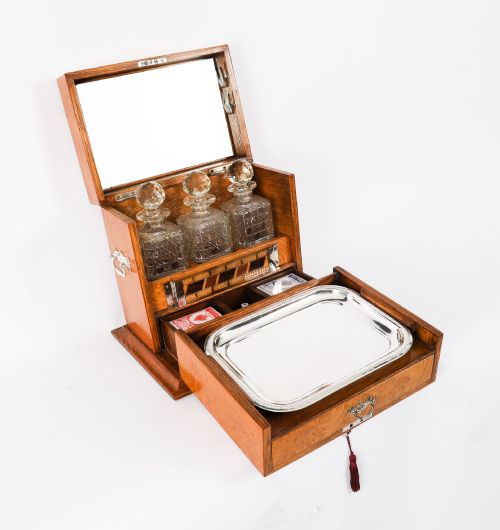
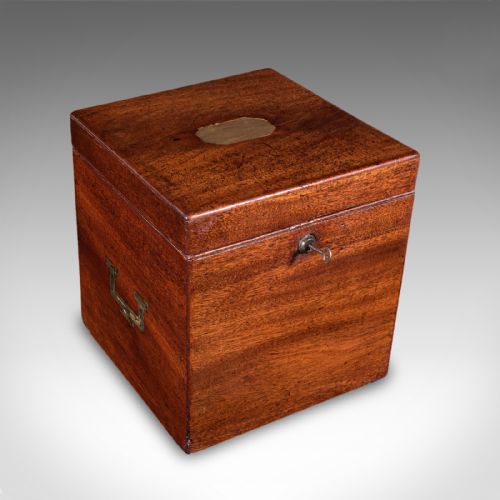
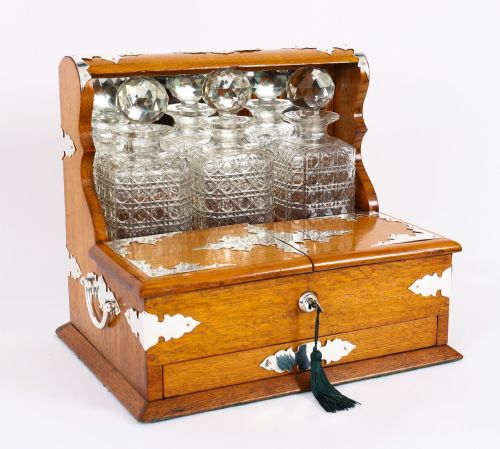
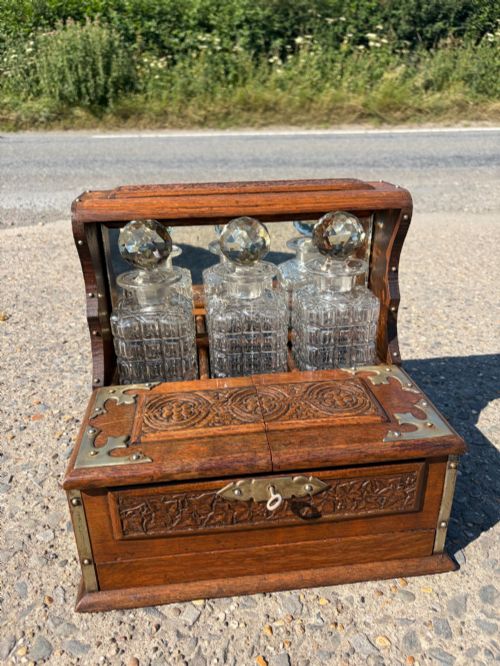
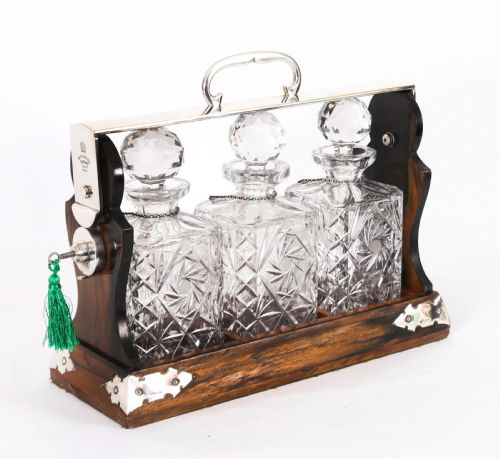
A spirit decanter lock takes the form of a tantalus, a storage box, or a fitted barware set designed to keep liquor secure. When looking for a spirit decanter lock, buyers generally encounter oak or coromandel frameworks secured by brass fittings and functioning keys.
The objects span from the Georgian period through the Victorian era into Art Deco and the 1930s. Oak and silver-platedtantaluses dominate the selection, holding cut glass or crystal decanters safely within a locking wooden or metal bar.
How they were made
Cabinetmakers constructed the main housings using solid oak, walnut, or coromandel wood, often mounting them with heavy brass or silver-plated hardware. Internal partitions match the contours of cut crystal or cut glass decanters precisely.
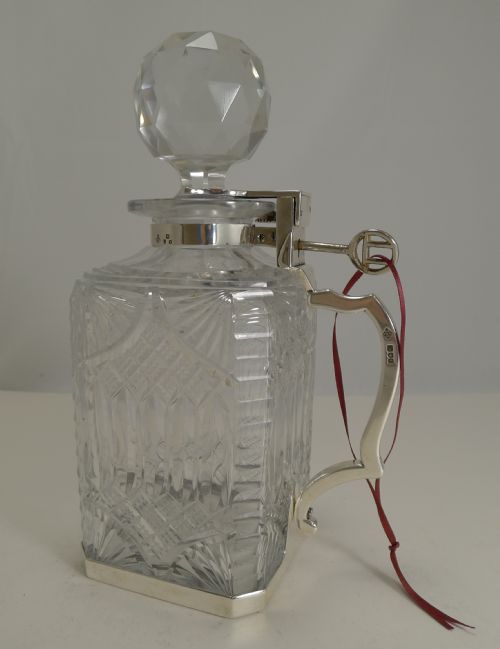
Locksmiths integrated specialised mechanisms, such as Bramah locks, into the framework alongside hinged bars that drop down to immobilise the bottle stoppers. Silver hallmarks appear on mounts and collars, marking the collaboration between silversmiths and cabinetmakers.
Spirit Decanter Lock Retail Price Guide 2026
Typical asking prices for spirit decanter lock among the pieces listed under this phrase on Sellingantiques today, from the lower quarter to the upper quarter. They describe what is for sale here now, not the wider market.
Some Victorian models combined a secure liquor lock with a fold-out board game compendium, hiding recreation inside your afternoon refreshment.
What varies in quality
The refinement of the timber and the complexity of the locking action define the standard of a piece. Figured veneers, substantial silver plating, and heavy cut crystal elevate an example above standard utility models.
Integrated games compendiums or multiple decanter configurations indicate ambitious design. The smoothness of the drop-bar mechanism and the original working condition of the key determine the desirability of the piece.
Hukin and Heath·Betjemann
The Spirit Decanter Lock Glossary
- Tantalus
- A locking drink cabinet or stand that holds decanters in place with a metal bar so that the bottles cannot be removed without a key. It is named after the mythological figure Tantalus, who was kept just out of reach of food and water.
- Bramah lock
- A high-security cylindrical lock invented by Joseph Bramah in the late eighteenth century. These mechanisms utilise small sliding slots and cylindrical keys.
- Coromandel wood
- A dense, heavily figured exotic timber from Asia with dark brown and black grain patterns. Cabinetmakers utilised it for luxury boxes and tantaluses during the nineteenth century.
- Silver plate
- A layer of silver bonded to a base metal foundation, commonly used for the handles, mounts, and locking bars of barware. It provides the appearance of solid silver at a lower manufacturing cost.
- Decanter set
- A collection of matching glass or crystal bottles housed together in a tray, box, or locking frame. They serve the purpose of storing and displaying spirits.
Spirit Decanter Lock: Frequently Asked Questions
How do tantalus locks work?
A locking metal bar runs across the necks of the decanters, preventing the stoppers from being lifted out while the bar is secured in place. Turning the key releases the mechanism so the bar drops down.
The design ensures that the bottles cannot be poured from until the owner unlocks the wooden frame, keeping the contents safe.
What is the difference between a tantalus and a decanter box?
A tantalus exposes the decanters behind an open metal framework where the bottle bodies are visible but locked by their necks. A decanter box encloses the bottles entirely inside a hinged wooden chest.
Both serve the function of securing spirits, but storage boxes offer hidden protection while tantaluses display the cut crystal.
Are keys usually included with these locks?
Many surviving pieces retain their original keys, though some rely on replacement keys that operate the historic locks. Locksmiths can often fit functional keys to older mechanisms if necessary.
Checking whether the locking bar operates smoothly with the key is standard practice for collectors.
How should I clean my locking decanter set?
Dust the wood frameworks with a dry cloth and polish the brass or silver-plated mounts gently with appropriate metal cleaners. Avoid getting moisture into the locking mechanisms.
Wash the crystal decanters by hand with warm water, leaving the stoppers out until the interior dries completely.