



Spiral Carved Chairs
Spiral carved chairs combine turning and hand-carving to bring strong vertical rhythm to domestic seating.
Spiral Carved Chairs
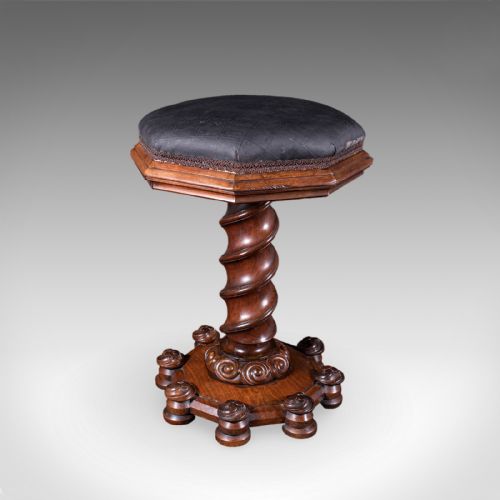
When you search for spiral carved chairs, you encounter seating built across several centuries, from seventeenth-century Carolean walnut armchairs to later Victorian and Edwardian revivals in oak, mahogany, and satinwood. The forms vary from modest side chairs and music stools to substantial carver armchairs and hall chairs, reflecting diverse domestic and institutional uses over time.
The Portuguese Baroque and seventeenth-century English styles dominate the early end of the range, whilst later examples draw on Regency, William IV, and Jacobean Revival aesthetics. Walnut and oak form the backbone of the material record, though mahogany, satinwood, and cane also appear across the listings.
How they were made
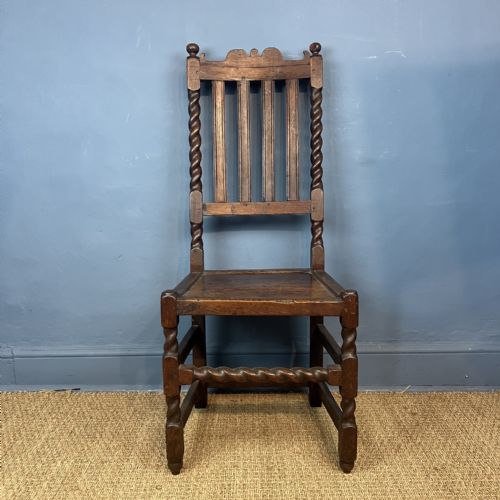
The defining feature of these chairs is the turned and carved twist, produced by hand using wood-turning lathes and chisels to create continuous rope-like patterns on legs, stretchers, and uprights. Joinery methods relied on traditional mortise and tenon construction to support the dynamic forces exerted on frames during daily use.
Upholstery techniques varied according to the period and purpose, utilising cane, leather, tapestry fabric, and silk cotton secured with brass details or traditional tacks. Timber selection dictated the weight and grain structure, with dense hardwoods like oak and walnut providing the structural integrity needed for deep carving.
Spiral Carved Chairs Retail Price Guide 2026
Typical asking prices for spiral carved chairs among the pieces listed under this phrase on Sellingantiques today, from the lower quarter to the upper quarter. They describe what is for sale here now, not the wider market.
Periods represented span the seventeenth century, Georgian era, Regency period, and the late nineteenth and early twentieth centuries.
What varies in quality
Quality in these pieces rests upon the crispness of the hand-carving and the proportion of the twist relative to the structural members of the frame. Sharp definition in the spiral turns and clean junctions between turned and square sections distinguish finer examples from simpler production.
The choice of primary timber and the integrity of the original construction, whether in solid walnut, oak, or mahogany, determine the longevity and visual impact of the chair. Finer seating integrates the carved elements harmoniously with functional requirements such as arm supports and backrests.
The Spiral Carved Chairs Glossary
- Carolean
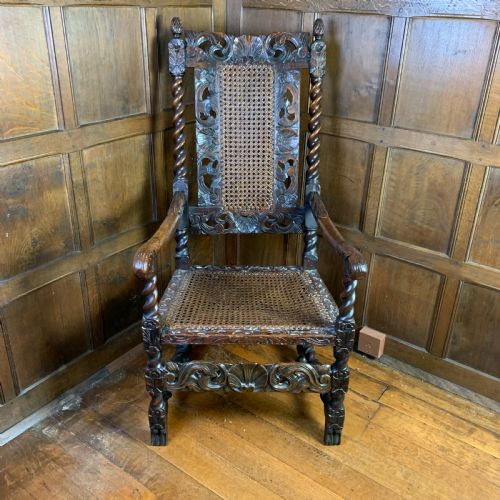
- A seventeenth-century English style spanning the reign of Charles II, characterised by rich walnut frames, elaborate carving, and high cane backs. This period provides the earliest archetypes for the twist-turned forms seen later.
- Carver armchair
- A seating form featuring supportive arms, designed typically as the head chair at a dining table or for use in a parlour. These pieces often display the most prominent spiral carving on their front legs and arm supports.
- Stretcher
- The horizontal wooden member connecting the legs of a chair to provide structural stability. In spiral carved chairs, these stretchers frequently carry the same twist turning as the uprights.
- Satinwood
- A durable exotic timber known for its pale golden colour and fine grain. It appears in nineteenth-century pieces such as hall chairs.
- Embossed leather
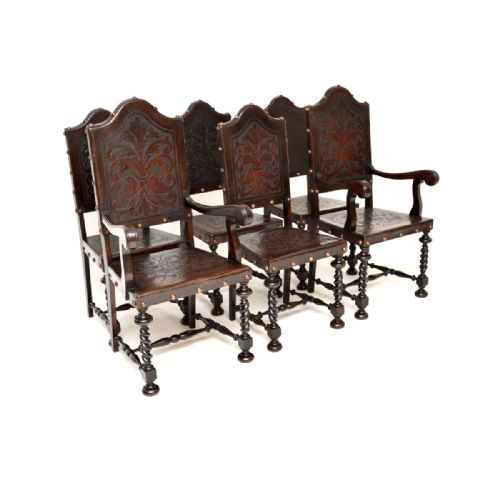
- Treated animal hide pressed with decorative patterns using metal dies. It is found on Portuguese dining chairs from the late nineteenth century.
Spiral Carved Chairs: Frequently Asked Questions
What periods do spiral carved chairs come from?
These chairs span from the seventeenth century through the Georgian and Regency eras into the late nineteenth and early twentieth centuries. Revival periods often reinterpreted earlier seventeenth-century forms using contemporary woodworking techniques.
Evidence from listings shows pieces dated to the 1600s alongside Victorian and Edwardian interpretations, demonstrating a long tradition of twist turning in furniture design.
How were spiral carved chairs used originally?
They served multiple roles in historic interiors, functioning as dining chairs, hall seats, music stools, and formal carver armchairs. Elaborate examples often stood in reception rooms or parlours to display status and craftsmanship.
Sturdier oak and walnut versions accommodated daily domestic life, whilst specialised forms like organist stools and hall chairs fulfilled specific institutional and domestic requirements.
How do you distinguish original seventeenth-century chairs from later revivals?
Distinguishing the periods requires examining the tooling marks, timber oxidation, and construction methods used in the frame joints. Seventeenth-century pieces show hand-cut joinery and period-specific timber shrinkage, whereas revivals from the nineteenth century reflect later workshop practices.
Stylistic markers such as the depth of the carving and the specific profile of the twist also help separate seventeenth-century originals from Carolean Revival pieces.
What woods are typical for these chairs?
Walnut and oak form the primary materials for early and revival pieces, providing the dense grain required for sharp spiral turning. Mahogany and satinwood appear in later Georgian, Regency, and nineteenth-century examples.
Additional materials such as cane, leather, and tapestry fabric complete the upholstery and seating surfaces across the various regional styles.