

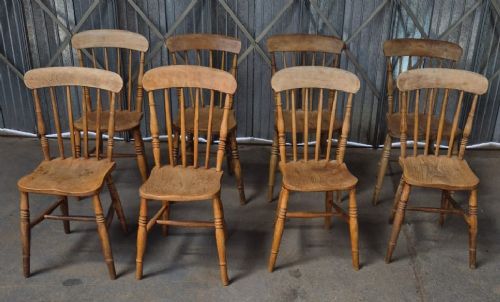


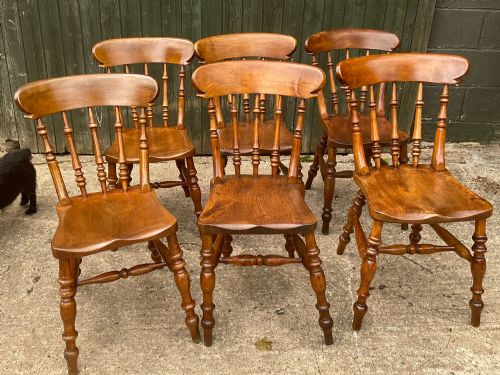

Spindle Leg Dining Chairs
Spindle leg dining chairs bring authentic vernacular character to a room, offering sturdy wooden frames and time-worn seats that suit everyday use.
Spindle Leg Dining Chairs
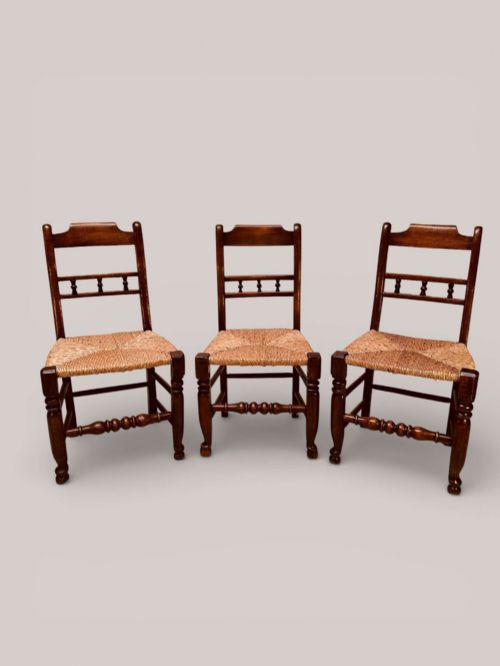
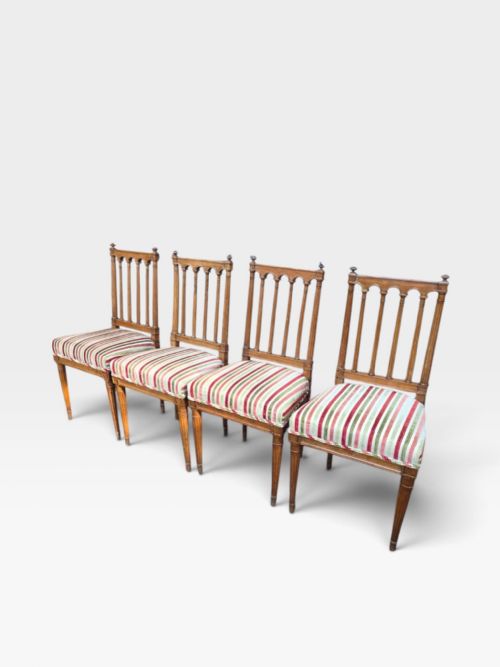
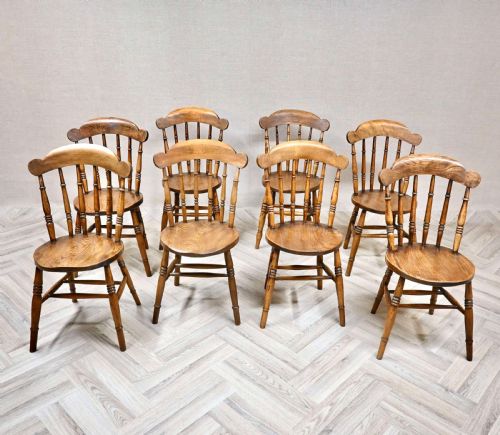
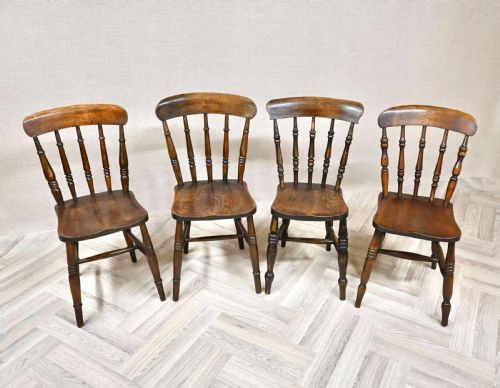
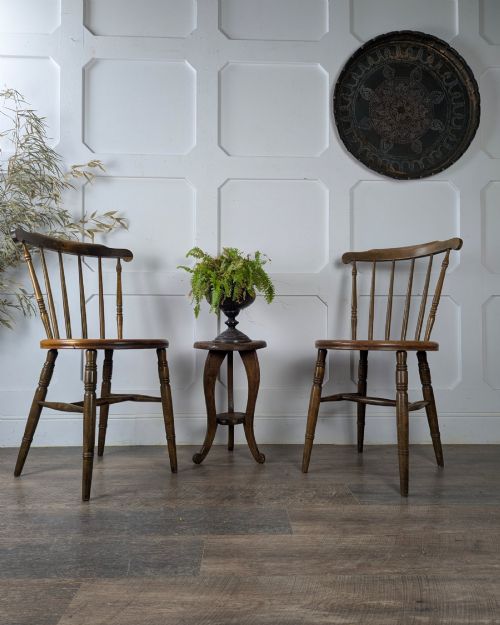
When you search for spindle leg dining chairs, you encounter a variety of traditional forms rooted in nineteenth-century country and domestic design. These pieces range from kitchen windsors and stick backs to formal mahogany and walnut dining seats.
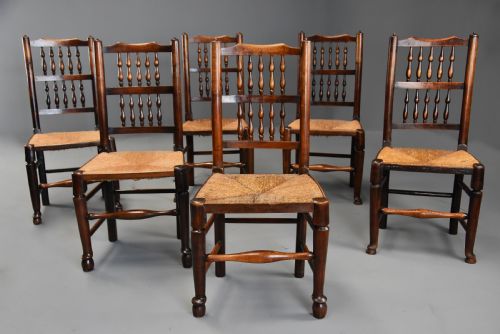
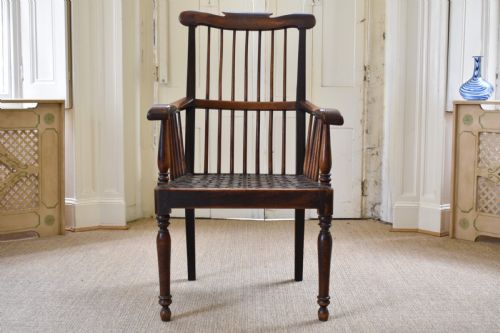
You are most likely to meet elm, beech, and ash country chairs featuring turned spindles and wooden plank or rush seats. Sets often appear alongside individual armchairs and side chairs reflecting Victorian and Edwardian vernacular traditions.
Materials and construction
Cabinet makers and rural turners utilised native timbers such as elm, beech, oak, and fruitwood to build these chairs. Seat bases were typically carved from solid elm planks, while upright spindles and legs were turned on lathes from straight-grained woods like ash and beech.
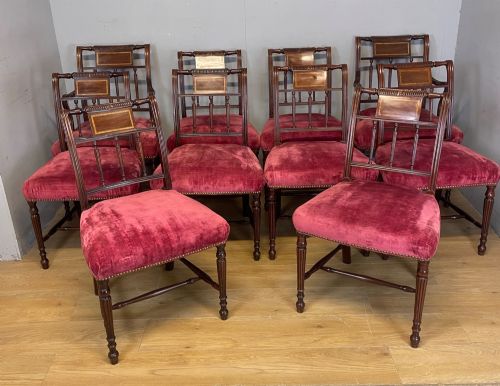
Joinery relied on traditional pegging and wedged tenons to secure the back assemblies into the wooden seats. Some formal Edwardian and Victorian variants incorporated mahogany, walnut, or rosewood with inlaid details and upholstered pads.
Spindle Leg Dining Chairs Retail Price Guide 2026
Typical asking prices for spindle leg dining chairs among the pieces listed under this phrase on Sellingantiques today, from the lower quarter to the upper quarter. They describe what is for sale here now, not the wider market.
Some nineteenth-century kitchen chairs feature penny seats scooped out by hand to fit the sitter comfortably.
Assessing quality and craftsmanship
Quality rests in the selection of timber and the precision of the turning work on the spindles and stretchers. Tighter grain in the seat elm and well-balanced proportions in the back rails distinguish finer examples from standard utility seating.
The integrity of the structural joints and the depth of the natural patina indicate how well a chair survives decades of daily service. Matching sets maintain higher desirability than assembled groups gathered together over time.
Worksop Allsop
The Spindle Leg Dining Chairs Glossary
- Windsor chair
- A wooden chair built with a solid sculpted seat into which the legs and back spindles are separately inserted. This construction provides robust support through interlocking wooden components.
- Crinoline stretcher
- An arched or curved lower stretcher connecting the legs of a chair to provide lateral stability. It often appears on nineteenth-century windsor models.
- Penny seat
- A wooden saddle seat featuring circular depressions shaped to improve comfort. The name derives from the shallow round scoop resembling a coin.
- Rush seat
- A seating surface woven from dried marsh rushes or sedge over a wooden frame. This traditional method creates a textured, flexible platform for dining.
- Stick back
- A chair design featuring simple turned vertical spindles forming the backrest without a central carved splat. These pieces offer clean lines typical of country vernacular furniture.
Spindle Leg Dining Chairs: Frequently Asked Questions
How do I clean wooden seats?
Wipe surfaces gently using a slightly damp cloth to remove dust without damaging the old finish. Avoid harsh chemical cleaners that strip the natural oils from the wood.
Apply a traditional beeswax polish occasionally to nourish the timber and maintain a soft lustre across the grain.
Can I mix different chair styles?
Combining different country kitchen chairs creates an eclectic look around a farmhouse table. Matching heights and wood tones helps maintain visual harmony within the group.
Near pairs and matched sets offer more uniformity if you prefer a consistent arrangement for formal dining spaces.
Are these chairs suitable for daily use?
Solid wood construction makes nineteenth-century and Edwardian dining seats remarkably durable for everyday meals. Checking the undercarriage stability ensures each piece handles regular sitting safely.
Adding loose squab cushions provides extra comfort on wooden or rush seats without altering the original frames.
How do I identify a Victorian chair?
Victorian examples often display heavier proportions and darker timbers such as mahogany and walnut. Details like turned stick backs or upholstered slip seats frequently accompany this period.
Comparing the turning patterns and wood species helps distinguish mid-century models from later Edwardian revivals.