



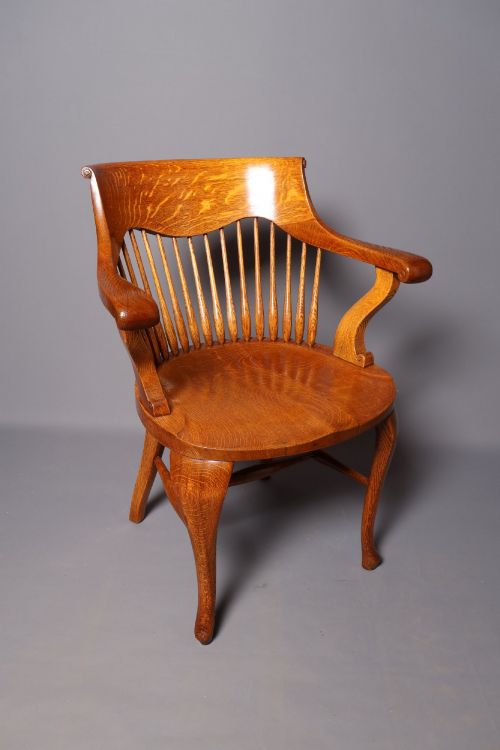


Spindle Back Captain Chair
A spindle back captain chair brings sturdy domestic utility and generous proportions to a study, combining Windsor comfort with desk functionality.
Spindle Back Captain Chair
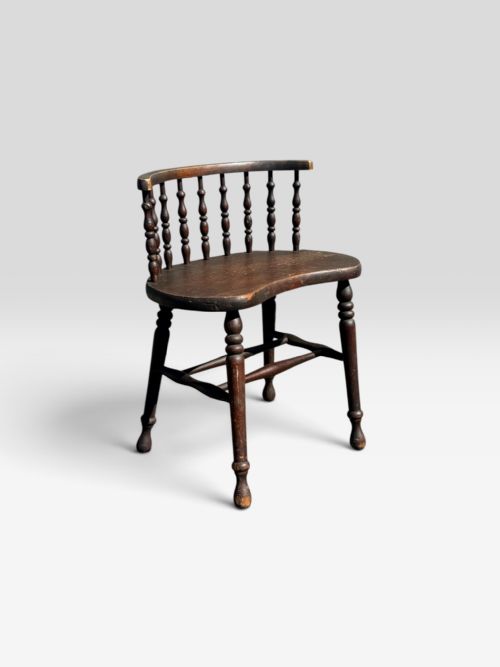
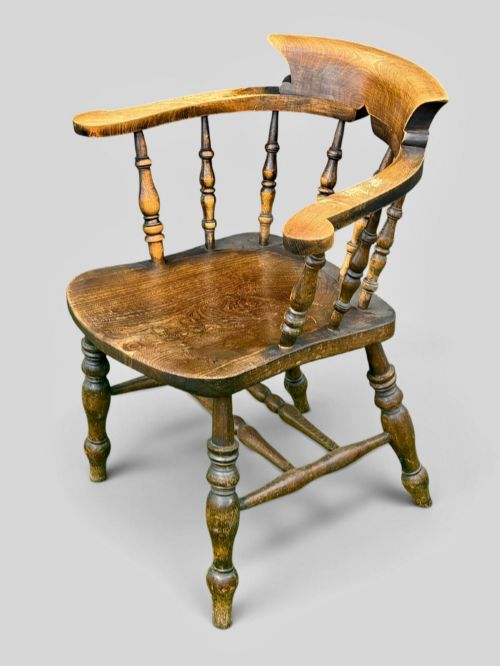
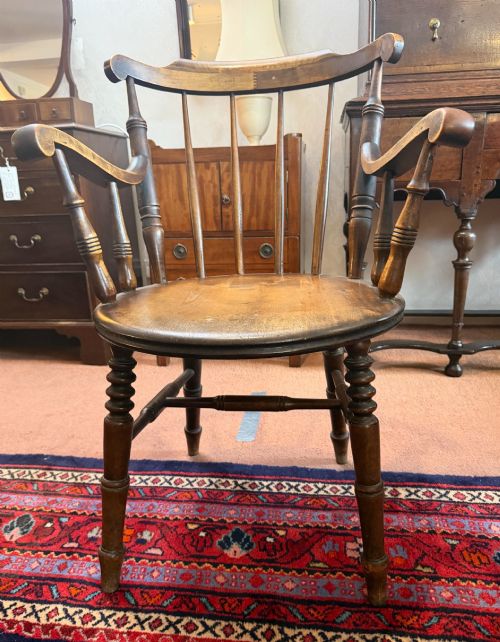
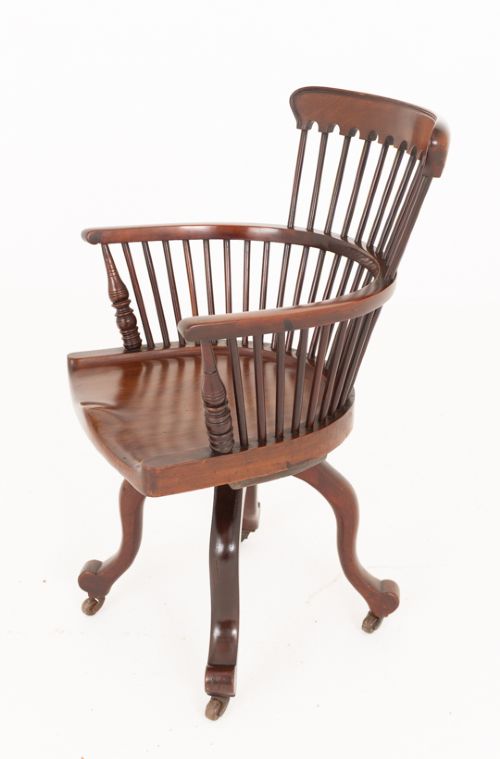
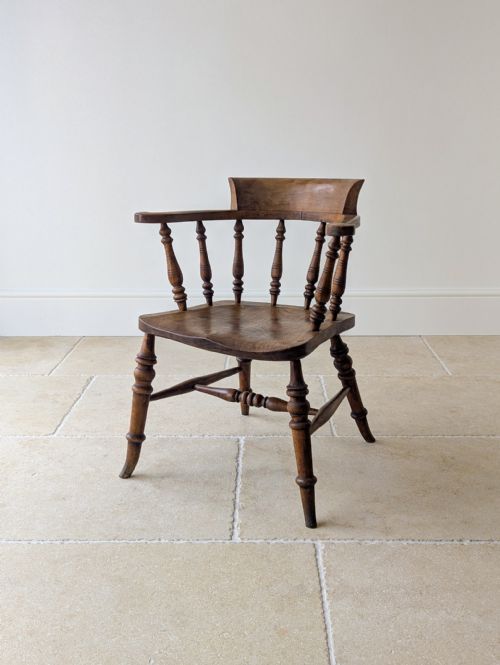
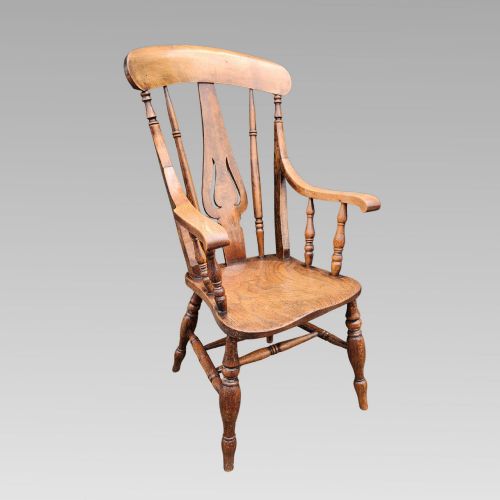
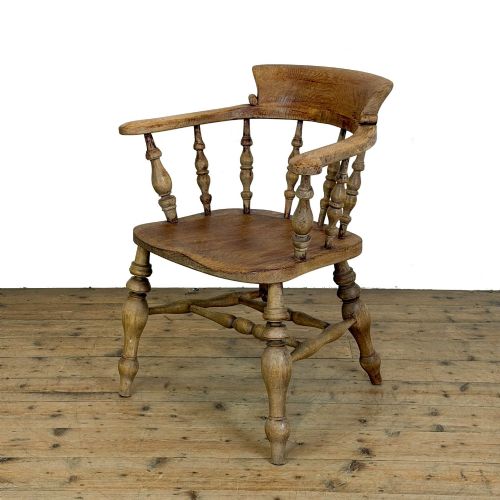
A spindle back captain chair is typically encountered as a nineteenth century desk chair, office chair, or smoker's bow armchair. These forms emerge primarily from Victorian and Edwardian periods, frequently showing English country workshop traditions.
The category encompasses robust armchairs and revolving desk chairs designed for extended seating. Many examples feature low, curved bow backs fitted with vertical spindles and solid wooden seats shaped for the occupant.
Materials and construction
Construction relies heavily on native timbers such as elm for solid, shaped seats paired with bent ash or beech for curved backbows and spindles. Cabinetmakers also utilised mahogany, oak, fruitwood, and occasionally yew or satin birch for more formal library and office seating.
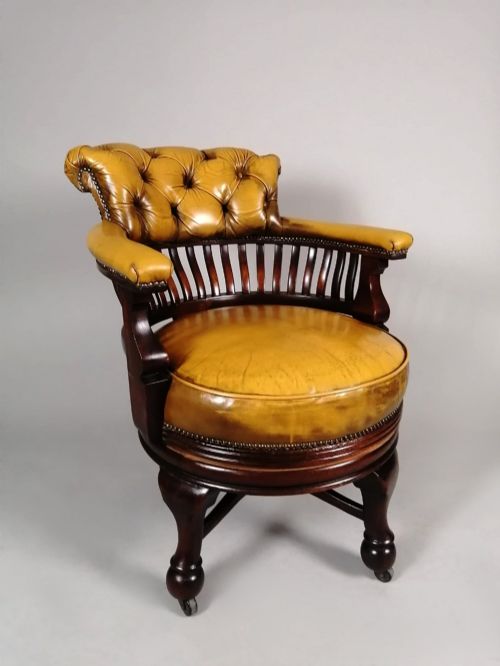
Joinery combines traditional Windsor framing techniques with turned components, sometimes incorporating iron, brass, and swivel mechanisms on nineteenth century revolving desk chairs. Upholstered variants introduce leather seating supported by traditional stuffing and brass tacks.
Spindle Back Captain Chair Retail Price Guide 2026
Typical asking prices for spindle back captain chair among the pieces listed under this phrase on Sellingantiques today, from the lower quarter to the upper quarter. They describe what is for sale here now, not the wider market.
Some nineteenth century captains traded maritime decks for swivel chairs, bringing nautical revolving comfort straight to dry land.
Assessing quality and character
Quality rests upon the selection of timber and the depth of figure in woods like elm and mahogany. Superior pieces display harmonious grain matching across the seat and well-balanced turning on the spindles and legs.
The integrity of the structural joints and the retention of original surface patination distinguish finer examples. Chairs that maintain their original swivel mechanisms or unmodified wooden frames command greater appreciation among collectors.
Edward William Godwin·Kendrick & Jefferson
The Spindle Back Captain Chair Glossary
- Smoker's bow
- A low-backed Windsor armchair with a continuous curved armrail resting on short spindles, commonly associated with nineteenth century public houses and studies.
- Windsor chair
- A chair constructed with a solid wooden seat into which the legs and back spindles are directly tenoned, rather than using a conventional framed skeleton.
- Comb back
- A Windsor chair variation where the top rail resembles the spine of a comb, featuring vertical spindles rising above the main arm bow.
- Revolving desk chair
- An office or library armchair mounted on a central swivel spindle and four or five legged base, often dating from the late Victorian period.
- Spindle back
- A chair back composed of multiple slender turned wooden uprights connecting the seat to the top rail.
Spindle Back Captain Chair: Frequently Asked Questions
What is a smoker's bow?
A smoker's bow is a robust, low-backed Windsor armchair featuring a continuous curved armrail supported by turned spindles.
These chairs were traditionally used in domestic parlours, offices, and inns, offering sturdy support for daily sitting.
How do I date a Victorian desk chair?
Dating relies on observing construction details, timber selection, and mechanical hardware such as iron swivel mechanisms.
Earlier nineteenth century examples often display deep elm seats and hand-turned ash components, while later versions adopt more standardised factory production methods.
Are these chairs comfortable for daily use?
Their generous proportions and sculpted wooden seats make them well-suited for regular seating at a desk or table.
Many incorporate low, curved armrests designed to fit comfortably beneath standard desktop heights.
What woods were used for country chairs?
English country chairmakers primarily utilised native hardwoods that offered strength and flexibility for steam bending.
Elm was favoured for comfortable, anti-splitting seats, while ash and beech provided durable material for bent backbows and slender spindles.