

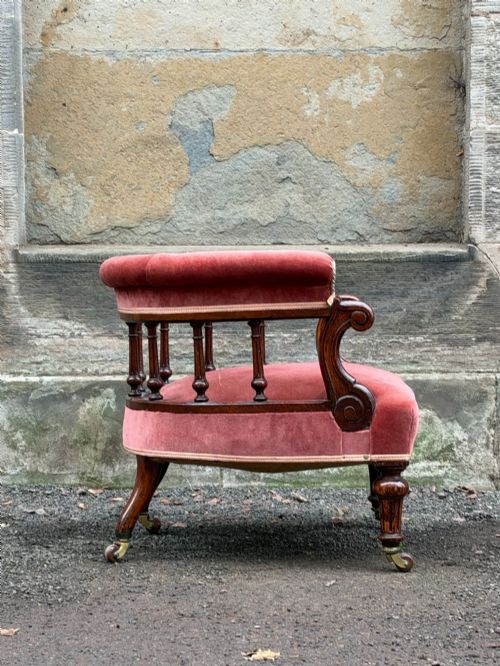
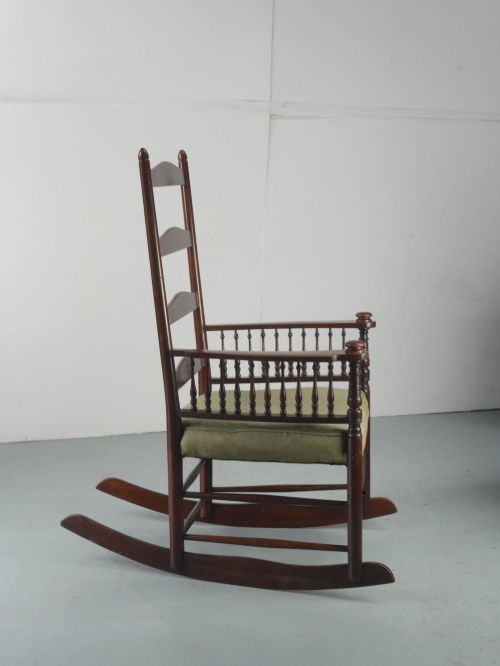
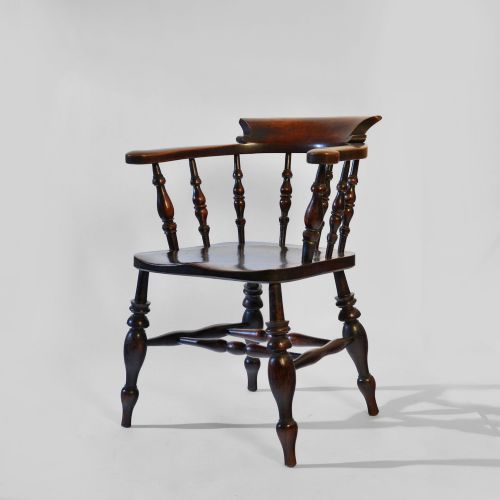

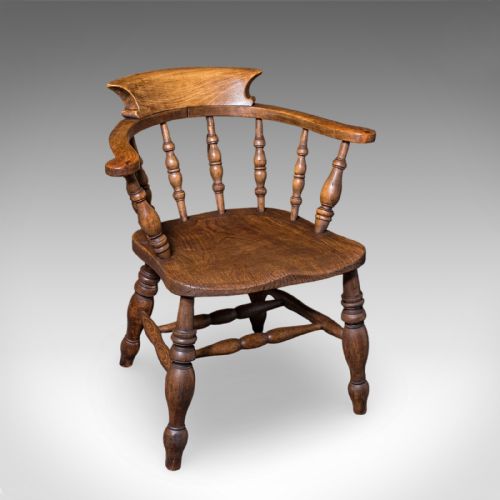


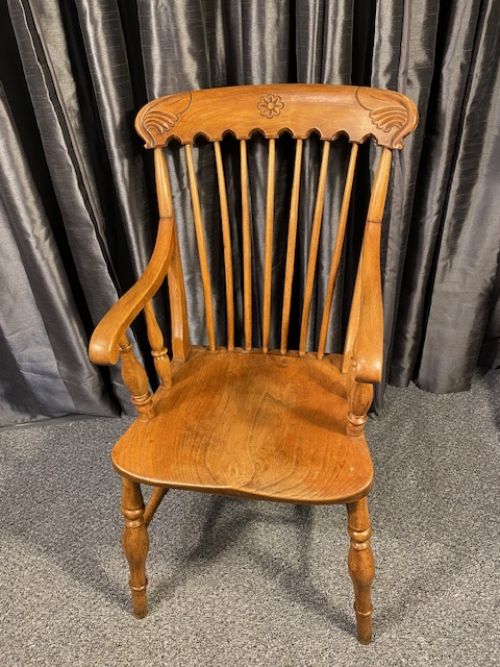
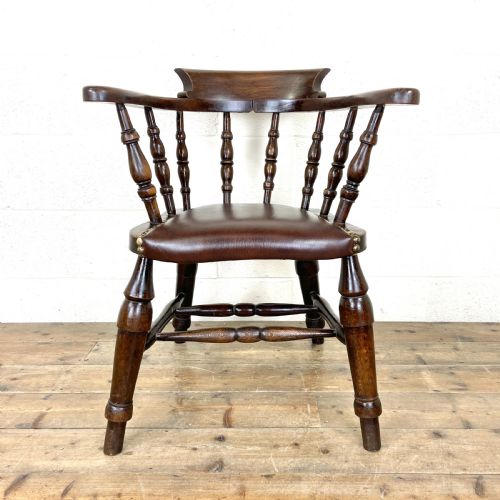
Spindle Arm Oak Chair
These spindle arm oak chair examples bring robust vernacular character into a room through honest timber work and traditional turning.
Spindle Arm Oak Chair
A spindle arm oak chair connects domestic vernacular seating with traditional carpentry, drawing on styles such as English Country, Edwardian, and American Colonial. Buyers encounter various vernacular forms including turners chairs, smokers bows, Captains chairs, and Windsor variants.
The evidence shows construction spanning the Regency period through the Victorian era and into the Edwardian years. Forms range from full-size armchairs and rocking chairs to occasional dining seats and miniature furniture pieces.
Regional variations appear across English, Scottish, and American workshops, incorporating local timbers alongside oak frames. These seating pieces served utilitarian roles in kitchens, country houses, and studies before becoming collector items.
Materials and construction methods
Makers built these chairs primarily using solid oak frames complemented by secondary woods such as elm, ash, beech, and stained wood. Turned spindles and bobbin framing required precise lathe work to shape structural uprights and arm supports.
Seating surfaces vary between solid wood dish seats, woven webbing, rush, leather, and upholstered fabric additions. Traditional joinery methods secured turned components without relying on modern metal fasteners.
Spindle Arm Oak Chair Retail Price Guide 2026
Typical asking prices for spindle arm oak chair among the pieces listed under this phrase on Sellingantiques today, from the lower quarter to the upper quarter. They describe what is for sale here now, not the wider market.
Even tiny hands needed proper seating, as proven by the occasional miniature Windsor chair waiting quietly in the corner.
Distinguishing quality in vernacular seating
Quality rests in the crispness of the spindle turning, the balance of the timber grain, and the integrity of the original joints. Superior examples display harmonious proportions between the heavy oak framework and the delicate turned spindles.
The choice of seating material also influences character, from finely figured solid elm and dish seats to well-executed upholstery or rush work. Preservation of original surface patination distinguishes finer items from heavily restored or later altered pieces.
The Spindle Arm Oak Chair Glossary
- Vernacular
- Everyday objects built by local craftspeople for practical domestic or agricultural use rather than following high-style academic designs. These pieces rely on regional traditions and available materials.
- Bobbin framing
- Structural furniture components turned on a lathe to resemble a string of rounded bobbins or spools. This decorative technique appears frequently on nineteenth-century rocking chairs and armchairs.
- Smoker's bow
- A low-backed Windsor-style armchair with a continuous bentwood rail forming the arms and backrest. They often feature robust elm or oak seats shaped for comfort.
- Windsor chair
- A chair built with a solid wooden seat into which the legs, back spindles, and bow are separately dowelled or wedged. Traditional country examples utilise mixed timbers for structural strength.
- Turned chair
- An early form of seating constructed entirely from turned wooden posts and spindles joined with mortise and tenon joints. The style dates back centuries and saw revivals in later periods.
Spindle Arm Oak Chair: Frequently Asked Questions
What periods do these chairs come from?
The available pieces originate predominantly across the nineteenth and early twentieth centuries, including Regency, Victorian, and Edwardian examples. Construction dates span from around eighteen-fifty through to the nineteen-tens.
Craftspeople continued traditional vernacular methods long after industrial furniture production began, creating overlap between eras.
How were spindle arm chairs used originally?
These chairs served functional daily roles in country houses, farmhouses, kitchens, and offices. Their robust construction suited heavy daily use by family members or guests.
Rocking variants and upholstered models provided additional comfort for reading or resting by the hearth.
What woods are typically found in these chairs?
Oak forms the primary structural framework for many of these pieces, often paired with complementary timbers. Makers frequently utilised elm, ash, and beech for seats, spindles, and bent components.
Secondary materials such as leather, fabric, rush, and woven webbing appear on padded or woven seats.
How do regional styles differ?
Regional variations reflect local woodworking traditions in English country districts, Scottish vernacular workshops, and American colonial hubs. Each region utilised available native timber species and distinct turning profiles.
For example, East Anglian pieces or Scottish vernacular items display characteristic local turning patterns and seat shapes.
Are these chairs suitable for daily seating?
Most sturdy nineteenth-century and Edwardian examples remain structurally sound for regular domestic use. Solid timber frames and traditional joined construction offer enduring stability.
Upholstered or woven seat variations may require occasional maintenance depending on their condition and age.