



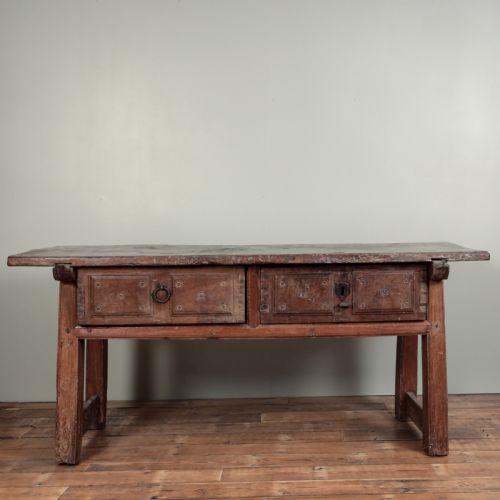


Spanish Walnut Desk
A genuine spanish walnut desk brings heavy timber and restrained proportion into a room, offering a tactile workspace rooted in centuries of Iberian craftsmanship.
Spanish Walnut Desk
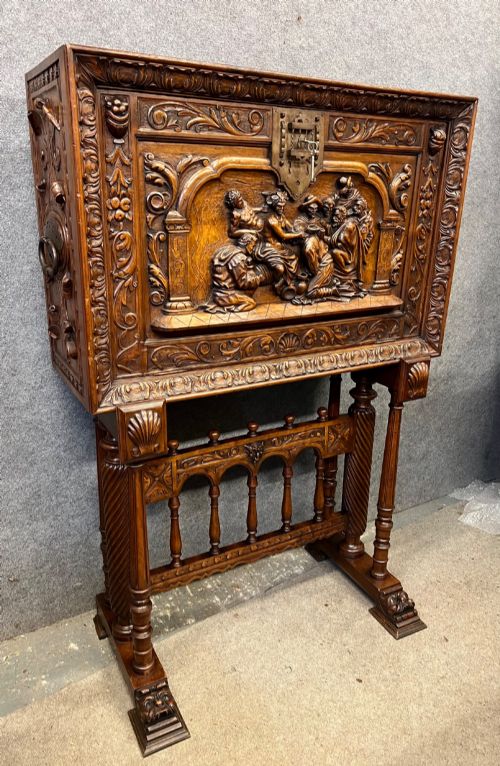
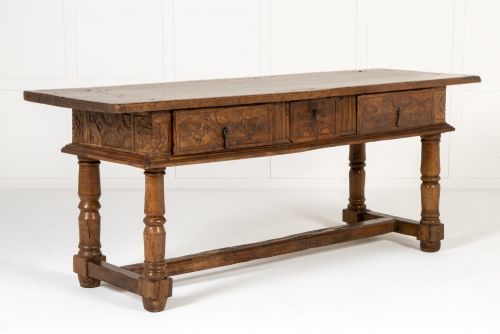
A spanish walnut desk typically encompasses robust writing cabinets, fall-front bargueños on stands, and substantial tables utilised for writing across the seventeenth, eighteenth, and nineteenth centuries. These forms reflect the functional needs of historic Iberian interiors, favouring dark timbers and structural strength.
Buyers encountering this selection will frequently find seventeenth-century examples alongside later nineteenth-century revivals and twentieth-century interpretations. The core of the inventory centres on walnut construction, often paired with auxiliary woods and iron work.
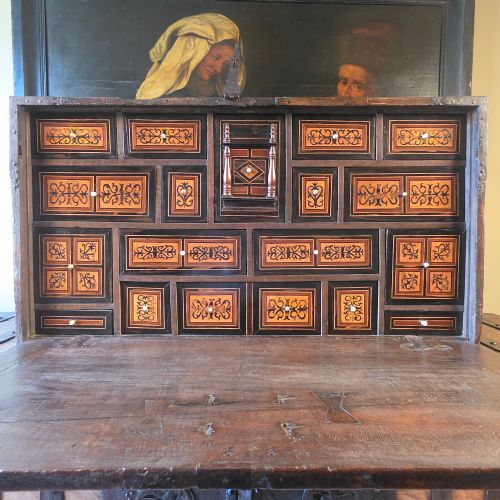
The typology bridges closed cabinet forms that conceal fitted drawers and open writing surfaces supported by trestles or turned legs. Such pieces serve as both working furniture and architectural anchors within a room.
Materials and construction methods
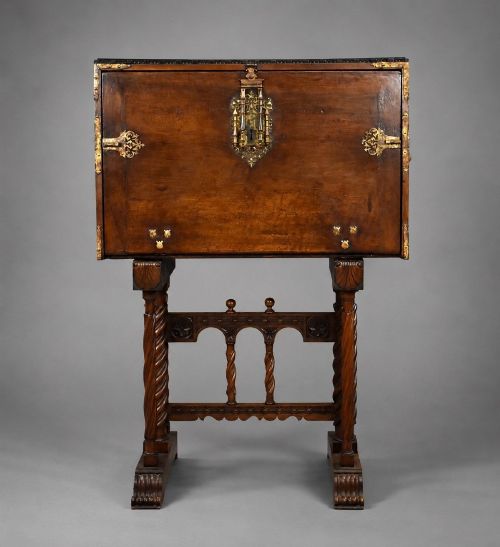
Master cabinetmakers constructed these pieces primarily from solid walnut and fruitwood, selecting timber for density and deep grain patterns. Structural elements frequently incorporate wrought iron for braces, stretcher bars, and ornate exterior mounts that secure the heavy wood panels.
Surface decoration relies on inlaid details, carved walnut motifs, and occasionally bone accents to define drawer fronts and interior compartments. Traditional joinery methods ensure the stability of large table tops and cabinet carcases without relying on modern adhesives.
Spanish Walnut Desk Retail Price Guide 2026
Typical asking prices for spanish walnut desk among the pieces listed under this phrase on Sellingantiques today, from the lower quarter to the upper quarter. They describe what is for sale here now, not the wider market.
Hidden drawers within these cabinets often require discovering secret wooden latches, designed to outsmart wandering hands during the Spanish Baroque era.
Distinguishing quality across periods
Quality reveals itself in the selection of the walnut timber and the integrity of the original surface patina developed through centuries of use. Pieces retaining their early iron hardware and original fruitwood or bone inlays demonstrate superior craftsmanship compared to later replacements.
The complexity of the interior drawer arrangement in cabinet forms and the precision of the structural joinery separate standard production from exceptional examples. Proportion and the harmonious integration of stands with their upper cabinets dictate the overall visual balance.
The Spanish Walnut Desk Glossary
- Bargueño
- A traditional Spanish cabinet with a drop-front writing surface concealing numerous small drawers, typically mounted on a trestle or arcaded stand. This form developed during the Renaissance for secure storage and correspondence.
- Vargueno
- An alternative spelling for a bargueño cabinet, describing the portable chest fitted with drawers designed to sit upon a supporting base. These pieces often feature elaborate bone inlay and gilded accents.
- Papillero
- A small cabinet or desk fitted with multiple shallow drawers intended for papers, letters, and documents. Such pieces represent a more compact scale of Iberian storage furniture.
- Trestle table
- A table construction where the top rests on two or more vertical supports connected by a horizontal stretcher. This design provides sturdy support for heavy walnut surfaces.
- Patina
- The surface sheen and colour depth acquired by timber through age, handling, and polishing. Original patination is a key indicator of historical authenticity.
Spanish Walnut Desk: Frequently Asked Questions
How do I care for historic walnut furniture?
Maintain a stable indoor humidity and apply microcrystalline wax sparingly to nourish the dry timber.
Avoid placing these heavy wooden pieces near direct heat sources or strong sunlight to prevent warping and surface cracking.
Were these desks used for writing?
Many examples functioned primarily as portable storage chests placed upon tables until dedicated writing desks became common.
Drop-front cabinet versions provided a sloping or flat surface specifically for handling correspondence and documents.
How do I distinguish seventeenth-century pieces from later revivals?
Early pieces exhibit hand-cut joinery, forged iron hardware, and timber patination developed over centuries of continuous existence.
Nineteenth-century revival pieces and 1920s interpretations often show more uniform machine-assisted construction and standardised decorative carving.
What is the function of the iron mounts?
Wrought iron braces and corner plates reinforced the heavy walnut carcases against seasonal wood movement and structural stress.
Decorative lock plates and drop handles also provided essential security for valuable documents kept inside.