





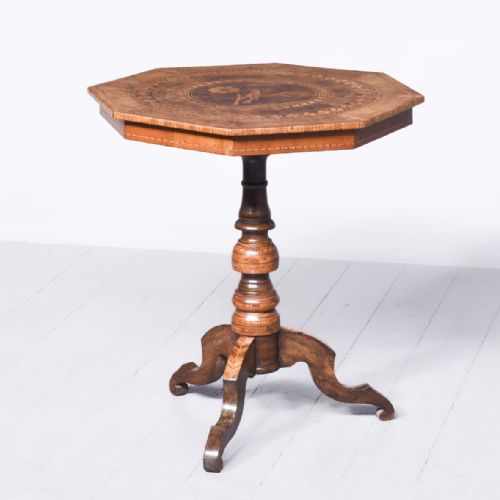
Sorrento Marquetry Tripod Table
These sorrento marquetry tripod table examples bring intricate Italian wood mosaic directly into a room as compact occasional or tilt-top display pieces.
Sorrento Marquetry Tripod Table
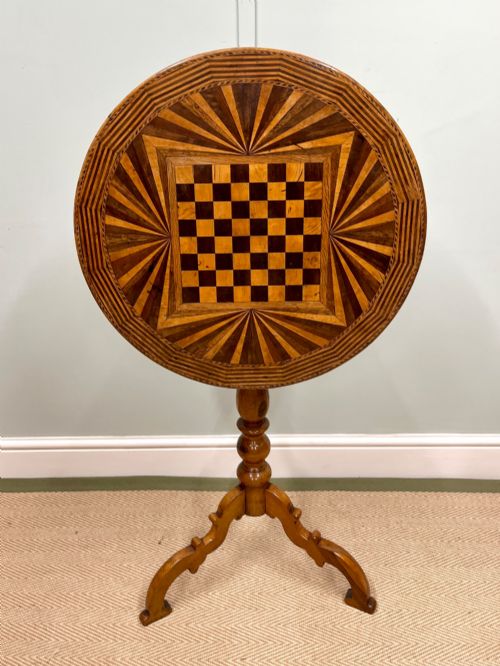
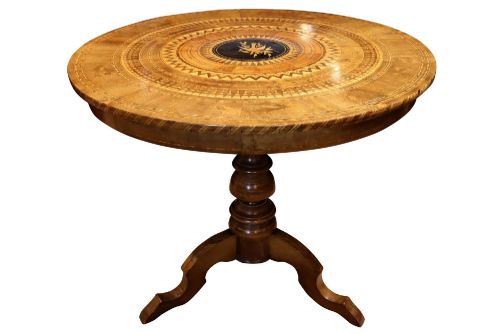
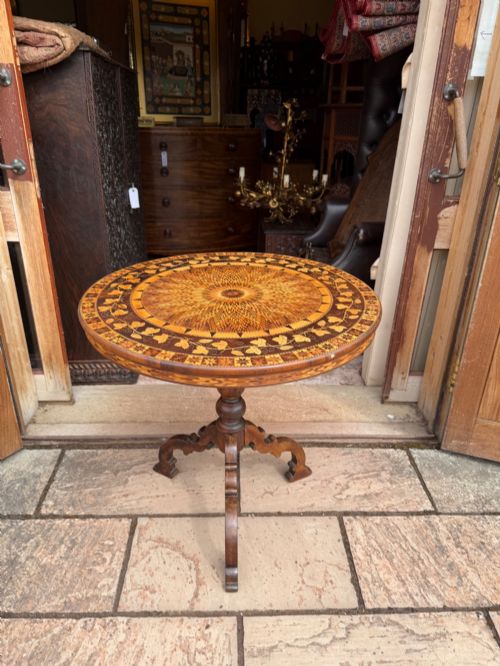
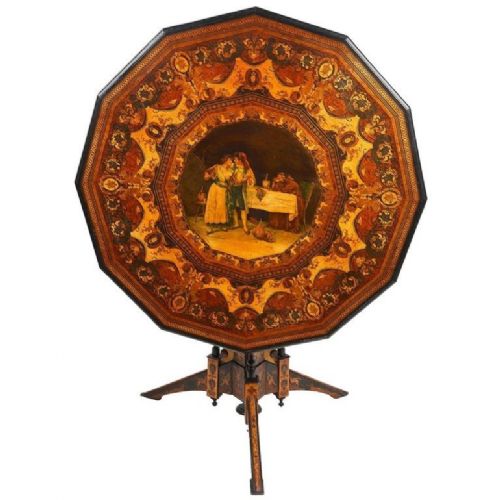
A sorrento marquetry tripod table stands on a central pedestal supported by three legs, topped with intricate wood mosaic imagery. You are most likely to meet nineteenth-century Victorian and Grand Tour Italian examples fashioned from walnut, olive wood, and fruitwood veneers.
The surface patterns typically showcase elaborate floral, architectural, or figural imagery created through careful veneer work. These versatile forms include occasional tables, side tables, tilt-top tables, and centre tables originating from Italian workshops.
Makers utilised mixed hardwood veneers and fruitwood inlay to achieve contrasting tones across the circular or multi-sided tops. Surviving pieces span from the mid-nineteenth century up to nineteen-twenty productions.
Materials and construction
Craftsmen built these tables using solid foundational timbers like walnut or olive wood, applied as a base for intricate surface decoration. Mixed wood veneers and fruitwood inlay were painstakingly cut and fitted together to form detailed pictorial or geometric scenes.
Sorrento Marquetry Tripod Table Retail Price Guide 2026
Typical asking prices for sorrento marquetry tripod table among the pieces listed under this phrase on Sellingantiques today, from the lower quarter to the upper quarter. They describe what is for sale here now, not the wider market.
The site records nineteenth-century Italian Sorrento and Victorian styles alongside signed pieces by Almerico Gargiulo.
Assessing quality in veneer and design
Quality rests primarily on the precision of the veneer cutting and the complexity of the pictorial subject matter on the top. Finer examples display a wider palette of natural wood tones without relying heavily on surface staining or painted highlights.
The crispness of the turning on the central pedestal and the stability of the three legs demonstrate the underlying joinery standards. Subtle variations in timber selection, such as figured olive wood or rich walnut, separate standard production from superior workshop output.
Almerico Gargiulo
The Sorrento Marquetry Tripod Table Glossary
- Marquetry
- The art of forming decorative patterns by fitting together small pieces of wood veneer. This technique allows for elaborate pictorial designs across table tops.
- Parquetry
- Geometric mosaic woodwork formed by arranging small veneer blocks into repeating patterns. It frequently borders the central pictorial marquetry scenes.
- Tripod table
- A small stand supported by a central pillar and three legs. This form became popular for occasional use and easy relocation within a room.
- Tilt top
- A hinged table top that can be swung from horizontal to vertical. This design saved space and protected the delicate veneer surface when stored.
- Sorrento ware
- Wooden decorative objects produced in the Italian coastal town using local timbers and specialised inlay methods. These pieces were heavily collected during nineteenth-century travels.
Sorrento Marquetry Tripod Table: Frequently Asked Questions
What is a sorrento marquetry tripod table?
It is a small nineteenth-century Italian table featuring a three-legged pedestal base and a top decorated with intricate wood inlay. The surfaces display detailed floral or architectural scenes created from various tinted wood veneers.
These pieces were often brought home by travellers undertaking the Grand Tour. They function today as decorative occasional or side tables.
How do I use a tilt top table?
The hinged mechanism allows the surface to lift into a vertical position for storage against a wall. This kept the detailed marquetry protected from dust and accidental damage when not needed.
In daily use, the top lowers back to a horizontal position locked by a small catch. It serves well for holding a lamp or small display items.
What woods were used in these tables?
Workshops primarily utilised walnut, olive wood, and fruitwood for both the structural timber and the contrasting inlay elements. Mixed hardwood veneers provided the wide range of natural tones required for shading pictorial designs.
Each wood species was chosen for its distinct grain pattern and natural colour. No artificial dyes were needed to achieve the varied hues.
How can I tell the period?
Nineteenth-century examples show traditional hand-cut veneer work and characteristic turning on the central pillar. Later pieces from the early twentieth century may exhibit slightly different joinery methods and standardised inlay patterns.
Matching the materials and style tags helps confirm the manufacturing era. Most surviving examples date from the Victorian period through eighteen-eighty.