

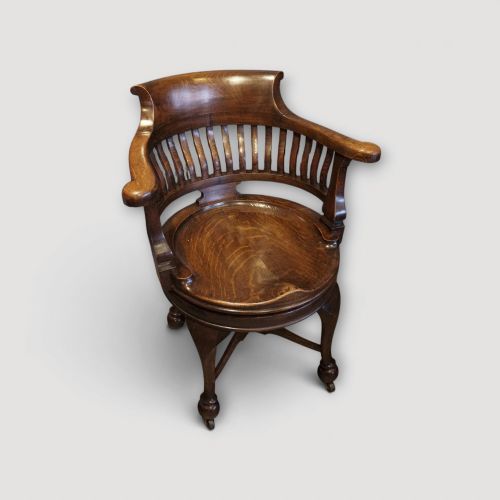
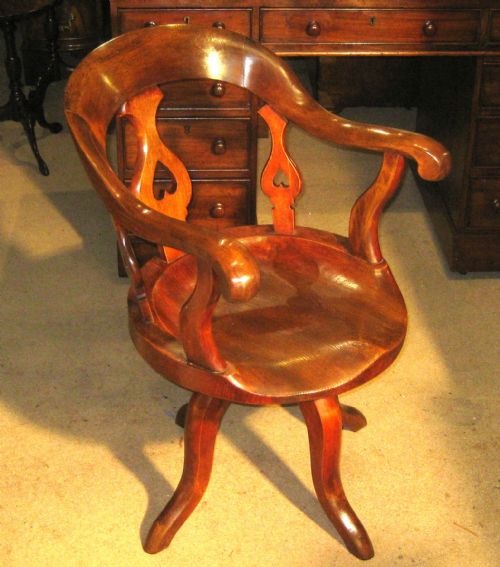
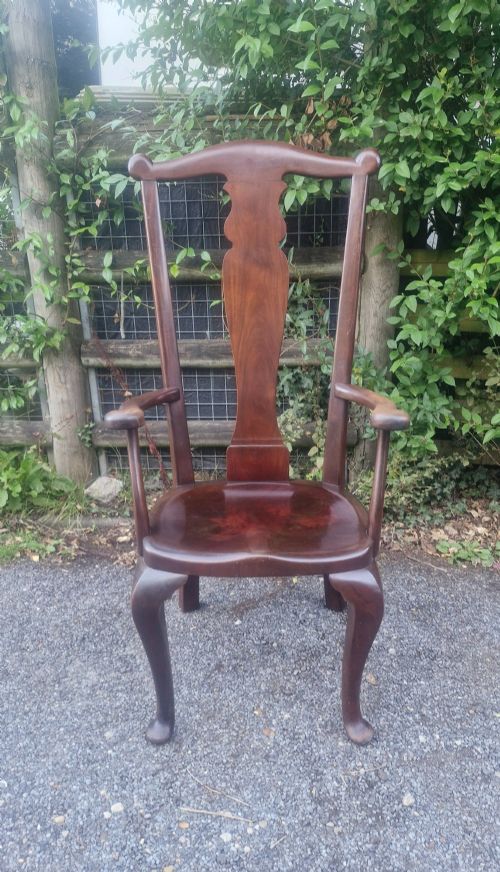
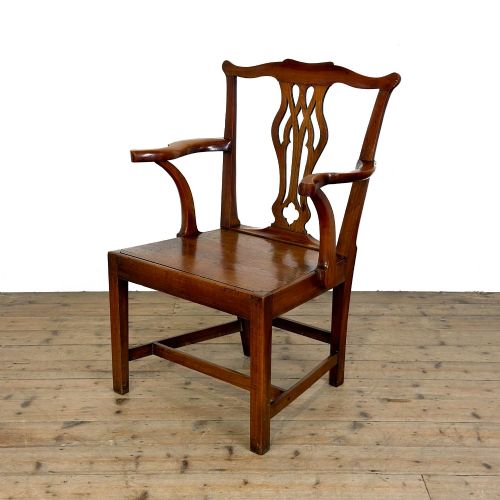

Solid Wood Armchair
A solid wood armchair offers enduring construction and character, spanning centuries of regional vernacular and formal cabinet-making traditions.
Solid Wood Armchair
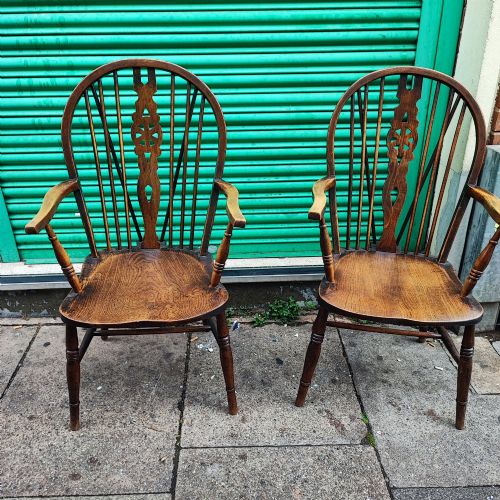
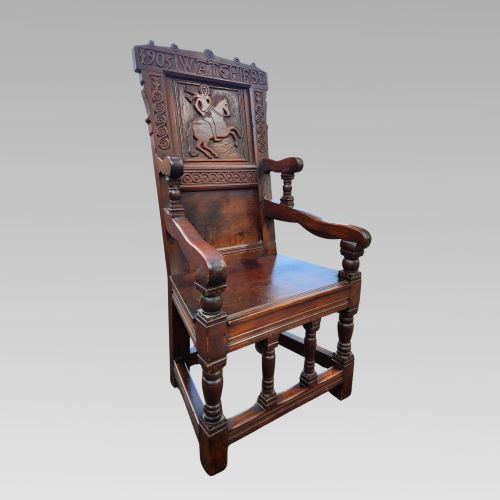
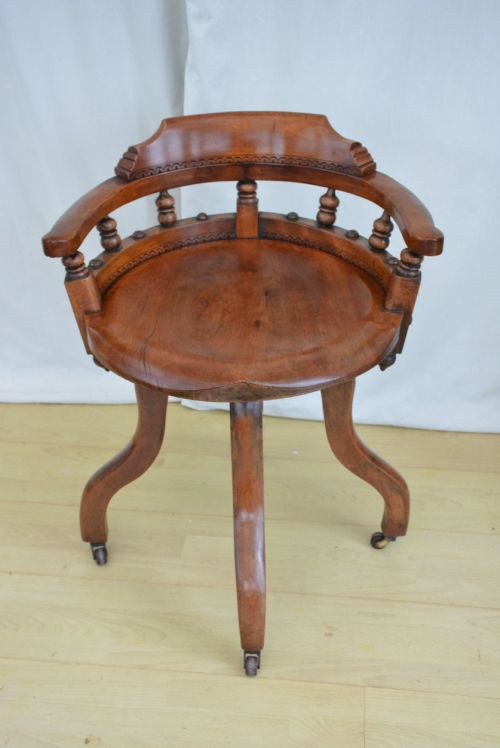
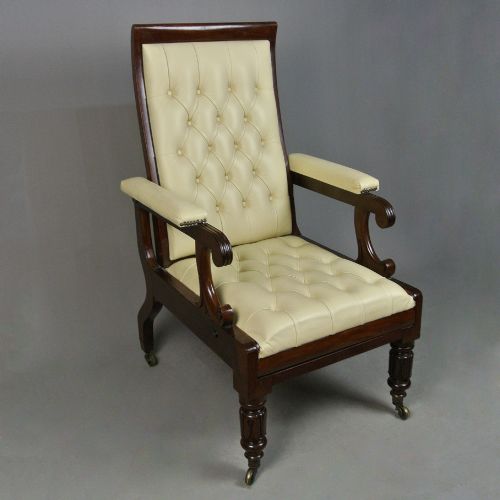
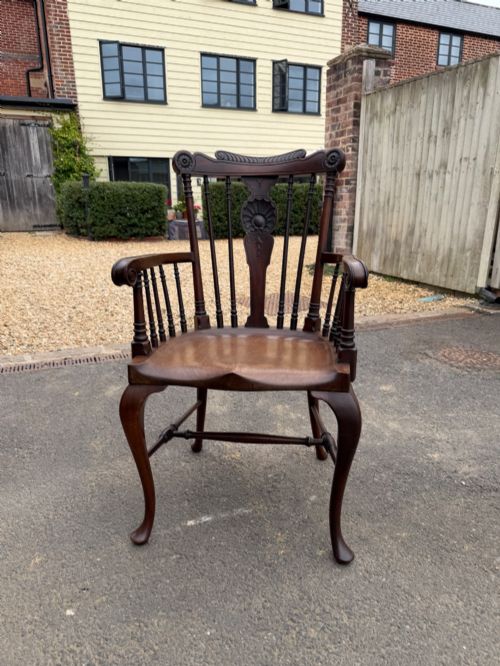
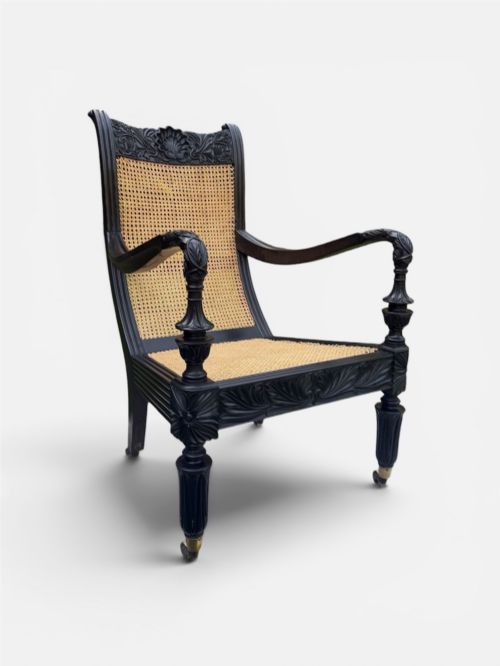
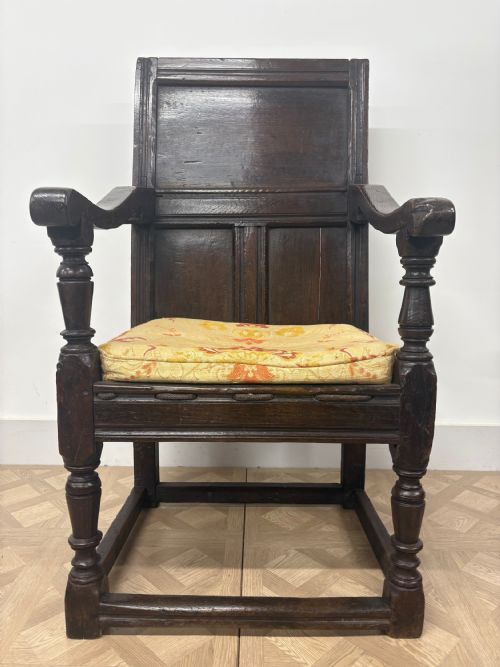
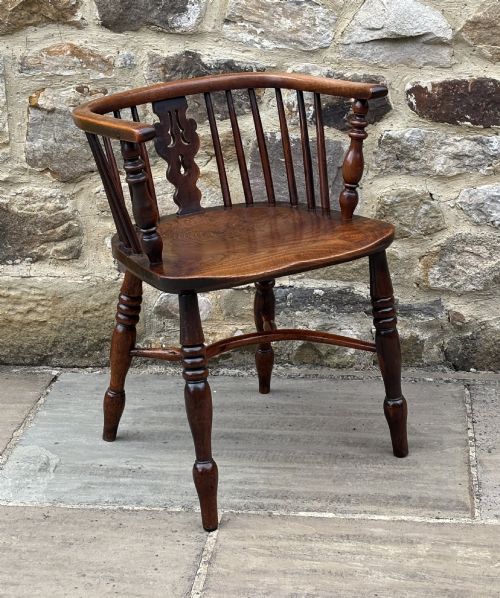
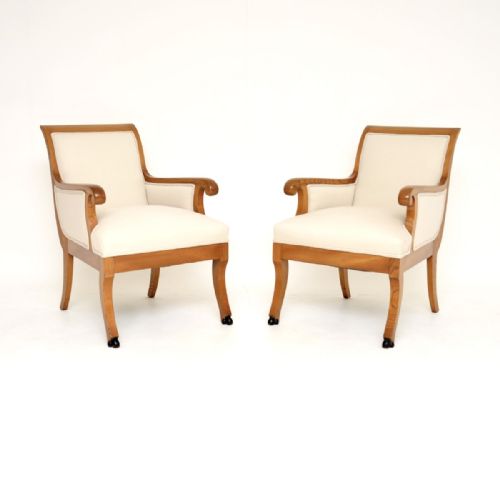
A solid wood armchair encompasses a broad spectrum of seating, from heavy oak wainscot chairs originating in the seventeenth century to lighter elm Windsor chairs built across the nineteenth century. These forms include specialised desk chairs, rocking chairs, and substantial library seating constructed entirely from timber.
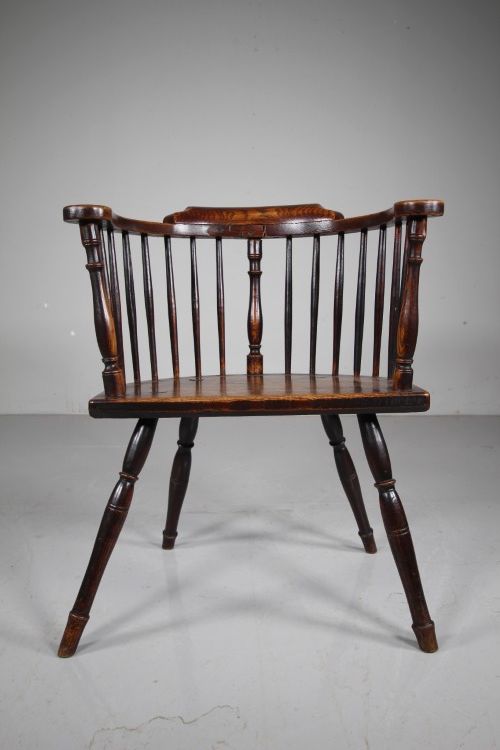
The selections available here lean heavily toward nineteenth-century vernacular seating alongside formal mahogany and walnut pieces from the Georgian and Edwardian eras. Buyers encounter regional variations such as smokers bows and comb-back Captains chairs alongside panelled oak styles.
Origins range from English country workshops to continental European makers, utilising native timbers like yew, ash, beech, and fruitwood. Each specimen reflects the domestic or commercial requirements of its period, maintaining structural integrity through visible grain and substantial joinery.
Materials and construction methods
Makers relied on native hardwoods such as oak, elm, ash, and beech, frequently combining timbers within a single piece, such as ash frames fitted with elm seats. Mahogany, walnut, and yew appear in more formal library chairs and Windsor seating.
Joinery techniques combined traditional mortise and tenon joints for panelled frames with steam-bending for the curved backs of Windsor chairs and smokers bows. Turned spindles and legs give structural support without excess weight.
Solid Wood Armchair Retail Price Guide 2026
Typical asking prices for solid wood armchair among the pieces listed under this phrase on Sellingantiques today, from the lower quarter to the upper quarter. They describe what is for sale here now, not the wider market.
Some nineteenth-century desk chairs feature patent swivel mechanisms that let weary nineteenth-century clerks spin in circles while pondering ledgers.
Determinants of quality
Quality rests primarily on the integrity of the timber selection and the retention of original surface patination. Pieces that display uncompromised grain matching and honest timber shrinkage command greater attention from collectors.
The sophistication of the turning work, the balance of the proportions, and the tightness of the original joints distinguish utilitarian workshop output from master cabinet-maker production.
Fred Walker
The Solid Wood Armchair Glossary
- Wainscot armchair
- A heavy, rigid wooden armchair of sixteenth or seventeenth-century origin featuring panelled construction and turned supports. These pieces represent early domestic luxury before upholstery became common.
- Windsor chair
- A chair built with a solid wooden seat into which the legs, back sticks, and bow are separately raked and wedged. Regional variations include low-back, comb-back, and hoop-back designs.
- Patina
- The surface sheen and colour developed by timber over decades of handling, light exposure, and polishing. Original patination serves as a key indicator of age and undisturbed finish.
Solid Wood Armchair: Frequently Asked Questions
How do I date a wooden armchair?
Dating relies on examining the timber species, tool marks left by manufacture, and the style of the turning or joinery. Seventeenth-century examples typically feature heavy oak panelling, while nineteenth-century vernacular pieces employ mixed hardwoods like ash and elm.
Changes in chair height, proportions, and hardware integration also provide clues to the exact decade of production.
What is a Windsor armchair?
A Windsor chair is constructed by inserting individual legs and back spindles directly into a thick sculpted wooden seat rather than using a continuous frame. This clever design distributes weight efficiently while maintaining a sturdy profile.
They appear in various forms including low-backs, comb-backs, and Captains chairs utilising timbers such as yew, elm, and beech.
Are these chairs comfortable for daily use?
Many solid wood armchairs were designed with ergonomically sculpted wooden seats that offer surprising support without padding. High backs and broad arm rests accommodate extended sitting periods in studies or dining rooms.
Adding a loose cushion can increase comfort while preserving the exposed timber surface of the seat.
How should I care for antique timber?
Protect antique wood by maintaining stable room humidity and keeping chairs away from direct heat sources or strong sunlight. Regular dusting with a dry cloth prevents dirt buildup in carved details and joints.
Applying a traditional beeswax polish occasionally helps nourish the wood and preserves the historic surface shine.