


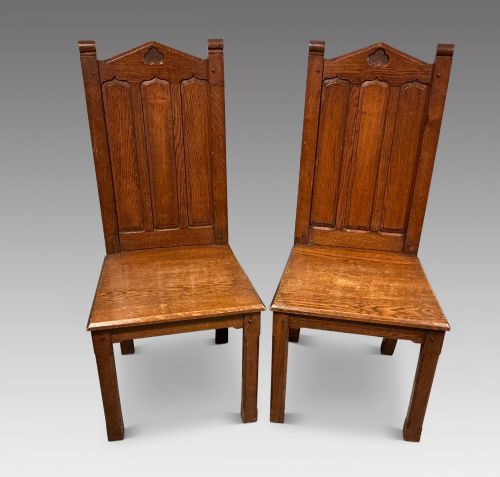


Solid Timber Hall Chair
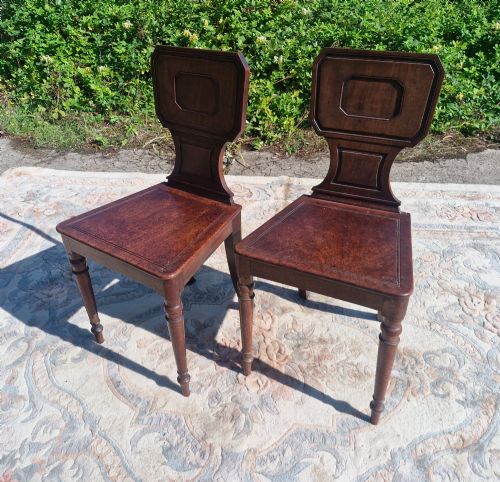
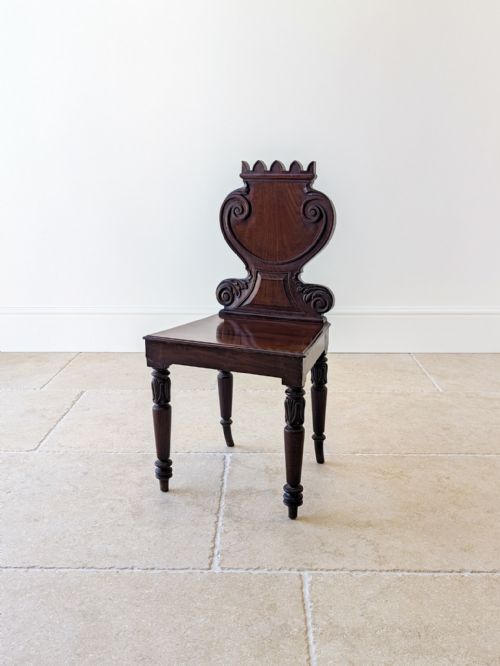
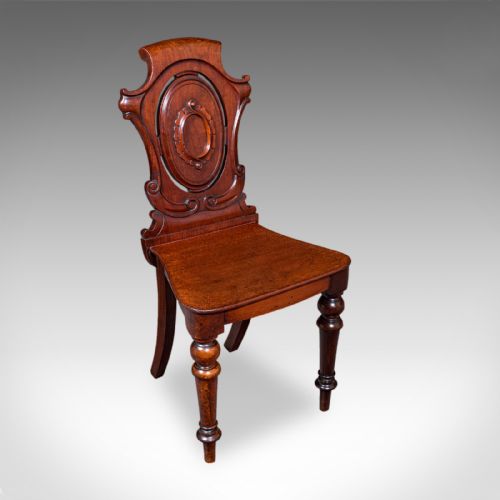
These solid timber hall chair examples are upright seats built to anchor an entranceway with sturdy dignity.
Solid Timber Hall Chair
A solid timber hall chair is an upright seat designed primarily for an entranceway rather than long hours of parlour comfort. The forms here span the Georgian, Regency, William IV and Victorian periods, manifesting predominantly in mahogany, oak and walnut.
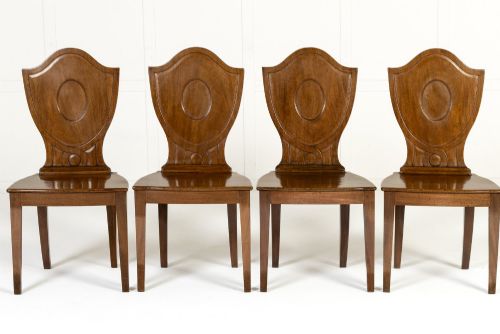
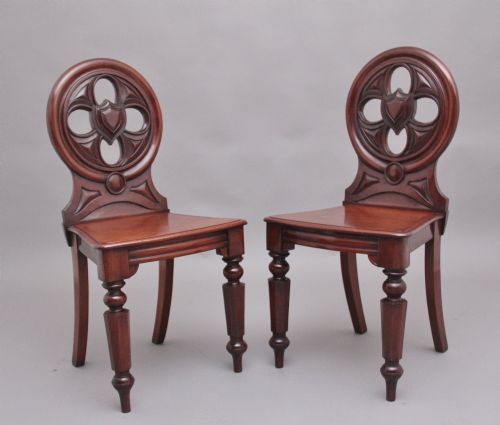
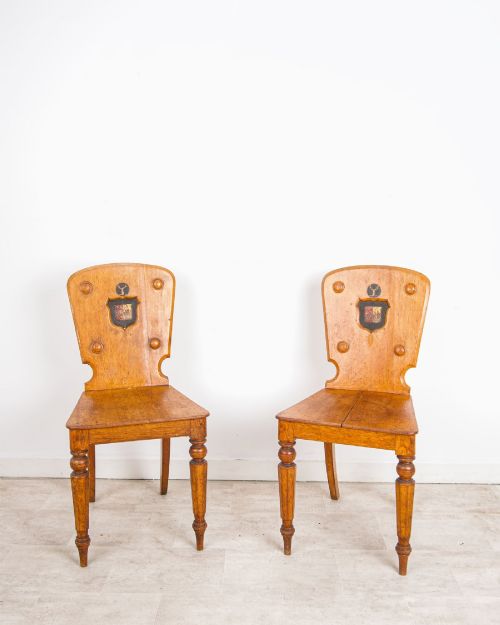
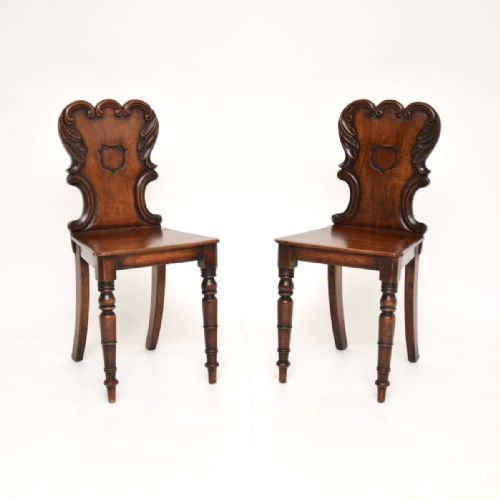
Most pieces meeting this description arrive as pairs or sets rather than solitary seats, reflecting their original purpose of lining grand hallways. The backs frequently display carved heraldic shields, shells or plain wooden panels rather than upholstered cushioning.
Makers from the 18th century onward shaped these functional objects with strict wooden seats intended to withstand outdoor garments and brief waiting periods. They bridge the gap between architectural joinery and domestic furniture.
What varies in quality
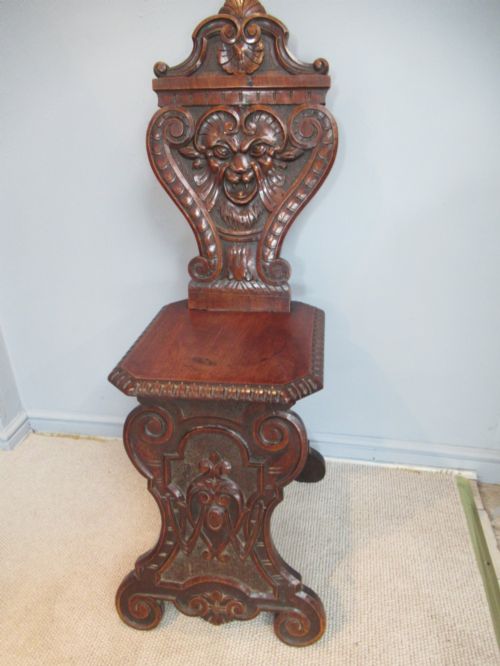
Quality rests upon the depth and crispness of the carved details on the solid timber backs, alongside the selection of figured mahogany or rich walnut grain. Superior pieces exhibit confident sculptural lines in the wood rather than flat, mechanical pressing.
The integrity of the original joints and the thickness of the solid timber seat boards dictate longevity and resilience. Workshop attribution to known makers elevates certain examples well above standard utilitarian production.
Mahogany and oak dominate the material records across all listed periods, from Georgian origins to Late Victorian production.
Gillows·Holland and Sons
The Solid Timber Hall Chair Glossary
- Shield back
- A chair back shaped like a heraldic shield, frequently carved from solid mahogany or oak. This design enjoyed great popularity during the Georgian and Regency periods.
- Shell back
- A carved wooden back panel resembling a fluted sea shell. Cabinetmakers utilised this motif extensively on early 19th century hall seating.
- Heraldic shield
- An engraved or carved coat of arms displayed on the wooden back of a reception seat. These marked family lineage and estate ownership.
- Solid timber
- Unveneered wood utilised throughout the entire construction of the chair frame and seat. This material choice ensures structural durability.
- Gothic Revival
- An architectural and decorative style drawing inspiration from medieval design. Pieces from this movement feature pointed arches and heavy oak construction.
Solid Timber Hall Chair: Frequently Asked Questions
Where were hall chairs placed?
These chairs stood near the front entrance of grand homes, serving visitors who waited briefly before being received inside. Their rigid wooden construction discouraged lounging.
Because hallways faced heavy foot traffic and open doors, the furniture required durable timber that resisted knocks and temperature shifts.
Why do they lack upholstery?
Entrance hall seating avoided fabric because visitors wore damp coats and heavy cloaks outdoors. Solid timber surfaces survived moisture far better than padded textiles.
Cabinetmakers focused their artistry on carved wooden backs and turned legs rather than stuffing and springs.
How do I date a hall chair?
Stylistic clues within the timber carving point to specific eras, such as the neoclassical lines of Regency pieces or the heavier Gothic Revival oak work of the Victorian decades. Leg shapes and wood species also shift across these timelines.
Comparing the stretcher arrangement and backrest contours against documented examples helps narrow down the decade of creation.
Can I use them daily?
Solid timber construction makes these seats robust enough for modern daily use in entryways or dining spaces. Their compact footprint suits narrow corridors and small rooms.
Regular polishing with appropriate wax maintains the hardwood finish against the rigours of everyday traffic.