


Solid Oak Side Cupboard
These solid oak side cupboard examples offer honest utility and timber weight, bringing grounded presence to a room.
Solid Oak Side Cupboard
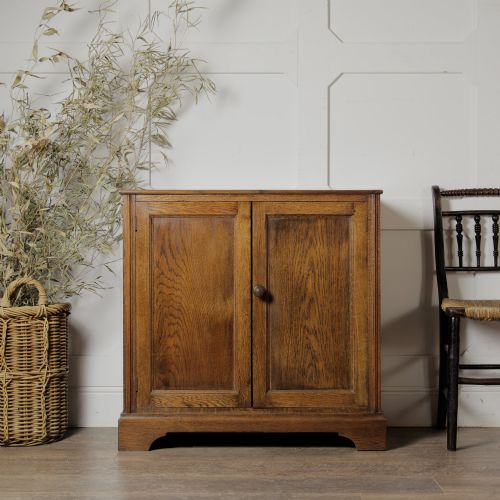
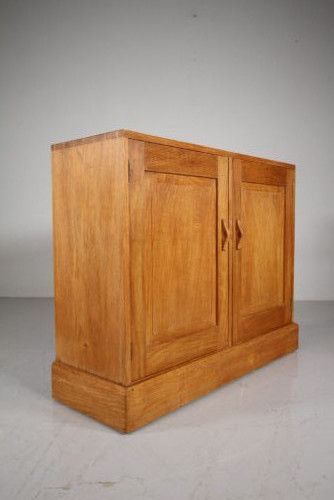
A solid oak side cupboard provides sturdy storage with the distinct grain and density of native hardwood. The selection spans utilitarian side cabinets, bedside lockers, and low cupboards built for everyday domestic use.
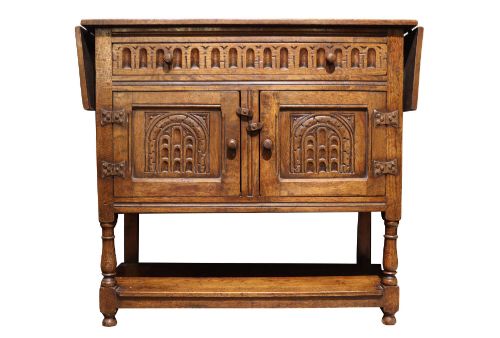
Most examples date from the Victorian era through the 1930s, encompassing revivalist movements and simpler modernist leanings. You will encounter forms ranging from heavy Jacobean revival styles to cleaner Arts and Crafts interpretations.
These items serve as practical repositories for dining rooms, hallways, and living spaces. Their robust timber construction ensures they endure as functional furniture rather than mere decorative objects.
How they were made
Construction relies heavily on solid English oak, chosen for its durability and prominent medullary rays. Workshops utilised traditional joinery methods, allowing the dense timber to move naturally with seasonal humidity changes.
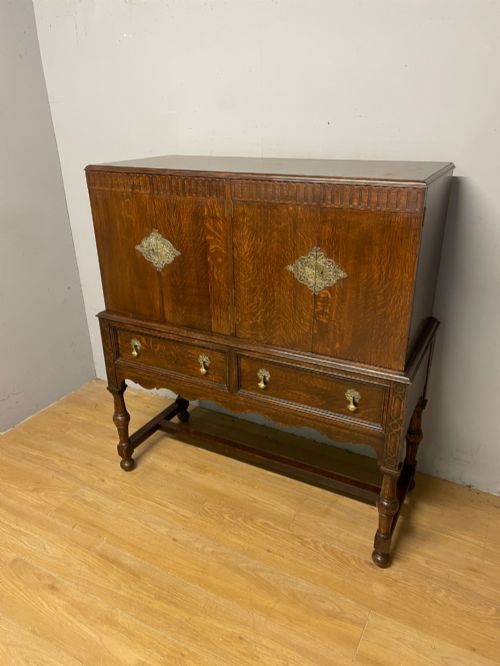
Metal elements such as brass handles, iron hinges, and occasional glass panels provide structural contrast and functional operation. Surface decoration ranges from simple wood inlay to deep geometric carving characteristic of revival periods.
What varies in quality
Quality rests in the selection of the timber and the honesty of the construction. Plain utility pieces rely on clean lines and sound joints, whereas higher-status examples display sophisticated carving, considered proportions, and well-figured grain.
The integration of secondary materials defines the character of individual pieces. Heavy brass hardware and thoughtful use of wood inlay elevate standard storage units into more ambitious examples of cabinet making.
The Solid Oak Side Cupboard Glossary
- Jacobean Revival
- A style popular in the late nineteenth and early twentieth centuries that reinterprets seventeenth-century motifs. It is characterised by heavy proportions, geometric mouldings, and deep panel carving.
- Arts and Crafts
- A design movement prioritising visible construction, simple forms, and honest materials. Pieces in this style reject excessive machine ornamentation in favour of hand-finished integrity.
- Pot Board
- An open lower shelf beneath a dresser or cabinet, traditionally used for storing earthenware and heavy kitchen utensils. This practical feature lifts the main body of the furniture off the floor.
- Wood Inlay
- The technique of fitting contrasting pieces of timber into a recessed surface to form decorative patterns. It adds visual interest to flat door panels and drawer fronts.
Solid Oak Side Cupboard: Frequently Asked Questions
What periods do these cupboards cover?
The available pieces span from the late nineteenth century through the interwar years of the 1930s. This includes Victorian, Edwardian, and early twentieth-century production.
Design influences stretch further back through revival styles, borrowing aesthetic cues from Georgian and Jacobean periods while retaining twentieth-century utility.
Where should I place a side cupboard?
These cabinets suit dining rooms, hallways, and studies where enclosed storage is required. Their solid timber construction handles daily use in high-traffic areas.
Smaller formats function well as bedside units, while low cupboards and side cabinets provide surface space alongside practical interior shelving.
How do I identify Cotswold School work?
Cotswold School pieces originate from early twentieth-century West Country workshops influenced by Arts and Crafts principles. They emphasise unpretentious construction and visible hand-working of the oak.
Such cabinets display restraint in decoration, letting the quality of the solid timber and straightforward joinery speak for itself.
Are these cabinets made of solid wood?
The pieces listed here utilise solid oak construction rather than modern veneered composites. This ensures the material can be maintained and aged with natural dignity.
Regional variations include English oak alongside other durable hardwoods, supplemented by brass and iron hardware for functional longevity.