

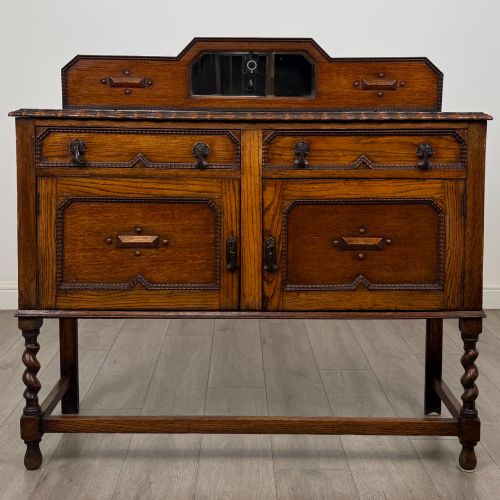

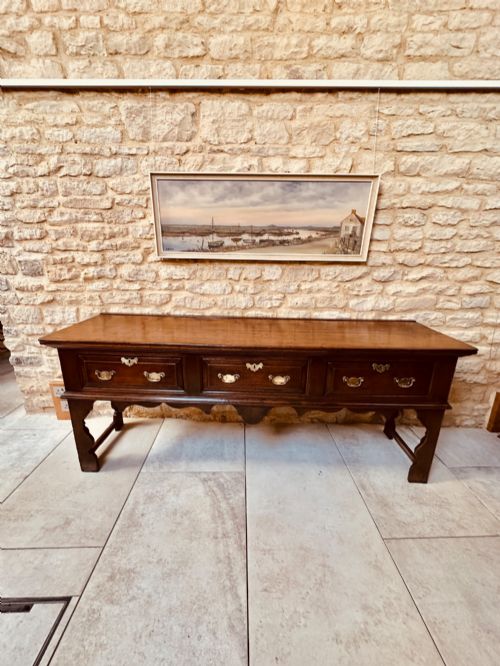


Solid Oak Server
A solid oak server brings honesty and utility to a room, offering robust storage shaped by centuries of British cabinet-making traditions.
Solid Oak Server
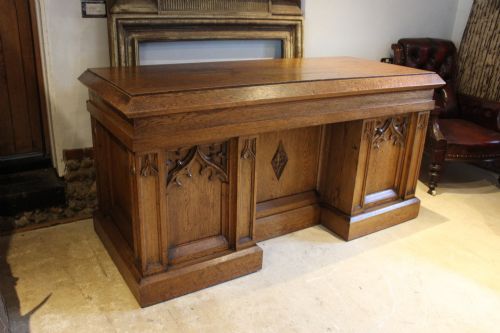
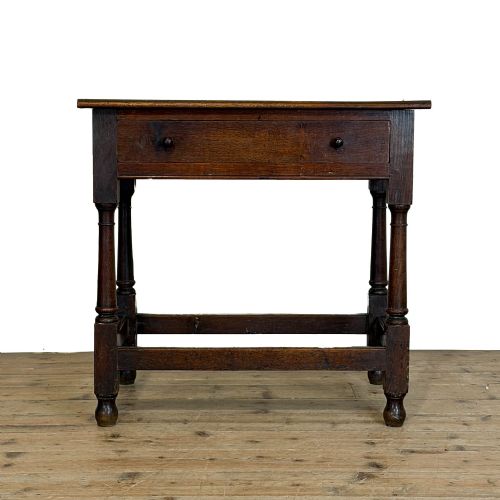
A solid oak server encompasses sturdy sideboards, dresser bases, console tables and serving pieces designed for utilitarian storage and display. When searching for a solid oak server, buyers encounter forms ranging from rustic seventeenth-century dresser bases to refined Edwardian and Arts and Crafts sideboards.
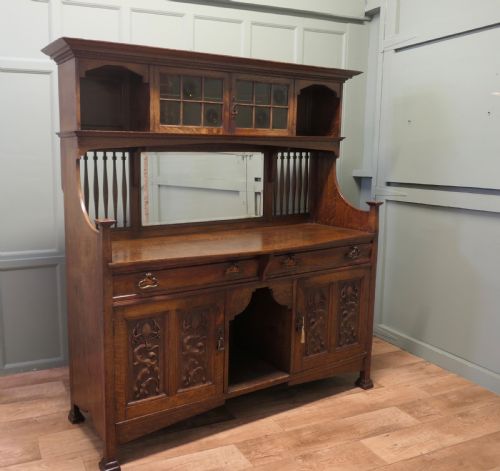
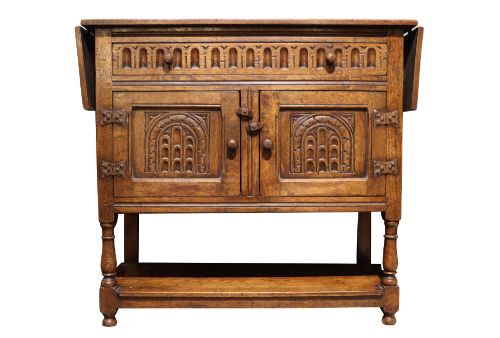
The pieces appearing here draw upon diverse historical revivals and vernacular styles, including Jacobean, Georgian and English Country House aesthetics. A typical meeting point on this page is the early twentieth-century Arts and Crafts sideboard in golden oak or a traditional eighteenth-century dresser base.
Construction and materials
Makers built these pieces primarily from solid oak, sometimes accented with brass, iron or copper hardware such as drop handles and strap hinges. Glass appears in leaded cabinet doors on later Arts and Crafts iterations, while structural framework relies on traditional pegged joints and solid timber boards.
Surface finishes range from waxed patinated surfaces on eighteenth-century oak to cleaner, polished golden tones on twentieth-century Arts and Crafts examples. Carved details, blind silhouette legs and panelled doors reflect the hand-tooling and joinery methods of each respective period.
Solid Oak Server Retail Price Guide 2026
Typical asking prices for solid oak server among the pieces listed under this phrase on Sellingantiques today, from the lower quarter to the upper quarter. They describe what is for sale here now, not the wider market.
Some dining servers share their nomenclature with pastry utensils and fish presentation boxes.
Judging quality in oak furniture
Quality rests upon the integrity of the timber selection, the crispness of any hand-carving, and the retention of original brass or iron hardware. Superior examples display thoughtful proportions, such as small-scale dresser bases or balanced console tables that maintain structural rigidity without excessive restoration.
The distinction between ordinary and exceptional pieces lies in the subtlety of the joinery and the depth of the natural patina accumulated over generations of use. Honest timber movement and minimal timber replacement preserve the historical character that collectors value.
The Solid Oak Server Glossary
- Dresser base
- A low wooden storage unit featuring drawers and sometimes a potboard shelf beneath, traditionally used for food preparation and serving in large country houses.
- Potboard
- An open lower shelf fitted beneath a dresser base or server, historically utilised for storing pots and heavy kitchen utensils.
- Arts and Crafts
- A design movement spanning the late nineteenth and early twentieth centuries that emphasised simplified forms, visible construction methods and honest materials like solid oak.
- Jacobean Revival
- A nineteenth-century stylistic movement copying the heavy, geometric mouldings, panelled doors and dark-finished turned legs of seventeenth-century English furniture.
- Patina
- The surface sheen and colour depth developed by timber over long periods through handling, polishing, and natural ageing.
Solid Oak Server: Frequently Asked Questions
What is a solid oak server?
A solid oak server is a heavy, durable piece of furniture used for storage and serving, encompassing forms like sideboards, dresser bases and console tables.
These pieces provide substantial storage capacity through drawers and cupboards while anchoring dining rooms, hallways or kitchens with traditional craftsmanship.
How do I date an oak server?
Dating relies on examining construction methods, hardware types, timber patination and stylistic cues such as carved panels or leg shapes.
Earlier pieces from the seventeenth and eighteenth centuries often feature pegged joinery and hand-planed boards, whereas Edwardian and Arts and Crafts examples display simpler lines and golden oak finishes.
Where should I place a server?
These servers fit naturally into dining rooms for storing tableware, kitchens as preparation surfaces, or hallways as console tables.
Their robust construction and varied proportions allow them to function as focal points in both traditional country houses and modern interiors.
What distinguishes Arts and Crafts servers?
Arts and Crafts servers emphasise functional utility, unpretentious joinery, and the natural grain of golden oak without heavy historical ornamentation.
They frequently incorporate copper or brass hardware and leaded glass elements that reflect a philosophy of handmade simplicity.