



Solid Oak Office Cabinet
A solid oak office cabinet brings honest British materiality and practical workspace storage into a modern room.
Solid Oak Office Cabinet
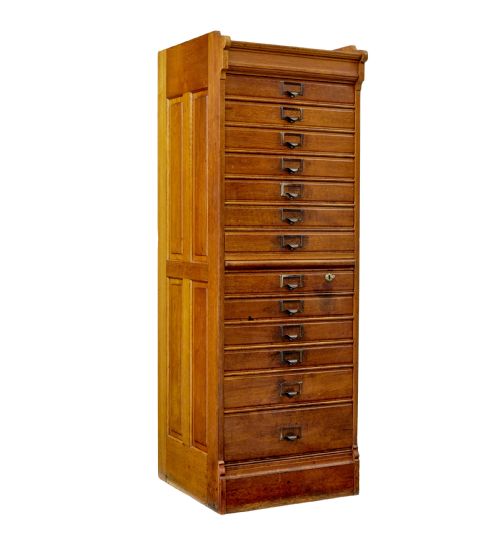
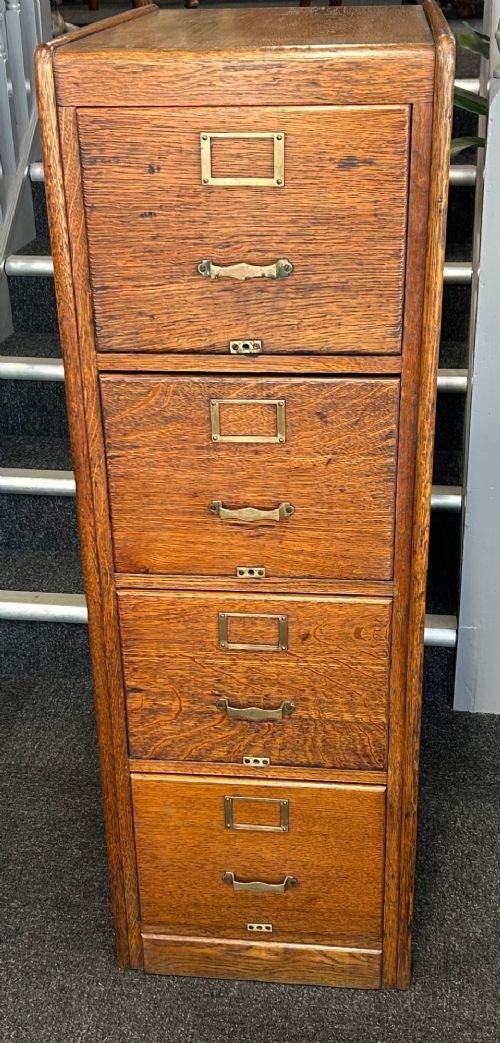
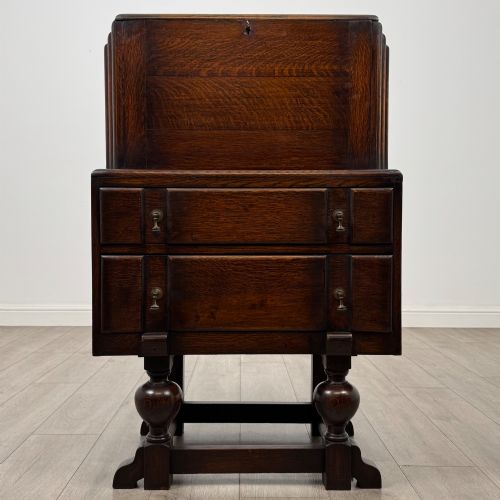
A solid oak office cabinet represents robust commercial and domestic storage from the nineteenth and early twentieth centuries. These pieces encompass filing cabinets, bureau bookcases, roll-top desks, and music cabinets designed for daily workspace utility.
The versions most commonly met on this page date from the Edwardian period and the early twentieth century, alongside nineteenth-century examples. They typically combine heavy timber construction with brass hardware and fitted interior compartments.
Makers and workshops of the era utilised dense oak to build storage furniture intended to endure heavy clerical use. Today, these cabinets serve as functional workspace additions that anchor a room with period character.
How they were made
Cabinet makers constructed these pieces using solid oak, often selected for its durability and prominent grain pattern. Joinery methods of the period ensured that filing drawers and fall-front bureaus could withstand constant opening and closing.
Metal and brass components, including handles, hinges, and locking mechanisms, were fitted to secure internal documents and stationery. Glass panels occasionally appeared in upper bookcase doors to display contents while keeping them dust-free.
Solid Oak Office Cabinet Retail Price Guide 2026
Typical asking prices for solid oak office cabinet among the pieces listed under this phrase on Sellingantiques today, from the lower quarter to the upper quarter. They describe what is for sale here now, not the wider market.
Filing cabinets occasionally retain faint traces of old departmental labels tucked inside deep drawers.
What varies in quality
The distinction between standard utility items and finer examples rests upon the sophistication of the internal fittings and the crispness of the exterior joinery. Bureau bookcases and fitted cupboards with compartmentalised interiors demonstrate greater workshop ambition.
Hardware selection also marks the difference across the range, where heavy cast brass handles and original locking mechanisms indicate higher production standards. The choice of quarter-sawn oak with prominent medullary rays elevates the visual presence of certain pieces.
Shannon
The Solid Oak Office Cabinet Glossary
- Bureau bookcase
- A writing desk with a sloping fall-front combined with shelving enclosed by doors above. This form provides both concealed workspace and display storage.
- Roll-top desk
- A desk featuring a flexible tambour shutter made of narrow slats of wood that slides down to cover the writing surface and pigeonholes. It became a popular office form in the late nineteenth and early twentieth centuries.
- Filing cabinet
- A piece of office furniture fitted with multiple drawers specifically designed for vertical document storage. These units often incorporated internal metal mechanism guides.
- Raised gallery
- A low decorative railing or shelf attached to the top surface of a cabinet or desk. It prevents items placed on top from sliding off.
- Quarter-sawn oak
- Timber cut radially to the growth rings, producing a distinct and decorative flake pattern known as medullary rays. It was favored for high-grade Arts and Crafts and Edwardian furniture.
Solid Oak Office Cabinet: Frequently Asked Questions
How do I date a solid oak office cabinet?
Dating relies on observing stylistic markers such as Arts and Crafts influences, Edwardian proportions, and construction methods. Documentation like stamps or retailer labels also helps establish the era.
Hardware styles and timber preparation further indicate whether a piece originates from the nineteenth century or the early decades of the twentieth century.
Were these cabinets meant for home or office use?
Many of these pieces served in professional offices, legal chambers, and administrative institutions during a period of expanding paper records. Their robust construction was engineered for demanding clerical environments.
Over time, forms like bureau bookcases and music cabinets transitioned into domestic studies and libraries as workspace furniture entered the home.
How should I care for the oak surface?
Maintaining solid oak requires regular dusting with a soft, dry cloth to prevent particulate buildup on the grain. Avoid placing the cabinet near direct heat sources or strong sunlight, which can dry out the timber.
Period wax polish applied sparingly helps nourish the wood and maintain a gentle lustre without sealing the pores permanently.