



Solid Oak Desk Armchair
A solid oak desk armchair provides the sturdy seat and dependable support needed for daily study in a study or library.
Solid Oak Desk Armchair
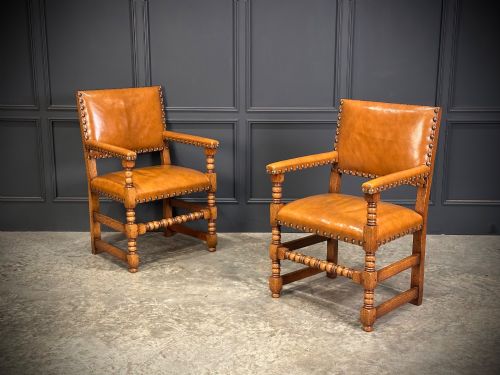
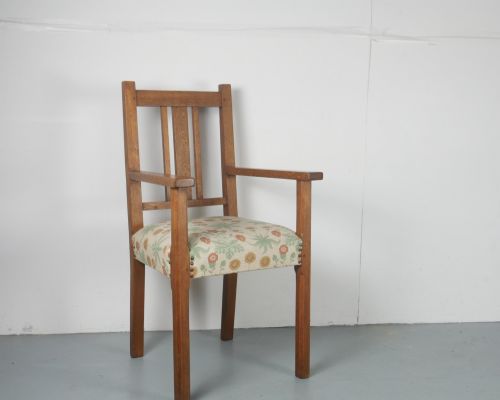
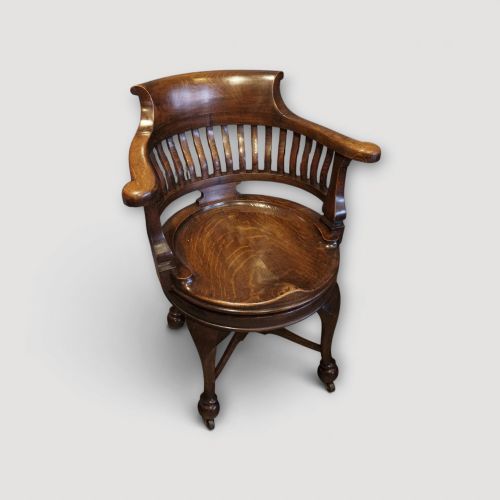
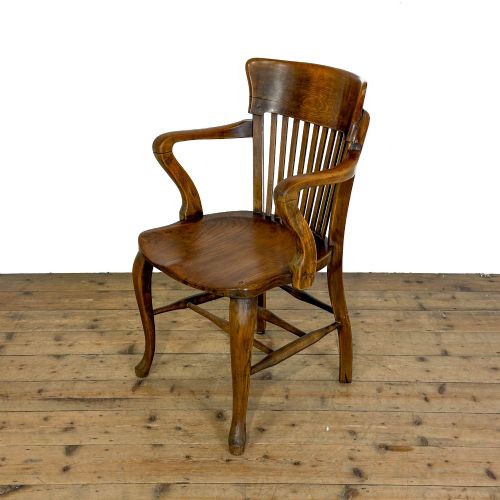
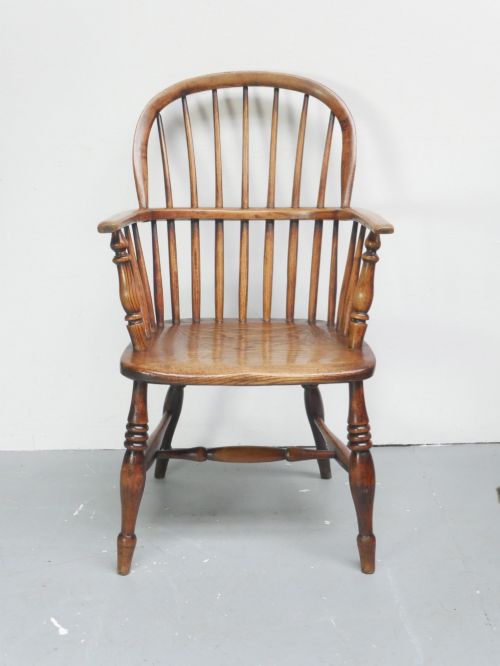
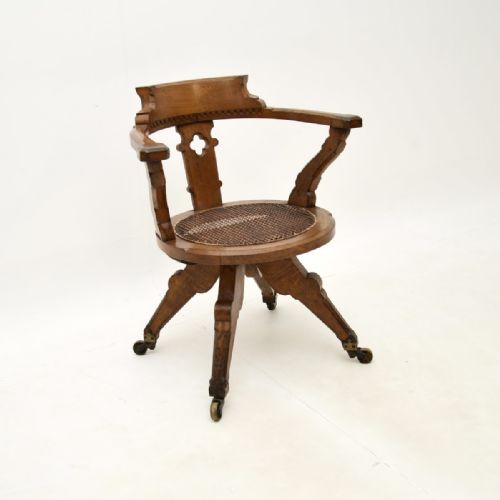
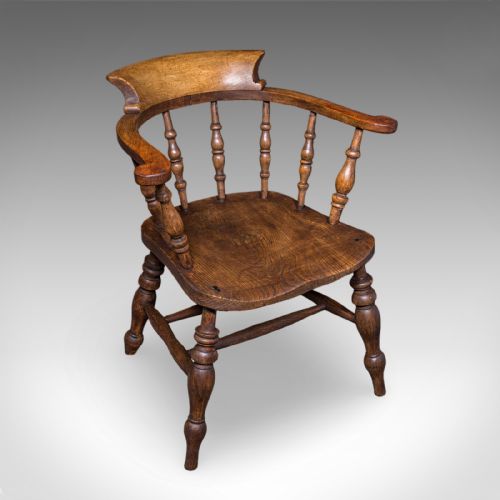
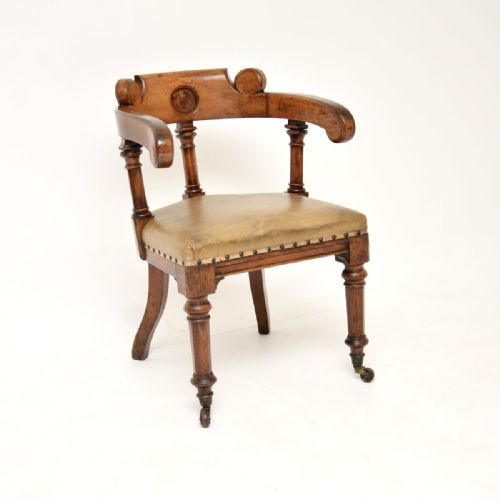
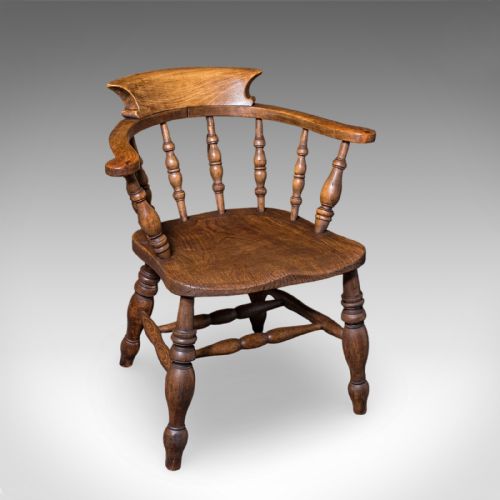
A solid oak desk armchair combines the substantial frame of nineteenth and early twentieth century seating with practical utility for a workspace. Buyers seeking a solid oak desk armchair will find forms ranging from traditional revolving office seats to robust country captain's chairs and high-backed Arts and Crafts designs.
The selection leans heavily toward Edwardian and Victorian pieces, alongside George III and nineteenth-century country examples. Materials extend beyond plain timber to incorporate leather inserts, brass castors, and iron swivel mechanisms on the more mechanical office variants.
Construction and materials
Makers utilised solid oak alongside supporting timbers such as elm, beech, and ash for spindles, arms, and bentwood bows. Structural rigidity relied on traditional joinery, steam-bent components for curved armrests, and robust iron or brass swivel mechanisms fitted to revolving desk chairs.
Surfaces frequently feature leather upholstery or fabric pads inset into the seat, complemented by turned wooden legs and occasional carved detailing typical of the Gothic Revival and Arts and Crafts movements.
Solid Oak Desk Armchair Retail Price Guide 2026
Typical asking prices for solid oak desk armchair among the pieces listed under this phrase on Sellingantiques today, from the lower quarter to the upper quarter. They describe what is for sale here now, not the wider market.
Several armchairs share cataloguing space with an unusual oak magazine rack and folding reading table from the 1920s.
Quality and execution
Superior examples demonstrate careful selection of timber grain, particularly in golden oak and quarter-sawn boards that display distinct medullary rays. The complexity and smoothness of mechanical swivel systems also separate standard utilitarian seating from finer office armchairs.
Hand-carved decorative motifs, substantial steam-bent backrails, and the integrity of pegged joints distinguish workshop-produced pieces from simpler commercial output of the period.
Shapland and Petter
The Solid Oak Desk Armchair Glossary
- Smoker's bow
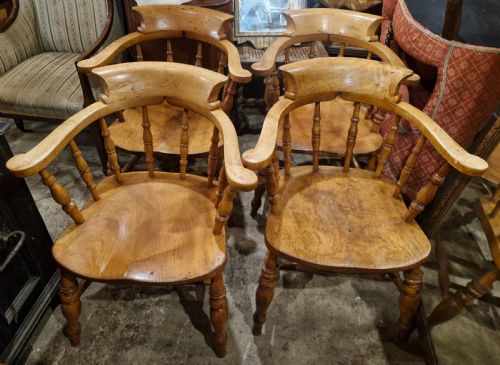
- A low-backed Windsor-style armchair featuring a continuous bentwood armrail supported by turned spindles.
- Captain's chair
- A sturdy wooden armchair with a rounded backrest designed for low desks and office use.
- Swivel chair
- A seat mounted on a central rotating pivot, frequently incorporating iron and brass mechanical adjustment screws.
- Arts and Crafts
- A design movement prioritising visible construction, honest materials, and handcrafted simplicity over mass production.
- Quarter-sawn oak
- Timber cut radially from the log to produce a distinct decorative grain pattern known as silver grain.
Solid Oak Desk Armchair: Frequently Asked Questions
How do I date a solid oak desk armchair?
Dating relies on examining construction methods, hardware, and stylistic indicators such as Gothic Revival or Arts and Crafts motifs. Early examples often feature pegged joinery and hand-turned components.
Later Victorian and Edwardian office models introduce metal swivel screws, cast iron bases, and shaped plywood seats that point to industrial manufacturing shifts.
Are revolving desk chairs sturdy enough for daily use?
Period revolving chairs were built for heavy commercial and domestic office work using thick oak and iron mechanisms. Most retain their structural integrity after a century of use.
Maintenance involves checking the central screw or pivot for wear and ensuring the wooden base remains tightly secured to the column.
What is the difference between a captain's chair and a smoker's bow?
A smoker's bow generally refers to the country elbow chair design with a low continuous armrail and turned spindles. A captain's chair often shares this silhouette but is traditionally associated with office and shipboard desk environments.
Both types utilise solid timber framing, frequently combining an elm seat with ash or oak bentwood components.
How should I care for an antique oak office chair?
Protect the wood by maintaining stable room humidity and applying occasional natural wax to nourish the dry oak surface. Avoid placing the chair near direct heat sources that could split the timber.
Leather seat pads benefit from gentle conditioning to prevent cracking while preserving the original surface patina.