


Solid Gold Albert
Solid gold albert chains are substantial pocket watch chains from the Victorian and Edwardian eras, highly sought after today for modern necklace and bracelet wear.
Solid Gold Albert
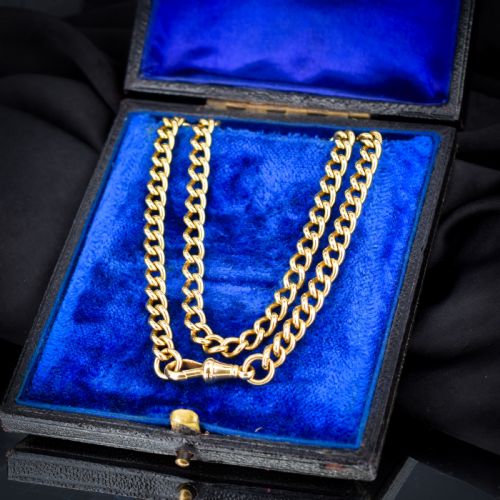
A solid gold albert is a heavy functional chain designed originally to secure a pocket watch to a waistcoat in the nineteenth and early twentieth centuries. These pieces appear frequently as robust necklaces or shortened bracelets, retaining their characteristic swivelling dog clips and bar attachments.
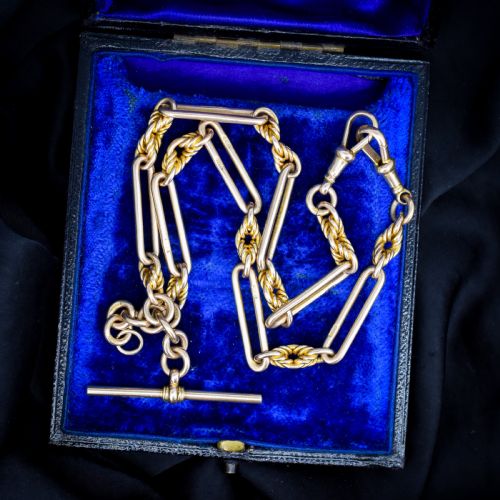
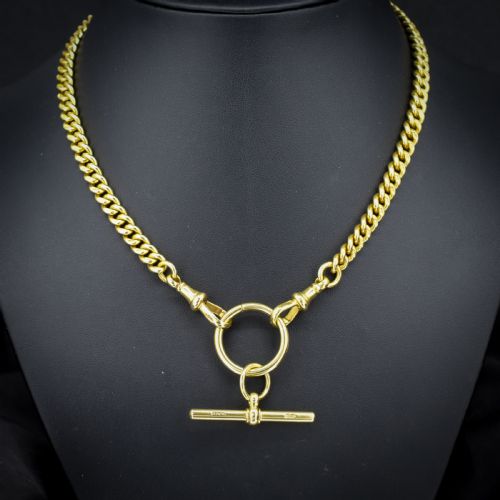
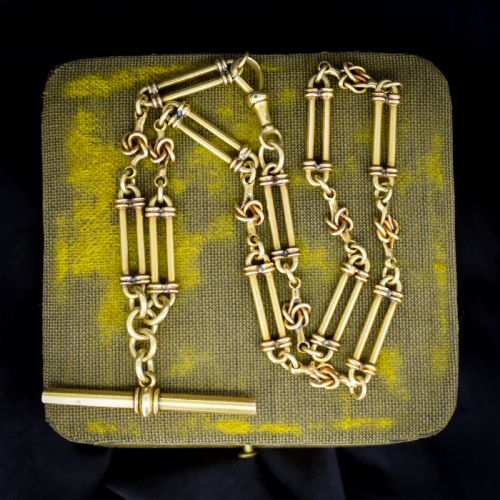
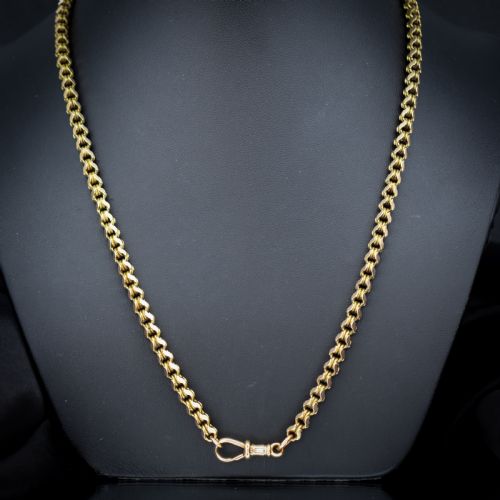
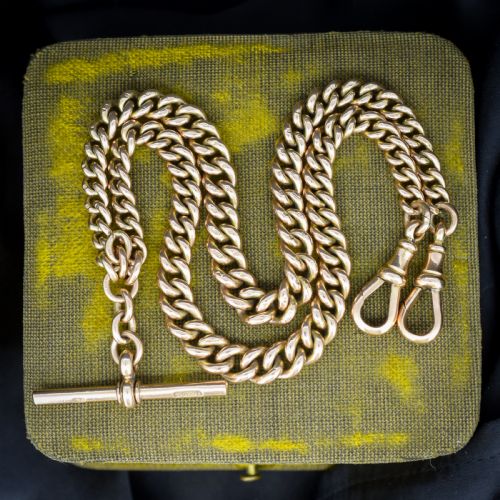
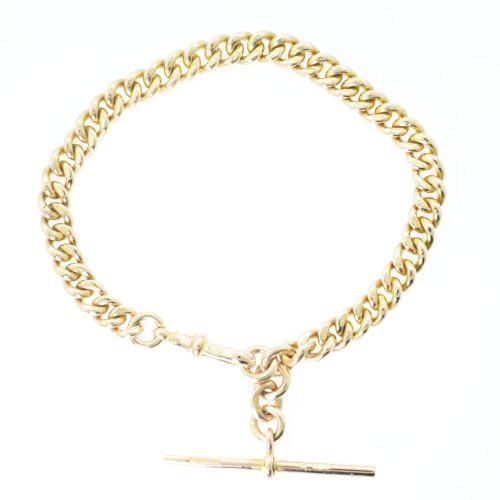
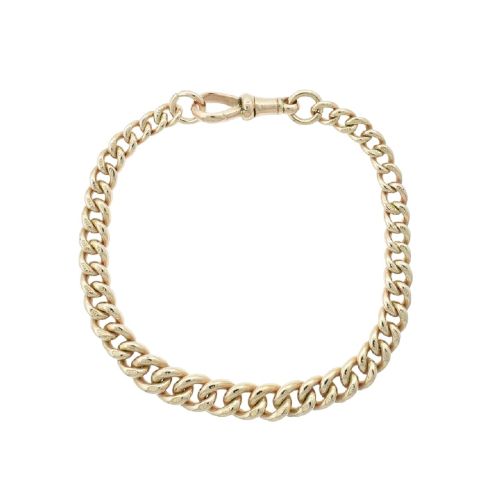
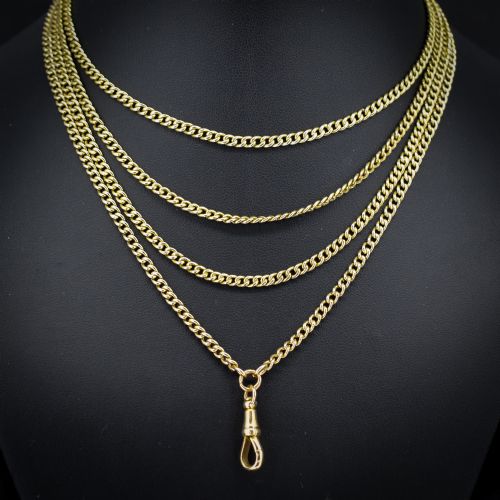
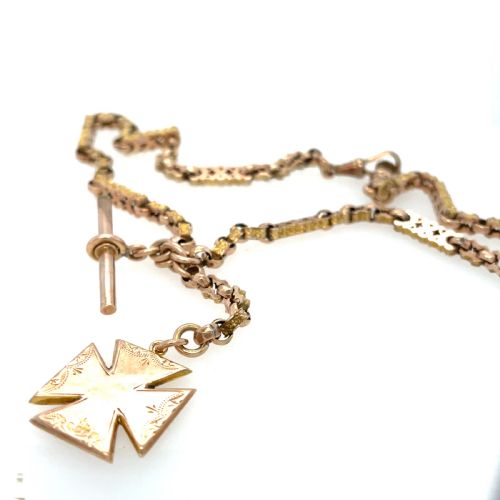
Examples on this page span the Victorian, Edwardian, and Art Deco periods, encompassing both yellow and rose gold hues. The forms range from short pocket watch chains to long guard chains and graduated curb links that sit heavily against the collarbone.
How they were made
Goldsmiths constructed these chains predominantly from nine carat, fifteen carat, and eighteen carat gold, employing various shades including yellow and rose gold. Links were individually formed, shaped, and joined by hand or early mechanical methods, with many pieces featuring hallmarks stamped on every single link.
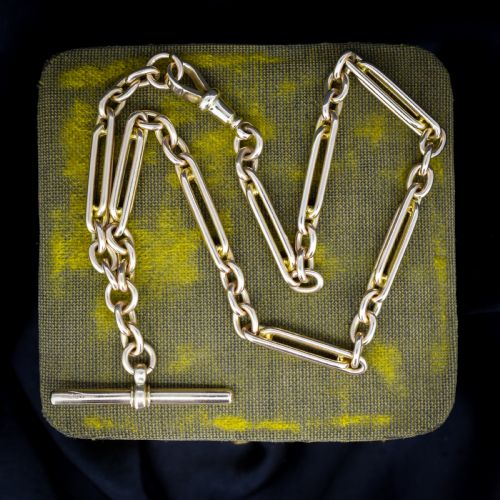
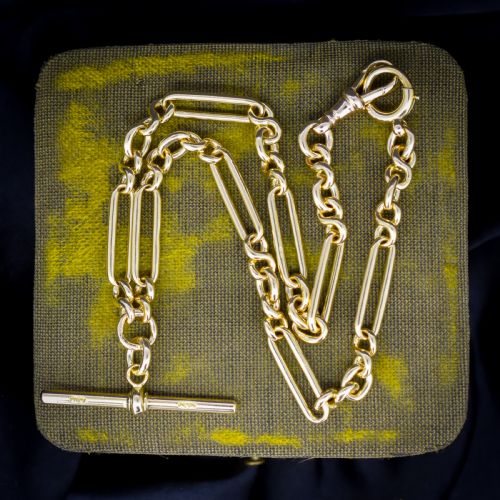
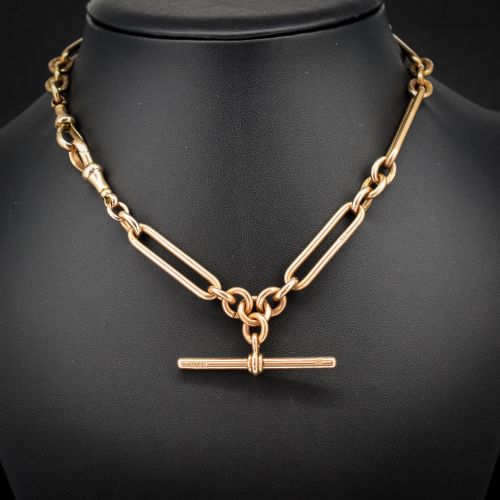
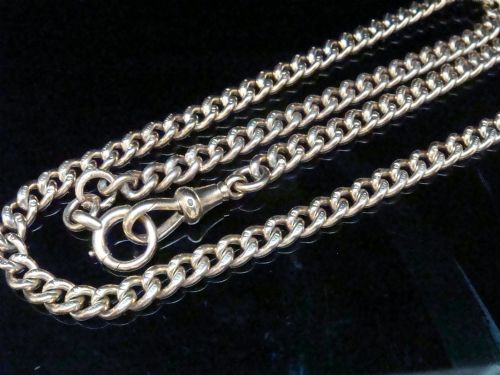
The construction relies on sturdy link formations such as curb, trombone, oval, and fancy patterns, secured by spring-loaded dog clips and T-bars. This meticulous metalwork ensured the chain could withstand the daily weight and movement of a pocket watch.
The inventory records both yellow gold and rose gold variations in curb, trombone, and oval link formations.
What varies in quality
The overall quality of a solid gold albert rests upon the purity of the metal and the substantial weight of the links. Finer pieces demonstrate consistent grading in graduated chains and retain crisp, legible hallmarks stamped across the components.
Superior examples often incorporate complex link variations, such as love knots or figaro patterns, alongside fully functional, original dog clips and T-bars. The integrity of the links and the tautness of the spring clips determine the enduring standard of each piece.
The Solid Gold Albert Glossary
- Dog clip
- A spring-loaded swivel clasp attached to the end of the chain. This mechanism allowed the secure fastening of a pocket watch or decorative fob.
- T-bar
- A short transverse bar attached to the centre or end of the albert chain. It slipped through a waistcoat buttonhole to anchor the watch securely.
- Graduated link
- Links that systematically decrease in size from the centre outwards. This traditional technique balanced the visual weight of the chain across the garment.
- Trombone link
- A distinctive elongated rectangular link interspersed with smaller round or oval links. This pattern adds textural rhythm to the construction of the chain.
Solid Gold Albert: Frequently Asked Questions
How do I wear an albert chain today?
These pieces convert easily into contemporary necklaces or wrap bracelets. The dog clips and T-bars provide versatile fastening options that work well with modern pendants.
For shorter lengths, the chain sits snugly as a choker, whilst longer iterations wrap comfortably around the wrist or neck multiple times.
How can I tell the period of my chain?
Dating relies heavily upon the metal hallmarks stamped into the links or clips. Assay office marks and date letters reveal the exact year of manufacture.
Stylistic markers also help, as heavier rose gold curb links tend to associate with the Victorian era, while lighter yellow gold trombone links often point to the Edwardian period or the 1920s.
Are these chains suitable for daily wear?
Solid gold construction makes these pieces remarkably durable for regular use. The thick links and sturdy dog clips withstand everyday movement without easily bending.
Checking the spring mechanism on the dog clips periodically ensures the security of the chain during routine wear.