




Solid Elm Windsor Chair
A solid elm windsor chair brings tactile warmth and vernacular practicality into a room through its carved seat and turned spindles.
Solid Elm Windsor Chair
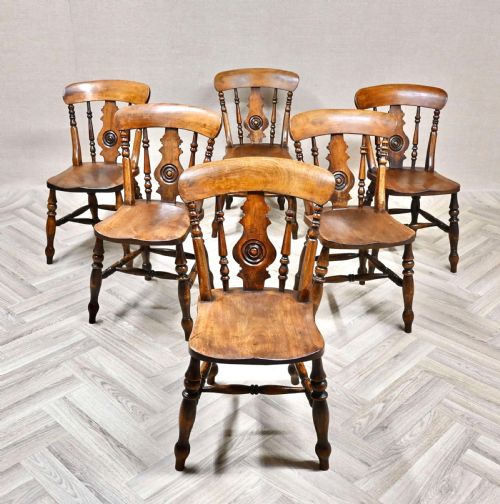
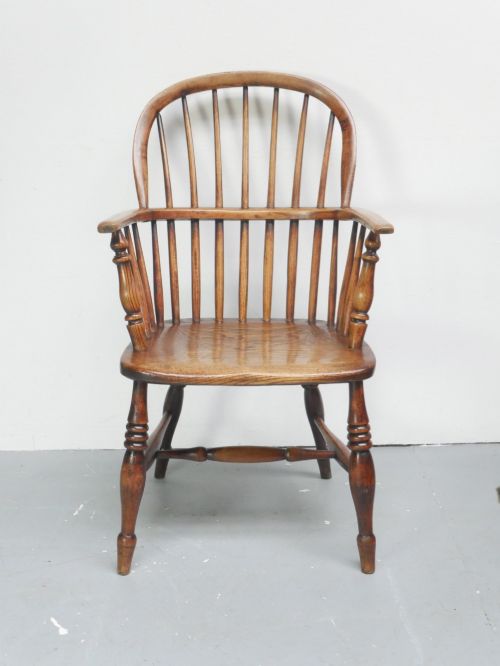
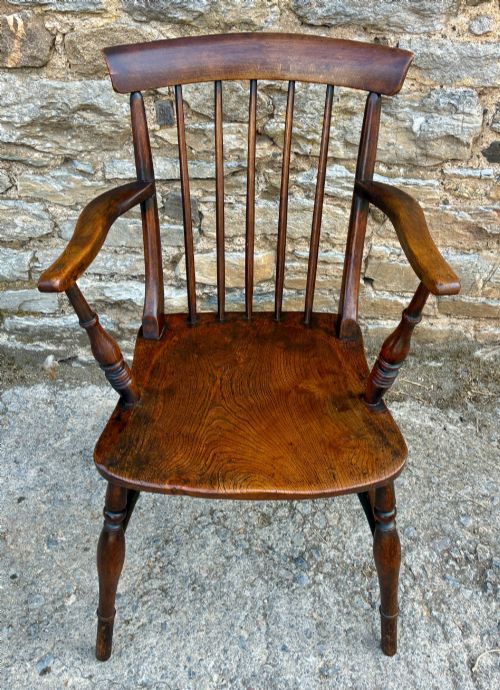
A solid elm windsor chair is a traditional seating form defined by a heavy wooden seat into which the legs and back spindles are wedged directly. When you search for a solid elm windsor chair, you encounter regional variations spanning the eighteenth, nineteenth, and early twentieth centuries, reflecting rural craftsmanship.
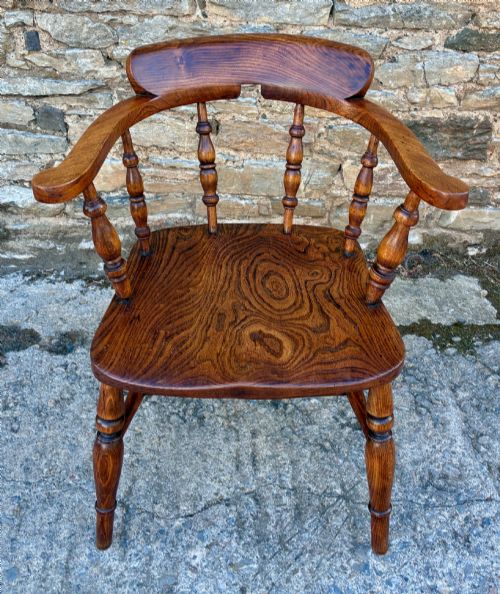
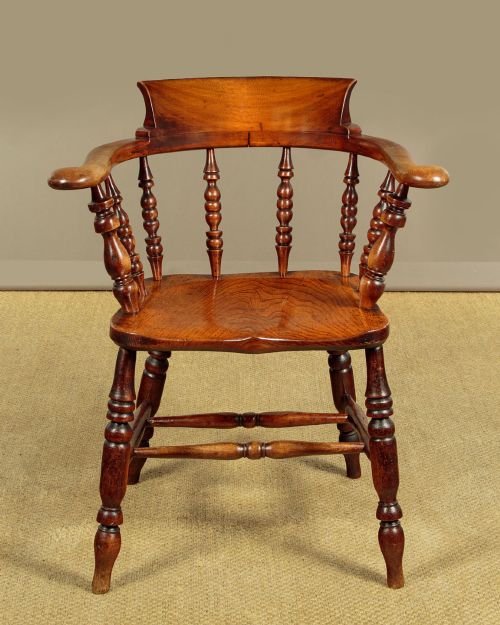
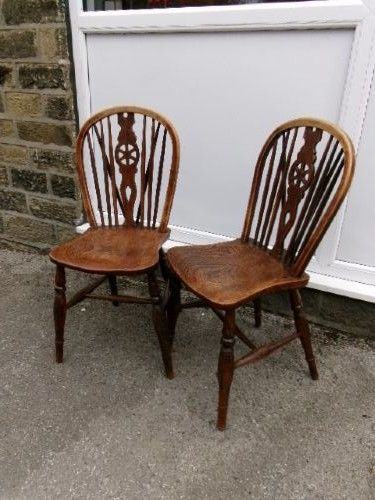
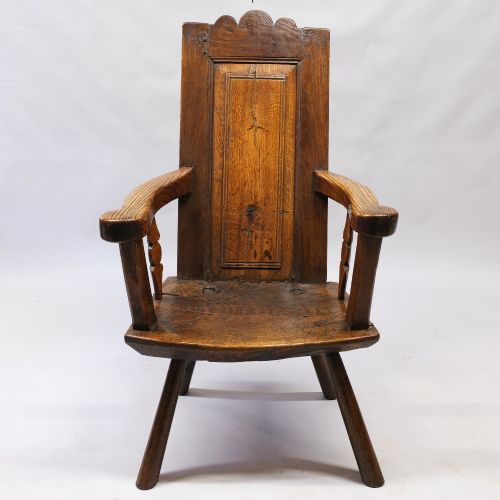
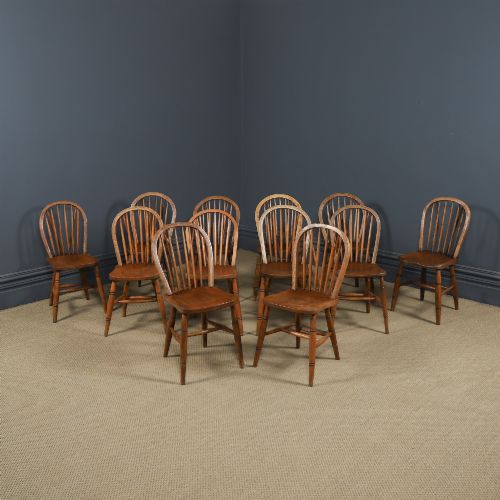
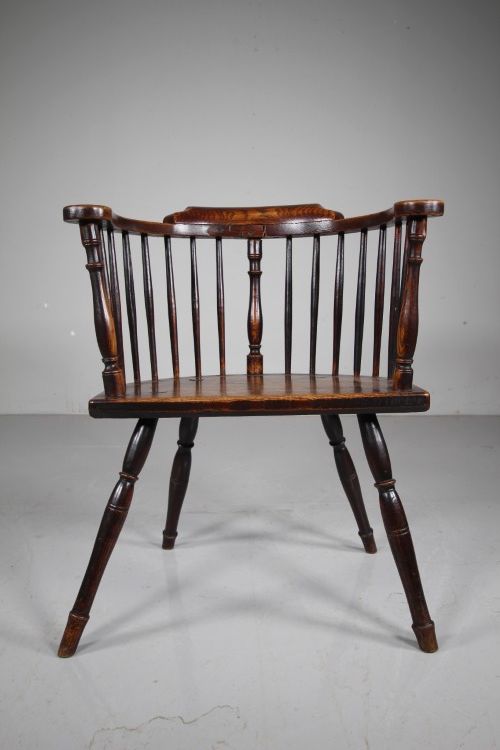
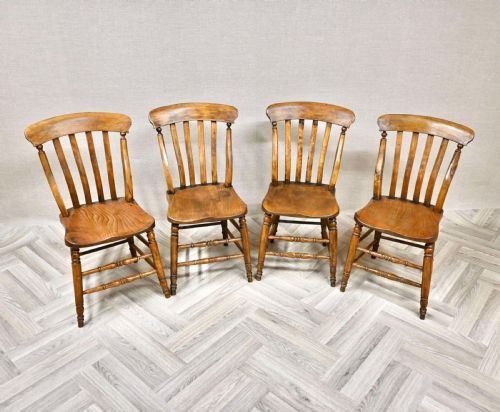
The most common examples on this page are kitchen chairs, armchairs, and smokers bows produced in English and Scottish workshops. These pieces range from simple stick backs and wheelbacks to panel-backed and rocking forms originating across various historic periods.
Materials and construction methods
Makers utilised contrasting timbers for specific structural properties, pairing tough elm for thick, dished seats with ash or beech for flexible spindles, bent bows, and turned legs. Alder and oak also appear in certain regional pieces, adding variety to the grain and colour of the finished chair.
The construction relies on wedged tenon joints where component parts pass completely through the seat slab. Turned structural elements combined with steam-bent wooden hoops provide rigid support without complex upholstery.
Listings span the eighteenth, nineteenth, and early twentieth centuries, incorporating elm, ash, beech, oak, and alder across armchairs, dining chairs, and rockers.
Factors that define quality
Quality rests upon the depth and thickness of the solid elm seat slab and the harmony of the turned undercarriage. Chairs exhibiting well-proportioned armbows, balanced spindle spacing, and retained surface patination sit at the upper end of the range.
Structural integrity depends on original wedges remaining firm within the seat mortises. Pieces retaining their original timber combinations and showing honest wear without heavy alterations demonstrate superior craftsmanship.
Fred Walker
The Solid Elm Windsor Chair Glossary
- Smoker's bow
- A low-backed armchair with a continuous curved armrail, often associated with nineteenth-century country pubs and offices.
- Wheelback
- A chair back featuring a pierced wooden splat carved in the shape of a spoked cartwheel.
- Penny seat
- A saddle-shaped wooden seat base with a characteristic circular depression resembling a large coin.
- Stick back
- A chair back constructed from multiple slender turned spindles rather than a solid central splat.
- Stretcher
- A horizontal rail connecting the legs of a chair to provide rigidity and structural stability.
Solid Elm Windsor Chair: Frequently Asked Questions
How do I care for a solid elm windsor chair?
Keep the wood nourished by applying a traditional beeswax polish occasionally, avoiding direct heat sources and extreme humidity fluctuations that can cause timber to split.
Dust the spindles and carved seat regularly with a soft, dry cloth to preserve the surface patination built up over generations.
Were these chairs used at dining tables?
Many examples on this page served as kitchen or dining chairs, often found in sets around large farmhouse tables for everyday family meals.
Armchairs and smokers bows typically functioned as desk chairs, smoking chairs, or fireside seating rather than standard table chairs.
How do I tell an earlier chair from a later one?
Earlier eighteenth-century pieces often feature panel backs or heavier plank construction with simpler regional turning on the legs. Nineteenth-century examples introduce steam-bent components like wheelbacks and continuous hoop arms.
Examine the construction of the seat underside to observe the tool marks and joint methods characteristic of different periods.
Can I mix different styles around a table?
Country vernacular furniture naturally accommodates mixed seating arrangements, provided the scale and timber tones share a similar rustic character.
Pairs and matched sets offer uniformity, while single armchairs and side chairs introduce varied regional details to a dining space.