





Snooker Life Pool Board
These snooker life pool board pieces are robust wooden scoreboards built to track complex parlour games, offering rich historical character for a traditional games room.
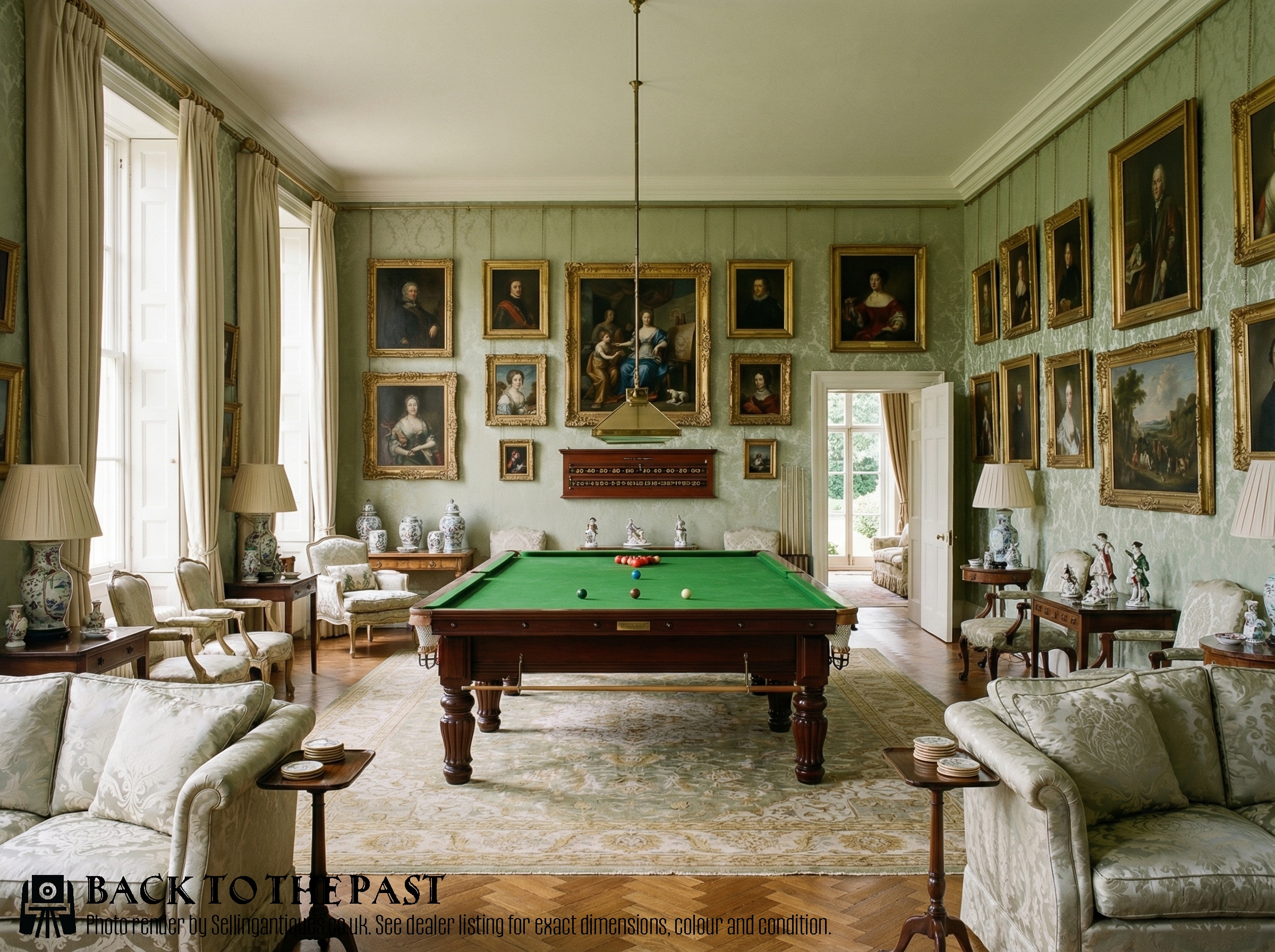
Snooker Life Pool Board
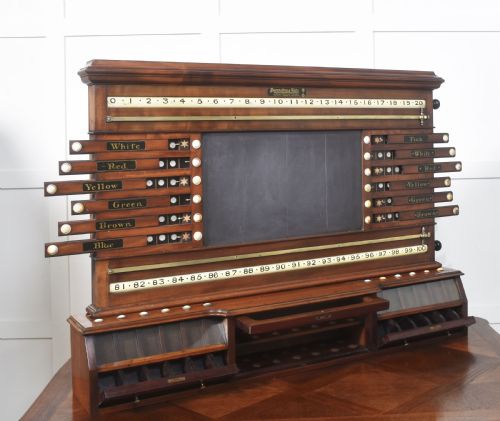
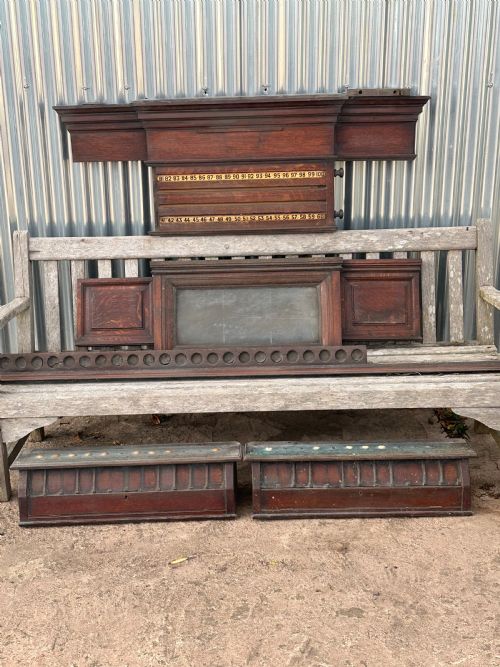
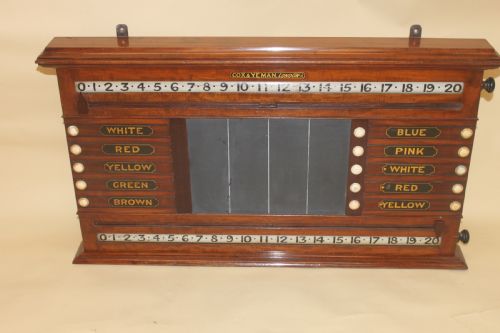
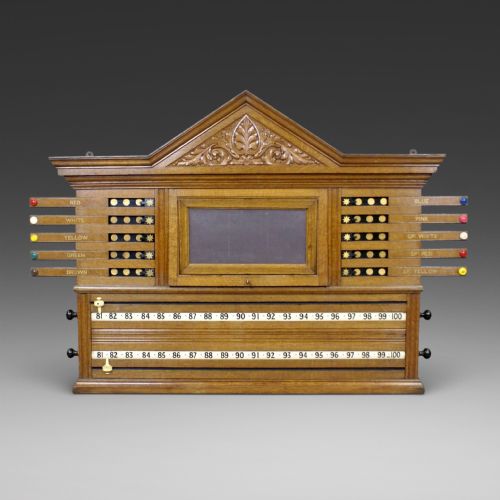
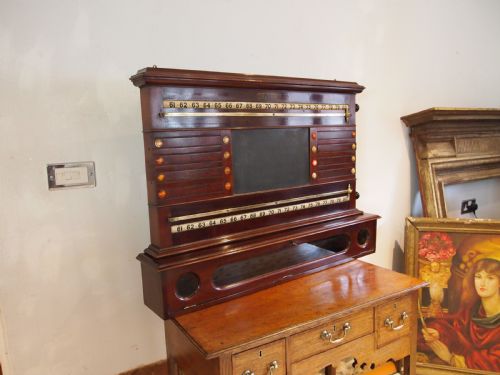
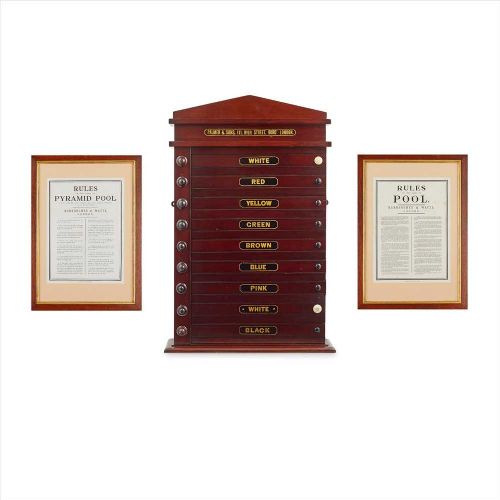
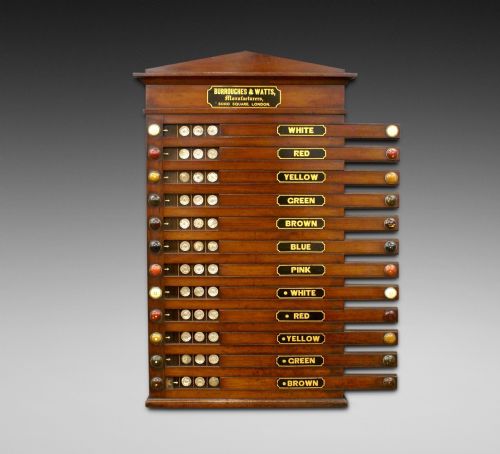
A snooker life pool board is a specialised wall-mounted scoring apparatus designed to manage traditional billiards, snooker, and life pool matches. When you search for a snooker life pool board, you encounter robust wooden scoreboards that feature sliding markers, dials, and sometimes enclosed cabinets.
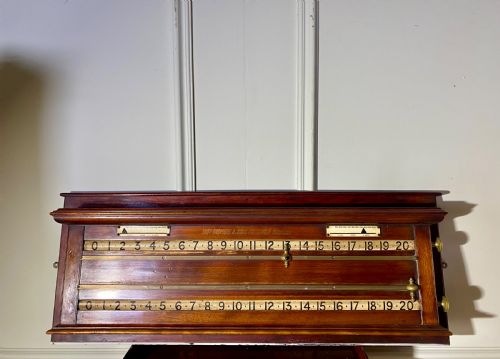
The pieces appearing on this page belong predominantly to the Victorian and Edwardian eras, spanning the nineteenth century and the early twentieth century. These scoreboards range from simple wall-hung mahogany panels to large, decorative English walnut cabinets fitted with glass panels and brass indicators.
Originating as essential accessories for private billiard rooms and gentleman's clubs, these scoreboards reflect the heavy social gaming culture of the nineteenth century. Most examples combine utilitarian scoring tracks with fine cabinet-making, utilising materials suited to domestic and club interiors of the period.
Materials and Construction
Cabinet makers utilised dense hardwoods such as mahogany, oak, and English walnut to construct the primary bodies and backing boards of these scoreboards. These timbers provided the structural stability required to house mechanical scoring dials and sliding wooden markers.
Detailing often incorporated brass for hinges, indicators, and marker rails, alongside bone, celluloid, or ivory for numerical markers and pointers. Slate occasionally appears in associated components, while glass is fitted to the doors of the larger score cabinets.
Listings feature solid mahogany and oak scoreboards alongside glazed English walnut cabinets from the nineteenth and early twentieth centuries.
Factors of Quality
Quality in a snooker life pool board rests upon the selection of timber, the complexity of the scoring mechanism, and the involvement of a notable maker. Superior pieces exhibit finely figured English walnut or quarter-sawn oak, coupled with crisp brass fittings and smooth sliding actions.
Simpler scoreboards rely on basic painted numbers and straightforward wooden pointers, whereas higher-grade examples feature intricate carved decoration, glazed lockable cabinets, and specialised scoring dials for multi-player life pool variations.
Orme and Sons Manchester·Thurston and Co of London·Cox and Yeman London·Burroughes and Watts·Ashcroft Liverpool
The Snooker Life Pool Board Glossary
- Life pool
- A traditional cue sport variant where players hold lives represented by coloured balls, requiring specialised tracks on the scoreboard to track remaining players.
- Scoreboard
- A wall-mounted wooden board fitted with sliding markers, pointers, or rotating dials to record scores during a cue sports match.
- Score cabinet
- A larger wall-hung enclosure featuring doors, often glazed, which houses the scoring mechanism while providing storage for related accessories.
- Sliding pointer
- A small marker attached to a recessed channel or brass rail that moves along a graduated scale to indicate points scored.
Snooker Life Pool Board: Frequently Asked Questions
How do you mount a heavy scoreboard safely?
These scoreboards are heavy wooden items that require secure fixing into solid masonry or direct attachment to wall studs using robust brackets.
Because many examples incorporate dense hardwoods and cast brass elements, professional installation ensures the weight is distributed properly across the backplate.
Can these scoreboards still be used for modern games?
Many scoreboards retain fully functional sliding markers and dials that accommodate standard snooker and billiards scoring without modification.
Some specialised life pool tracks require understanding nineteenth-century rules, but the main numerical scales function perfectly for contemporary play.
How do I identify the period of a board?
Dating relies on timber selection, brass hardware style, and cabinet construction methods typical of the Victorian and Edwardian eras.
Maker signatures, patent stamps, and the complexity of the scoring layout also provide clear indicators of manufacturing decade.
What maintenance do the wooden surfaces need?
Polishing the mahogany, oak, or walnut with a traditional beeswax preserves the finish and prevents the timber from drying out in centrally heated rooms.
Avoid liquid cleaners and keep brass components free from moisture to maintain the original patina of the metal.