
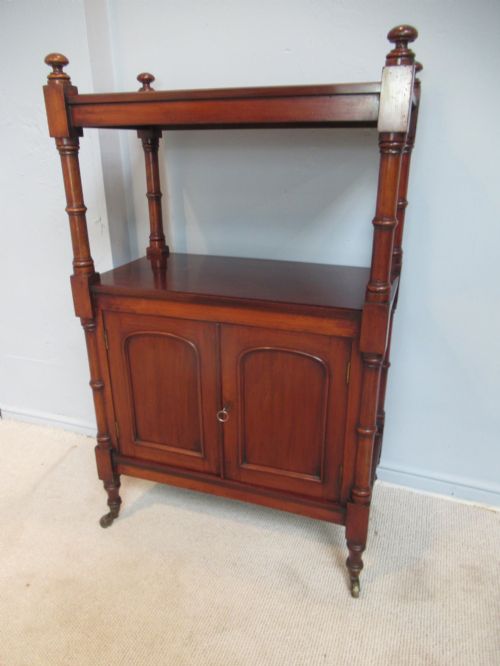

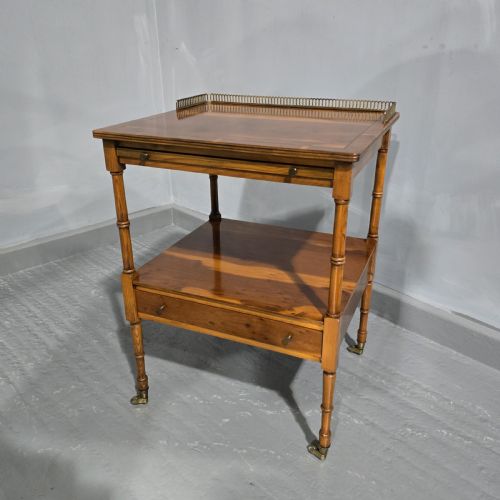
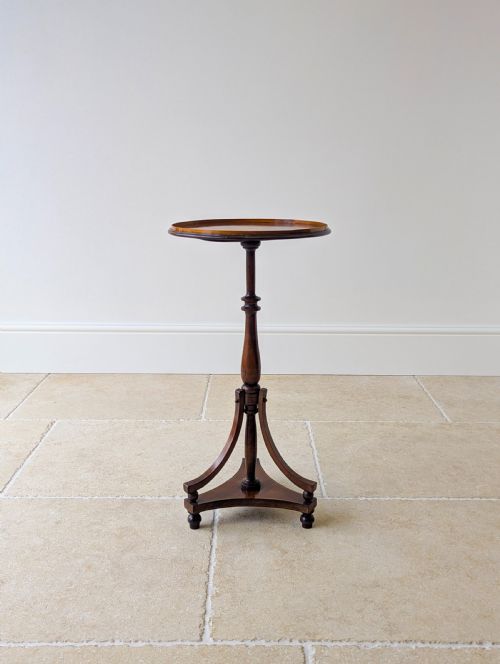


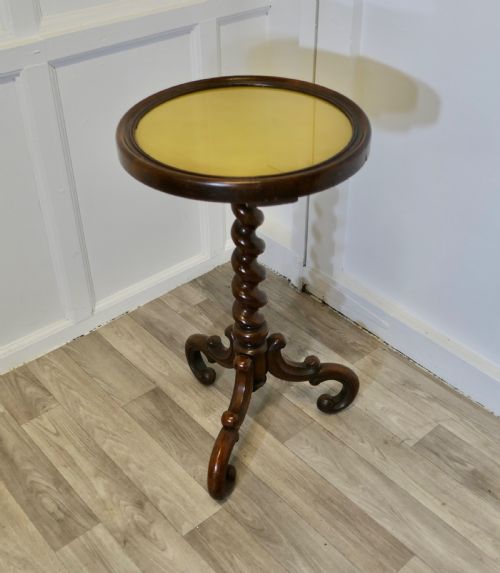


Small Wooden Drink Table
These small wooden drink table examples offer compact surfaces for glassware, bringing period character and practical function to compact spaces.
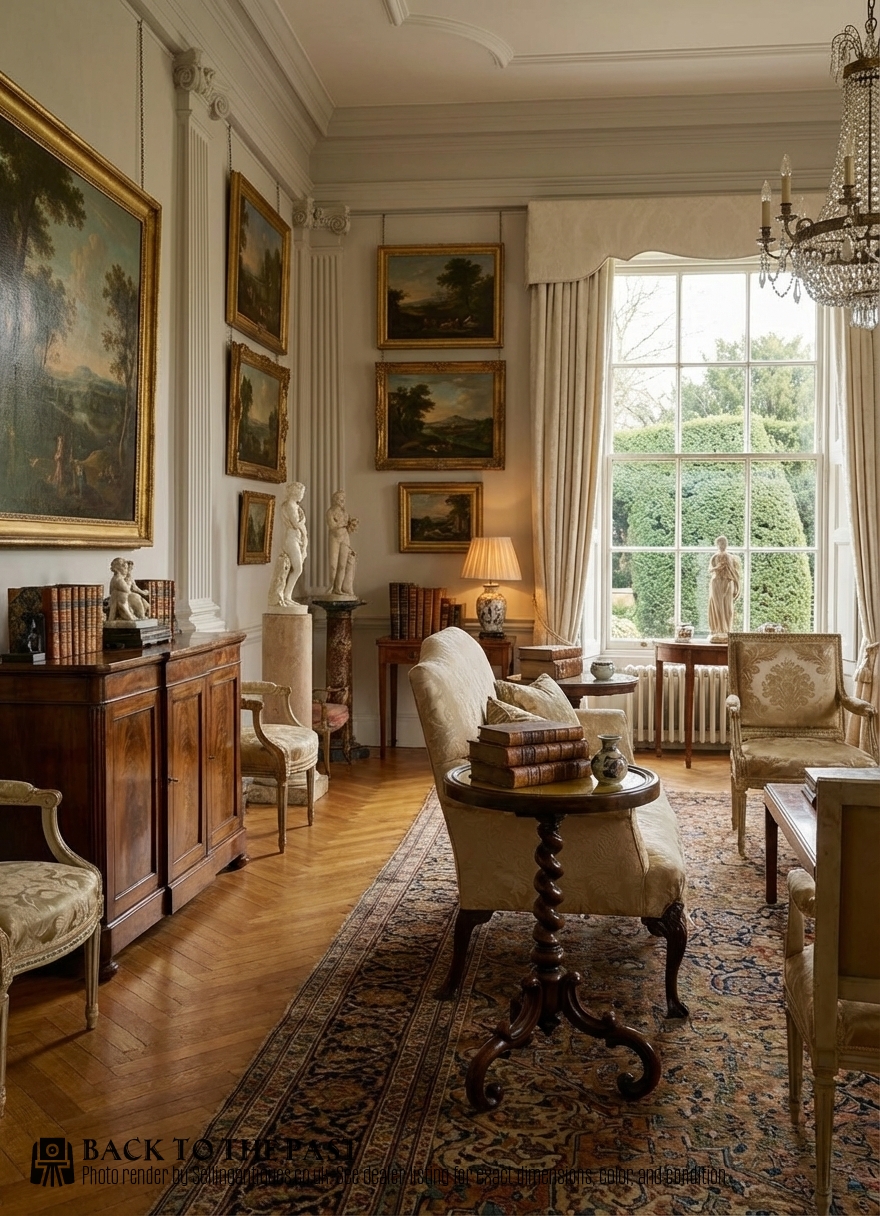
Small Wooden Drink Table
A small wooden drink table serves as a convenient surface for holding beverages and small items beside a chair or sofa. When searching for a small wooden drink table, buyers encounter formats spanning the eighteenth, nineteenth, and twentieth centuries, including wine tables, lamp tables, and occasional tables.
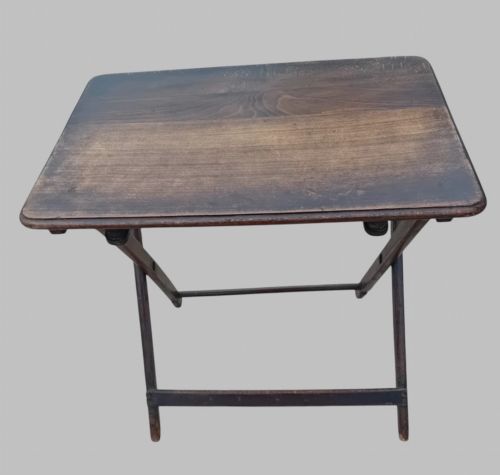
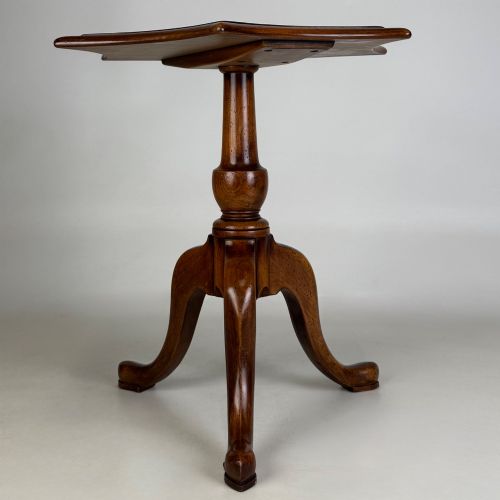
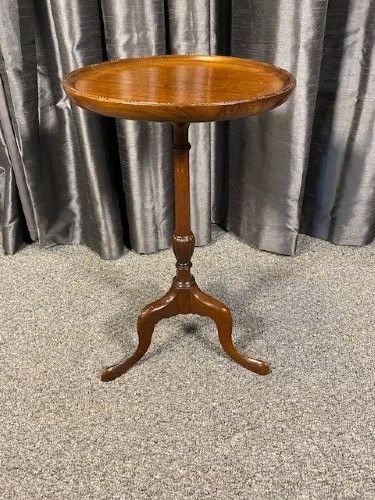
The pieces appearing in these listings originate from periods such as the Georgian, Victorian, and Edwardian eras, alongside later twentieth-century decades. Wine tables with circular tops and tripod bases emerge most frequently, alongside folding campaign styles and occasional tables in oak and mahogany.
Makers and designers from the past adapted these compact forms for domestic and social settings, producing circular tops, six-sided occasional pieces, and folding frames. Their modest footprints allow them to fit easily into modern interiors while retaining traditional construction methods.
Materials and construction
Makers relied on solid timbers and veneers such as mahogany, oak, walnut, beech, birch, and yew wood to build these compact tables. Selected hardwoods provided the structural strength needed for slender pillars, tripod legs, and folding mechanisms.
Joinery techniques included turned pedestals, peg construction, and brass hinges for campaign tables, ensuring stability despite narrow footprints. Inlaid decoration in contrasting woods appeared on Edwardian examples, adding visual detail to the timber surfaces.
Miniature wine tables exist solely to make standard furniture look delightfully oversized by comparison.
Distinctions in quality
Quality rests in the selection of timber grain, the precision of the turning on pedestals, and the stability of the joints. Superior examples exhibit well-balanced tripod bases and tight joints that withstand regular daily use without wobble.
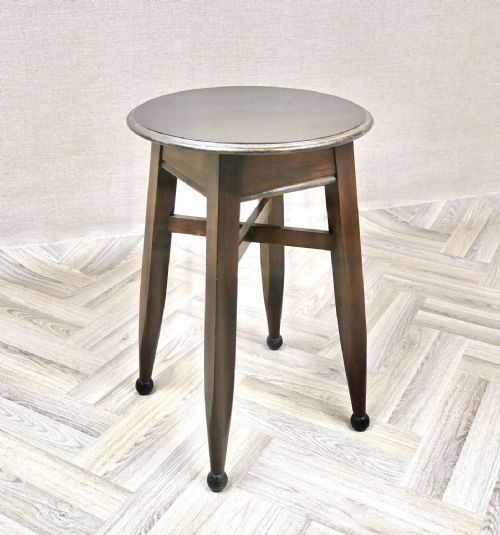
Refined surface finishes and restrained inlay distinguish finer workshop output from simpler utilitarian pieces produced for pubs or modest parlours. The integrity of the original timber and the absence of clumsy repairs determine the standing of each piece.
The Small Wooden Drink Table Glossary
- Tripod base
- A three-legged support structure commonly found beneath the central pillar of wine tables. This arrangement ensures stability on uneven floors.
- Wine table
- A small freestanding table with a single central pillar and a small circular top, originally designed to hold glasses and bottles during social gatherings.
- Campaign style
- Portable furniture designed for military officers on the move, typically featuring folding frames and brass hardware. These pieces disassemble or fold flat for transport.
- Occasional table
- A general term for a small table intended to be moved around a room as needed for specific tasks. They appear in various geometric top shapes.
- Inlay
- A decorative technique where contrasting pieces of wood or shell are inserted into recessed cavities on the surface. This method creates geometric or floral patterns.
Small Wooden Drink Table: Frequently Asked Questions
Where should I place a small wooden drink table?
These pieces fit comfortably beside armchairs, sofas, or in narrow corners where a full-sized table would crowd the floor. Their modest surface area holds a glass, a book, or a lamp without dominating the room.
Because they occupy minimal space, they can move between rooms as functional accents. Their traditional timber finishes blend easily with both period and modern seating arrangements.
How do I identify a Georgian wine table?
Georgian examples from the eighteenth century typically feature hand-turned mahogany pedestals, tripod legs terminating in pad or spade feet, and pegged joinery. The timber shows deep patination developed over centuries of use.
Proportions remain elegant and restrained, lacking the heavier machine-carved details common in later revivals. Tops are frequently solid mahogany secured to the pillar with a birdcage mechanism allowing rotation.
How do I care for antique wood surfaces?
Maintain timber surfaces by dusting with a dry cloth and applying natural beeswax periodically to nourish the grain. Avoid placing tables near direct heat sources or strong sunlight to prevent the wood from drying out.
Use coasters under wet glasses to protect polished finishes from water marks. Gentle care preserves the historical patination built up over generations.