

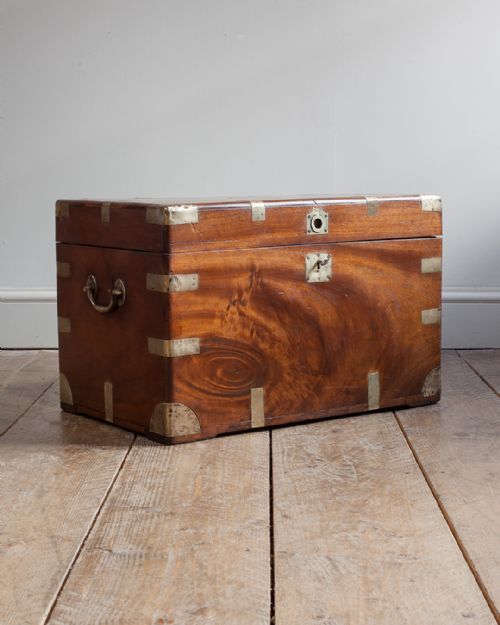
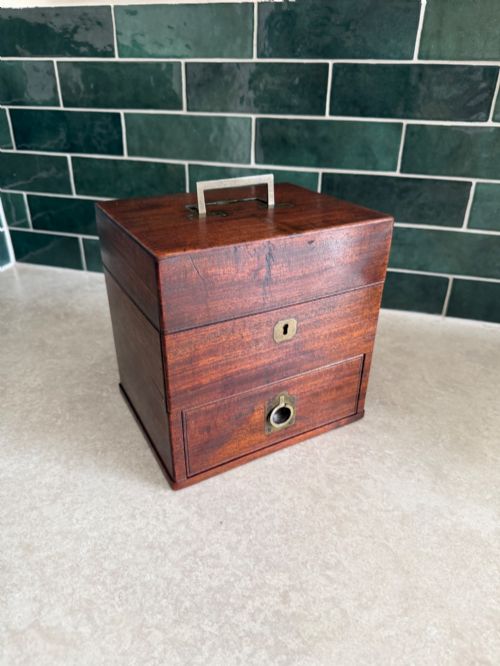
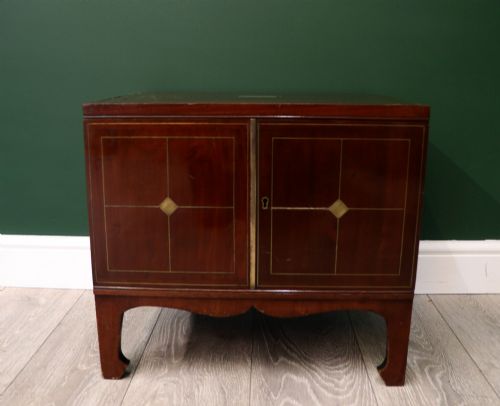


Small Wooden Campaign Chest
A small wooden campaign chest is a portable, durable piece built for travel, offering compact storage with fitted brass corners and recessed handles.
Small Wooden Campaign Chest
When you search for a small wooden campaign chest, you are looking at practical travelling furniture designed for officers and officials on the move during the nineteenth century. These pieces include compact trunks, miniature chests of drawers, apothecary boxes, and collectors' cabinets built to withstand frequent relocation.
On this page, the most common versions you will meet are nineteenth-century camphor wood and mahogany trunks alongside Victorian specimen cases and miniature campaign chests. They arrive in various timbers like teak, oak, pitch pine, and walnut, often featuring brass inlays and robust carrying handles.
How they were made
Cabinet makers built these pieces using dense tropical hardwoods such as camphor wood, mahogany, and teak to resist humidity and heavy handling during travel. These timbers provided the structural integrity needed for portable furniture that faced harsh colonial conditions.
Metal reinforcement defined the construction, utilising brass corners, strapwork, and flush-fitting recessed handles to prevent snagging and damage in transit. Drawers and compartments often featured tight joinery and bone details to secure contents safely.
Small Wooden Campaign Chest Retail Price Guide 2026
Typical asking prices for small wooden campaign chest among the pieces listed under this phrase on Sellingantiques today, from the lower quarter to the upper quarter. They describe what is for sale here now, not the wider market.
Camphor wood chests retain a distinct, lingering scent that kept nineteenth-century insects at bay during long voyages across the empire.
What varies in quality
The sophistication of the brass hardware and the precision of its flush fitting separate standard utility boxes from finer examples. Superior pieces display meticulous inlay work and clean joinery that remains tight despite decades of shifting climates.
The choice and figuring of the timber dictate the visual hierarchy, with well-selected camphor wood, mahogany, or figured walnut elevating a simple trunk into a refined cabinet. Original surfaces and intact recessed fittings carry significantly more integrity than later replacements.
The Small Wooden Campaign Chest Glossary
- Camphor wood
- An aromatic hardwood frequently utilised for nineteenth-century military chests. Its natural scent helped deter insects during tropical travel.
- Recessed handle
- A pull handle set flush into the surface of a drawer or trunk side. This design prevented the hardware from catching during transit.
- Specimen case
- A small cabinet fitted with shallow drawers for holding natural history collections. These pieces often feature glass tops or snug internal divisions.
Small Wooden Campaign Chest: Frequently Asked Questions
What is a small wooden campaign chest?
A small wooden campaign chest is a portable trunk or cabinet built for travel during the nineteenth century. These pieces feature durable timbers and brass hardware designed to protect belongings on the move.
Officers and officials utilised them for personal storage and administrative work across colonies and military campaigns. Their compact proportions made them ideal for tents and cabins.
Where were campaign chests used?
Campaign chests were used primarily by British military officers and colonial administrators on foreign service. They travelled extensively across India and other territories.
Their robust construction allowed them to endure rough journeys by ship, cart, and pack animal. Today, they function well as compact storage in domestic settings.
How do I care for camphor wood furniture?
Camphor wood furniture requires minimal maintenance beyond regular dusting with a soft, dry cloth. Avoid placing these pieces in direct sunlight or near heat sources to prevent the timber from drying out.
The natural oils within the wood help preserve its condition and characteristic aroma over time. Keeping indoor humidity stable protects both the timber and the brass hardware.