




Small Walnut Hall Table
These small walnut hall table pieces bring compact warmth and practical surface space to narrow spaces.
Small Walnut Hall Table
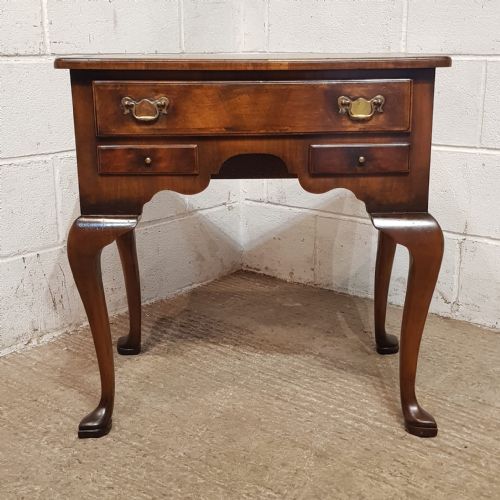
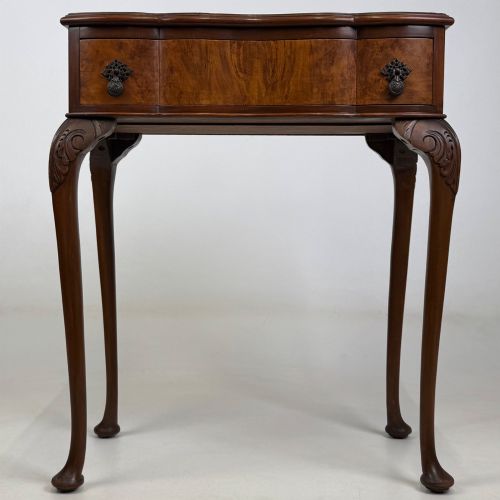
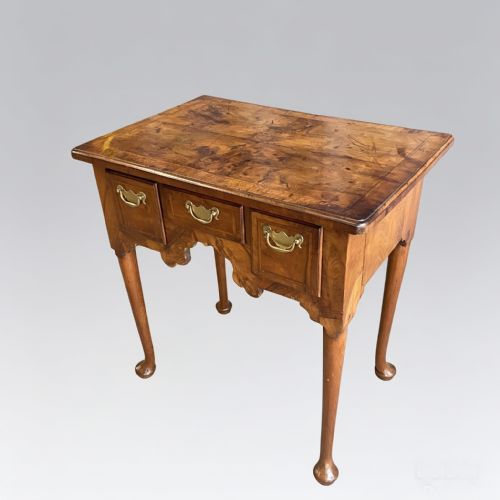
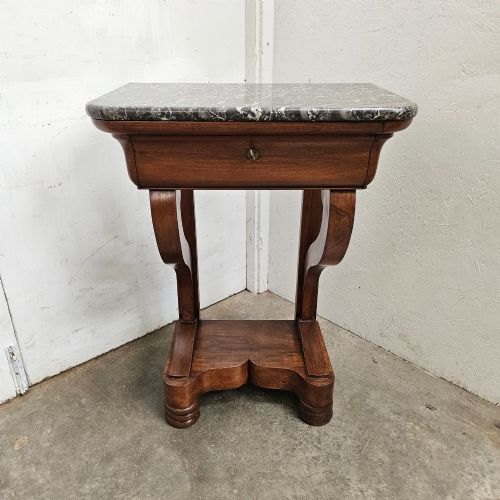
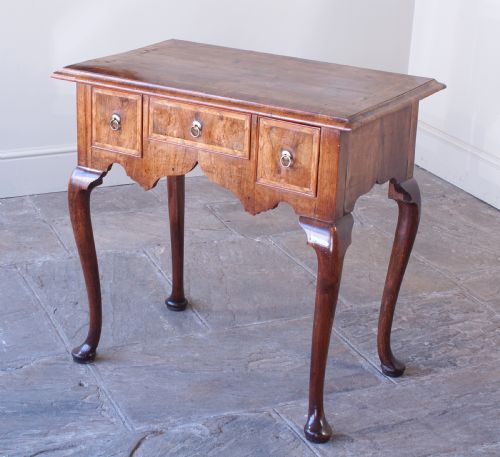
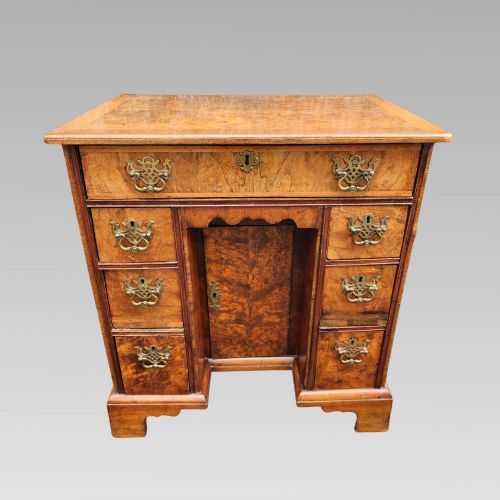
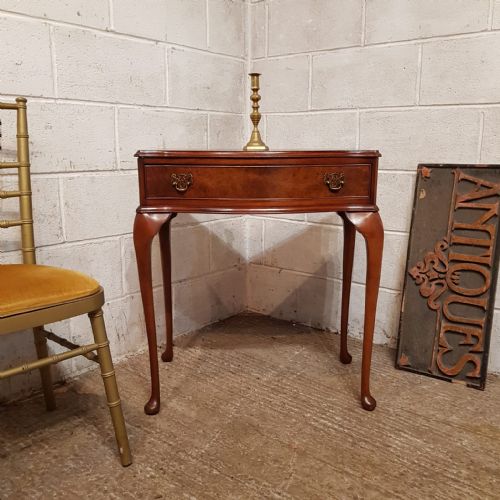
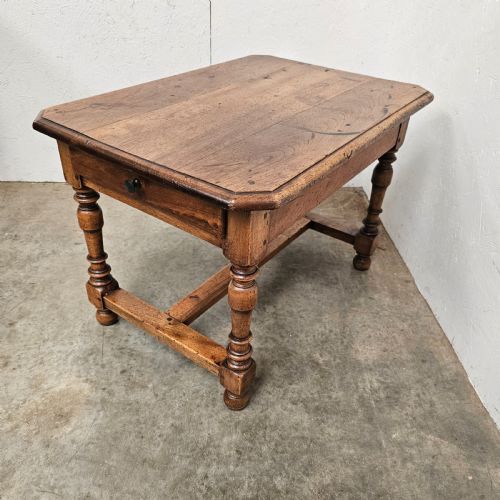
When searching for a small walnut hall table, buyers encounter a variety of compact forms designed for corridors and entrance spaces. These pieces primarily span side tables, lowboys, and console tables from the eighteenth, nineteenth, and early twentieth centuries.
The lowboy is particularly common among these listings, alongside Victorian and Edwardian side tables and console tables. Origin styles range from Georgian and Queen Anne to French influences and the Arts and Crafts movement.
These items serve as functional hallway furniture, offering shallow depths and rich wood tones suited to period and traditional interiors. The selection covers diverse historical revivals alongside genuine earlier examples.
Materials and construction methods
Cabinet makers utilised solid walnut and burr walnut veneer over secondary timbers to achieve rich, figured surfaces. Brass hardware appears on drawer fittings, while certain continental console variants incorporate inset marble tops.
Veneers were carefully selected to create decorative grain patterns, particularly on drawer fronts and table tops. Secondary woods such as mahogany and satin walnut also appear within the framework of these tables.
Listings feature walnut pieces spanning from the eighteenth century through the 1930s, incorporating marble, brass, and burr walnut veneer.
Distinctions in quality
Quality rests heavily on the choice of timber and the complexity of the grain arrangement, with figured burr walnut commanding particular attention. The crispness of carved details, such as cabriole legs or brass mounts, separates standard production from superior workshops.
Originality of the timber surfaces and hardware significantly influences the standing of a piece. Finer examples retain their original polish and patination, showing natural ageing rather than heavy modern restoration.
The Small Walnut Hall Table Glossary
- Lowboy
- A small table with drawers, typically raised on four legs, functioning historically as a dressing or side table. They often feature multiple small drawers beneath a finished top.
- Burr walnut
- A specialised wood cut from the burl growth of a walnut tree, yielding swirling and highly decorative grain patterns. It is frequently applied as a veneer on prominent surfaces.
- Console table
- A table designed to be fixed against a wall, sometimes supported by front legs and secured at the back. These often feature decorative marble tops or pier mirrors.
- Cabriole leg
- A furniture leg that curves outward and then tapers inward, mimicking an animal's leg in motion. This form is common in Queen Anne and Georgian pieces.
- Serpentine front
- A furniture front characterised by a wavy shape, curving outward in the centre and inward at the sides. This technique demands precise woodworking skill.
Small Walnut Hall Table: Frequently Asked Questions
Where should I place a small walnut hall table?
These tables fit well in narrow entryways, corridors, or landings where floor space is limited. Their shallow profiles allow them to sit flush against walls without obstructing passage.
They provide a convenient surface for incoming post, keys, or a small lamp while adding historical character to transitional areas of the home.
How do I identify an eighteenth-century lowboy?
Eighteenth-century lowboys typically display traditional joinery methods, hand-cut dovetails within the drawer construction, and period-appropriate timber patination. The proportions tend to be modest and functional.
Details such as pad feet, cabriole legs, and original brass pull handles further point toward Georgian or Queen Anne origins.
What is the difference between a side table and a console table?
Side tables are freestanding pieces designed to stand against any wall, featuring four fully supporting legs. Console tables traditionally rely partly on the wall for structural stability or pair with wall-mounted pier mirrors.
In modern usage, both terms often overlap for small hallway surfaces, though console tables more frequently feature marble tops or decorative wall fixings.
How do I care for antique walnut furniture?
Maintain walnut surfaces by dusting regularly with a soft, dry cloth and avoiding placement near direct heat sources or strong sunlight. Excessive warmth can cause timber and veneer to dry out or split.
Apply specialist beeswax sparingly to nourish the wood and preserve the natural sheen without building up heavy chemical layers.