



Small Vanity Table
A small vanity table provides a neat surface for morning routines, drawing together periods from the eighteenth century to the Edwardian era in mahogany, walnut, and satinwood.
Small Vanity Table
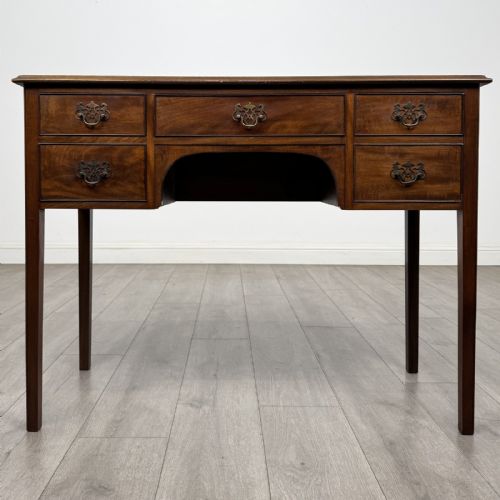
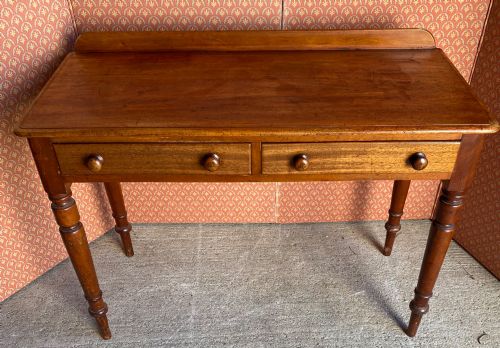
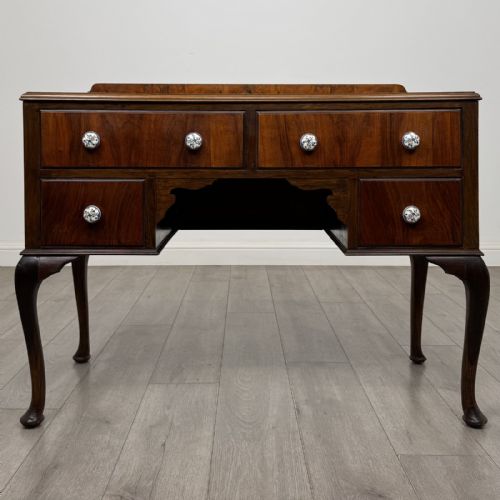
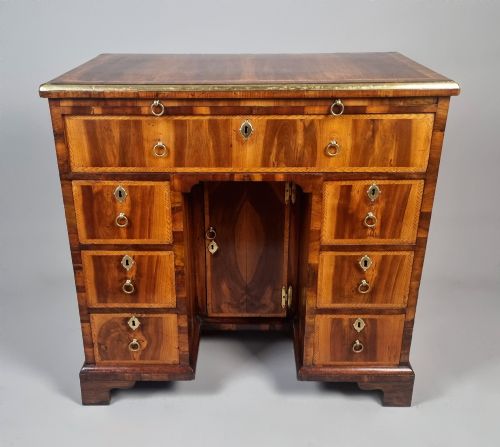
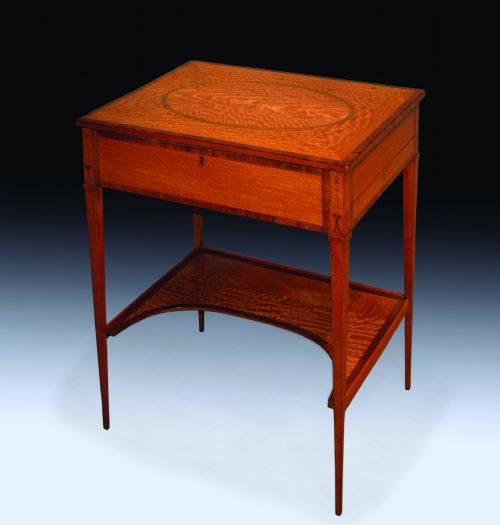
A small vanity table encompasses lowboys, dressing mirrors, kneehole desks, and bonheur du jour writing tables from eighteenth-century origins through the Victorian and Edwardian periods. Buyers searching this phrase meet versatile pieces in mahogany, walnut, and satinwood that functioned for grooming and correspondence.
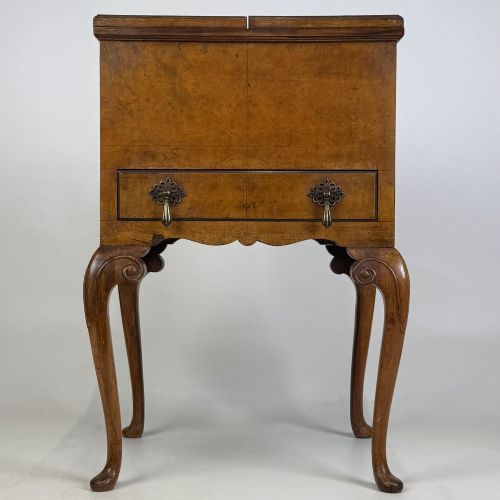
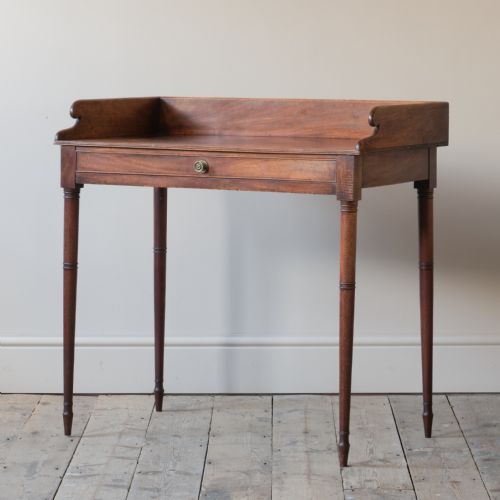
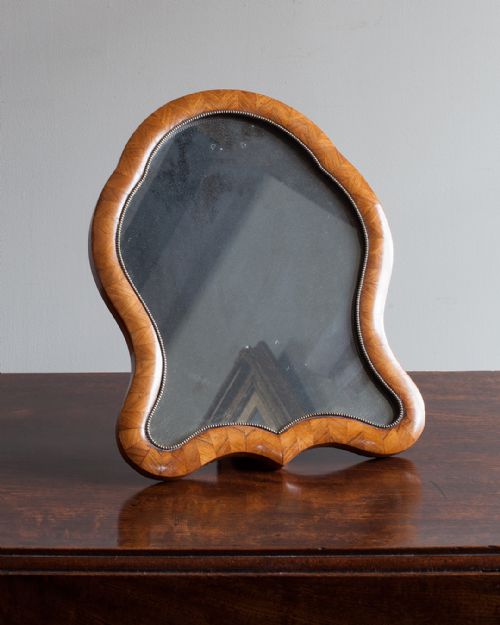
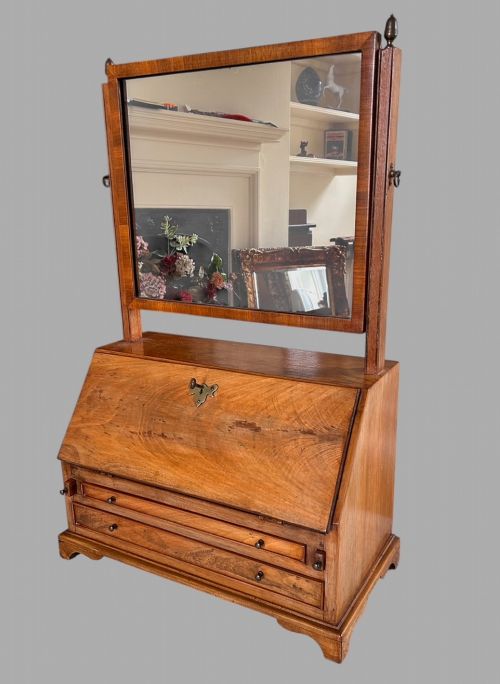
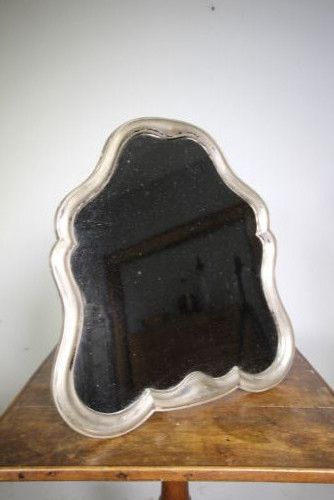
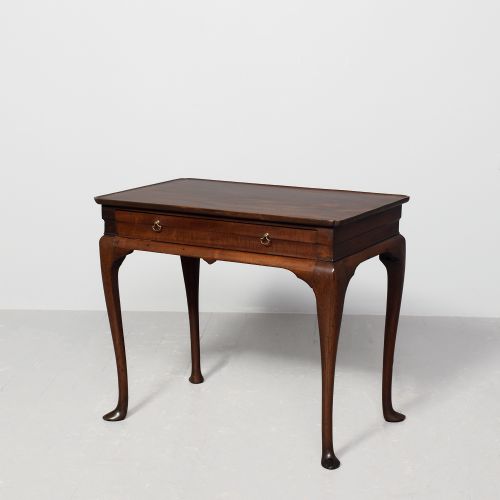
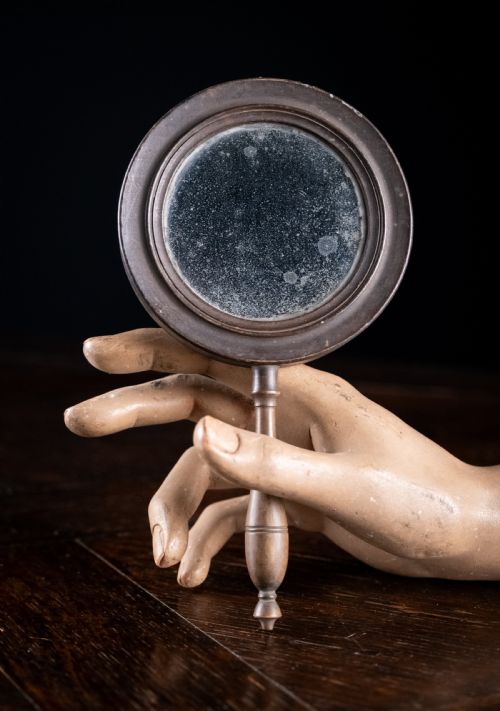
The selection ranges from Georgian lowboys and George II yew wood tables to Edwardian inlaid writing desks and table-top dressing mirrors. These forms frequently combine drawers and writing surfaces within compact footprints suited to modern rooms.
How they were made
Cabinetmakers constructed these pieces primarily in solid mahogany, walnut, and satinwood, frequently employing veneers and inlay to create decorative surfaces on top drawers and writing flaps. Brass handles, escutcheons, and repoussé frames provide functional contrast to the dark and figured wood grains.
Joinery techniques such as dovetailed drawer construction and turned legs define the structural integrity of the period pieces, while specialised items incorporate silver collars, glass, and enamelled porcelain details.
Small Vanity Table Retail Price Guide 2026
Typical asking prices for small vanity table among the pieces listed under this phrase on Sellingantiques today, from the lower quarter to the upper quarter. They describe what is for sale here now, not the wider market.
Current listings feature pieces spanning the Georgian, Victorian, and Edwardian eras, constructed primarily from mahogany, walnut, and satinwood.
What varies in quality
The standard of timber selection and veneer matching marks the division between ordinary furniture and finer examples, with figured walnut and satinwood commanding attention. Crispness in inlay work, hand-cut dovetails, and original brass hardware further distinguish the grade of a piece.
Proportion and the retention of original surfaces, whether polished mahogany or aged gilt, dictate the integrity of the design across different centuries and revival styles.
Edwards and Roberts
The Small Vanity Table Glossary
- Lowboy
- A small side table with drawers, originating in the eighteenth century and frequently utilised as a dressing table. It typically stands on four slender legs.
- Bonheur du jour
- A light ladies' writing desk featuring a small cabinet or set of drawers on the upper surface. This form gained popularity during the nineteenth and early twentieth centuries.
- Kneehole desk
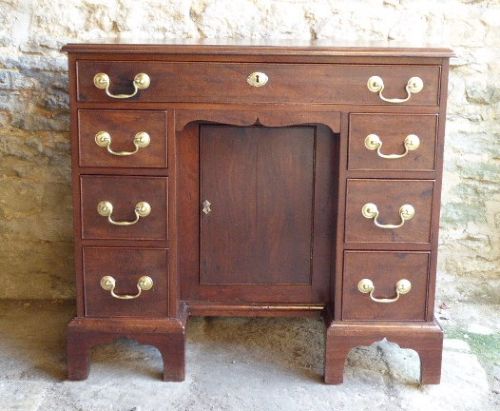
- A compact desk or dressing table featuring a central recessed space for the legs, flanked by pedestals of small drawers. Walnut and mahogany versions date from the eighteenth century onwards.
- Repoussé
- A metalworking technique where the design is hammered into relief from the reverse side. It appears frequently on Edwardian brass dressing table mirrors.
- Satinwood
- A durable, yellowish timber prized for its lustrous grain and used extensively for fine stringing and veneers during the Sheraton period.
Small Vanity Table: Frequently Asked Questions
What is a lowboy used for?
A lowboy served as a compact side table or dressing table in eighteenth-century bedchambers and parlours. Its drawers held small personal items and cosmetics.
Today, the surface accommodates a table mirror or decorative objects while fitting easily into narrower hallways and bedrooms.
How do I date a mahogany writing desk?
Dating relies upon examining construction methods, timber selection, and hardware styles across periods from the Georgian era to the Edwardian decades. Hand-cut dovetails and secondary woods like pine or oak offer clear chronological clues.
Stylistic markers such as cabriole legs or inlay patterns further help assign a piece to the eighteenth, nineteenth, or early twentieth century.
Where should I place a dressing mirror?
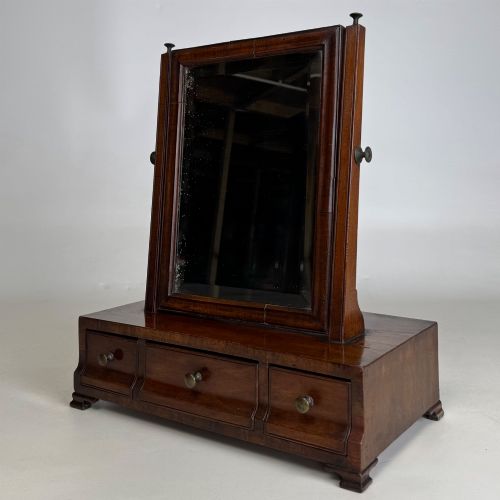
A dressing mirror sits securely upon a chest of drawers, lowboy, or dedicated table-top bureau to create a functional grooming station. Placing it near a window captures natural light for the mirror glass.
Ensure the surface is stable and deep enough to support the weight and tilt mechanism of the frame.