



Small Travel Clock
A small travel clock is a portable timepiece designed for journeys, offering precision mechanics housed in a compact brass, silver, or leather-bound case.
Small Travel Clock
When searching for a small travel clock, you encounter portable timepieces predominantly realised as carriage clocks and boudoir timepieces. These objects span from the Victorian and Edwardian eras into the twentieth century, originating from British workshops and French makers alike.
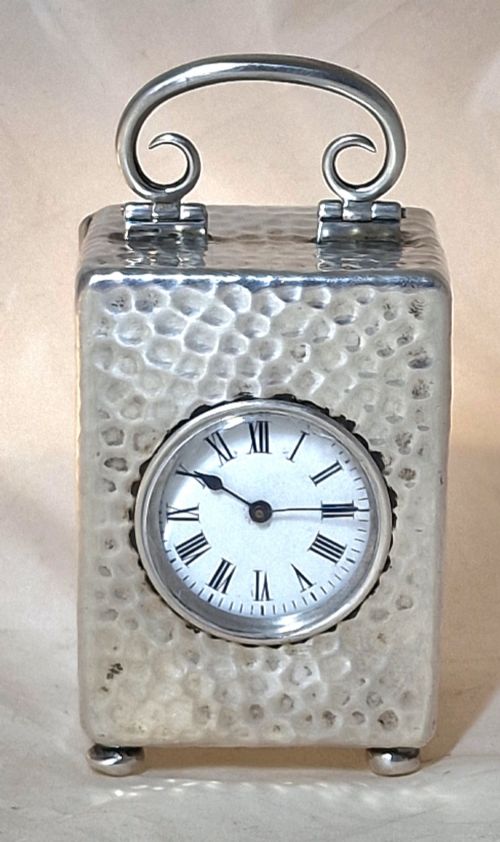
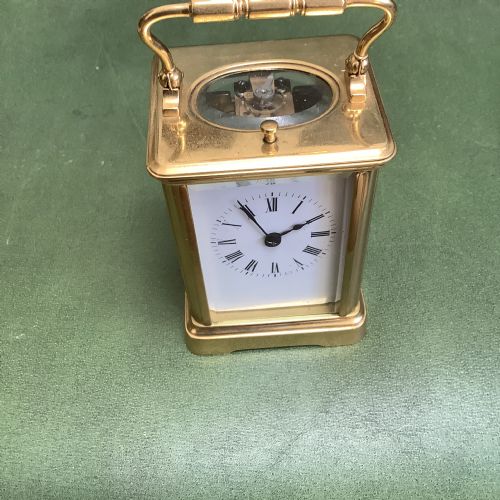
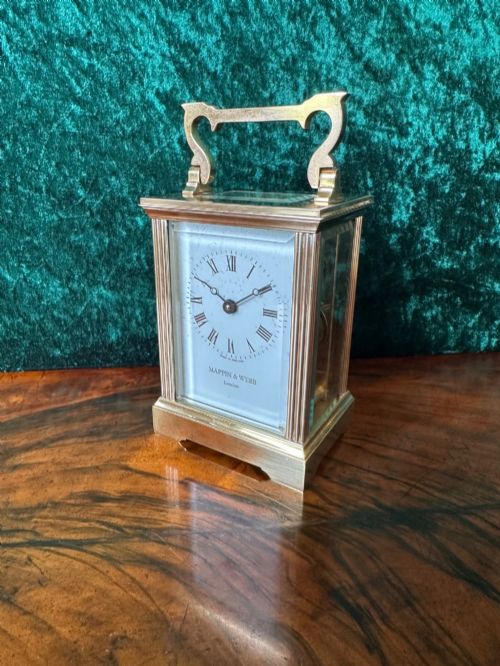
The most common form on this page is the miniature carriage clock, often enclosed in a brass or silver case with glass panels to reveal the movement. Pieces range from plain subminiature designs to fully engraved examples equipped with keys and travelling cases.
Makers and retailers such as Mappin and Webb, J Batson and Son, Richard Co, Drocourt, and J C Vickery produced these portable clocks for gentlemen and ladies on the move. They combine utility with ornamental metalwork, enamel dials, and sometimes striking mechanisms.
How they were made
Makers constructed the primary framework of these pieces using cast and polished brass, gilt brass, and sterling silver. Panels of bevelled glass were fitted into the metal housing to protect the delicate eight-day or smaller movements within.
Surface decoration involved intricate hand engraving upon the brass cases, alongside hammered textures on silver examples. Dials frequently incorporated white enamel with painted numerals, while specialised pieces featured floral enamelling or Delft enamel work.
For transit, many of these timepieces were accompanied by fitted leather or tortoiseshell travelling cases. This combination of robust exterior housing and precise mechanical gearing ensured the clock could withstand movement.
Small Travel Clock Retail Price Guide 2026
Typical asking prices for small travel clock among the pieces listed under this phrase on Sellingantiques today, from the lower quarter to the upper quarter. They describe what is for sale here now, not the wider market.
Some miniature travel clocks are so small they are designated as subminiature, designed to fit snugly inside a pocket or handbag.
What varies in quality
The standard of engraving across the gilt brass and silver frames dictates much of the visual distinction. Finely chased foliage and deep, crisp hand-engraved patterns separate standard production items from master-workshop pieces.
The complexity of the internal mechanism also defines the upper tier of the range. Simpler timepieces share space with repeating movements, grande sonnerie complications, and multi-day power reserves signed by renowned makers.
Mappin and Webb·J Batson and Son·Richard Co·Drocourt·J C Vickery
The Small Travel Clock Glossary
- Carriage clock
- A portable spring-driven timepiece originally designed for travellers in horse-drawn carriages. They typically feature a rectangular brass case with glass panels and a handle on top.
- Mignonette
- A term used to describe an especially small miniature carriage clock. These tiny portable timepieces require exceptional miniature joinery and delicate movement construction.
- Gorge case
- A specific style of carriage clock case featuring a stepped, curved top moulding and a distinct swinging handle. It is commonly found on better quality French pieces.
- Boudoir timepiece
- A small clock designed for domestic private rooms rather than travel. They share the compact scale of travel clocks but focus more on decorative enamel work.
- Repeating movement
- A mechanical complication that strikes the hours and quarters upon demand when a button or pendant on the case is pressed. This feature required advanced skill from the horologist.
Small Travel Clock: Frequently Asked Questions
What is a carriage clock?
A carriage clock is a portable mechanical timepiece enclosed in a brass and glass case with an integrated carrying handle.
Originally built for travel, these clocks relied on robust spring movements rather than pendulums so they could keep accurate time while moving.
How do you wind them?
Most of these clocks are wound using a dedicated small metal key inserted into an arbor on the backplate. Turning the key tensions the mainspring to power the movement for several days.
Some later examples incorporate a thumb-turn mechanism, removing the need for a separate winding key.
Where were they made?
Production was centred heavily in France, particularly Paris, alongside significant output from British silversmiths and retailers in London.
French workshops supplied many of the mechanical movements and brass cases, which British retailers then retailed or fitted with sterling silver housings.
Why do some have leather cases?
Travelling cases made of leather or tortoiseshell provided external protection for the delicate glass panels and metal finishes during transit.
Owners slipped the clock into its fitted outer shell before packing it into luggage for carriage journeys or railway travel.