


Small Painted Cupboards
Small painted cupboards bring colour and compact storage to a room, spanning rustic pine country furniture to decorated Chinoiserie and neoclassical styles.
Small Painted Cupboards
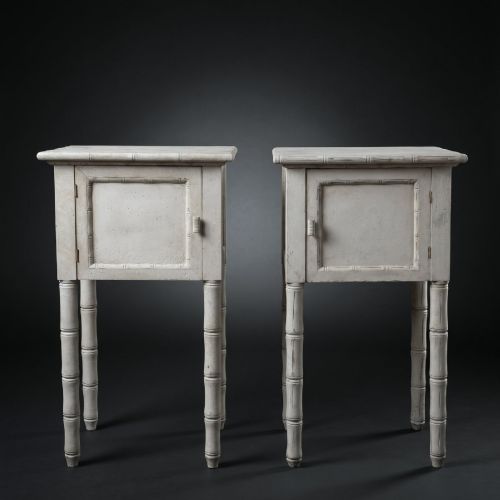
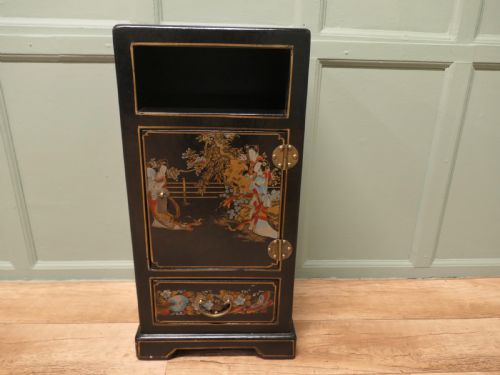
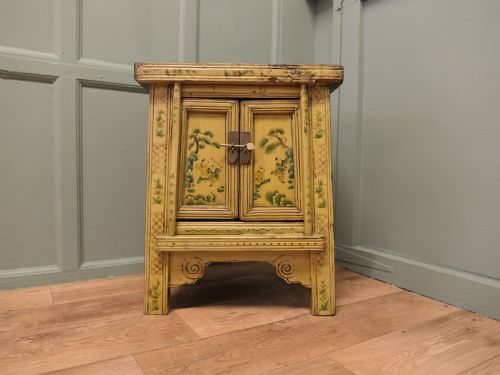
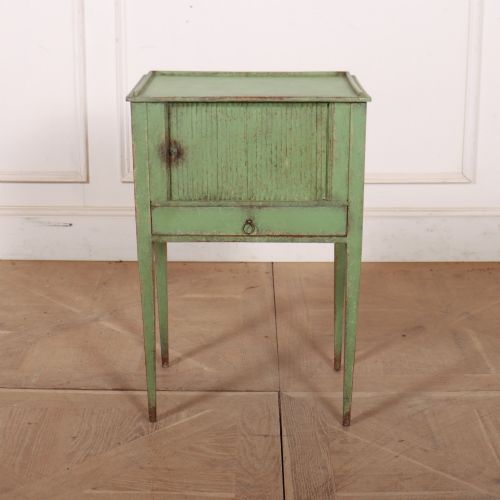
Small painted cupboards comprise compact storage forms such as bedside cabinets, wall cupboards, side cabinets, and small bookcases originating from the eighteenth, nineteenth, and early twentieth centuries. Buyers seeking this phrase encounter pieces created for domestic utility, from French farmhouse confituriers to Swedish wall units and English country furniture.
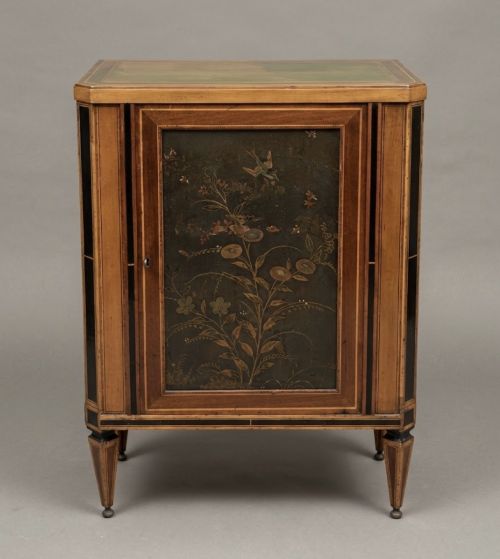
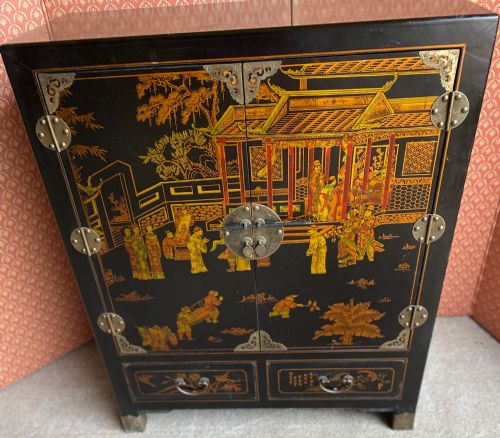
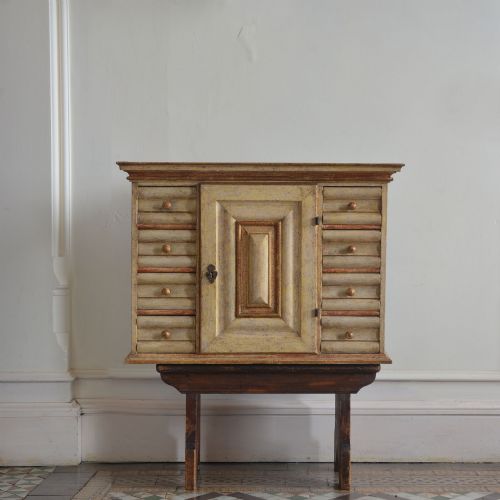
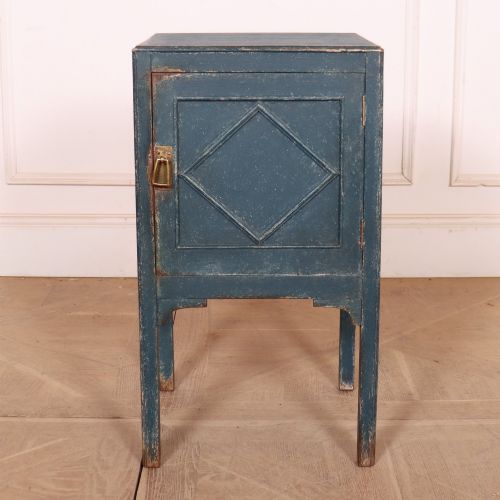
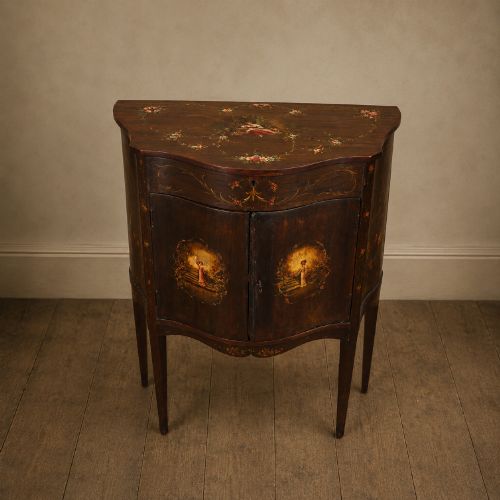
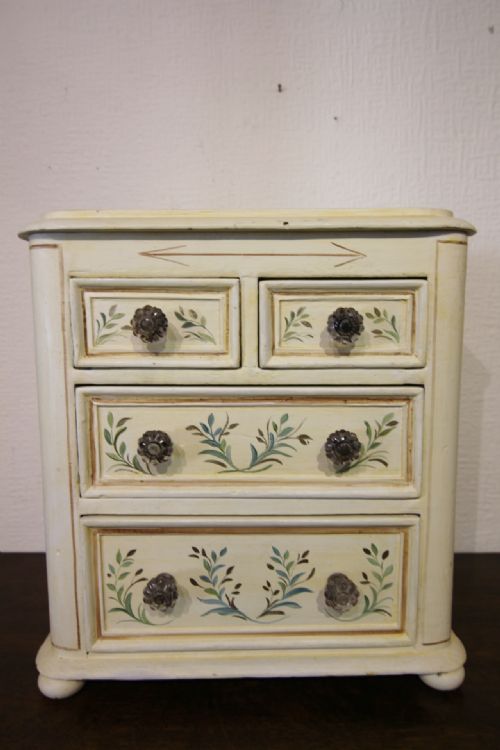
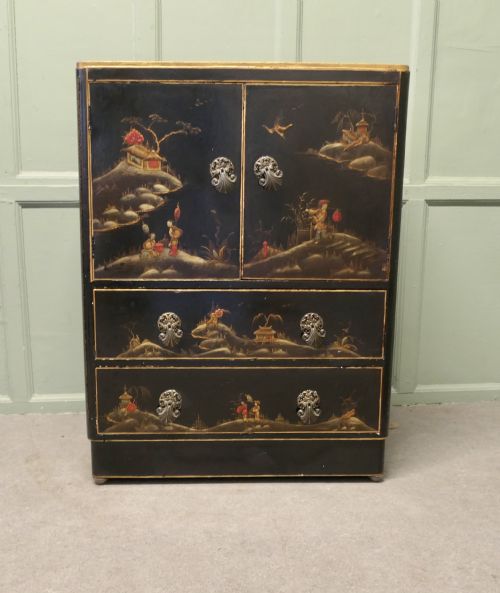
The selection ranges from vernacular pine pieces intended for rural homes to sophisticated Chinoiserie lacquer cabinets and Dutch neoclassical designs. Forms frequently meet practical needs in smaller spaces, serving as bedside tables, hanging corner cupboards, or miniature chests and apothecary cabinets.
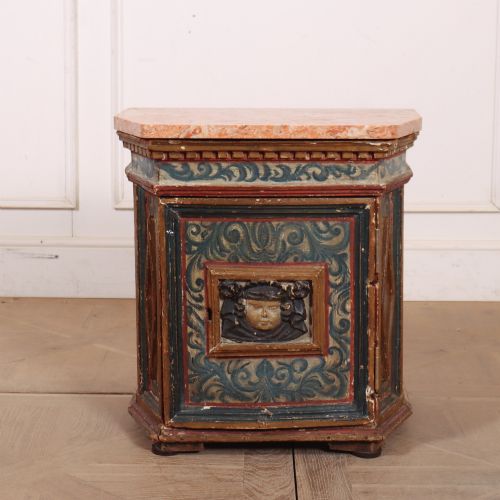
Regional diversity shapes the group, spanning English country workshops, French provincial houses, Scandinavian rural homes, and Italian studios. Pieces include items constructed for specific domestic tasks, such as spice cupboards and jam cupboards, alongside decorative bedroom and hallway storage.
Materials and construction
Makers utilised pine, oak, and general wood as the primary structural carcase materials, often applying surface treatments of paint, lacquer, and giltwood. Metal fittings in brass and iron appear on doors and drawers for hinges, handles, and escutcheons.
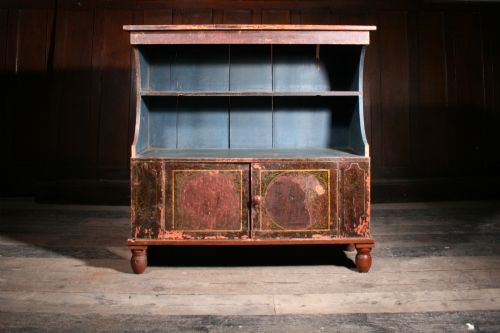
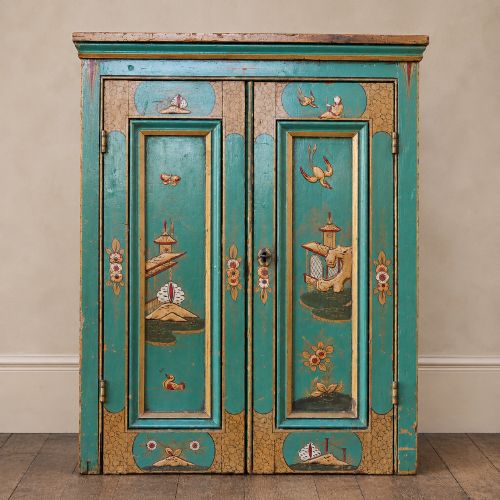
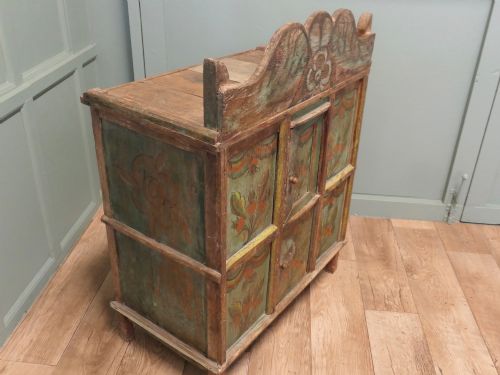
Surface decoration relies on applied paint layers, hand-painted motifs, and lacquer panels, particularly in Chinoiserie interpretations featuring pictorial scenes. Original paint surfaces survive on numerous nineteenth-century and earlier pieces, while others exhibit traditional regional decoration techniques.
Small Painted Cupboards Retail Price Guide 2026
Typical asking prices for small painted cupboards among the pieces listed under this phrase on Sellingantiques today, from the lower quarter to the upper quarter. They describe what is for sale here now, not the wider market.
Secret drawers hidden within miniature apprentice chests reward curious buyers who investigate beyond the primary keyholes.
Quality variations
Differentiation across the range depends upon the survival and integrity of the original paint surface, with untouched historic decoration commanding distinct interest compared to later or renewed surfaces. The sophistication of the hand-painted detail, whether botanical, figurative Chinoiserie, or vernacular folk art, marks the distinction between standard utility items and finer decorative works.
Joinery execution and proportion govern the construction quality, separating simple boarded country carpentry from refined cabinet-making seen in neoclassical and Georgian pieces. The presence of authentic period hardware, such as brass hinges and iron latches, contributes to the overall integrity of an individual cabinet.
Melissa White
The Small Painted Cupboards Glossary
- Chinoiserie
- European decorative style inspired by Chinese art and design, frequently featuring painted figures, landscapes, and motifs on lacquered surfaces.
- Confiturier
- A traditional French provincial cupboard or jam cupboard, typically of small proportions and enclosed by a single door.
- Gustavian
- Swedish neoclassical style dating from the late eighteenth century, characterised by restrained proportions, pale paint finishes, and classical detailing.
- Apprentice piece
- A small-scale model of a piece of furniture created by a craftsman to demonstrate skill, often taking the form of a miniature chest of drawers.
- Waterfall bookcase
- A set of open bookshelves where the sides step back progressively from bottom to top, creating a terraced profile.
Small Painted Cupboards: Frequently Asked Questions
What rooms suit small painted cupboards?
These compact cabinets suit bedrooms, hallways, and living spaces where floor space is limited. Their enclosed shelving and drawers provide discreet storage for books, linens, and everyday items.
Their decorative surfaces also allow them to function as focal display pieces or bedside tables in various interior schemes.
How do I identify original paint?
Original paint surfaces typically exhibit natural wear, craquelure, and patination accumulated over generations of use. Examining edges, corners, and protected areas reveals underlying layers and the manner in which the pigment has bonded to the wood.
Later overpainting often feels flat or masks the texture of the timber underneath, whereas historic paint integrates visually with the grain and structure of the carcase.
Are Chinoiserie cabinets fragile?
Chinoiserie cabinets finished with lacquer or delicate painted decoration require standard care given to antique wooden furniture. Keeping them away from direct sunlight and extreme humidity protects the painted surface and wood substrate.
Gentle dusting with a soft, dry cloth maintains the finish without risking abrasion to the historic decoration.