

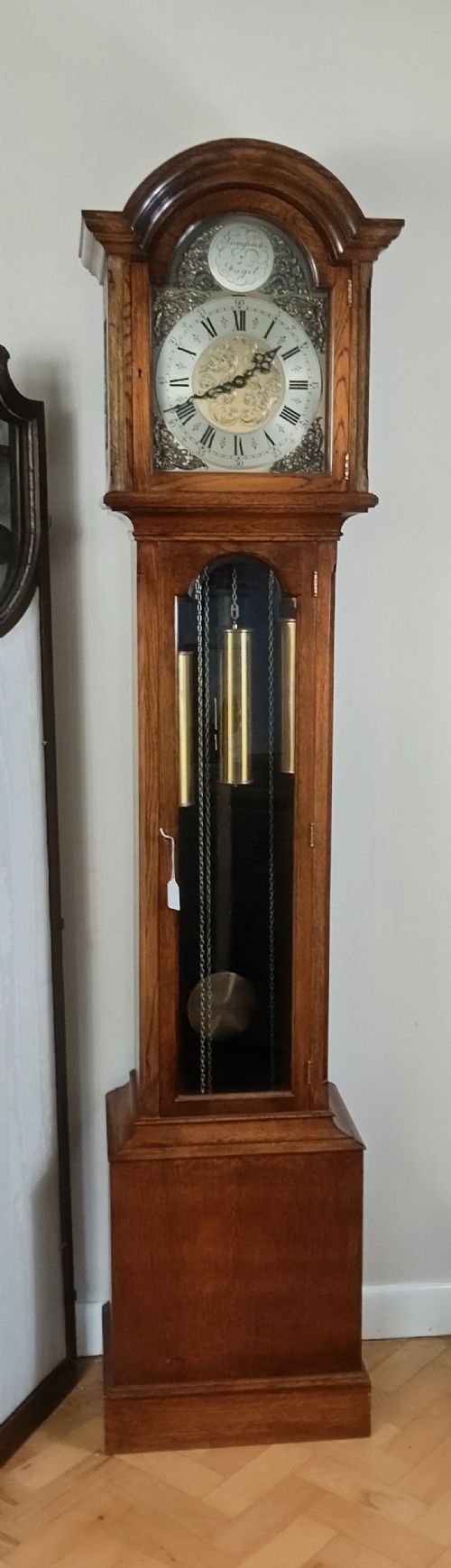


Small Oak Clock
A small oak clock brings architectural warmth and time-honoured mechanics to compact spaces through regional craftsmanship.
Small Oak Clock
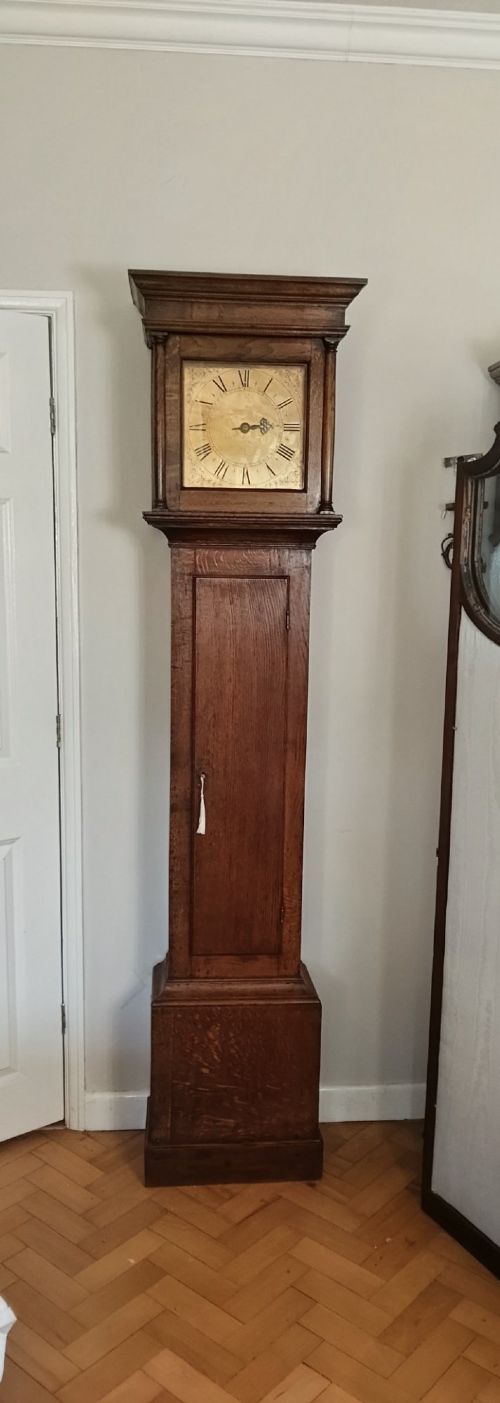
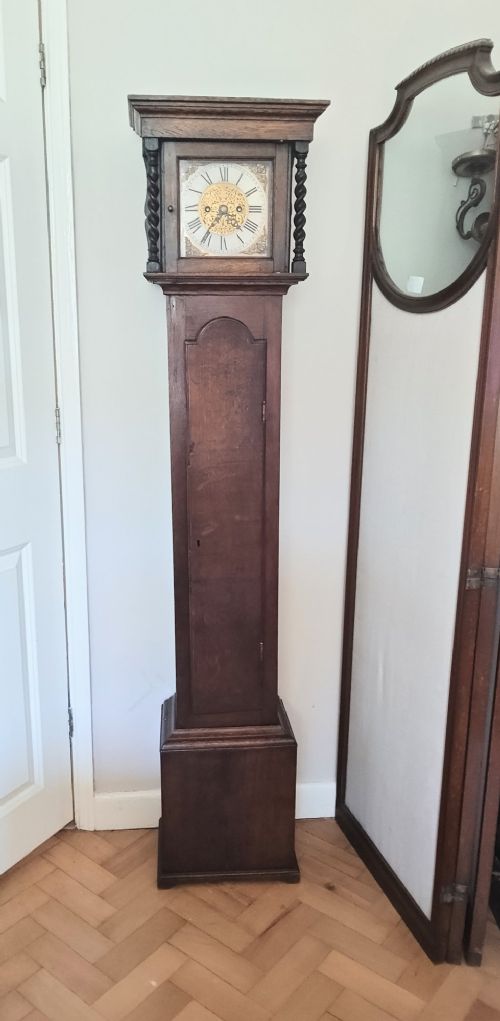
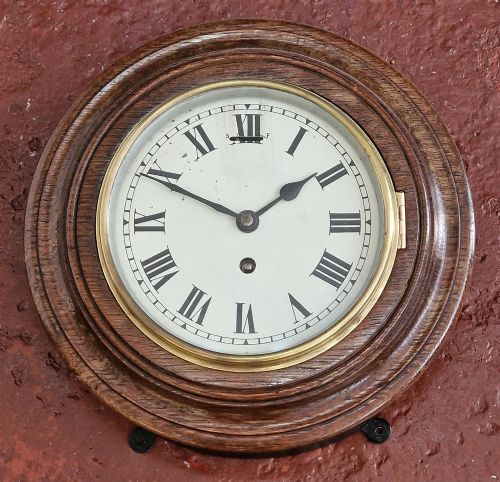
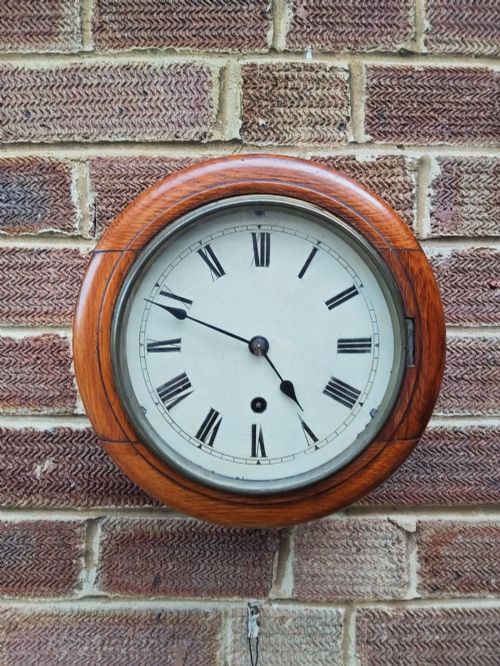
A small oak clock encompasses diverse timekeepers ranging from tall floor-standing longcase and grandmother pieces to wall-mounted dial clocks and mantel formats. When searching for a small oak clock, buyers encounter domestic items created across centuries, primarily rooted in Georgian, Edwardian, and nineteenth-century domestic traditions.
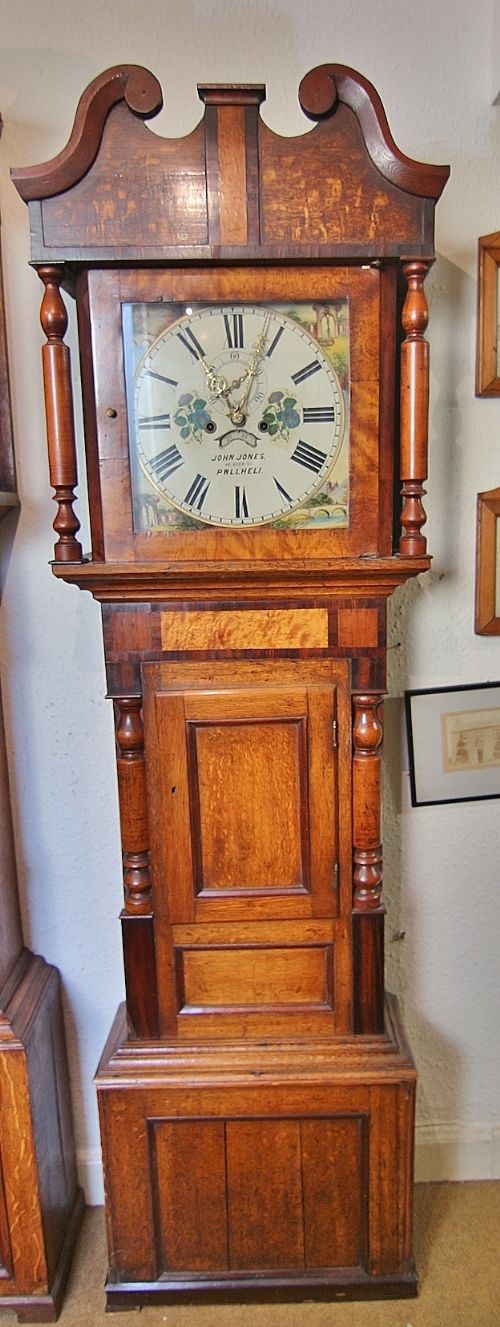
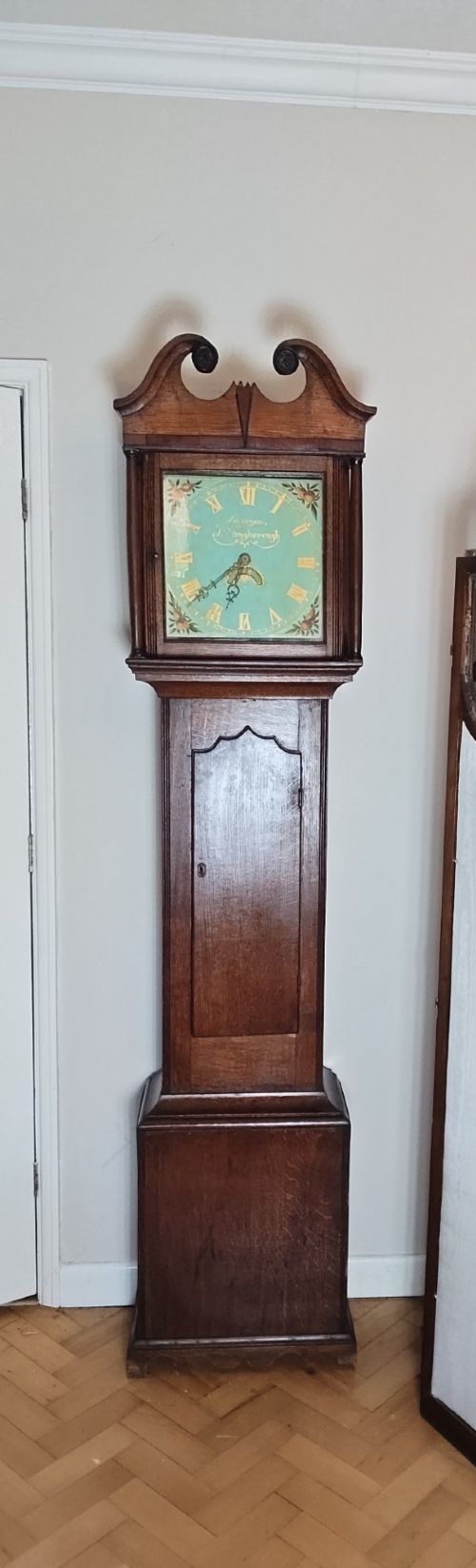
Floor-standing pieces appear frequently, featuring narrow proportions designed for modest ceiling heights and smaller rooms. These upright formats sit alongside round dial wall clocks and compact mantel timepieces housed in timber cases.
Regional British makers and retailers shaped these objects, producing utilitarian thirty-hour movements alongside complex eight-day chiming mechanisms. The resulting variety bridges practical timekeeping with tactile timber furniture suited to traditional interiors.
How they were made
Cases rely on solid oak boards, occasionally accented with mahogany inlays or painted finishes, constructed by joiners using traditional pegged and jointed frames. Dial surrounds integrate brass bezels, painted iron faces, and glass viewing doors to protect the moving parts within.
Internal mechanisms combine brass wheels and iron arbours driven by weights suspended on lines or chains, or powered by spring-driven fusee movements. Enamel and brass dials feature hand-painted chapter rings and engraved maker signatures.
Small Oak Clock Retail Price Guide 2026
Typical asking prices for small oak clock among the pieces listed under this phrase on Sellingantiques today, from the lower quarter to the upper quarter. They describe what is for sale here now, not the wider market.
Listings feature oak cases spanning the seventeenth century through to the 1930s, encompassing wall clocks, mantel pieces, and tall floor-standing formats.
What varies in quality
Construction standards separate standard domestic production from exceptional workshop output through timber selection and cabinet proportions. Superior examples display carefully matched grain patterns, slender case dimensions, and crisp mouldings that maintain visual balance at a reduced scale.
Movement sophistication distinguishes standard timepieces from elaborate chiming and musical longcase mechanisms. Original dial inscriptions, high-grade brass work, and undisturbed movement components elevate the standing of an individual piece.
William Noke of Shropshire·Smith Chester·Herbert of Haversham
The Small Oak Clock Glossary
- Fusee
- A conical pulley used in spring-driven clocks to equalise the torque of the mainspring as it unwinds. This mechanism ensures consistent force is delivered to the gear train throughout the winding cycle.
- Grandmother clock
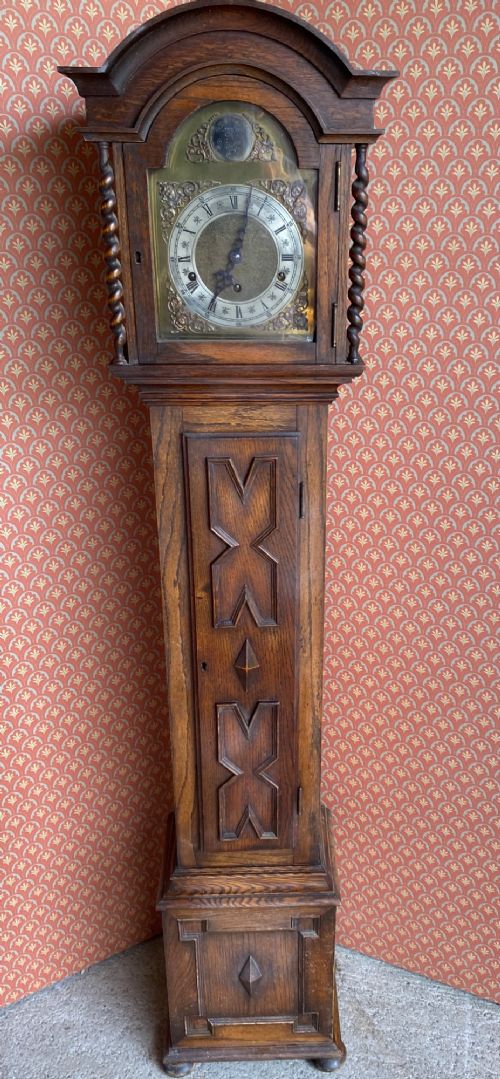
- A domestic floor-standing timekeeper modelled on the traditional longcase but built to significantly smaller proportions. These pieces suit rooms with lower ceilings while retaining full weight-driven movements.
- Dial clock
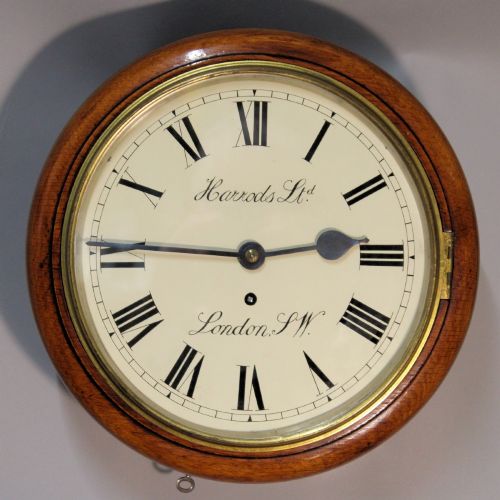
- A round wall-mounted timekeeper featuring a prominent face enclosed by a glazed wooden bezel and a short trunk. These instruments served railway stations, offices, and domestic hallways.
- Thirty-hour movement
- A clock mechanism designed to run for just over a single day before requiring manual winding by pulling up the hanging weights. This simpler gear train typifies earlier country house timekeepers.
- Chapter ring
- The outer ring on a clock face that displays the hour numerals, typically rendered in Roman or Arabic script. On older pieces, these rings are engraved brass fixed to a metal dial plate.
Small Oak Clock: Frequently Asked Questions
What is a grandmother clock?
A grandmother clock is a slender floor-standing timepiece scaled down from standard longcase dimensions. It occupies less floor space while housing traditional weights and pendulum mechanics.
These pieces were produced extensively during the Edwardian period and the nineteenth century, offering domestic charm without dominating a room.
How do fusee wall clocks work?
A fusee wall clock relies on a spring-driven movement regulated by a conical pulley system. This device maintains steady tension on the gears as the mainspring relaxes.
Such systems indicate higher grade English clockmaking, frequently found in circular dial formats dating from the late nineteenth and early twentieth centuries.
Where were small oak clocks placed?
Small oak clocks served functional roles across domestic and commercial interiors, from hallway corners and stairwells to offices and public rooms. Wall-mounted dial versions were hung where clear visibility mattered most.
Floor-standing formats fitted into narrow passages or low-ceilinged parlours where standard tall clocks proved too imposing.
How can I tell the period?
Dating relies on examining case styles, dial construction, and timber treatment together. Georgian examples often feature simpler architectural proportions and brass chapter rings, while Edwardian pieces introduce elaborate chiming trains.
Inscriptive signatures on the dial or movement backplate often name the maker and town, anchoring the piece to a specific decade.