

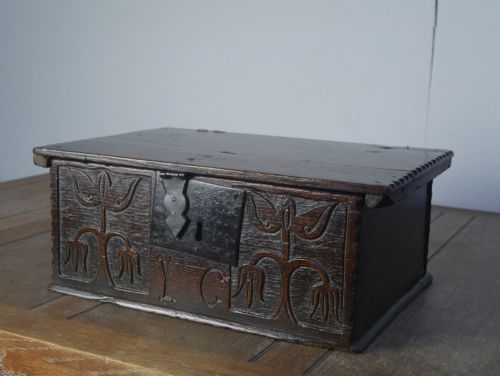


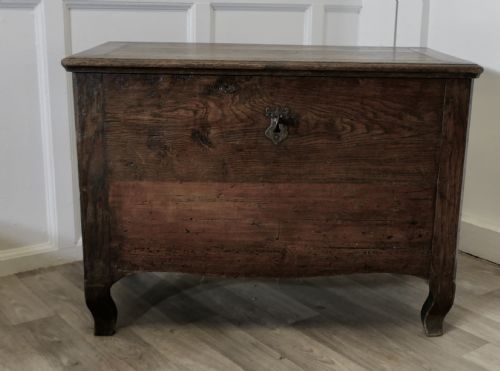


Small Locking Chest
These small locking chest selections bring together compact coffers, miniature drawers and fitted boxes that secure personal valuables with period ironwork and brass.
Small Locking Chest
A small locking chest encompasses a diverse group of compact furniture forms designed for security, ranging from early oak coffers to Victorian Wellington chests and tabletop tea caddies.
Buyers searching for a small locking chest frequently encounter sturdy timber boxes from the seventeenth and eighteenth centuries alongside mahogany miniature chests of drawers fitted with working locks.
The selection bridges several centuries of cabinetmaking, moving from provincial boarded coffers to refined satinbirch and walnut pieces intended for private chambers.
Materials and construction
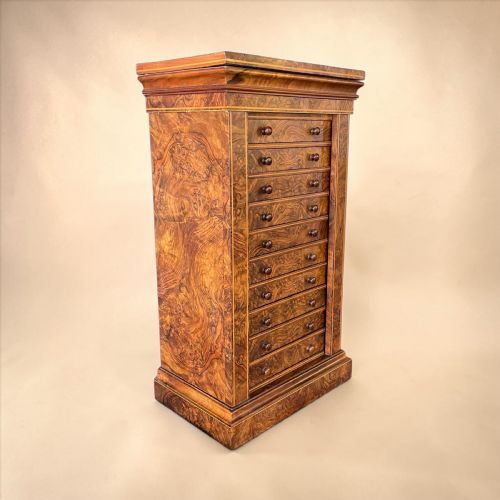
Cabinetmakers constructed these small locking chest examples primarily in solid oak, mahogany, and walnut, often employing burr veneers and satinbirch for decorative surfaces.
Security relied on robust iron hinges, straps, and brass locks inset into the timber lids and drawer sides, requiring precise hand-fitting by skilled joiners.
Small Locking Chest Retail Price Guide 2026
Typical asking prices for small locking chest among the pieces listed under this phrase on Sellingantiques today, from the lower quarter to the upper quarter. They describe what is for sale here now, not the wider market.
Miniature chests were often made as apprentice masterpieces to demonstrate cabinetmaking skill before joining a guild.
Evaluating the standard
Quality rests in the integrity of the timber selection and the original state of the locking mechanism rather than mere surface ornament.
Fine examples retain their matching keys and demonstrate crisp dovetail joints, whereas lesser pieces suffer from mismatched replacement hardware or heavy timber shrinkage.
The Small Locking Chest Glossary
- Wellington chest
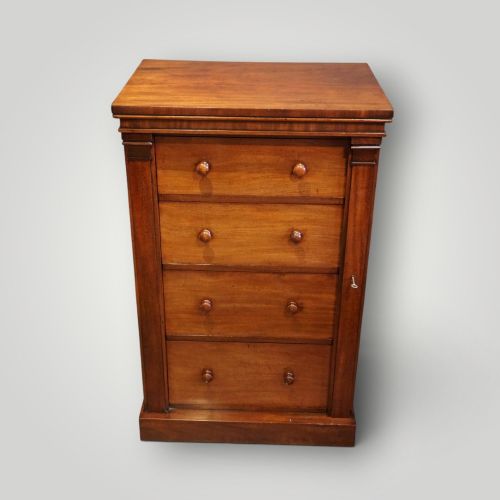
- A tall, slender chest of drawers featuring a locking stile hinged on one side to secure all drawers simultaneously. This form became particularly popular during the Victorian era for papers and valuables.
- Coffer
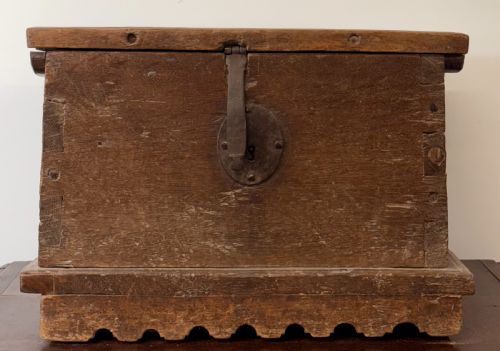
- A heavy wooden chest traditionally used for storage and travel, often reinforced with iron straps. Early examples utilise simple boarded construction or panelled framework.
- Tea caddy
- A small lidded box designed to store loose tea leaves securely under lock and key. Wealthy households kept these containers locked to protect an expensive commodity.
- Apothecary box
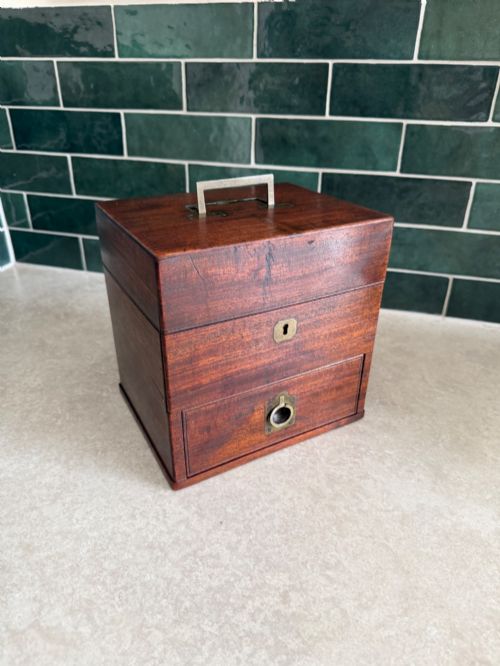
- A compartmentalised tabletop chest housing glass bottles and scales for medicines. These fitted interiors required precise woodworking to accommodate fragile contents safely.
Small Locking Chest: Frequently Asked Questions
What were small locking chests used for?
These compact containers held high-value personal possessions, documents, currency, and tea when household security relied on individual locks rather than room doors.
Owners kept them in private chambers or carried them during travel to protect contents from theft and moisture.
How do I date an antique wooden chest?
Dating relies on observing construction methods, such as hand-cut dovetails, tool marks on the timber, and the style of the iron or brass locks.
Earlier pieces from the sixteenth and seventeenth centuries display pegged frame-and-panel joints, while nineteenth-century items show more uniform mechanical sawing.
Are original keys common on these chests?
Original working keys survive on some pieces, but many antique locks have been adapted or fitted with replacement keys over the centuries.
A working lock period-appropriate to the timber adds significant interest for collectors of functional boxes.
How should I care for a veneer surface?
Protect delicate walnut and mahogany veneers by maintaining stable room humidity away from direct heat sources and strong sunlight.
Apply occasional microcrystalline wax to nourish the grain without sealing the timber pores.