
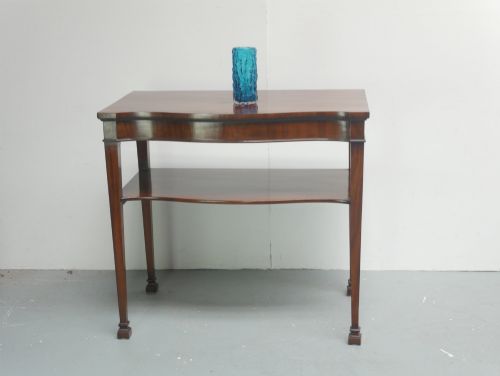
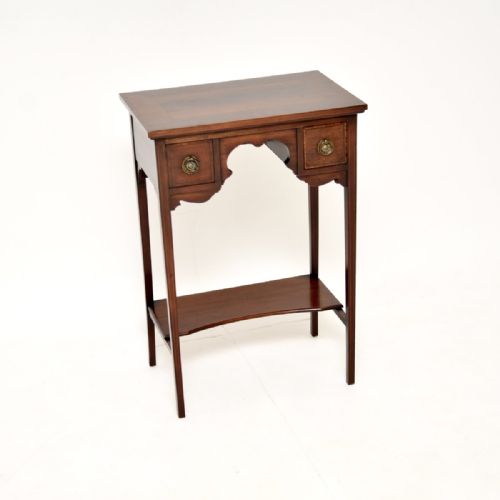
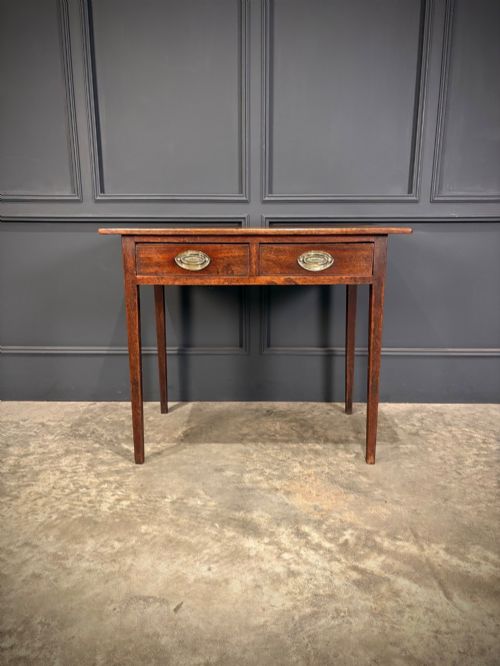
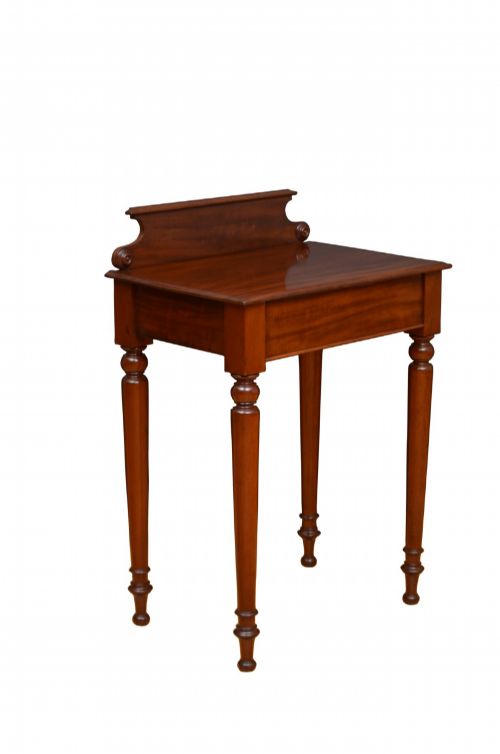

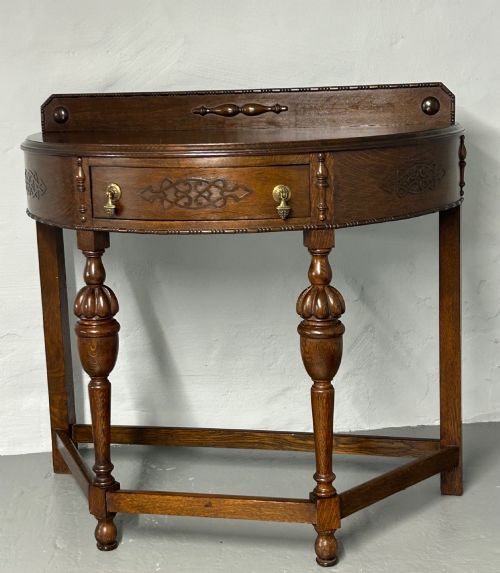


Small Hallway Console Tables
Small hallway console tables are compact surfaces for tight spaces, combining practical utility with period character.
Small Hallway Console Tables
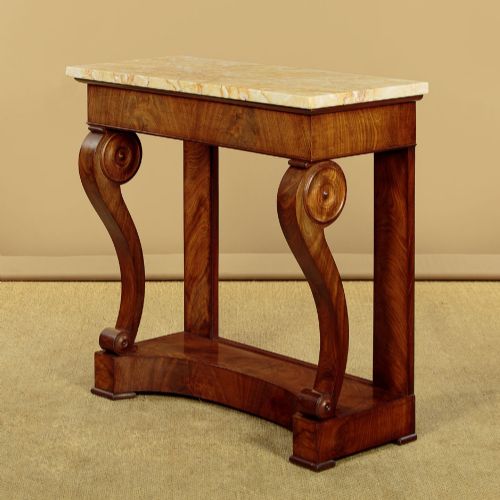
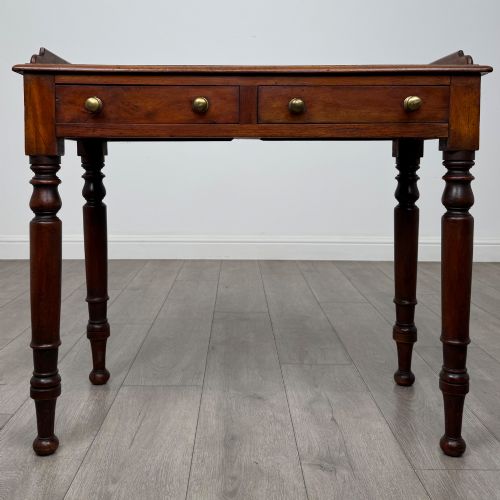
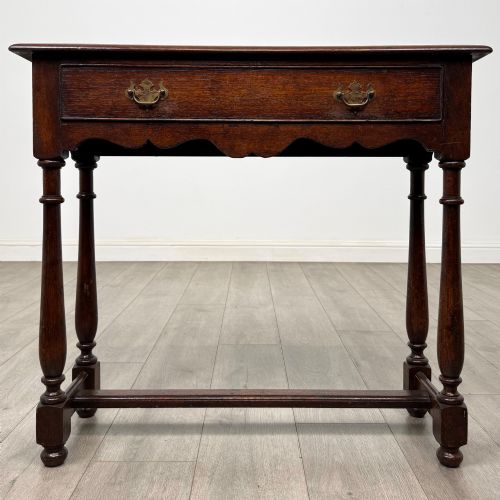
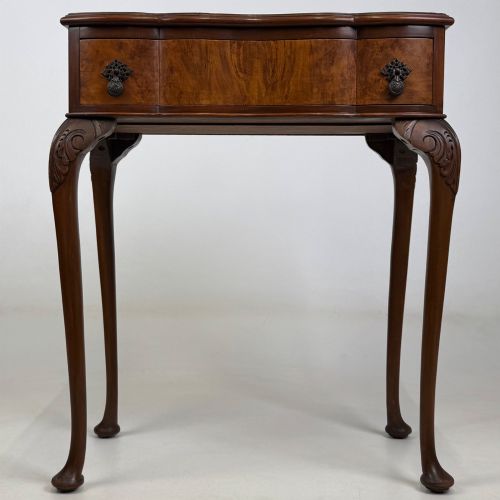
Small hallway console tables comprise narrow furniture forms designed to fit compact spaces like corridors and reception areas. These items encompass console tables, side tables, lowboys, and small sideboards from various historical periods.
The selection on this page relies heavily on 19th-century and Georgian origins, alongside Edwardian examples. Mahogany remains the dominant wood, accompanied by oak, walnut, and painted timber variants.
Buyers will encounter specific formats including demi-lune shapes, bow fronts, and rectangular tables equipped with drawers. These configurations provide surface display without blocking narrow thoroughfares.
Materials and Construction
Cabinetmakers utilised solid timbers and veneers, predominantly mahogany, oak, and walnut, often embellished with satinwood inlay or surmounted by marble tops. Brass handles and mounts frequently furnish the drawer fittings.
Joinery methods reflect the period of production, incorporating dovetailed drawer construction and turned or tapering legs characteristic of Georgian, Victorian, and Edwardian cabinetmaking traditions.
Periods represented span from the Georgian era through the Victorian, Edwardian, and 1930s decades.
Evaluating Quality and Finish
Quality rests in the selection of figured timber veneers, such as burr walnut or figured mahogany, and the crispness of inlaid details. Structural integrity of the legs and drawer boxes distinguishes superior examples.
The integration of secondary materials, including heavy marble slabs or intact brass hardware, influences the overall character and finish of each console.
Druce and Co·Heal and Son
The Small Hallway Console Tables Glossary
- Console Table
- A table designed to stand against a wall, frequently secured to it or supported by front legs. These tables suit narrow spaces like hallways and reception rooms.
- Lowboy
- A small oak or mahogany table with one or more drawers, originating in the early 18th century. It functions well as a compact hall table.
- Demi-Lune
- A half-moon shape used for tables designed to fit flush against a wall. This profile minimises the footprint in restricted spaces.
- Bow Front
- A convex curved front on a sideboard or table. This shape softens the profile of furniture in narrow corridors.
Small Hallway Console Tables: Frequently Asked Questions
What defines a small hallway console table?
Small hallway console tables are narrow tables built to occupy minimal floor space in corridors and entryways. They offer a surface for display while maintaining clear walkways.
Examples on this page span Georgian, Victorian, and Edwardian periods, utilising timbers such as mahogany, oak, and walnut.
Where were these tables historically placed?
These pieces traditionally stood in entrance halls, reception rooms, and narrow corridors of period homes. They served as drop zones for correspondence and small items upon entering the house.
Their shallow depth prevented obstruction in high-traffic transitional spaces.
How do I identify a Georgian console table?
Georgian tables typically feature dense mahogany timber, straightforward rectangular or bow fronts, and hand-cut dovetails within the drawers. Leg styles often follow contemporary vernaculars like tapered or square forms.
Construction details and timber patination help separate 18th-century pieces from later revival items.
Are marble top console tables original?
Many console tables, particularly from the 19th century, were paired with inset marble slabs to provide durable, water-resistant surfaces. These tops are integrated into the timber frame construction.
Matching the stone to the period of the base confirms the authenticity of the combination.