


Small Glazed Wall Cupboard
A small glazed wall cupboard is a compact hanging cabinet designed to store and display treasures while saving floor space.
Small Glazed Wall Cupboard
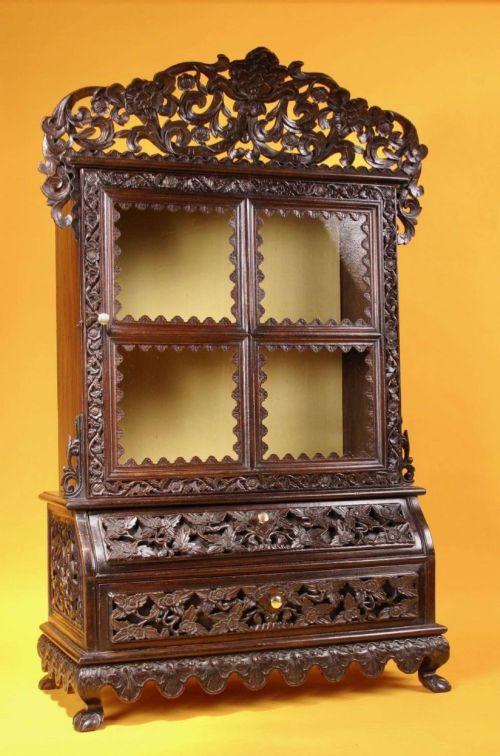
A small glazed wall cupboard brings compact storage and display to tight spaces, making use of vertical wall area rather than floor room. The pieces matching this search phrase encompass hanging wall cabinets, corner cabinets, and display cabinets created across several centuries.
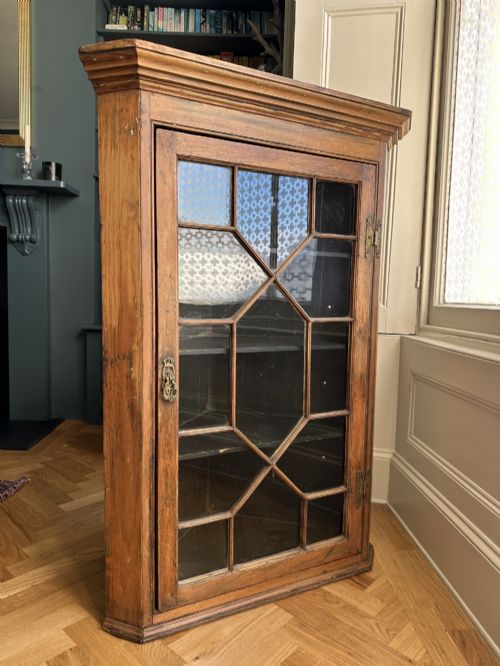
You are most likely to encounter Edwardian and Victorian examples on this page, often rendered in rich mahogany or oak. These pieces range from simple corner cupboards designed to fit awkward junctions to ornate display cabinets featuring glass doors.
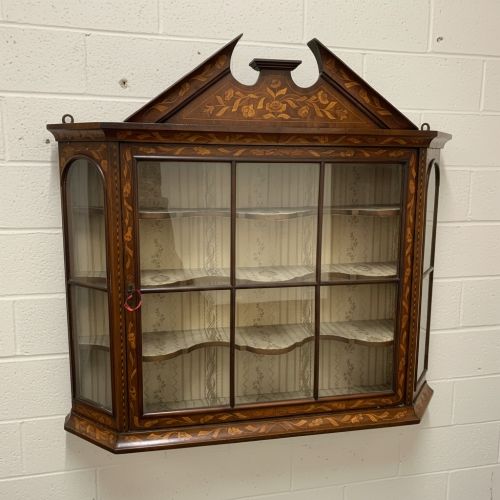
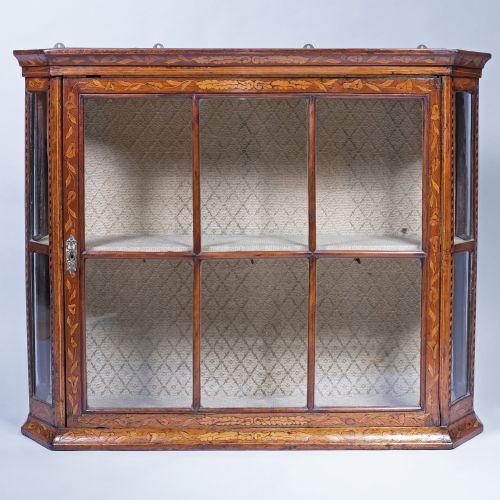
The selection includes specific regional and period styles, such as Dutch Baroque marquetry wall cabinets, rustic farmhouse pine, Arts and Crafts influences, and Aesthetic Movement pieces. Functional variations also appear, including key cupboards and small reception hall cabinets.
Materials and construction
Makers utilised a variety of timbers for these wall cabinets, predominantly mahogany and oak, alongside walnut, fruitwood, and pine. Marquetry inlay appears on finer examples, adding detailed decorative wood patterns to the exterior surfaces.
Construction relies heavily on glass panelling for the doors to allow contents to be seen, supported by brass hardware such as hinges and key escutcheons. Some interiors feature fabric linings or original painted finishes behind the shelving.
Materials represented across these cabinets include brass, fabric linings, marquetry inlay, and four distinct woods.
Assessing quality and craftsmanship
Quality in a small glazed wall cupboard reveals itself in the selection of timber and the precision of the joinery. Fine examples show careful matching of wood grains and intricate marquetry inlay rather than plain surfaces.
The sophistication of the hardware, the clarity and age of the glass panels, and the execution of period details like those seen in Dutch Baroque or Aesthetic Movement pieces distinguish standard utility cupboards from finer decorative works.
The Small Glazed Wall Cupboard Glossary
- Marquetry Inlay
- The technique of applying decorative veneer pieces to a structure to form intricate patterns. This method elevates the visual complexity of cabinet doors and panels.
- Corner Cabinet
- A storage piece specifically shaped with angled sides to fit snugly into the corner of a room. These maximise space utilisation in smaller chambers.
- Aesthetic Movement
- A late-nineteenth-century design style focusing on visual beauty over narrative or moral function. Pieces from this period emphasise artistic craftsmanship and refined lines.
- Edwardian
- Pertaining to the reign of King Edward VII, spanning the early twentieth century. Furniture from this era often lighter in proportion than heavy Victorian designs.
- Corner Cupboard
- A hanging or standing storage unit built for room angles. They frequently feature glazed upper doors for displaying china or small collections.
Small Glazed Wall Cupboard: Frequently Asked Questions
Where should I hang a wall cabinet?
These small cupboards suit spaces needing vertical storage without cluttering floor areas, such as hallways, kitchens, or dining rooms.
Corner cabinets specifically utilise neglected room junctions, while flat-backed wall cabinets mount securely above tables or sideboards.
How do I date a wooden cabinet?
Dating relies on identifying period characteristics in the timber, hardware, and decorative styles like Edwardian marquetry or Victorian mahogany.
Examining construction methods and secondary woods also provides clues to the era of manufacture.
Can these cabinets hold heavy items?
Small glazed wall cupboards are generally designed for display and lighter storage rather than heavy books or dense ceramics.
Specialist variants like key cabinets or display cases serve specific lighter domestic functions suited to their internal shelving.
What is the difference between a cupboard and a cabinet?
While terms often overlap, cabinets frequently incorporate glass panels for display, whereas cupboards traditionally feature solid wooden doors concealing storage.
Many pieces listed under this phrase combine both functions through glazed upper doors.