

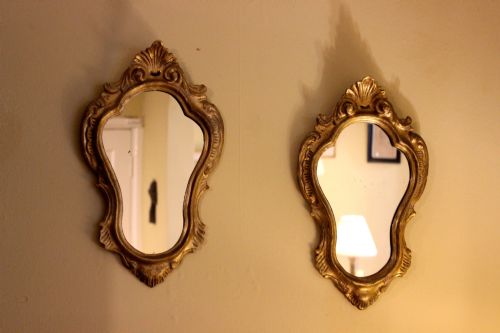
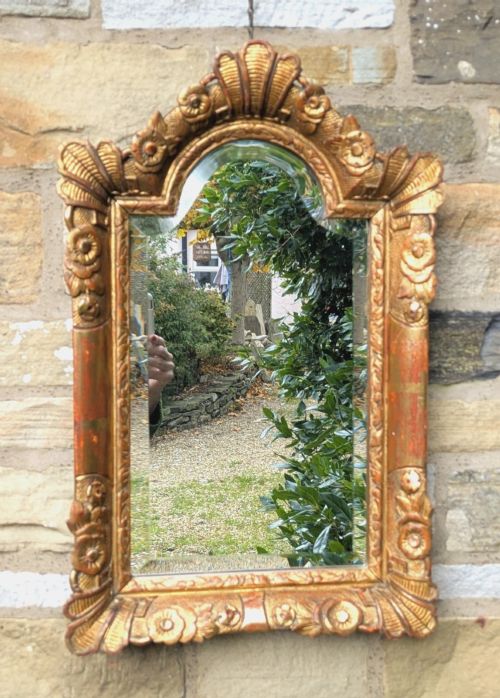
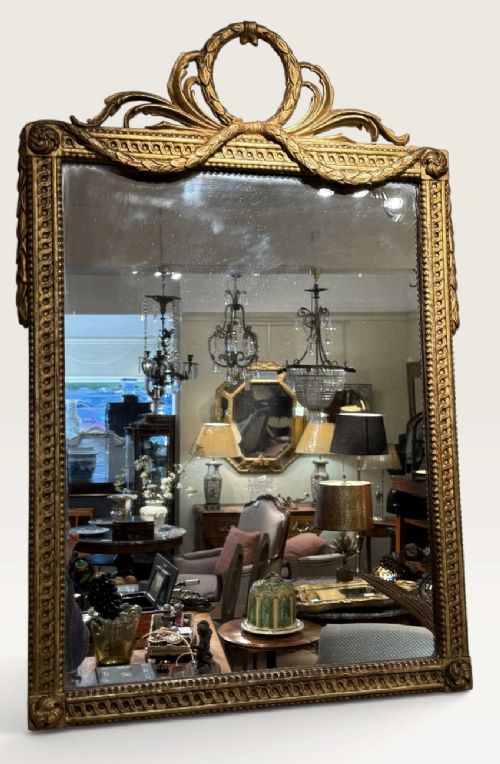
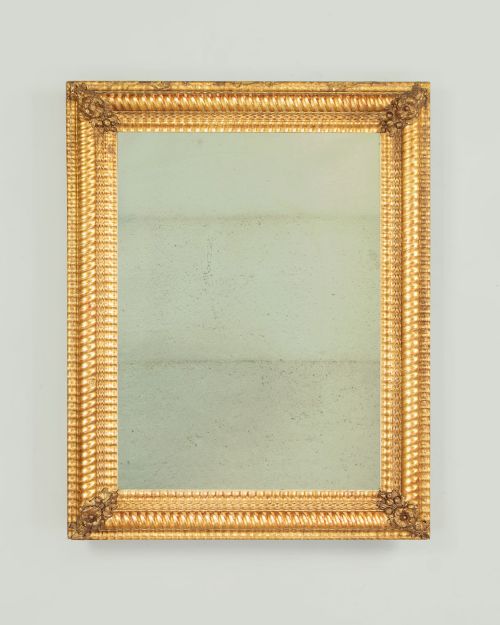






Small Giltwood Mirrors
Small giltwood mirrors bring warmth and reflective depth to compact spaces through centuries of carved and gilded design.
Small Giltwood Mirrors
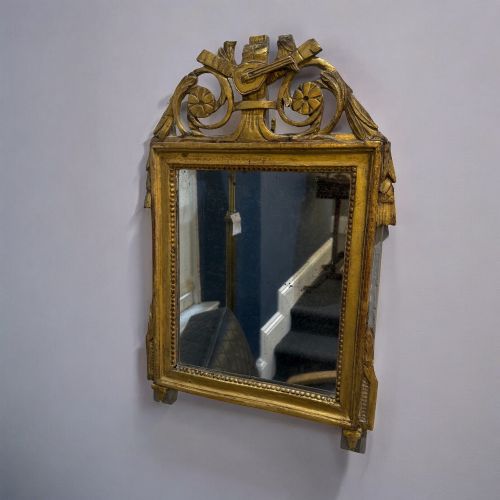
Small giltwood mirrors span the eighteenth, nineteenth and early twentieth centuries, encompassing wall mirrors, convex glasses, overmantels and marriage mirrors.
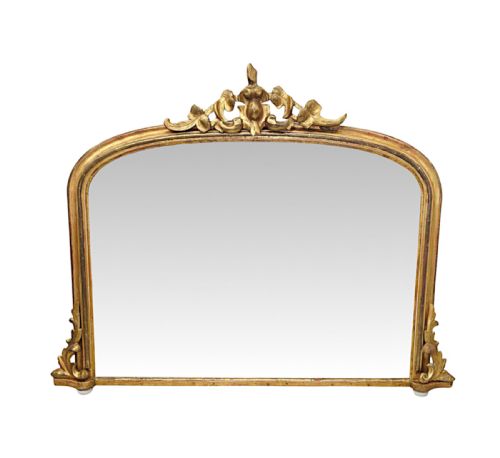
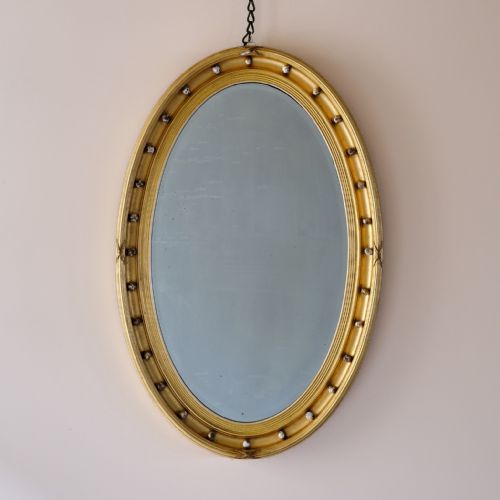
The Regency period and the nineteenth century dominate the forms found here, often taking circular, oval or arched top silhouettes.
Originating across England, France, Italy and Spain, these pieces range from austere carved frames to ornate rococo revivals.
Materials and construction
Carved wood and gesso form the foundational structure, providing a smooth preparation layer for subsequent gilding.
Gold leaf and applied gilt layers deliver the characteristic metallic sheen across the wooden frames.
Original mirror glass is frequently paired with ebonised wood details or painted wood elements for contrast.
Small Giltwood Mirrors Retail Price Guide 2026
Typical asking prices for small giltwood mirrors among the pieces listed under this phrase on Sellingantiques today, from the lower quarter to the upper quarter. They describe what is for sale here now, not the wider market.
Marriage mirrors were traditionally gifted to newlyweds, carrying symbolic decorative motifs intended to bless the union with prosperity.
Evaluating quality and execution
The crispness of hand-carved ornamentation distinguishes finer artisan work from simpler moulded gesso decoration.
The depth and uniformity of the gold leaf application reveal the care taken by the original gilder.
Proportion and balance in smaller frames indicate the skill of the maker in adapting grand architectural styles to neat dimensions.
The Small Giltwood Mirrors Glossary
- Giltwood
- Wood coated with gold leaf or gold paint. This finish creates the luminous golden surface characteristic of these frames.
- Gesso
- A plaster mix applied to wood as a base for gilding. It allows craftsmen to carve intricate relief details before applying gold leaf.
- Convex mirror
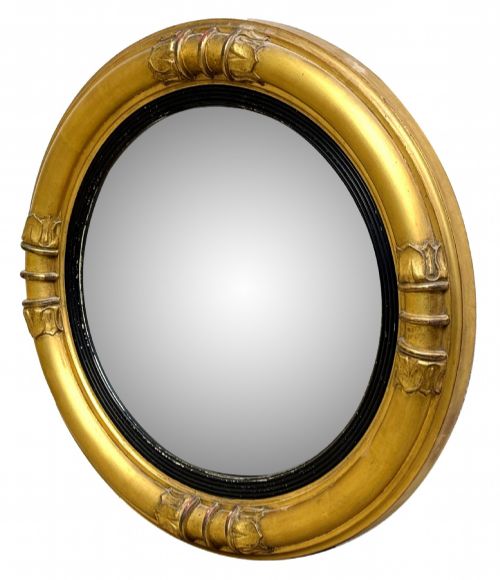
- A round mirror with a bulging glass surface that reflects a wide, curved view of the room. These pieces are often framed in circular giltwood surrounds.
- Overmantel mirror
- A wide mirror designed to hang above a fireplace mantel. Scaled-down versions frequently appear in nineteenth-century formats.
- Pier mirror
- A tall, narrow mirror designed to hang on the wall space between windows. Surviving examples often feature detailed Regency carving.
Small Giltwood Mirrors: Frequently Asked Questions
How do I hang a heavy giltwood mirror?
Secure hanging requires locating wall studs or using heavy-duty wall anchors rated for the weight of the timber and gesso frame.
Professional mirror hangers or robust brass brackets ensure the piece remains secure against the wall without straining the antique joints.
Where should I place a small convex mirror?
Convex mirrors excel in hallways, compact studies or opposite windows where they capture and distribute ambient light across the room.
Their curved glass provides a panoramic perspective, making smaller spaces feel considerably more open.
How do I clean antique giltwood?
Dust the carved frame gently with a dry, soft artist brush or microfiber cloth to protect the delicate gold leaf layer.
Avoid liquid cleaners, water and chemical solvents entirely, as moisture quickly damages historic gesso and gilding.
How can I tell a Regency mirror from a Victorian one?
Regency frames often display classical restraint with ball details, reeding and convex glass forms originating around the early nineteenth century.
Victorian pieces lean towards heavier proportions and revivalist styles such as French rococo or elaborate Italian carvings.