



Small Floral Vases
Small floral vases are compact vessels designed for single stems or modest posies, bringing focused colour and decorative detail into small corners of a room.
Small Floral Vases
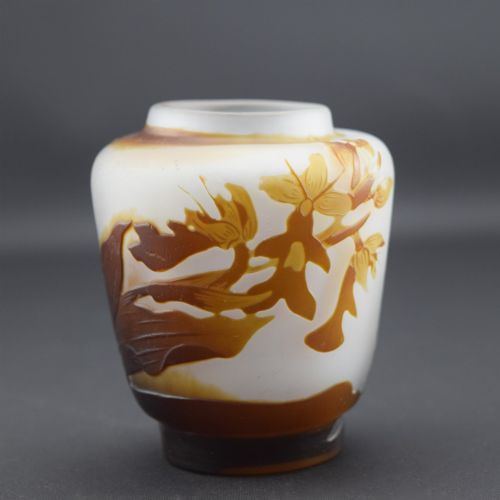
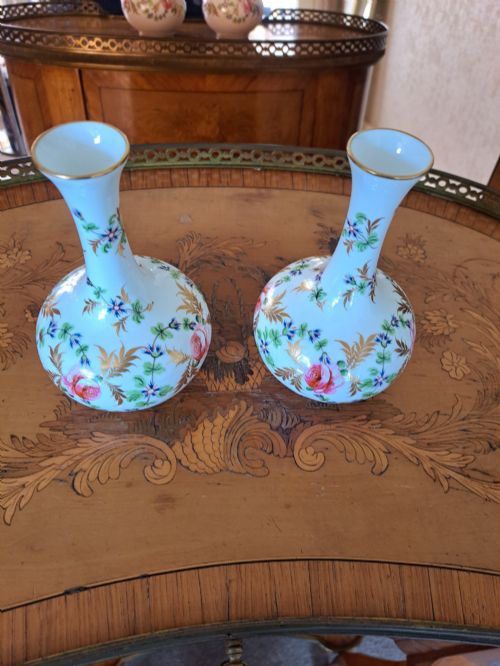
Small floral vases encompass compact vessels created across the Victorian, Edwardian, and Meiji periods, designed specifically to hold modest bunches or individual blooms. When exploring small floral vases on this page, the selection ranges from ceramic bud vases and ironstone posy vessels to miniature cloisonné and cameo glass examples.
The forms span English factories such as Royal Crown Derby, Doulton, and Mason's alongside Japanese export pieces and Chinese brass wares. Buyers frequently encounter pairs created for mantelpieces or dressing tables, reflecting domestic habits of the nineteenth and early twentieth centuries.
Materials and construction
The physical substance of small floral vases relies on fired ceramic bodies, ironstone, and porcelain, often enriched with hand-painted enamel colours or gilt highlights. Surface decoration frequently employs underglaze patterns, transfers, or intricate hand-painting as seen on Doulton Lambeth Carrara ware and Crown Derby porcelain.
Metal and glass variations utilise brass casting, Japanese wire-inlaid cloisonné enamel over copper bases, and acid-etched cameo glass. These techniques demand precise control over kiln temperatures and chemical reactions to achieve the desired glaze effects and metallic lustres.
Small Floral Vases Retail Price Guide 2026
Typical asking prices for small floral vases among the pieces listed under this phrase on Sellingantiques today, from the lower quarter to the upper quarter. They describe what is for sale here now, not the wider market.
Listings feature ceramic, brass, ironstone, and cameo glass materials spanning Victorian, Edwardian, and Japanese Meiji periods.
Measures of quality
Quality in small floral vases rests upon the crispness of the modelling, the precision of the hand-painted or enamelled decoration, and the preservation of the original surface finish. Superior pieces display confident brushwork and balanced proportions without crowding the modest surface area.
The integrity of the material further distinguishes the work, whether examining the sharp casting lines of brass, the smooth fusion of cloisonné enamel wires, or the depth of acid-cut cameo layers in glass.
The Small Floral Vases Glossary
- Bud vase
- A narrow-necked vessel intended to support a single flower stem. These pieces concentrate visual impact into a minimal footprint.
- Posy vase
- A small container designed for short-stemmed cluster arrangements. They are typically wider at the shoulder to allow flowers to fan outwards.
- Cloisonné
- A decorative metalwork technique where thin flat wires form compartments on a base before enamel paste is applied and fired. Japanese examples frequently use this method on small copper vessels.
- Ironstone
- A dense, durable type of earthenware patented in the nineteenth century. It provides a sturdy white body well-suited to colourful transfer-printed and hand-painted Orientalist motifs.
- Cameo glass
- Glass formed of two or more distinct layers of contrasting colours where the outer layer is carved or etched away. This technique creates raised opaque designs against a translucent ground.
Small Floral Vases: Frequently Asked Questions
What were small floral vases used for?
These vessels held fresh flowers on dressing tables, mantelpieces, and small parlor tables during the Victorian and Edwardian periods.
Their compact size allowed homeowners to distribute small touches of nature and decorative colour throughout tighter spaces in the home.
How do I clean antique ceramic vases?
Dust them gently with a soft, dry brush and avoid submerging pieces with delicate gilding or hand-painted enamel in water.
If washing is necessary for unglazed interiors, use lukewarm water without harsh detergents and dry thoroughly immediately afterwards.
Are these vases usually found in pairs?
Many of the ceramic, brass, and cloisonné examples on this page were manufactured and sold as matched pairs to flank decorative objects on a mantel.
Single vessels also appear frequently where one half of an original pair has been separated over time.
How can I tell a Victorian vase from an Edwardian one?
Victorian pieces often lean towards heavier ornamentation, rich gilt accents, and dense floral motifs characteristic of nineteenth-century revival styles.
Edwardian designs frequently display lighter palettes, refined shapes, and influences from Japanese export art or simplified floral patterns.