

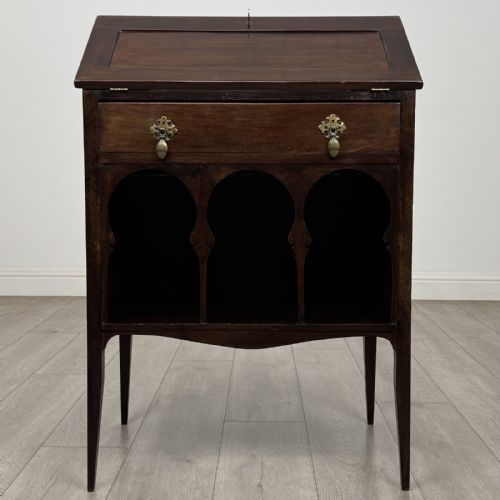
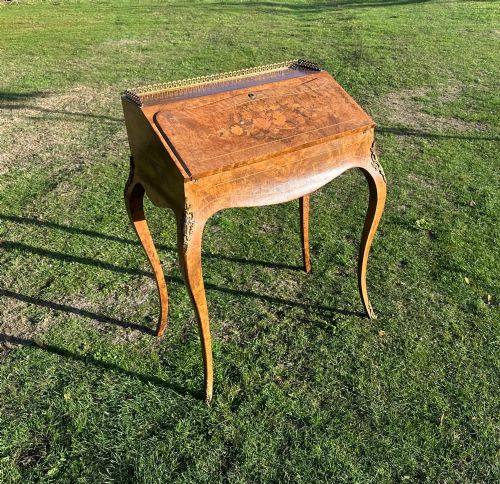
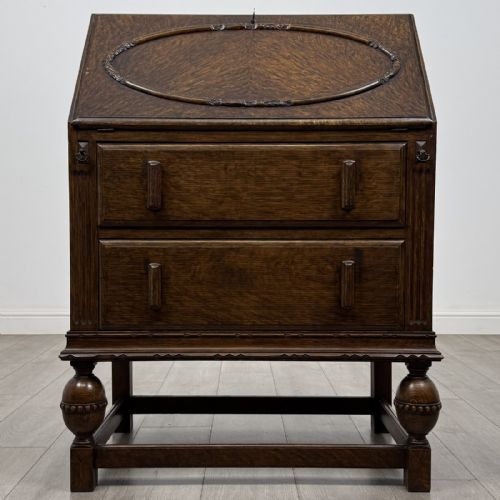
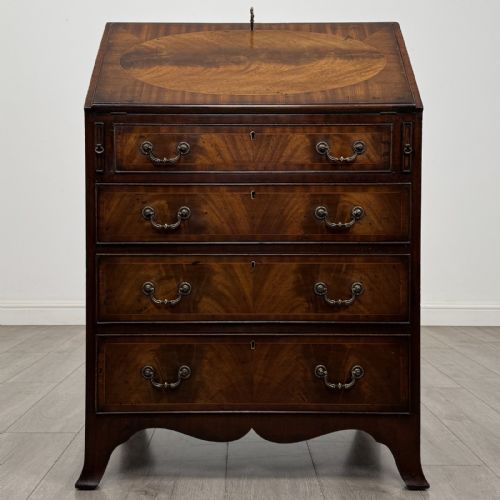


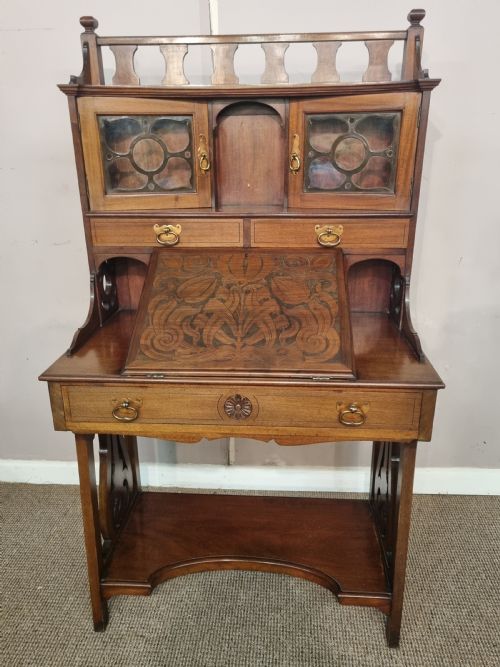
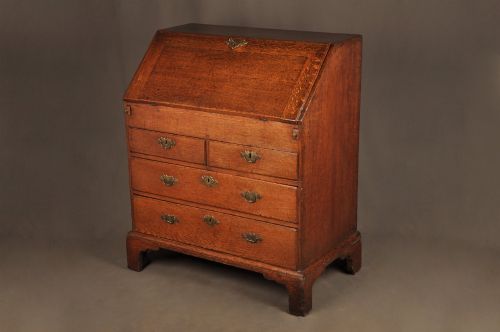
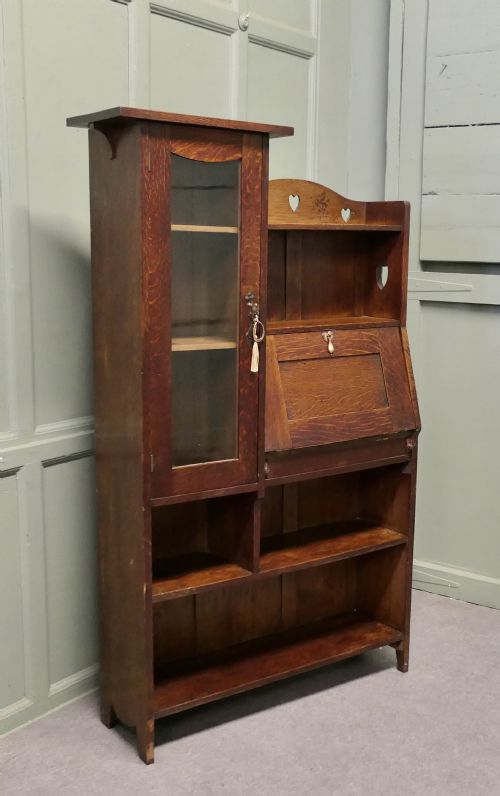
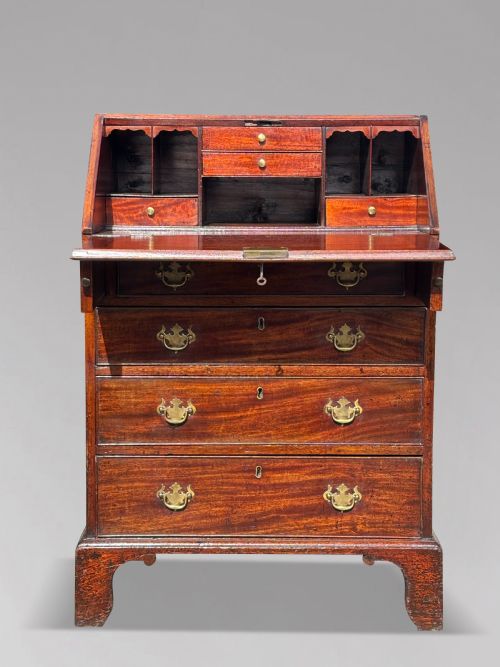


Small Fall Front Desk
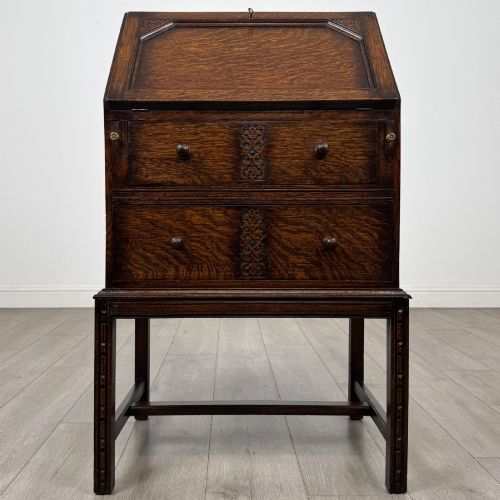
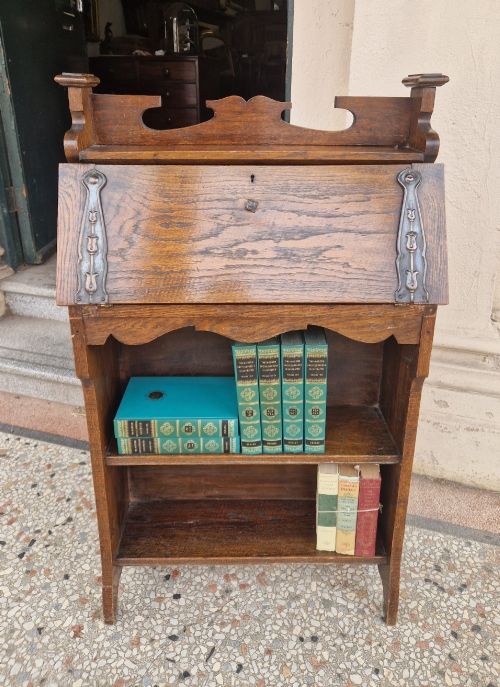
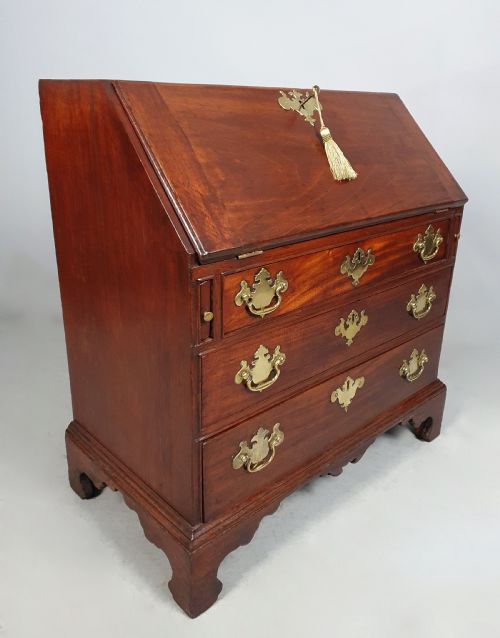
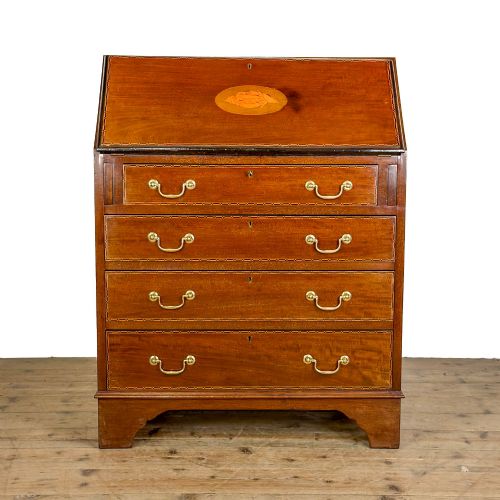
A small fall front desk is a compact writing cabinet housing a sloping hinged writing flap and internal drawers.
Small Fall Front Desk
A small fall front desk, frequently catalogued as a bureau or writing desk, provides a private writing surface that conceals fitted compartments when closed. Buyers searching for a small fall front desk encounter compact pieces designed to occupy minimal floor space while offering functional storage.
The selections available span multiple centuries, ranging from early eighteenth-century oak and walnut examples to Georgian mahogany designs and later Edwardian interpretations. These pieces often feature an inclined writing flap that drops down to rest on pull-out supports, revealing pigeonholes and small drawers within.
Makers adapted the form across distinct regional styles, producing everything from modest student models in golden oak to elaborate French marquetry ladies bureaux adorned with ormolu and porcelain plaques. The core function remains consistent across periods, prioritising enclosed workspace and vertical storage.
Materials and construction methods
Cabinetmakers constructed these desks using durable hardwoods such as oak and mahogany, often applying decorative veneers of walnut, burr walnut, amboyna, or satinwood to the primary surfaces. Crossbanding and marquetry inlays provided geometric or floral ornamentation on the fall front and drawer fronts.
Internal components relied on secondary woods like cedarwood and fruitwood, joined with traditional techniques to withstand the mechanical stress of the dropping flap and operational drawers. Brass handles, escutcheons, and hinges secured the structural integrity and provided functional hardware for daily use.
Small Fall Front Desk Retail Price Guide 2026
Typical asking prices for small fall front desk among the pieces listed under this phrase on Sellingantiques today, from the lower quarter to the upper quarter. They describe what is for sale here now, not the wider market.
Listings feature oak, mahogany, walnut, and burr walnut across periods spanning the late seventeenth century to the twentieth century.
Evaluating craftsmanship and proportion
Quality rests in the precision of the timber selection, particularly where matched burr walnut or figured mahogany veneers flow continuously across the fall front and drawer fascia. Superior examples display meticulous attention to the internal arrangement, with finely dovetailed pigeonholes and secret compartments operating smoothly.
Proportion and scale distinguish finer iterations from standard production, with superior pieces maintaining balanced dimensions and restrained inlay work. The crispness of carved details, the retention of original brass hardware, and the structural stability of the writing flap all dictate the standing of an individual desk.
The Small Fall Front Desk Glossary
- Fall front
- A hinged writing flap that drops down to form a horizontal desk surface. It conceals internal stationery compartments when closed.
- Bureau
- A writing desk equipped with a sloping lid or fall front enclosing drawers and pigeonholes. In British usage, this term frequently denotes the traditional fall front desk.
- Secretaire abattant
- A tall, upright cabinet featuring a drop-front writing surface. This form originated in France and provides substantial vertical storage.
- Marquetry
- Decorative patterns formed by inlaying pieces of wood veneer into a solid background. Craftsmen utilise diverse timber colours to create floral or geometric designs.
- Ormolu
- Gilt bronze mounts applied to furniture for decorative effect. This technique appears predominantly on continental pieces from the nineteenth century.
Small Fall Front Desk: Frequently Asked Questions
How do I use a small fall front desk today?
These desks suit modern laptop use or letter writing by dropping the hinged flap to create an immediate workspace. When finished, closing the flap conceals papers and restores a tidy appearance to the room.
The internal pigeonholes and small drawers organise stationery and modern accessories. Their compact footprint allows them to fit comfortably into bedrooms, hallways, or smaller studies.
How do I date an antique wooden desk?
Dating relies on examining the timber species, construction methods, and secondary woods used inside the drawers. Eighteenth-century pieces frequently employ oak or mahogany with hand-cut dovetails and pegged frames, while later Victorian and Edwardian examples show machine-sawn components.
Stylistic markers such as cabriole legs, bracket feet, and specific veneer types like burr walnut or satinwood help narrow the period of manufacture. Hardware styles and fixing methods also provide clear chronological indicators.
Where should I place a compact writing desk?
The modest proportions of these desks make them ideal for narrow hallways, guest bedrooms, or corners of a living room. Placing them away from direct sunlight and heat sources protects delicate wood veneers from drying out.
Ensure there is sufficient clearance in front of the desk for the fall front flap to lower fully and for a chair to pull out comfortably. Their finished backs sometimes allow them to sit away from the wall in open room layouts.