


Small Elm Chest
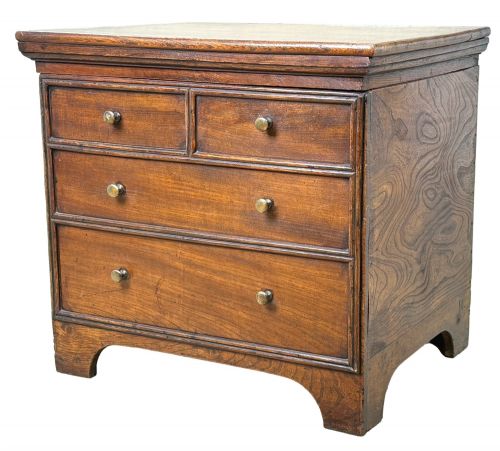
A small elm chest brings the rich, figured grain of native timber and country craftsmanship directly into smaller rooms.
Small Elm Chest
The domestic forms appearing in these pieces include bedside cabinets, close stools, miniature furniture, writing desks, and tabletop chests alongside standard drawer configurations. Surviving examples demonstrate how makers adapted local timber for daily storage needs, resulting in proportions suited to restricted spaces.
How they were made
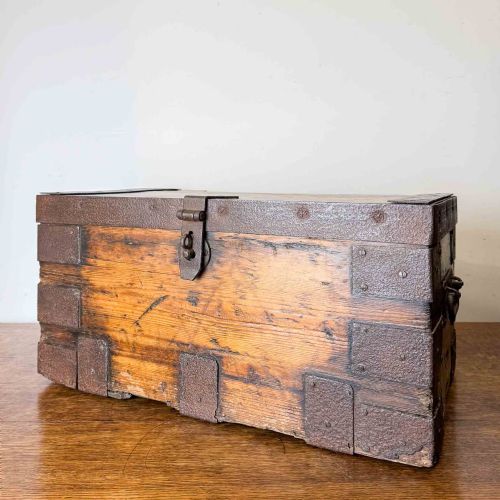
Makers utilised solid elm timber, frequently selected for its tough, interlocked grain that resisted splitting, and paired it with secondary woods such as pine and oak for internal framing and drawer linings. Surface hardware typically incorporates hand-forged iron handles, strapwork, and brass escutcheons that secure the box construction.
Joinery methods range from simple six-plank board construction secured with nails or dowels to sophisticated dovetail joints on drawer carcases and cabinet work. Timber surfaces were left to develop a natural finish or treated with historical wax applications that enhance the swirling figure of burr and straight-grained elm over centuries.
Some small elm chests masqueraded as innocent bedside furniture while secretly housing chamber pots.
What varies in quality
The standard of a small elm chest depends heavily on the choice of timber, particularly where highly figured burr elm veneers or selected solid boards display exceptional depth and movement in the grain. Superior pieces retain their original brass or iron hardware, unblemished feet, and minimal timber replacement.
Construction refinement also separates ordinary utility items from finer cabinetwork, evident in the tightness of hand-cut dovetails, the thickness of drawer bottoms, and the integrity of the original backboards. Pieces possessing untouched patination and proportional harmony command greater appreciation among collectors.
The Small Elm Chest Glossary
- Burr elm
- A growth deformity in the tree that produces highly twisted, knotty grain patterns prized for decorative furniture panels. This figured timber creates striking optical movement across drawer fronts and top surfaces.
- Six-plank
- A primitive box construction method utilising six individual boards joined at the edges to form a rigid coffer or chest. This sturdy technique typifies early country furniture from the seventeenth century.
- Close stool
- An enclosed piece of furniture designed to conceal a chamber pot, often disguised as a small bedside chest or cabinet. These domestic items frequently feature hinged lids and cupboard doors.
- Dovetail
- A joint formed by interlocking wedge-shaped fingers, commonly used to connect drawer sides to drawer fronts. Fine, narrow pins indicate careful hand craftsmanship in period carcases.
- Patina
- The deep surface sheen and coloration developed by wood and hardware through decades of handling, light exposure, and polishing. It serves as a visual indicator of age and continuous use.
Small Elm Chest: Frequently Asked Questions
What periods do small elm chests come from?
These pieces date from the late seventeenth century through the Georgian and Victorian eras, with many examples originating from the eighteenth century. Country workshops continued producing these timber forms well into the nineteenth century.
Design details such as bracket feet, moulding profiles, and construction methods help distinguish earlier seventeenth-century coffer forms from later nineteenth-century drawer units.
How were small elm chests used originally?
Households utilised these compact chests for storing textiles, bedding, valuables, writing equipment, or personal items in bedrooms and parlours. Their modest dimensions allowed them to fit into tighter spaces than standard wardrobe or tallboy furniture.
Specialised variants like close stools and writing desks performed dual functions, concealing sanitary equipment or providing a stable surface for correspondence.
How do you care for antique elm furniture?
Keep elm furniture away from direct heat sources and dramatic humidity fluctuations to prevent timber movement or splitting in the solid boards. Maintaining a stable indoor climate preserves the structural integrity of the joints.
Apply occasional natural wax polish using a soft cloth to nourish the wood surface and maintain the historic patina without sealing the pores.
Is elm a durable wood for furniture?
Elm possesses a famously interlocking grain structure that makes it extremely tough and resistant to splitting under heavy impact. This durability made it the traditional choice for Windsor chair seats, cart wheels, and robust country storage chests.
While tough, the timber can warp if improperly seasoned, making well-constructed historical examples resilient survivors of domestic use.