
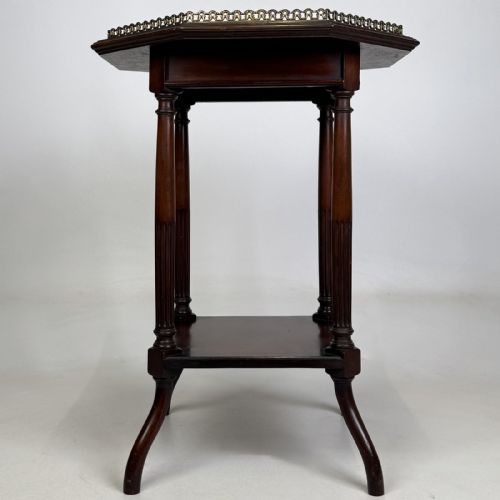
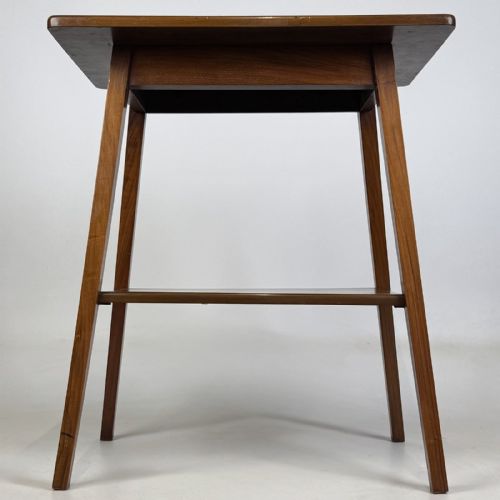
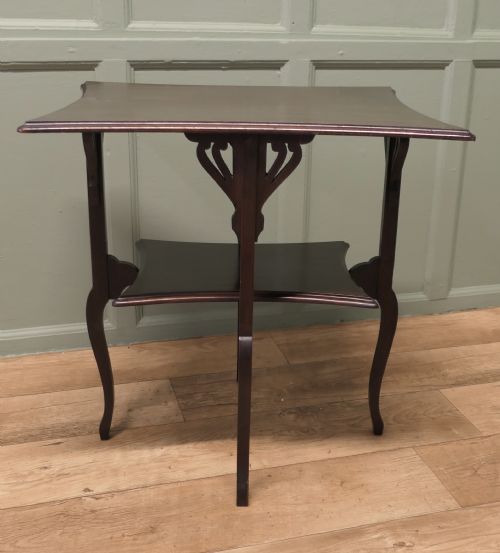
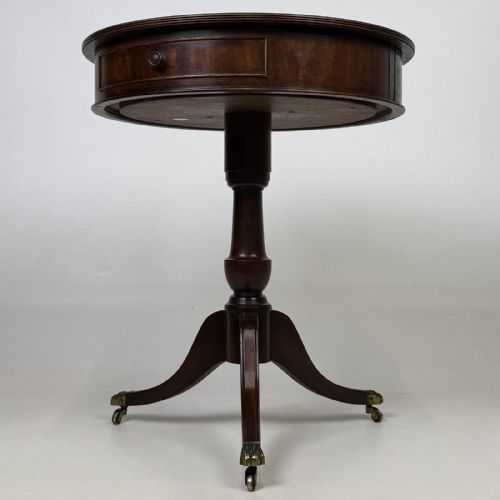
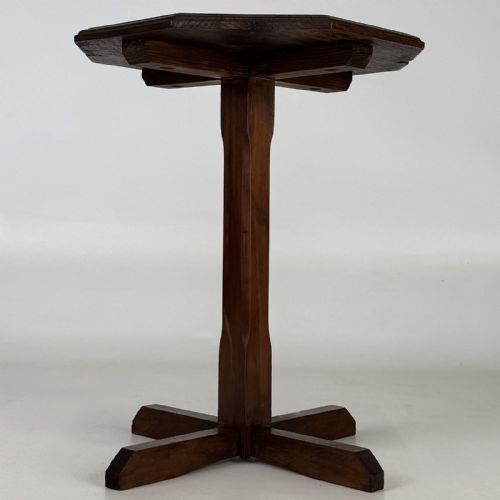
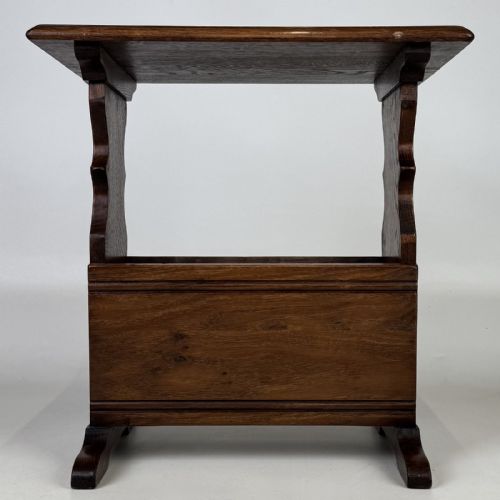
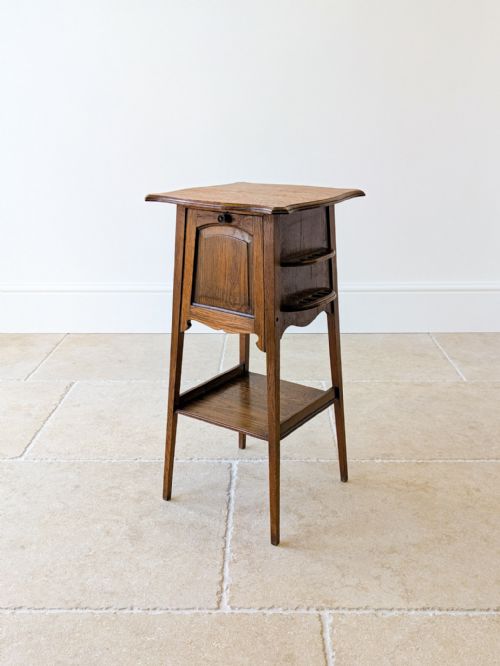
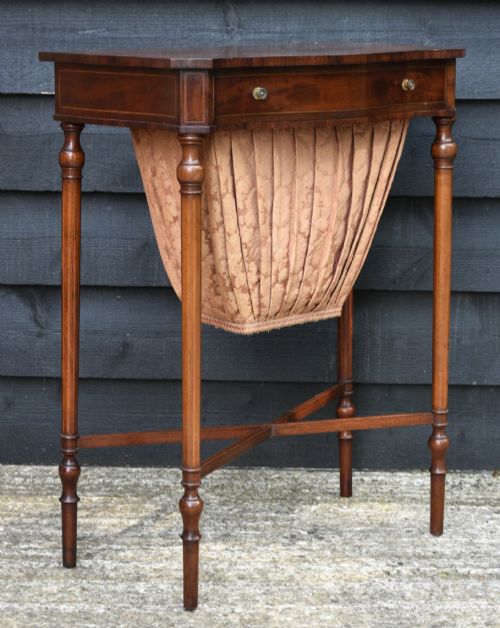
Small Edwardian Occasional Table
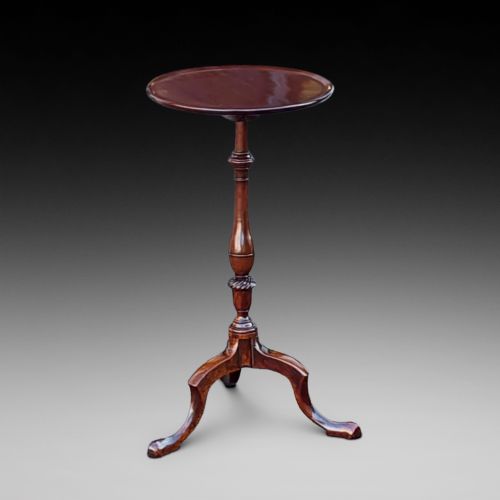
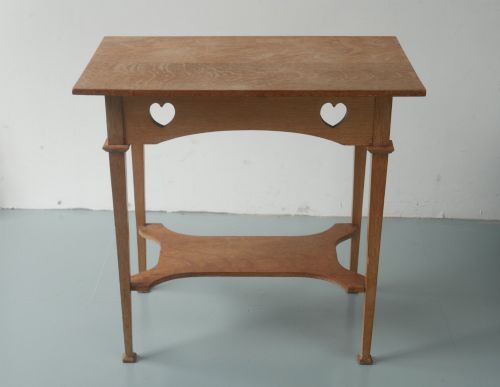
A small edwardian occasional table offers a compact surface for lamps and drinks, combining period craftsmanship with everyday utility in a domestic interior.
Materials and Construction
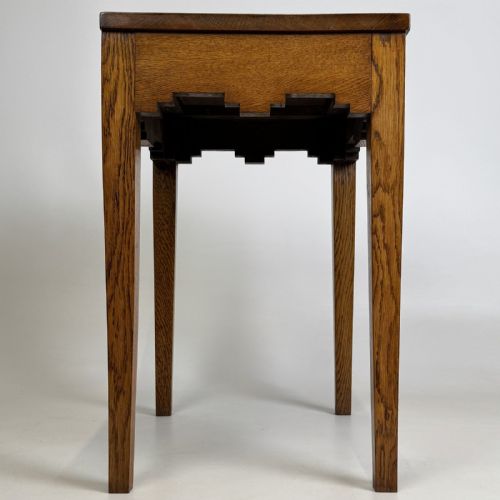
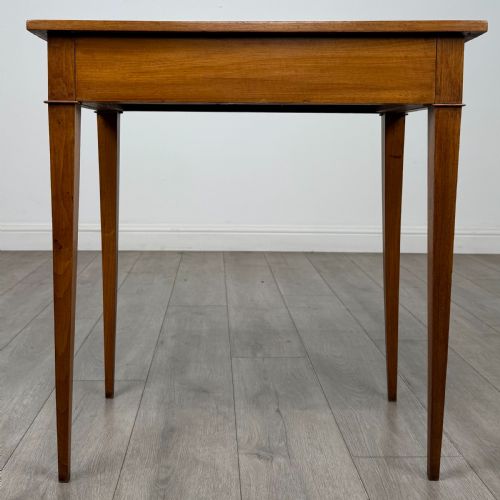
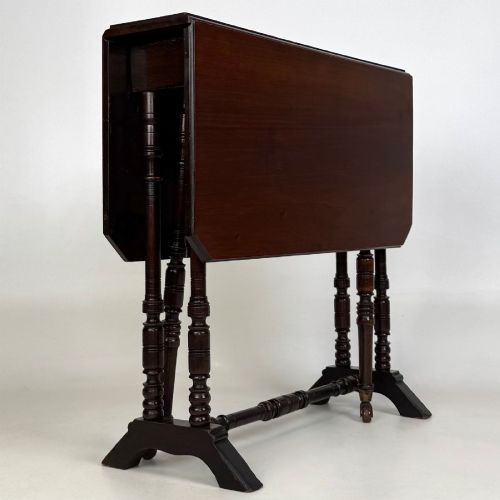
Cabinet makers utilised dense hardwoods such as mahogany, oak, and walnut, frequently selecting figured veneers for table tops. Boxwood stringing and decorative wood inlay provided contrast along edges and legs, while brass fittings appeared on drop-leaf supports and castors.
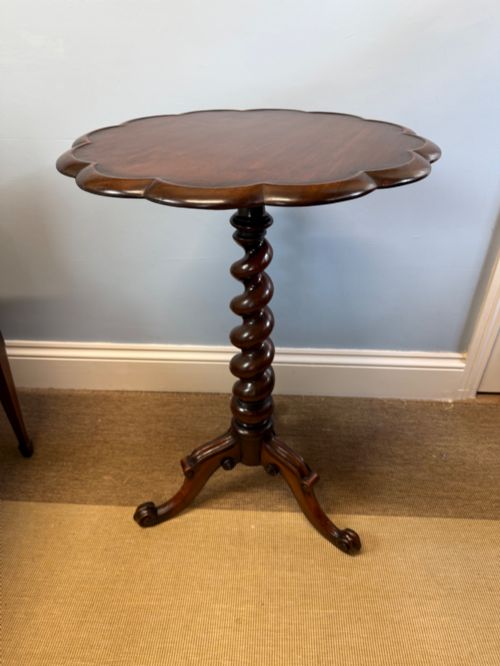
Joinery methods combined traditional framing with turned components, including barley twist legs and bamboo-turned supports. Certain workshops integrated ceramic tiles or velvet inserts directly into the wooden framework for specialised plant or reading tables.
Judging Quality and Finish
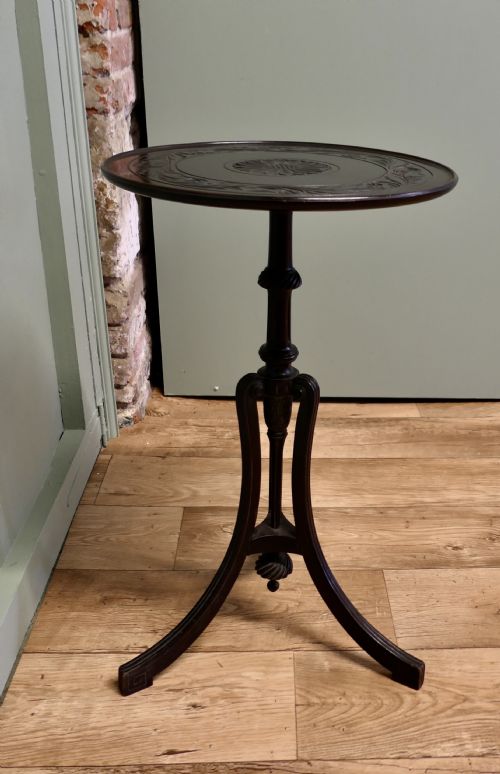
Superior examples reveal themselves through the precision of the wood inlay and the selection of figured timber veneers. Finely carved details on legs and rims demonstrate greater workshop skill than standard turned mouldings.
Structural integrity sets apart better pieces, particularly in folding or drop-leaf mechanisms that must operate smoothly over decades. The harmony of proportions and the preservation of original polish dictate the standing of an individual table.
Simulated bamboo turning lets a table pretend to be oriental flora while secretly staying stout British oak.
Shapland & Petter
The Small Edwardian Occasional Table Glossary
- Occasional table
- A moveable, light-duty table designed for specific temporary uses in a reception room rather than formal dining. These pieces include wine tables, lamp tables, and small side tables.
- Inlay
- A decorative technique where contrasting woods or materials like boxwood are set into recesses flush with the surface. This method creates geometric borders and floral motifs on table tops.
- Wine table
- A small, often tripod-based stand designed originally to hold a single glass and bottle of wine. They frequently appear with circular or shaped pie crust rims.
- Arts and Crafts
- A design movement prioritising honest construction, visible craftsmanship, and simple materials over factory mass production. Tables in this style often display exposed joinery and hand-carved oak elements.
Small Edwardian Occasional Table: Frequently Asked Questions
What is a small edwardian occasional table used for?
These tables served primarily as convenient surfaces for holding reading material, small lamps, or tea cups within sitting rooms.
Their lightweight construction allowed domestic staff or residents to shift them around the house as daily needs changed.
How do I identify an edwardian table?
Edwardian pieces generally date from the period between nineteen hundred and nineteen ten, showing lighter proportions than their heavy Victorian predecessors.
They frequently combine Sheraton revival influences with satinwood inlay, brass castors, and tapered legs.
Are these tables sturdy enough for daily use?
Solid mahogany and oak versions offer robust support for lamps and everyday items, provided the joints remain tight.
Tables with intricate drop-leaf mechanisms or slender spider legs require gentle handling to prevent structural strain.
What woods were used for these tables?
Cabinet makers relied heavily on mahogany, oak, and walnut as primary timbers for frames and tops.
Exported exotic woods and lighter accents like boxwood provided contrast for stringing and marquetry decoration.