




Small Desk Clock
A small desk clock sits quietly on a surface, measuring time in brass, silver, and mahogany through the centuries.
Small Desk Clock
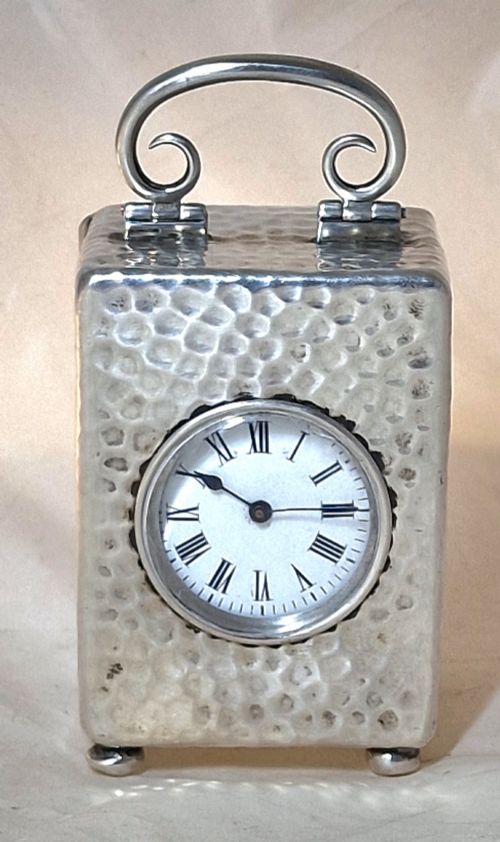
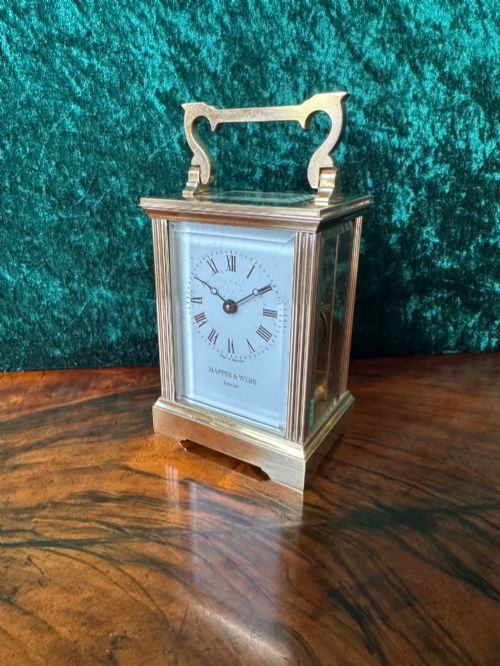
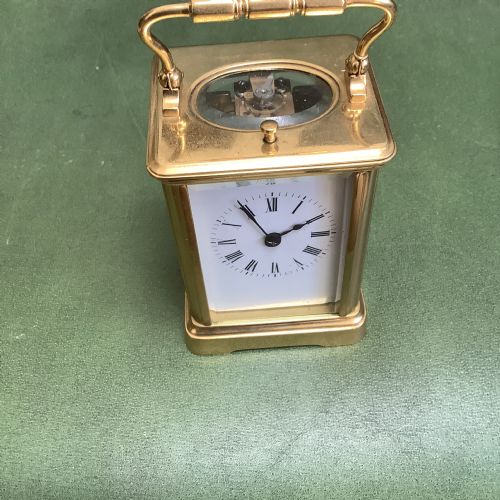
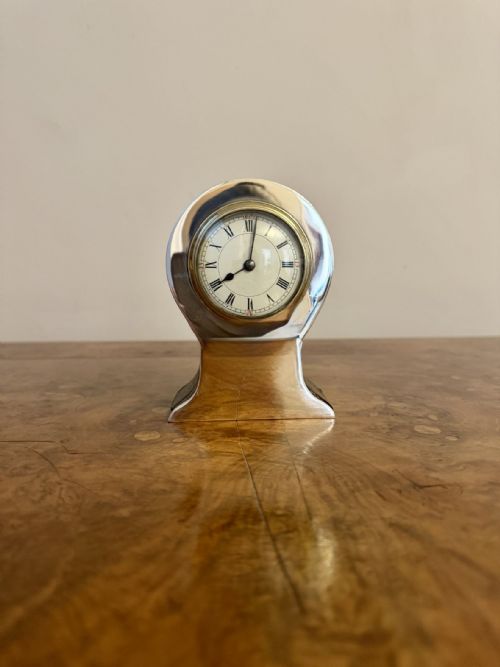
A small desk clock encompasses a variety of compact portable timekeepers, most frequently seen here as brass carriage clocks, silver boudoir pieces, and wooden library clocks. These objects were designed for travel, bedside use, or placement on smaller writing surfaces.
The selection ranges from Victorian and Edwardian examples to earlier French models and Art Deco variations. Carriage clocks and miniature timepieces dominate the offerings, often fitted with glass panels or hinged carrying handles.
Makers and retailers from London and Paris feature prominently, alongside unmarked pieces in mahogany, walnut, and satinwood. Buyers encounter both simple wooden timepieces and heavily engraved brass designs with enamel dials.
How they were made
Materials span metals and hardwoods, with brass, gilt bronze, ormolu, and sterling silver housing mechanical movements alongside glass panels. Cases utilise mahogany, walnut, satinwood, rosewood, oak, and marble.
Clockmakers employed precise metalworking techniques to house escapements and gear trains within miniature enclosures. Dials frequently feature hand-painted details, floral enamel work, or engraved brass chapter rings.
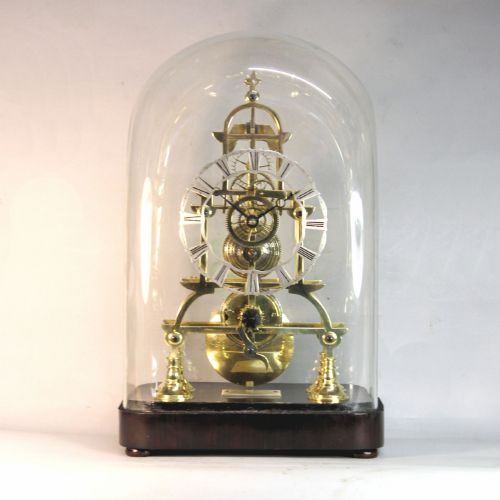
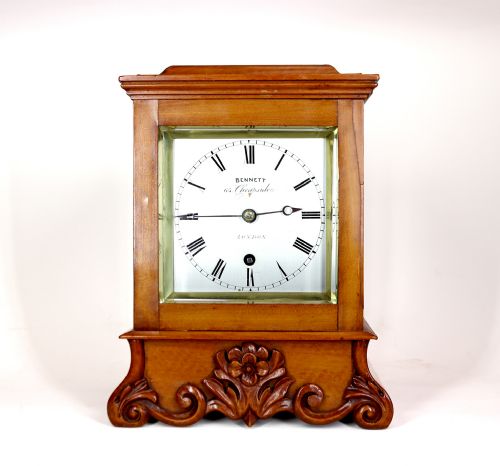
French carriage clocks with fully engraved gilt brass cases appear alongside English fusee library clocks and wooden timepiece mantel clocks.
What varies in quality
The refinement of the case execution separates standard items from exceptional ones, particularly regarding hand-engraved brass work, crispness of ormolu mounts, and figured timber grain. Signed movements by notable makers command greater interest than anonymous equivalents.
Dial preservation also dictates distinction, with undamaged enamel and delicate hand-painted motifs representing superior craftsmanship. The complexity of the internal mechanism, such as fusee movements or repeating striking functions, adds further distinction.
Mappin and Web·Richard Winter of Chieveley·Sir John Bennett·William Comyns·Tiffany·J Batson and Son·Lenzkirch·Joseph Jump·Richard Co·J C Vickery·McCabe·Purvis of London·Smiths
The Small Desk Clock Glossary
- Carriage clock
- A small, spring-driven clock with a carrying handle, originally designed for travel by horse-drawn carriage. They are frequently housed in brass cases with glass panels.
- Fusee
- A conical pulley used in mechanical clocks to maintain an even pull on the gear train as the mainspring unwinds. This mechanism improves timekeeping accuracy across the power reserve.
- Timepiece
- A clock that tells the time without striking the hours or chiming. Many small desk clocks and boudoir pieces are strictly timepieces.
- Gilt bronze
- Bronze metal treated with a thin layer of gold or gold-coloured alloy. It is commonly found on decorative French clock cases from the nineteenth century.
Small Desk Clock: Frequently Asked Questions
What is a carriage clock?
A carriage clock is a portable spring-driven timepiece fitted with a glass-sided metal case and a carrying handle on top. They were originally built for travellers in the nineteenth century.
Most examples use a platform escapement and can run for eight days on a single wind. They sit securely on desks or bedside tables due to their flat bases.
How do I wind a small desk clock?
Winding requires a matching key inserted into the winding square on the dial or back plate. Turn the key gently until resistance is felt, avoiding overwinding.
Many antique timepieces require careful handling and occasional professional servicing to keep the mechanical movement running accurately.
How can I tell the age of a desk clock?
Age is determined by stylistic indicators, maker signatures, case materials, and hallmarks on silver components. Victorian and Edwardian pieces often display registration numbers or assay marks.
French models from the nineteenth century frequently carry maker stamps on the back plate of the movement alongside serial numbers.