





Small Cylinder Desk
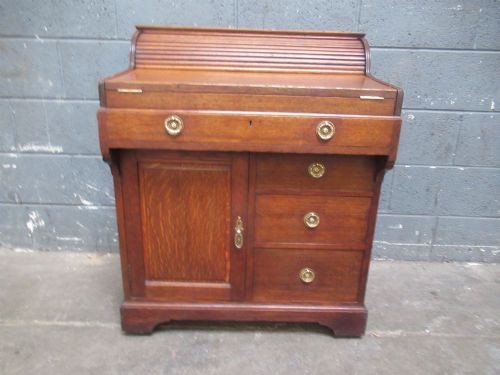
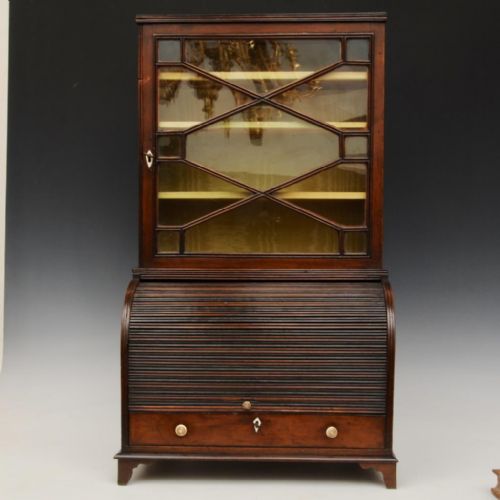
A small cylinder desk is a compact writing cabinet with a curved roll top enclosing fitted drawers and a pull-out slide, offering private storage and a concealed writing surface.
Small Cylinder Desk
A small cylinder desk combines enclosed compartmentalised storage with a curved wooden shutter that rolls back to reveal the writing surface. This selection spans multiple periods, including Georgian, Victorian, Edwardian, and the 18th century, alongside French revival styles.
Buyers will encounter various forms ranging from standard compact library tables to miniature furniture and ladies writing cabinets. Mahogany remains the dominant timber, though walnut, oak, satinwood, and marble also appear across these listings.
The architectural influences vary considerably, taking cues from Directoire taste as well as Louis XV and Louis XVI aesthetics. Many examples feature delicate marquetry or parquetry inlay, whilst others rely on the rich grain of solid mahogany.
Materials and construction
Cabinetmakers constructed the rolling shutter from narrow vertical slats glued to a canvas or leather backing, allowing the cylinder to glide smoothly within routed tracks. Solid timbers like mahogany and oak form the structural carcassing, frequently veneered with finely figured mahogany or exotic satinwood.
Writing surfaces are frequently inset with tooled leather panels to provide a durable and tactile writing plane. Additional details include cast brass gallery rails, escutcheons, and drawer pulls, which anchor the formal composition of the piece.
Small Cylinder Desk Retail Price Guide 2026
Typical asking prices for small cylinder desk among the pieces listed under this phrase on Sellingantiques today, from the lower quarter to the upper quarter. They describe what is for sale here now, not the wider market.
The listings feature mahogany predominantly, alongside oak, walnut, and satinwood, spanning periods from the 18th century through to Edwardian times.
Assessing quality
Quality rests upon the precision of the joinery within the rolling mechanism, where smooth, effortless travel indicates careful initial construction and minimal timber warping. The refinement of the interior pigeonholes and small drawers reflects the maker's dedication to hidden details.
Surface decoration divides standard utility pieces from exceptional examples, particularly where marquetry or parquetry uses contrasting timbers with sharp geometric or floral clarity. The integration of fine brass mounts and high-grade marble tops elevates the visual weight of the furniture.
The Small Cylinder Desk Glossary
- Cylinder desk
- A writing desk featuring a quarter-circle rotating wooden shutter that conceals the writing surface and interior pigeonholes when closed. This mechanism differs from a tambour desk by employing a solid curved panel rather than narrow slats.
- Marquetry
- A decorative technique where thin veneers of various coloured woods are cut and assembled to create pictorial or ornamental patterns. It differs from inlay by covering the entire surface rather than being set into recessed channels.
- Parquetry
- A geometric mosaic of wood veneer used to cover floors or furniture surfaces, creating repetitive patterns like cubes or chevrons. It provides a structured decorative scheme distinct from floral marquetry.
- Directoire style
- A transitional French design period bridging Louis XVI and Empire styles, characterised by classical restraint and reduced ornamentation. Pieces from this aesthetic favour clean architectural lines over excessive carving.
- Escutcheon
- A protective brass plate surrounding a keyhole that prevents the surrounding wood from splintering through repeated use. These hardware elements often double as decorative accents on drawer fronts.
Small Cylinder Desk: Frequently Asked Questions
What is a small cylinder desk?
A small cylinder desk is a compact writing cabinet featuring a curved rolling shutter that conceals the interior stationery compartments and pull-out writing slide. It provides private storage for correspondence whilst maintaining a modest footprint suited to smaller rooms.
These pieces typically incorporate finely fitted interior drawers and pigeonholes beneath the roll top. They emerge across Georgian, Victorian, and Edwardian periods in materials such as mahogany, oak, and satinwood.
How did people use a small cylinder desk?
Owners utilised these desks for private correspondence and the storage of important documents, concealing unfinished letters by simply rolling the cylinder shut. The pull-out writing surface offered a dedicated space for daily administration.
The interior arrangement of small drawers and open compartments allowed users to organise stationery, inkwells, and ledgers efficiently. This made the desk a popular choice for drawing rooms and private libraries.
How do I style a small cylinder desk at home?
A small cylinder desk functions effectively as a focal point in a study or as a practical writing surface in a bedroom or sitting room. Its compact dimensions allow it to sit comfortably against walls where larger partners desks would overwhelm the floor space.
Pair the desk with a low-backed antique chair that fits comfortably beneath the pull-out slide. Keep surface accessories minimal to showcase the grain of the mahogany or the detailed marquetry inlay.
How do I tell Edwardian from Georgian examples?
Georgian examples usually exhibit heavier proportions, simpler lines, and deep, patinated solid mahogany timbers reflecting 18th-century cabinetmaking traditions. Edwardian pieces often incorporate lighter satinwoodbanding, delicate marquetry, and brighter inlay work reflecting later revival tastes.
Examining the secondary timbers inside the drawer construction and the style of the brass hardware assists in determining the precise period of manufacture.