
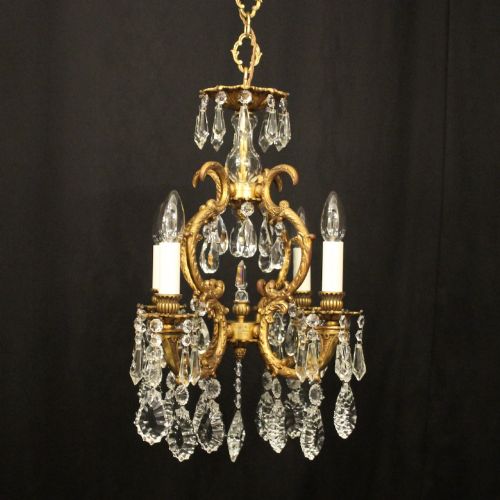
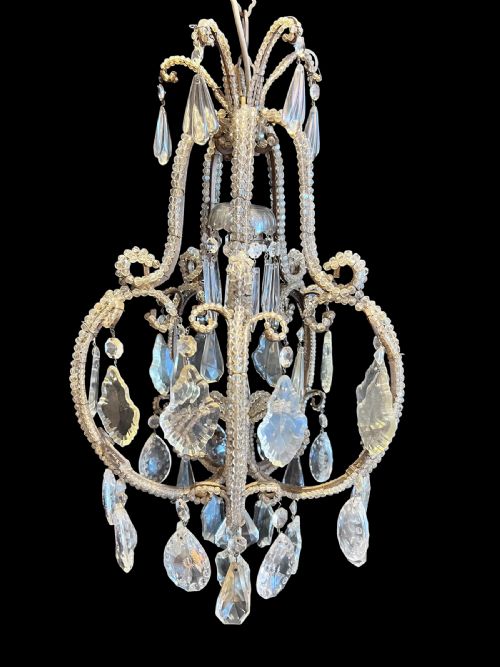
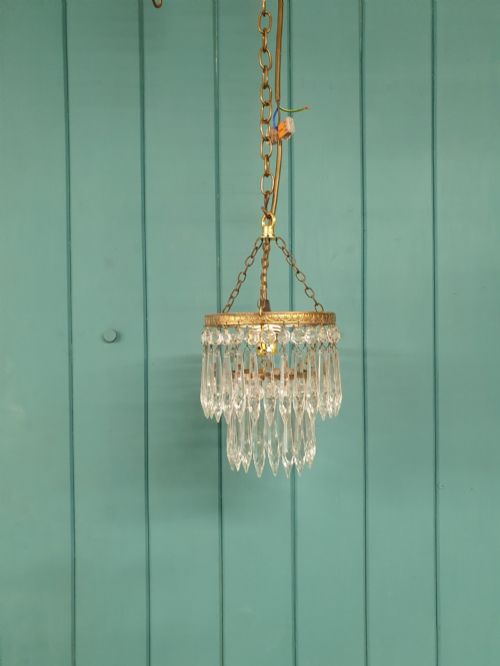
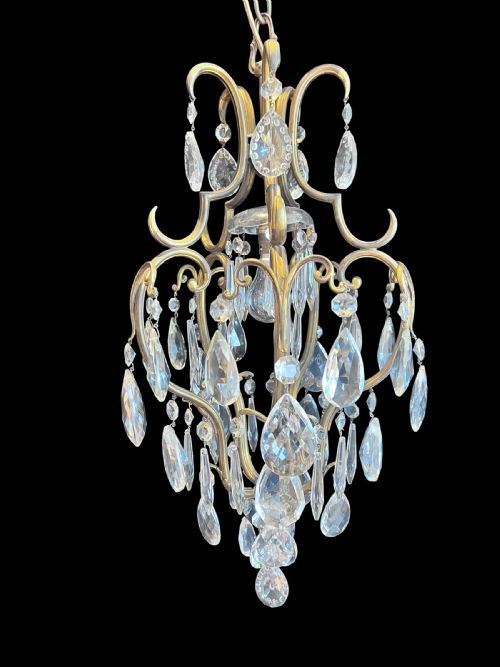
Small Crystal Chandelier Pendant
These small crystal chandelier pendant fixtures bring focused, glittering illumination to compact spaces.
Small Crystal Chandelier Pendant
A small crystal chandelier pendant serves as a decorative ceiling light, combining illumination with hanging glass elements. When exploring this selection, buyers frequently encounter compact fixtures designed for smaller rooms or specific architectural niches.
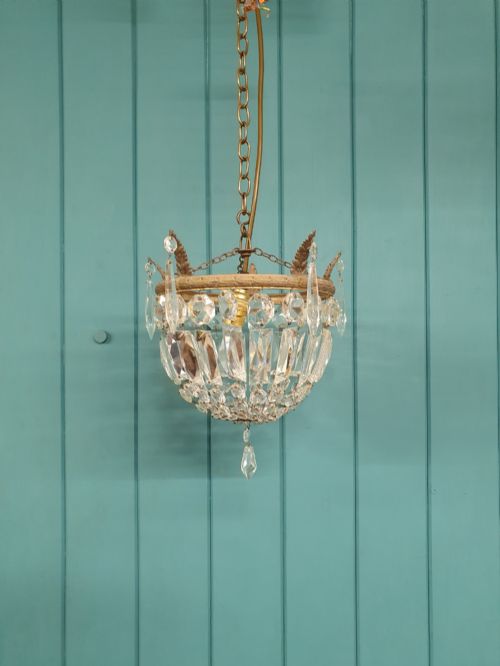
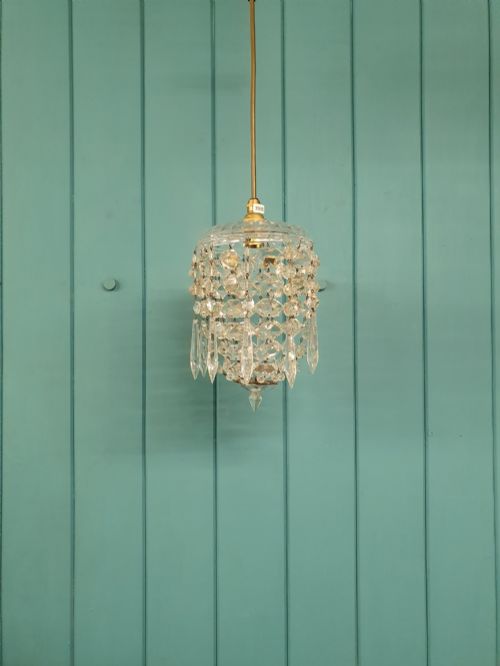
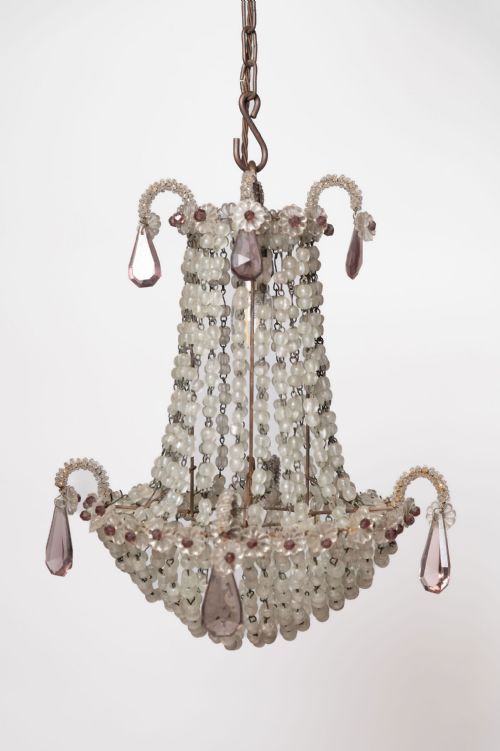
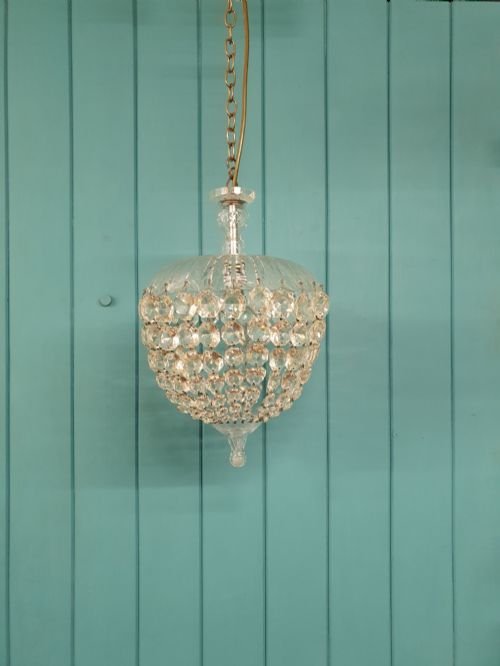
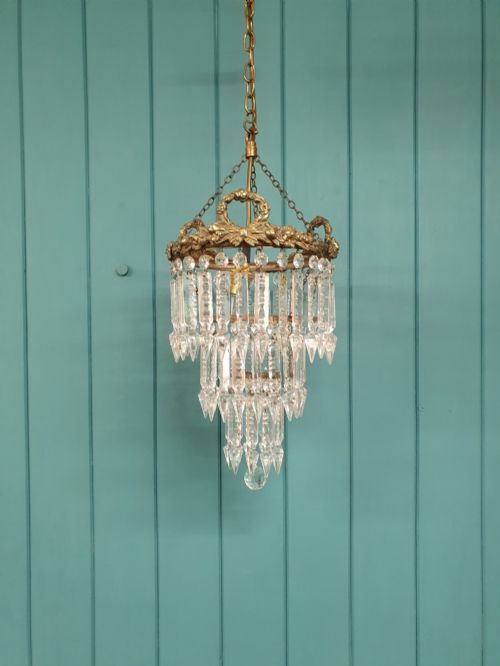
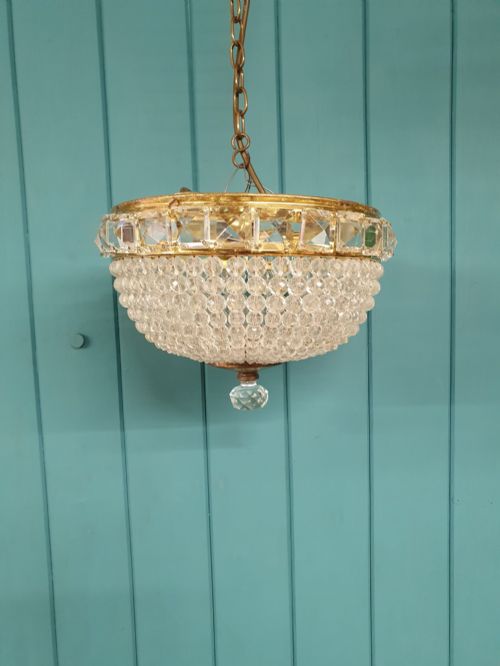
The inventory spans several distinct periods, including Edwardian examples alongside pieces dated from 1900 through 1930. Common forms include dome tops, bag chandeliers, and spike designs, often measuring between five and thirteen inches.
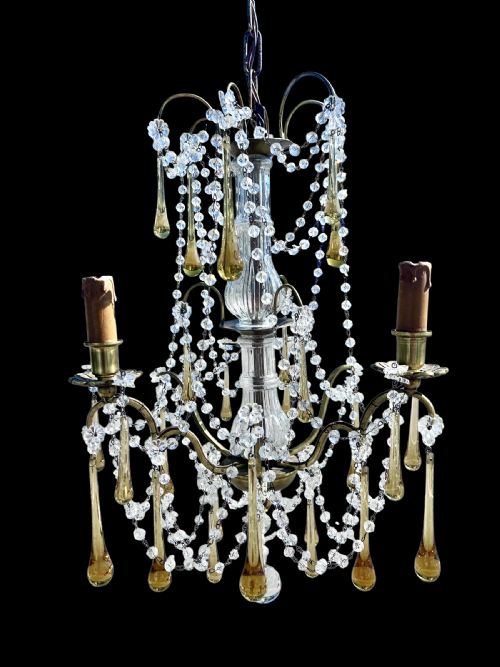
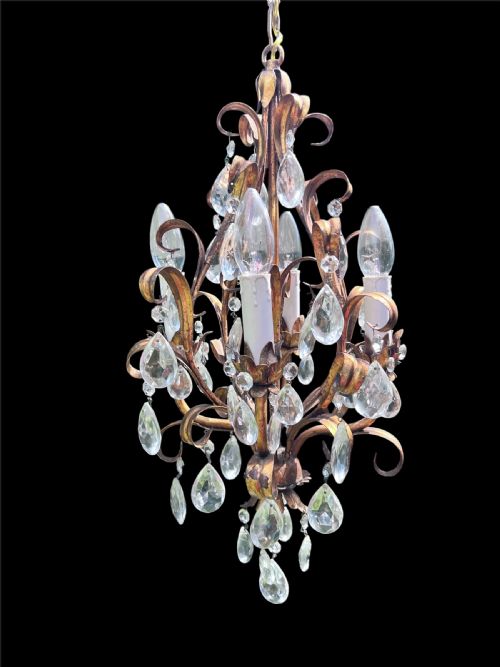
Stylistic influences lean heavily toward French and Italian traditions, encompassing French Empire, French Chateau, and various Rococo revivals. These origins dictate the silhouette, from simple single-light drops to multi-tiered configurations.
Materials and construction methods
Metal frames form the structural skeleton, utilising brass, gilt brass, gilt bronze, and standard metal to support the glass elements. These mounts provide the necessary rigidity while introducing warm metallic tones.
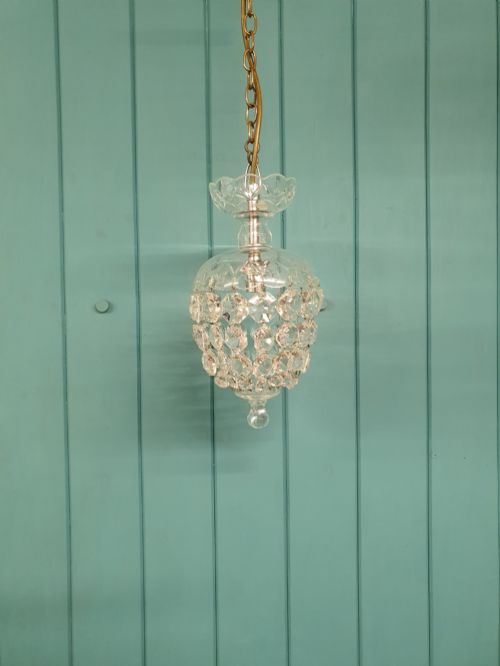
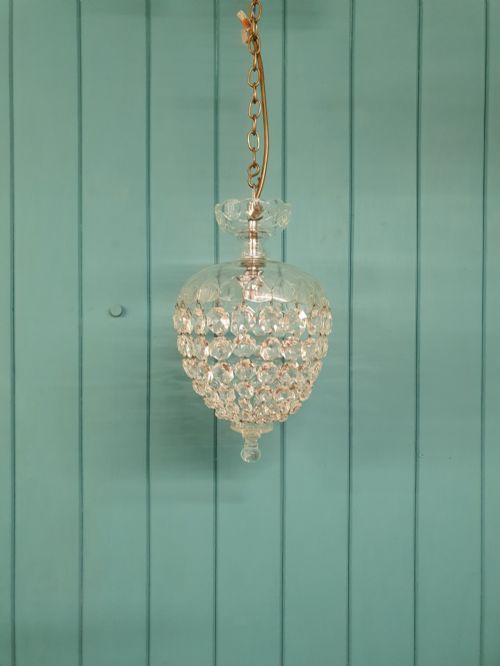
Cut glass, crystal glass, and plain glass are shaped into beads, prisms, and droplets to refract light effectively. Artisans suspend these components from the metal frameworks using fine wiring and pins.
Decorative details such as gilt leaves and wire floral motifs are integrated into the primary structure. The combination of reflective crystal and polished or gilded metal creates the characteristic sparkle of these hanging lights.
Materials across these listings include brass, cut glass, gilt bronze, and crystal, spanning the Edwardian era through the early twentieth century.
Distinguishing quality across pieces
The caliber of a fixture often rests on the clarity and cutting of the glass components. Precision-cut crystal elements catch and disperse light with greater brilliance than simpler moulded glass pieces.
The metalwork's execution reveals much about the piece's standard, particularly in the definition of cast mounts and the richness of gilding. Substantial brass and bronze frames provide both durability and aesthetic depth compared to lighter, plain metal alternatives.
Cohesion of design also separates standard examples from finer ones. Harmonious integration between the metal armature and the specific arrangement of prisms, beads, or spikes indicates deliberate craftsmanship.
The Small Crystal Chandelier Pendant Glossary
- Bag chandelier
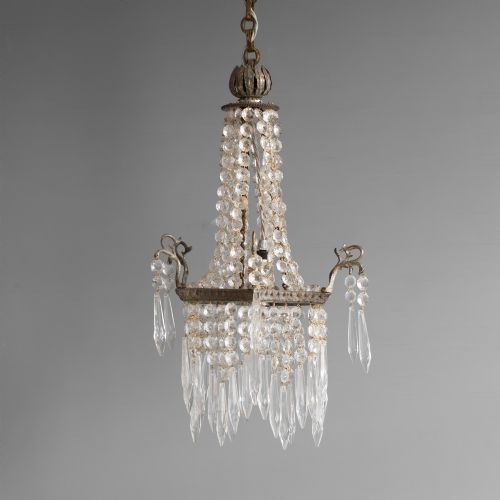
- A fixture shaped like a tapered bag or pouch, formed by numerous vertical strands of glass beads suspended from a circular metal ring. This style creates a dense cascade of light-catching crystals.
- Spike chandelier
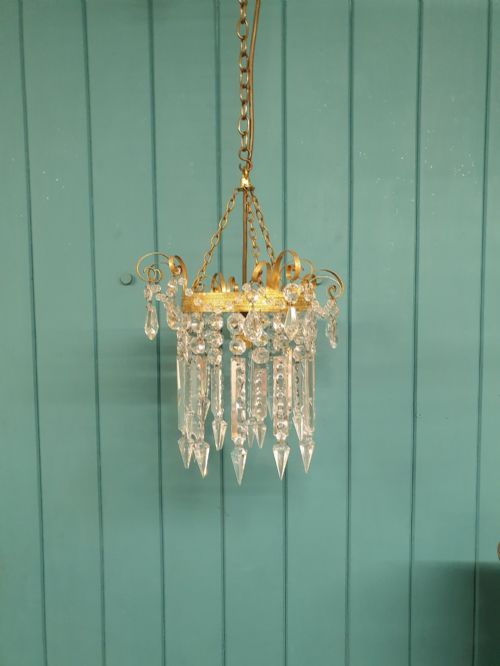
- A design featuring prominent downward-pointing crystal or glass spikes arranged around a central frame. These linear elements add distinct vertical emphasis to the small pendant silhouette.
- Dome top
- A lighting form characterised by a rounded upper canopy composed of glass plates or closely set crystals. This shape directs illumination outward while concealing the primary hanging mechanism.
- Prism
- A cut glass pendant designed to refract light into spectral colours. These elements hang from the frame to enhance the overall luminosity of the fixture.
- Marie Theresa
- A classic multi-tiered chandelier style featuring flat metal arms covered in glass strips and adorned with crystal droplets. Originating in Central Europe, this design offers a layered, ornate appearance.
Small Crystal Chandelier Pendant: Frequently Asked Questions
Where should I hang a small crystal chandelier pendant?
These compact fixtures suit hallways, small entryways, cloakrooms, or bedrooms where ceiling height is limited. Their modest dimensions allow them to introduce decorative elegance without overwhelming restricted square footage.
Positioning them centrally ensures the pendant provides adequate ambient glow while remaining safely above head height. They also function effectively when hung in pairs along a corridor.
How do I determine the period of a chandelier?
Dating relies on examining construction materials, framing techniques, and stylistic markers recorded across Edwardian and early twentieth-century examples. Metal composition, such as gilt bronze versus standard brass, often points to specific manufacturing decades.
Prism cuts and wiring styles offer further clues to the era of production. Comparing the silhouette against documented French and Italian design traits helps narrow down the timeline.
How do I clean a crystal pendant light safely?
Cleaning requires gentle handling of both the metal frame and the delicate glass pendants. Many owners remove individual crystals to wash them in warm soapy water before drying them thoroughly with a lint-free cloth.
The metal armature should be dusted carefully with a soft brush to preserve finishes like gilt bronze or brass. Reattaching each prism in its exact original position maintains the symmetry of the design.