
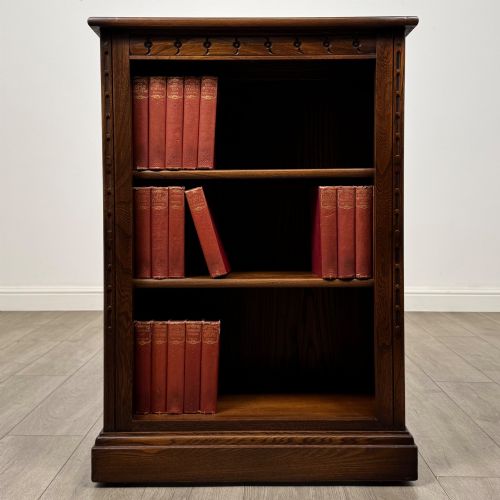
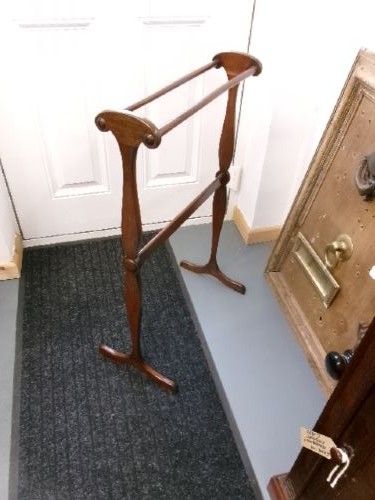
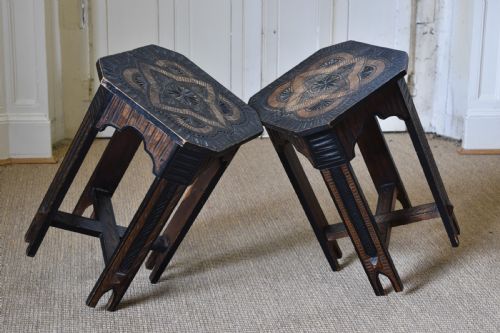
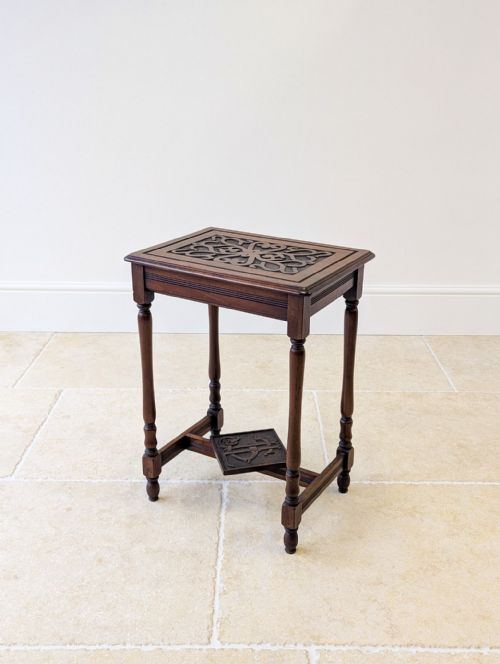
Small Carved Wooden Stand
A small carved wooden stand brings functional surface space and intricate surface detail to compact domestic interiors.
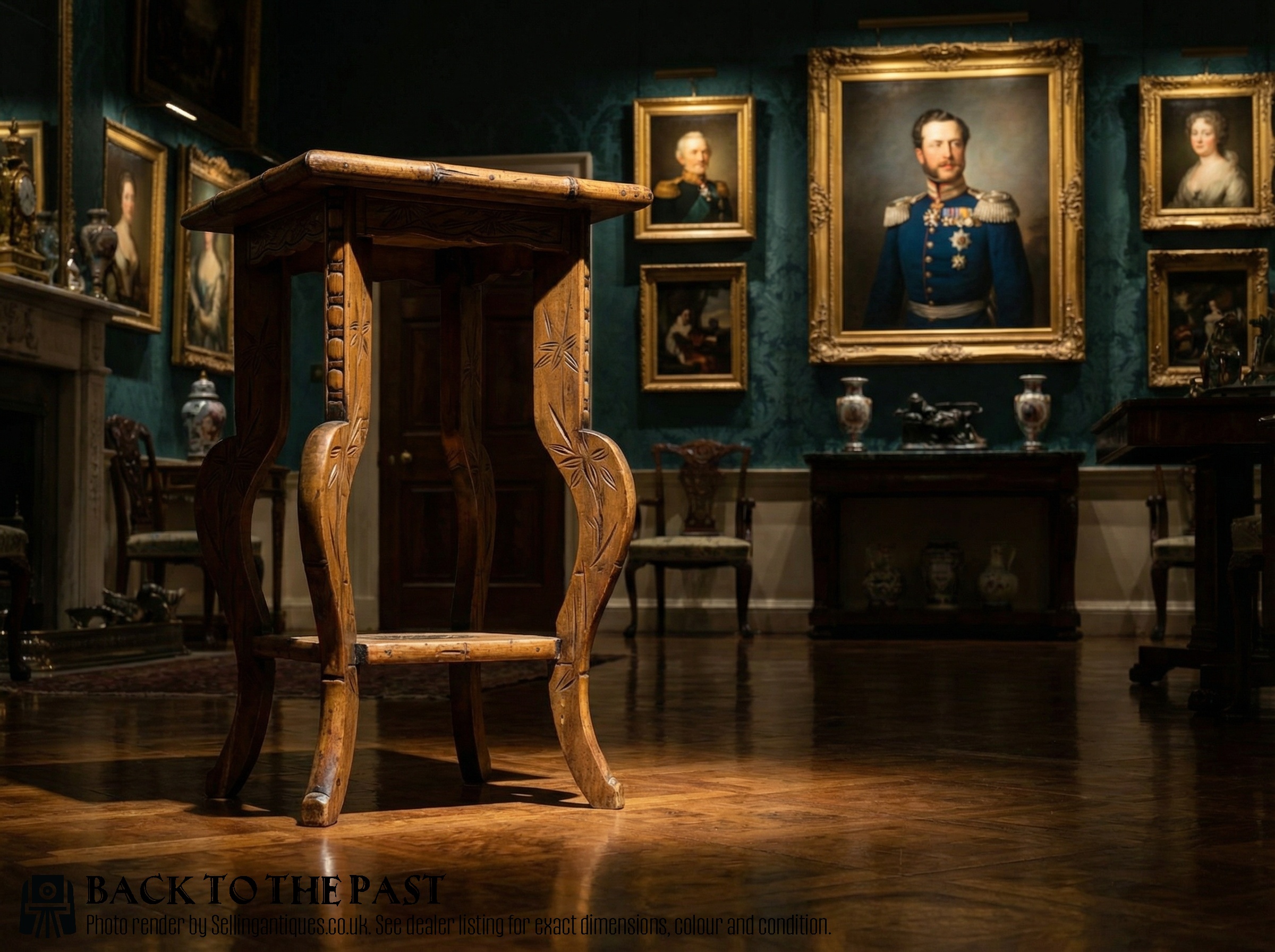
Small Carved Wooden Stand
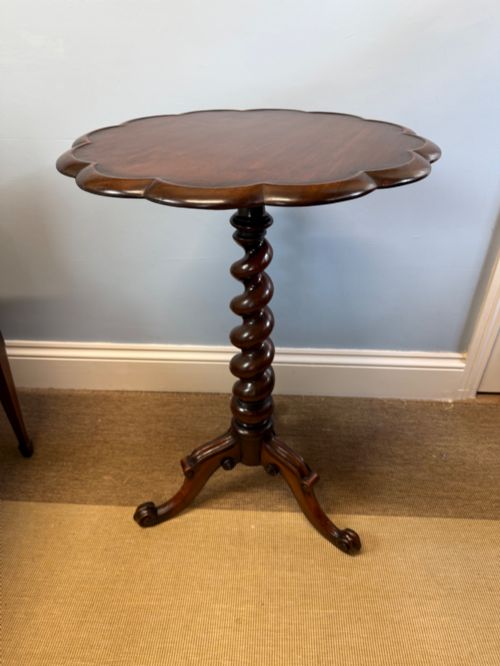
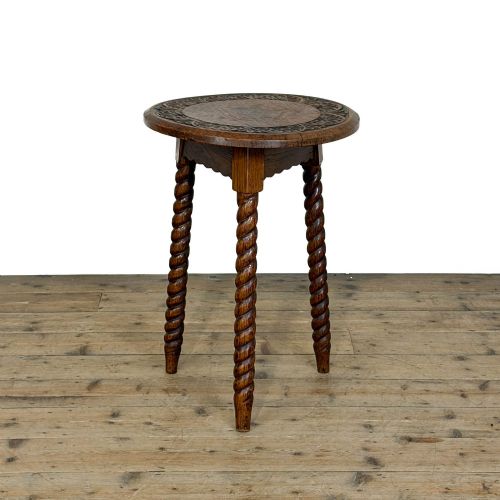
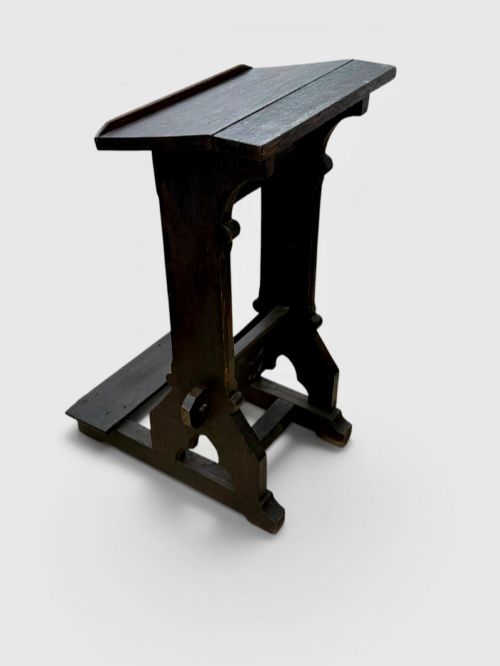
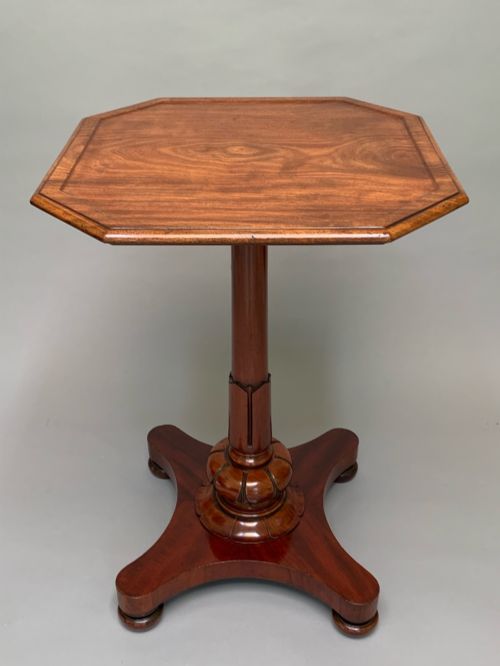
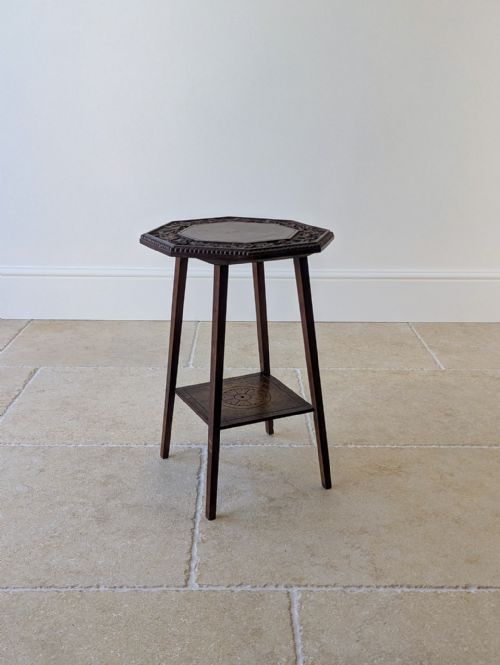
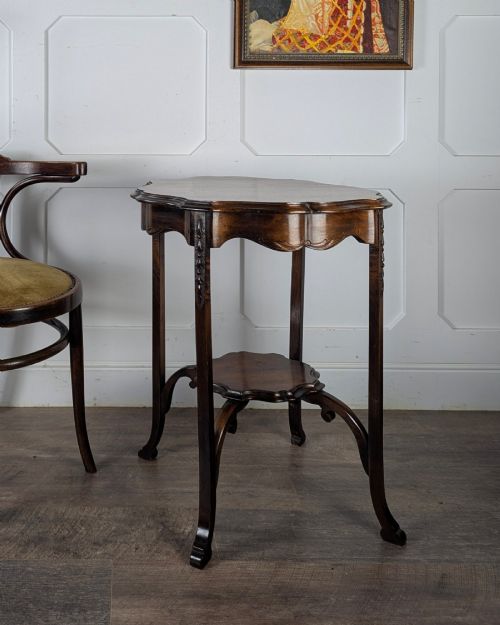
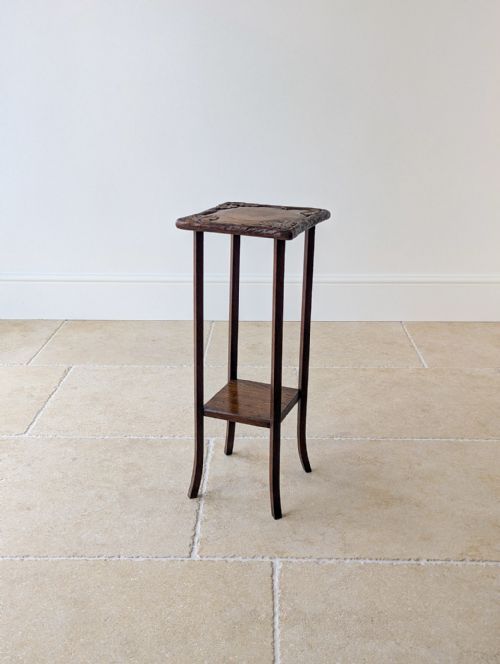
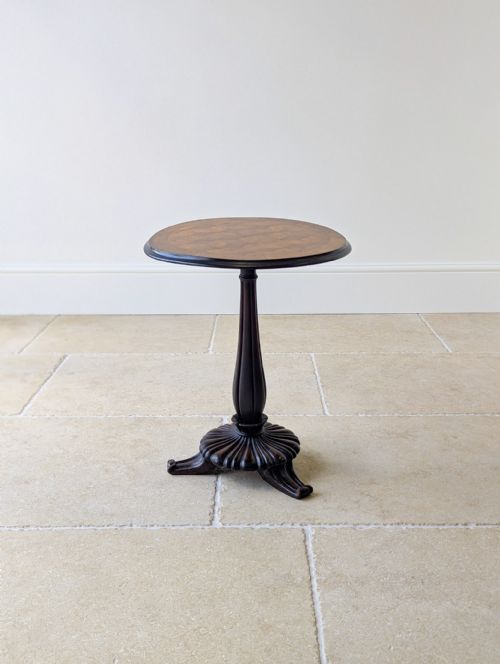
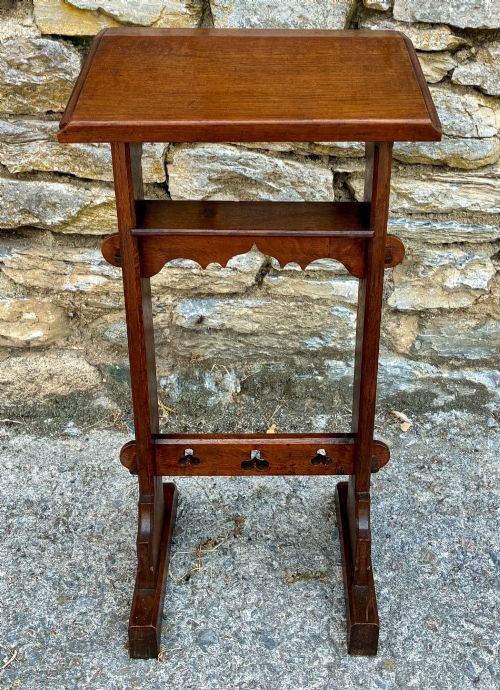
A small carved wooden stand encompasses versatile low furniture pieces such as occasional tables, plant stands, wine tables, and joint stools. These items serve practical domestic roles while displaying ornamental carving traditions from the Victorian, Edwardian, and early twentieth-century periods.
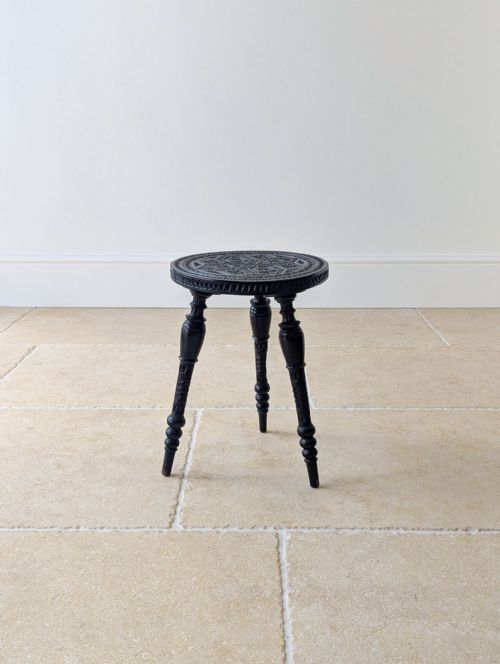
The selections on this page span diverse stylistic revivals, including Jacobean, Arts and Crafts, Gothic, and Anglo-Indian designs. Buyers encounter circular, six-sided, and tripod configurations fashioned from solid timbers with distinctive turned legs, pedestal bases, or chip-carved surfaces.
Materials and construction methods
Cabinetmakers utilised durable hardwoods including oak, mahogany, walnut, fruitwood, and beech to construct these stands. Timber selection dictated the depth and clarity of the carved ornamentation applied to table tops, friezes, and pedestals.
Joinery techniques ranged from traditional mortise and tenon joints on oak joint stools to delicate tripod bases and barley twist turnings on walnut occasional tables. Surfaces frequently display hand-applied chip carving, ebonised details, or integrated brass and glass elements.
Assessing quality in carved stands
Quality rests upon the crispness of the hand carving and the structural integrity of the timber frame. Superior examples demonstrate deliberate execution in decorative motifs such as chip carving or turned bobbin legs, ensuring the ornamentation complements the functional form.
Material selection and stability differentiate standard production from finer craftsmanship. Solid hardwoods that retain their original rich grain, paired with robust joinery at leg junctions and pedestals, define the upper tier of surviving pieces.
The Small Carved Wooden Stand Glossary
- Tripod table
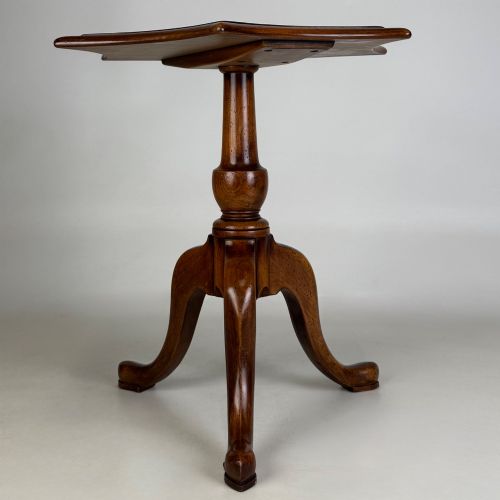
- A small freestanding table supported by three legs branching from a central pedestal. This configuration provides stability on uneven floors.
- Chip carving
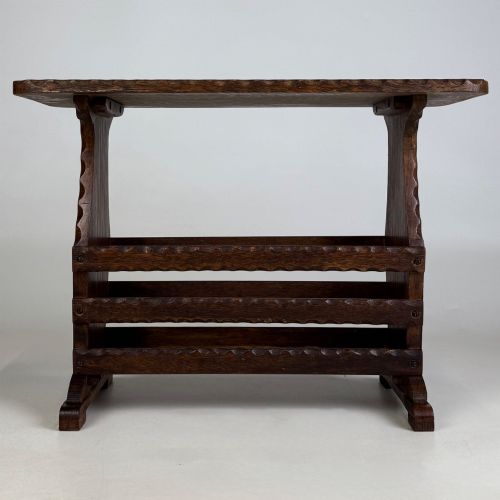
- A surface decoration technique where small chips are removed from a wooden block with knives or chisels to create geometric patterns.
- Barley twist
- A type of turning shaped like a spiral or helix resembling twisted barley sugar. It appeared frequently on seventeenth-century furniture and later revival pieces.
- Occasional table
- A small, movable table designed for intermittent use around a room such as holding a lamp or book.
- Joint stool
- A sturdy wooden stool constructed with mortise and tenon joints rather than traditional pegging. They functioned as seating or elevated display surfaces.
Small Carved Wooden Stand: Frequently Asked Questions
Where should I place a small carved wooden stand?
These compact items fit easily beside armchairs, in hallway corners, or beside beds as practical surfaces for lamps and small objects.
Their restrained footprints allow them to inhabit tight domestic spaces without cluttering the room.
How do I care for antique carved wooden stands?
Maintain the timber by dusting regularly with a soft, dry cloth and avoiding placement near direct heat sources or strong sunlight.
Apply a quality beeswax periodically to nourish the wood and preserve the depth of the carved details.
How do I distinguish Edwardian stands from Victorian ones?
Victorian examples often feature heavier proportions, dark ebonised finishes, or elaborate barley twist supports reflecting historic revival styles.
Edwardian pieces tend toward lighter constructions, simplified Arts and Crafts motifs, and brighter oak or walnut tones.
What is the difference between a plant stand and an occasional table?
Plant stands generally feature taller, narrower profiles with smaller top surfaces designed specifically to elevate flora or jardinieres.
Occasional tables offer broader surfaces intended for general holding purposes within living spaces.