
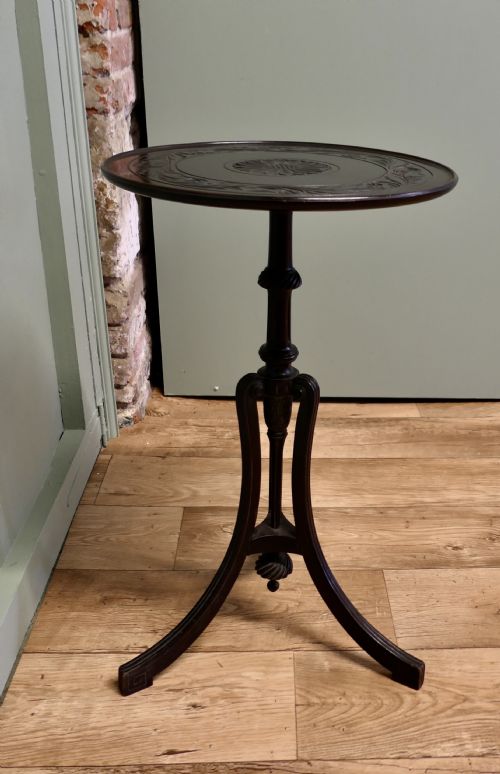
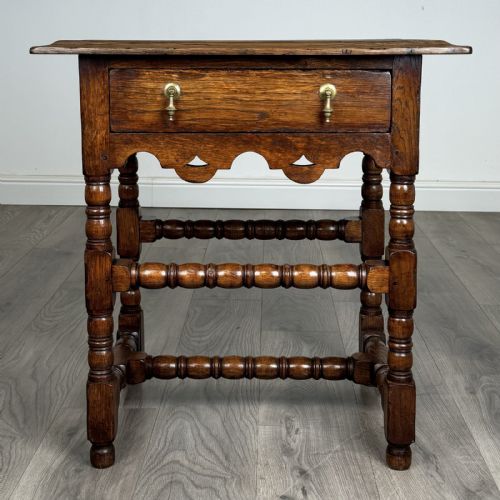
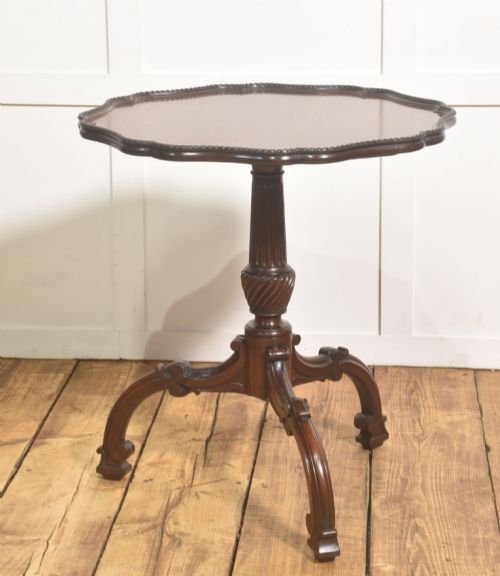
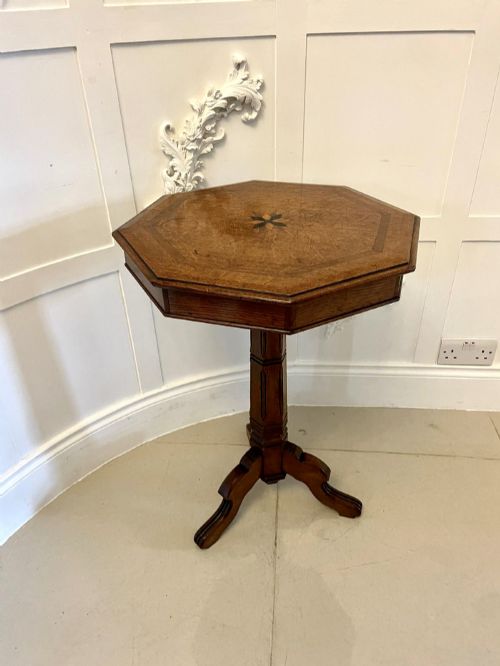
Small Carved Accent Table
These small carved accent table examples bring compact utility and period craft to a corner, combining centuries of timber turning with surface decoration.
Small Carved Accent Table
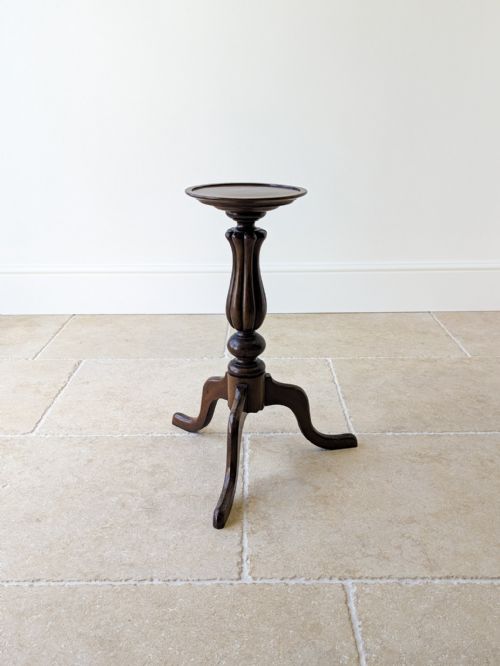
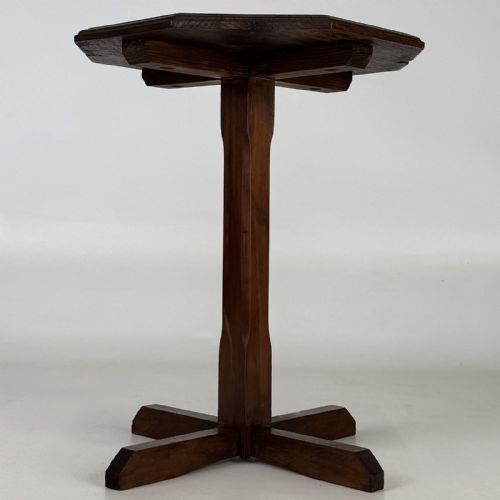
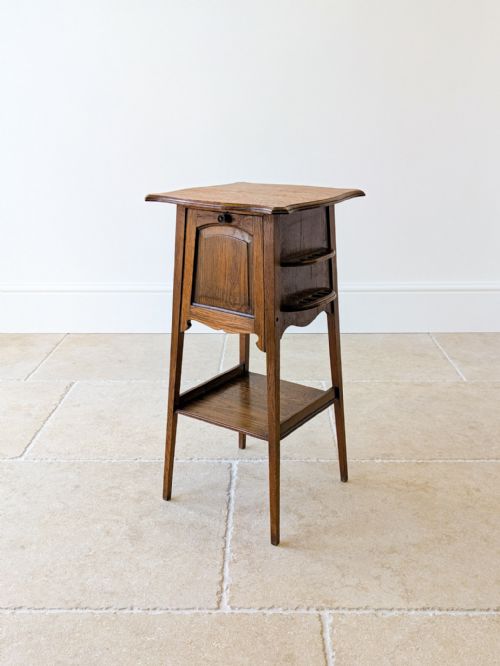
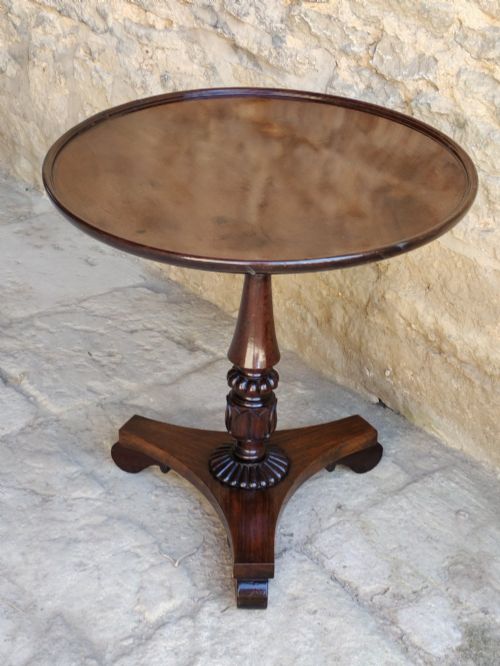
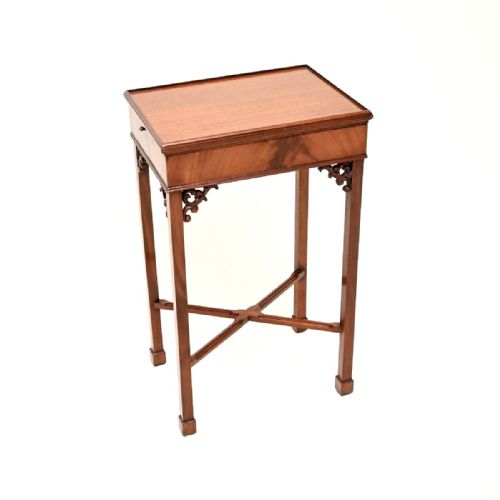
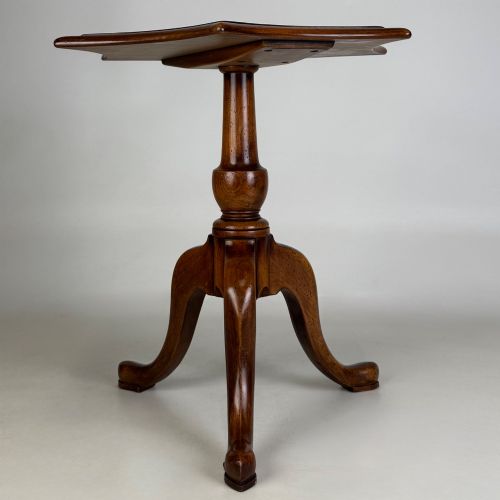
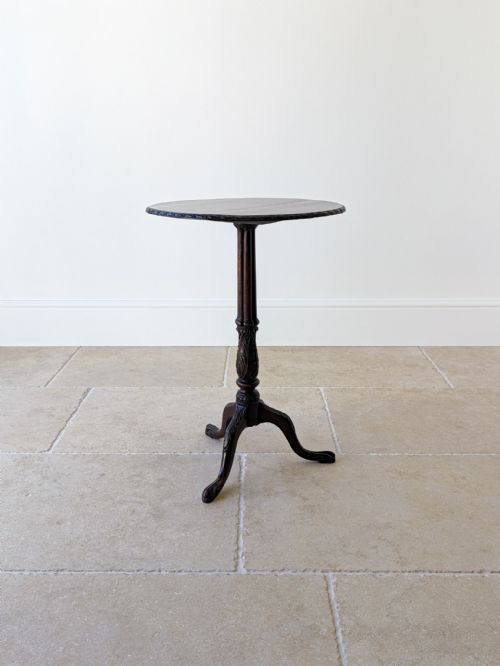
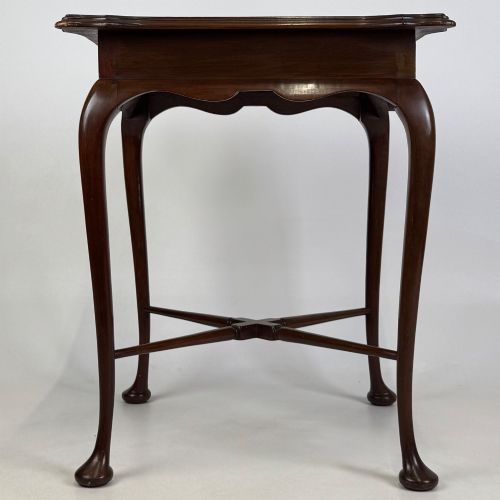
When you search for a small carved accent table, you find a variety of compact occasional furniture designed for domestic use across the nineteenth and twentieth centuries. These functional items include side tables, wine tables, tripod cricket tables, and lowboys intended to sit beside seating or in hallways.
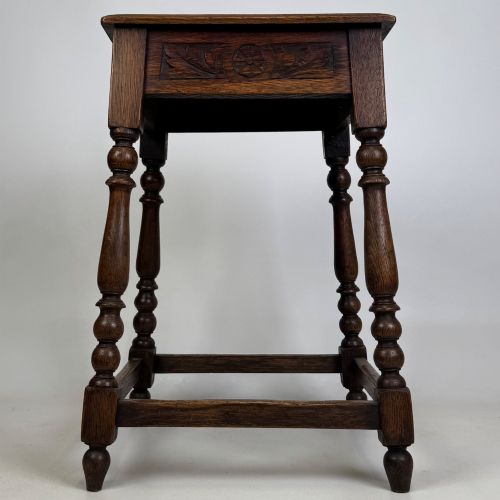
The pieces appearing on this page span several stylistic revivals, with Edwardian and Victorian examples forming the bulk of the selection. You encounter sturdy oak and figured walnut frames bearing chip carving, tripod bases, and shaped rims.
Origins stretch from English workshops to French ateliers, taking the form of occasional surfaces, two-tier tables, and folding Sutherland designs. Each serves as a portable surface for lamps, books, or decorative objects without dominating a room.
Materials and Construction
Cabinetmakers utilised hardwoods such as mahogany, oak, and burr walnut, selecting timber for visible grain patterns and structural stability. Secondary woods often reinforced inner frames, while brass fittings and ceramic elements appeared on specific revival pieces.
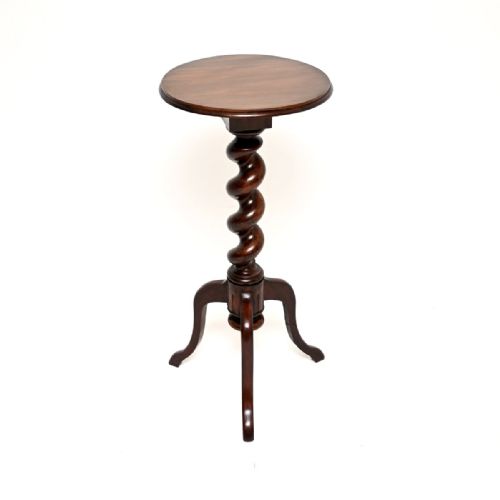
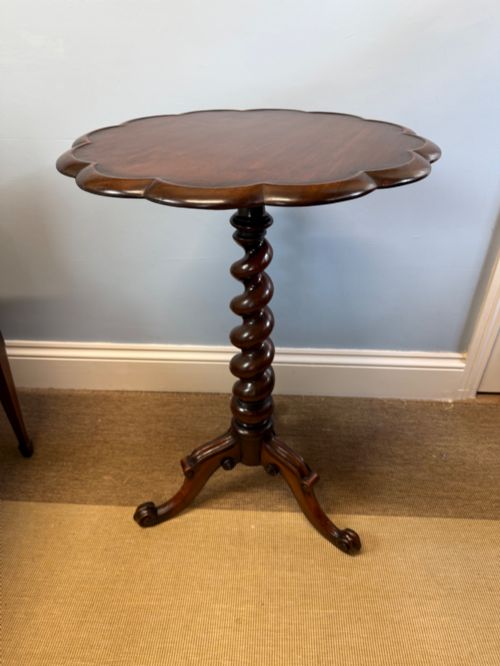
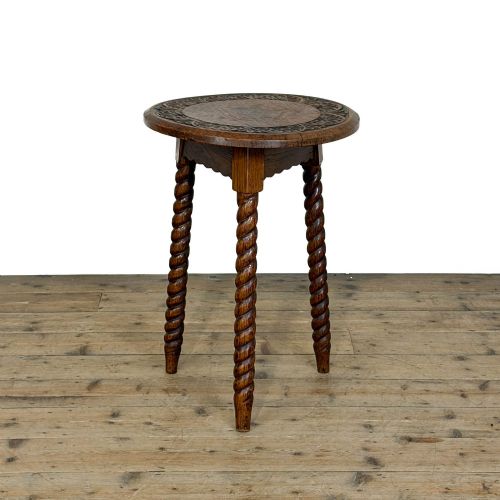
Surface ornamentation relied on hand techniques, notably chip carving and relief work executed directly into the timber. Turning lathes produced barley twist pedestals and tapered legs, while tripod bases utilised joined blocks or dovetailed joints to secure the legs to the central column.
Object forms on this page include wine tables, occasional tables, lowboys, Pembroke tables, and two-tier stands.
Standards of Execution
Quality rests upon the crispness of the hand carving and the choice of timber figure, such as highly figured burr walnut veneers or selected solid oak boards. Superior examples exhibit clean joinery, well-turned pedestals, and stable tripod joints that remain rigid over time.
The distinction between standard utility items and finer pieces lies in the subtlety of the moulding, the balance of the proportions, and the preservation of original patination on the polished wood surfaces.
The Small Carved Accent Table Glossary
- Tripod Table
- A small freestanding table supported by three pillar legs radiating from a central column. This format gained popularity in the eighteenth century and persisted through Victorian revivals.
- Chip Carving
- A style of ornamentation where small chips are removed from a flat wooden surface with knives or chisels to create geometric patterns. It appears frequently on late Victorian and Edwardian occasional tables.
- Sutherland Table
- A narrow drop-leaf table featuring folding leaves supported by swinging gate legs. Victorian examples in walnut allow the piece to fold flat when not in use.
- Lowboy
- A small occasional table with drawers, resembling the lower section of a tallboy chest. Burr walnut versions from the early twentieth century served as refined writing or dressing surfaces.
Small Carved Accent Table: Frequently Asked Questions
What is a tripod cricket table?
A tripod cricket table is a small, three-legged wooden table traditionally built with a round top and pegged joints. These sturdy pieces originated as functional domestic items for hearthside use.
Edwardian and Victorian cabinetmakers later revived the form, applying decorative carving to the legs and top while retaining the stable three-point stance.
How do I identify burr walnut?
Burr walnut displays swirling, knotty grain patterns created from tree growths rather than straight timber boards. Cabinetmakers used these highly figured veneers on table tops to create rich visual texture.
Victorian and Edwardian makers prized this material for formal occasional tables, often pairing the figured top with solid walnut turned pedestals.
Where should I place a wine table?
A wine table suits narrow spaces beside armchairs, sofas, or in empty corners where a large surface would crowd the room. Their small top diameters make them ideal for holding a single lamp or cup.
Because many feature removable tops or lightweight tripod bases, you can move them easily between rooms as needed.
What distinguishes an Edwardian piece?
Edwardian tables often reflect lighter proportions and borrow decorative motifs from earlier Georgian and Chippendale styles. Makers utilised mahogany, oak, and satinwood with understated carving rather than heavy Victorian ornamentation.
These pieces typically date from the early twentieth century and emphasise practical domestic utility combined with refined craftsmanship.