


Small Candle Stands
Small candle stands are compact table forms designed to hold illumination or small vessels, offering useful surfaces from the Georgian, Victorian and Edwardian eras.
Small Candle Stands
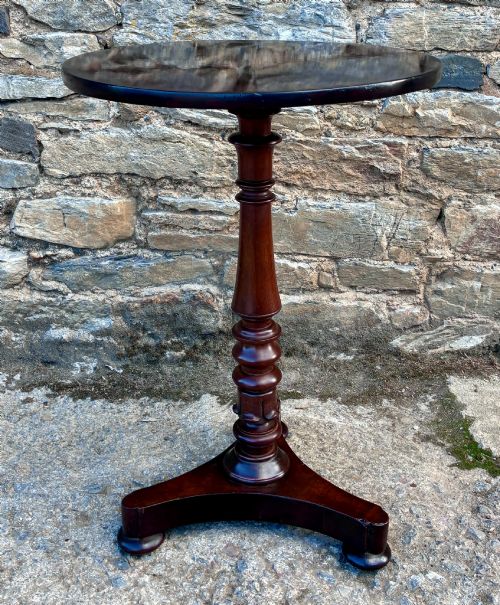
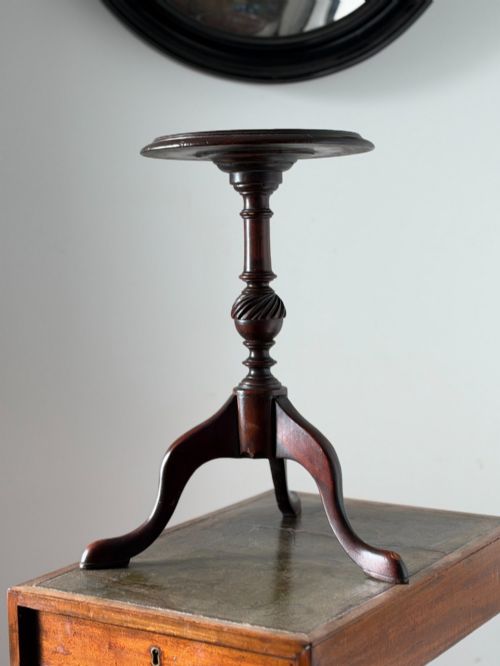
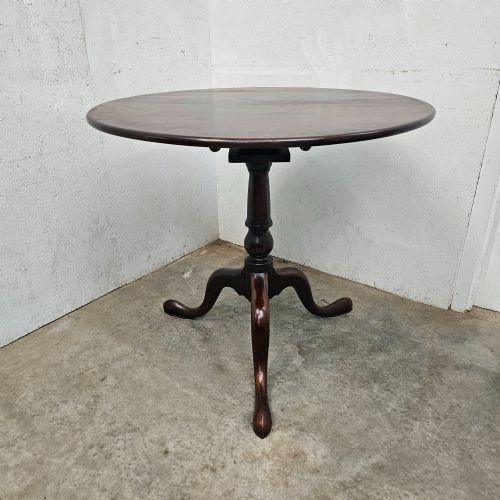
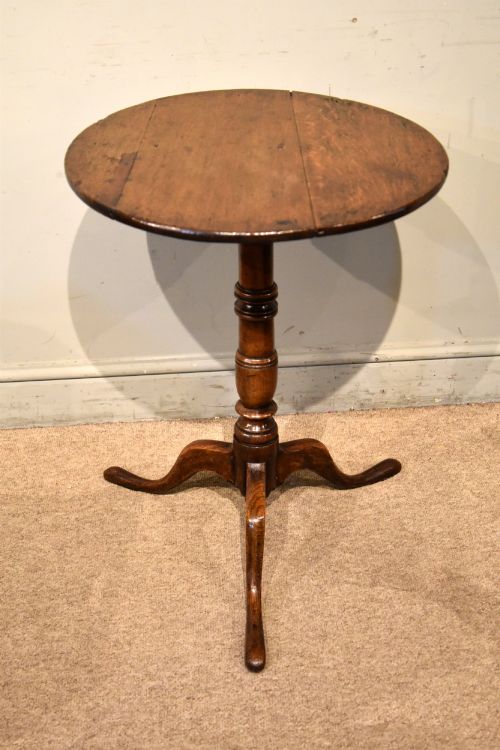
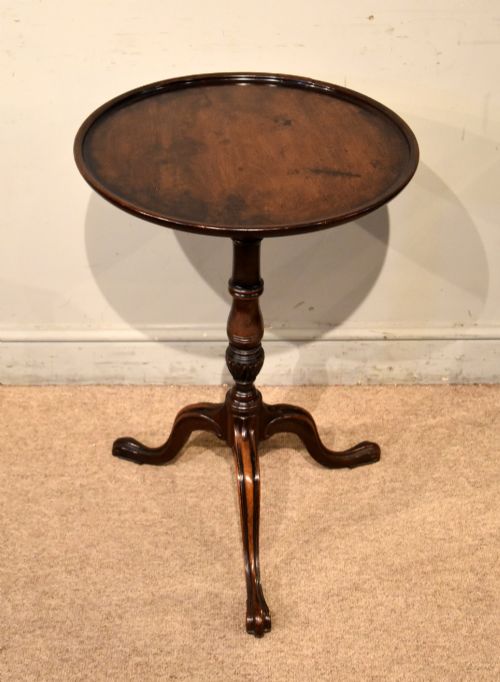
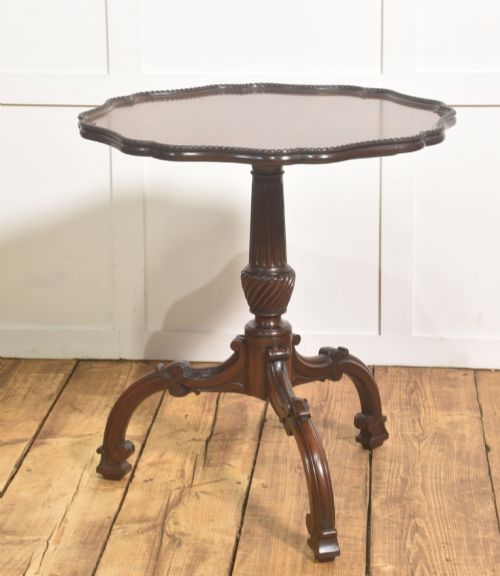
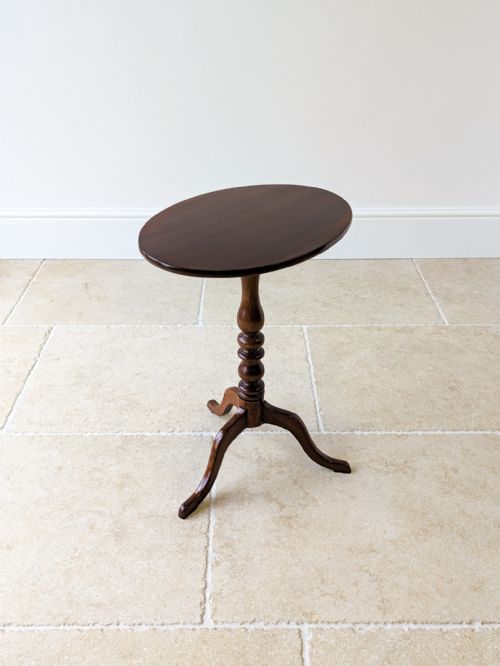
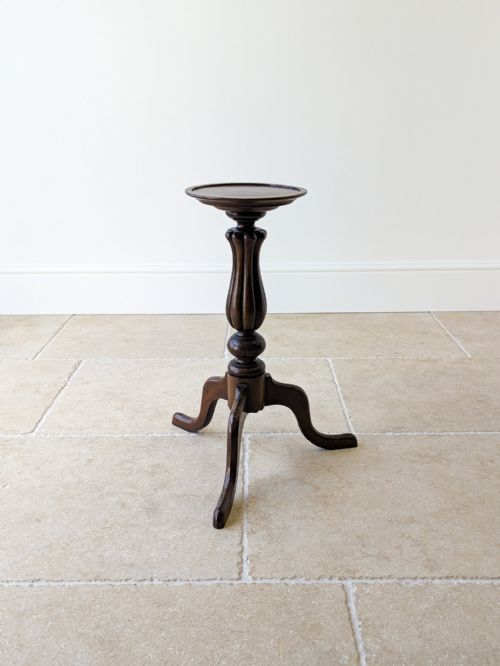
Small candle stands take several forms across this selection, appearing most frequently as tripod wine tables, occasional tables and lamp tables with circular or oval tops. Makers produced these pieces in mahogany, walnut, oak and fruitwood during the eighteenth, nineteenth and early twentieth centuries.
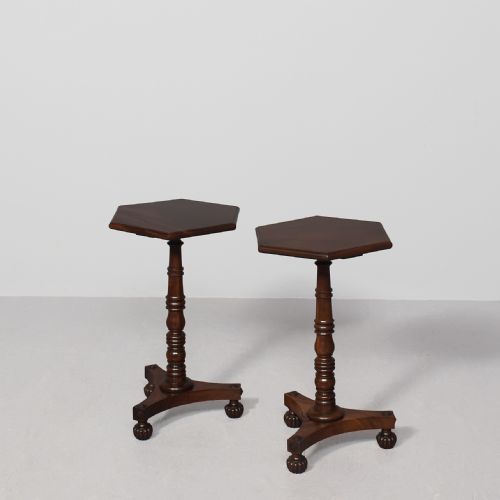
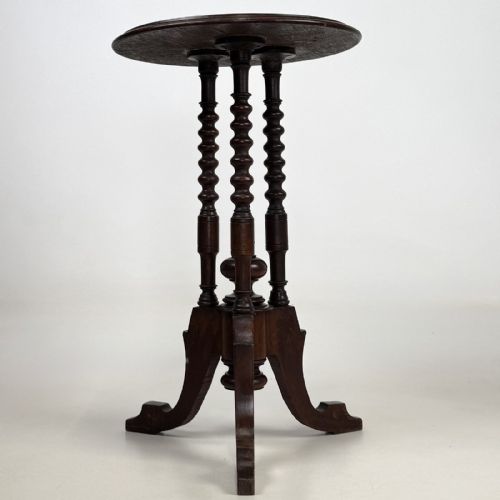
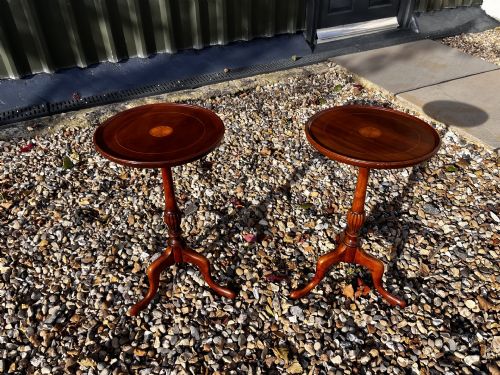
The traveller meets Georgian tilt-top examples alongside Victorian bobbin-turned or barley twist designs and Edwardian inlaid pieces. Many items serve multiple domestic functions, doubling as urn stands or miniature occasional furniture.
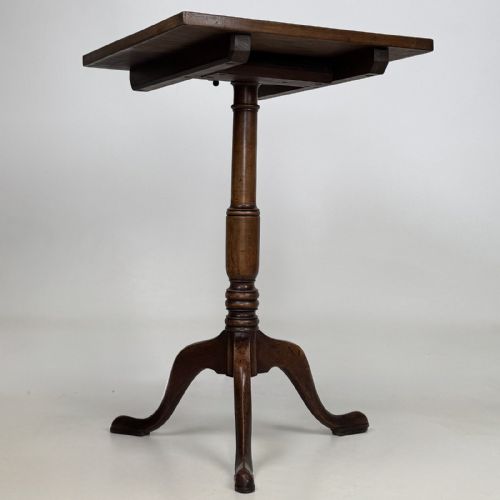
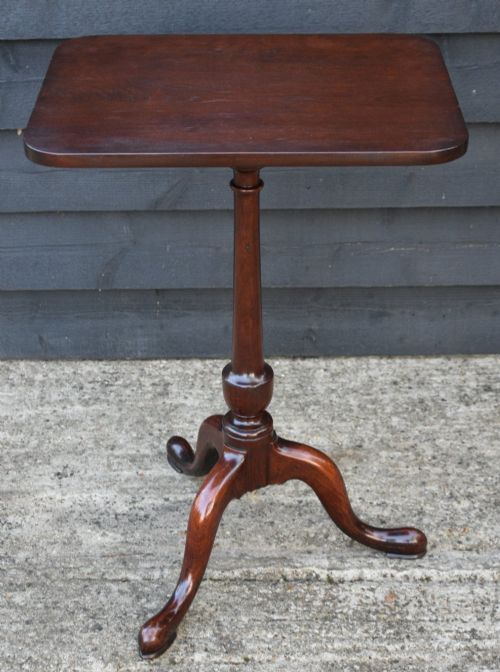
Proportions remain compact throughout the periods represented, usually featuring a single central pillar supported by three feet. Regional variations bring in local timbers such as elm alongside standard cabinet woods.
Materials and construction
Cabinetmakers utilised dense hardwoods like mahogany, walnut and rosewood for durability and fine turning, often pairing solid tops with slender pedestals. Fruitwood, beech and oak appear in country workshop pieces, while marquetry and wood inlay decorate formal Edwardian and Victorian surfaces.
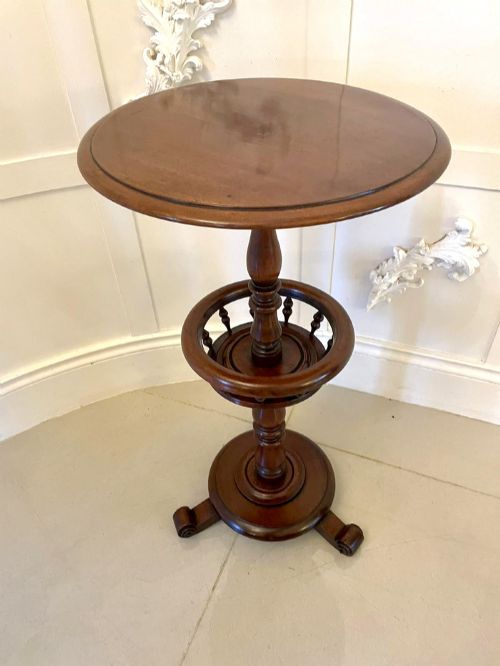
Tripod bases join to central turned pillars using traditional tenon or dovetail joints beneath pivoting or fixed top mechanisms. Turning techniques range from plain vase columns to bobbin and barley twist profiles.
Small Candle Stands Retail Price Guide 2026
Typical asking prices for small candle stands among the pieces listed under this phrase on Sellingantiques today, from the lower quarter to the upper quarter. They describe what is for sale here now, not the wider market.
Several stands feature removable tops, ready for an impromptu nineteenth-century game of musical chairs.
Quality differences
The standard of timber selection and the precision of the pillar turning distinguish finer examples from standard production. Grain matching on mahogany or walnut tops and crisp execution of tripod leg carving separate master cabinet work from simpler output.
Stability and the exact fit of tilt-top mechanisms or removable surfaces reveal the original maker's skill. Finer pieces display refined proportions and subtle edge profiling rather than heavy or utilitarian joints.
Bulstrode Cambridge
The Small Candle Stands Glossary
- Tripod base
- A pedestal support featuring three radiating feet attached to a central vertical pillar. This configuration provides steady floor contact on uneven historic floorboards.
- Tilt-top
- A tabletop hinged to the pedestal pillar to allow the surface to fold vertical when not in use. This mechanism saved floor space in smaller domestic rooms.
- Pad foot
- A rounded foot profile resting flat on the floor at the base of a cabriole or straight leg. It distributes weight evenly without sharp corners.
- Gallery
- A raised wooden rim around the edge of a tabletop to prevent items from sliding off. These rims appear plain or pierced in various timber types.
- Occasional table
- A small, movable table intended for auxiliary use around a sitting room. They accommodate lamps, books or small decorative objects.
Small Candle Stands: Frequently Asked Questions
What are small candle stands?
Small candle stands are compact antique tables originally built to support individual candles, small lamps or decorative urns. They feature elevated tops on slender pedestals for easy placement beside seating.
Craftsmen built these portable pieces from the Georgian period through the Edwardian era using diverse hardwoods and decorative veneers.
How were wine tables used?
Wine tables served as movable surfaces for drinks and glassware during evening gatherings in historic homes. Their lightweight construction allowed servants to reposition them easily.
Owners also utilised them for reading materials or needlework alongside armchairs and sofas.
How do I date a tripod table?
Dating relies on examining the timber species, leg profile and joining methods beneath the tabletop. Georgian examples often feature pad feet and tilt mechanisms, while Victorian pieces show barley twist or bobbin turned pillars.
Cabinet woods shift from early mahogany and walnut toward later satinwood and rosewood variations.
Where should I place an occasional table?
These compact tables fit well beside reading chairs, in hallways or as display surfaces in corners where floor space is limited. Their small footprints prevent crowding in modern rooms.
Keep antique timber away from direct heat sources and strong sunlight to protect the finish.