


Small Bowfront Chest Drawers
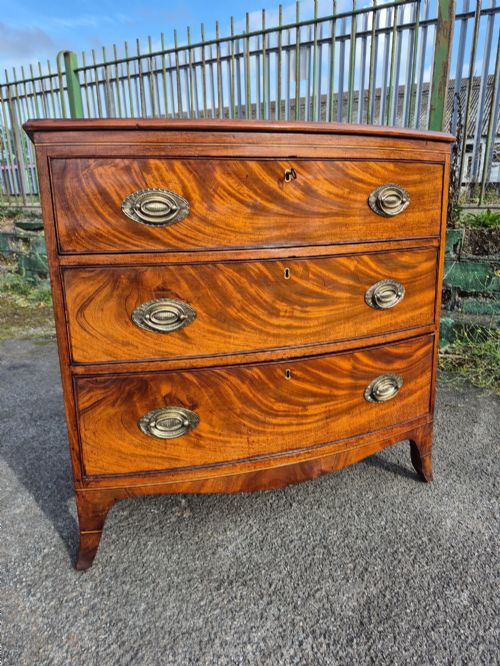
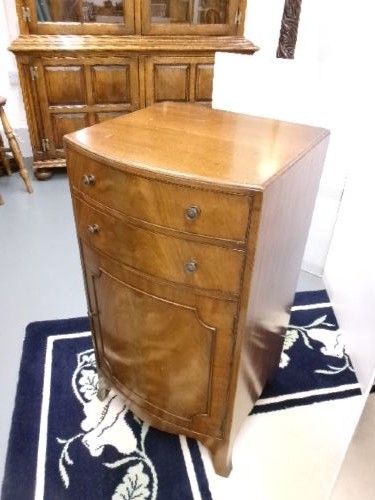
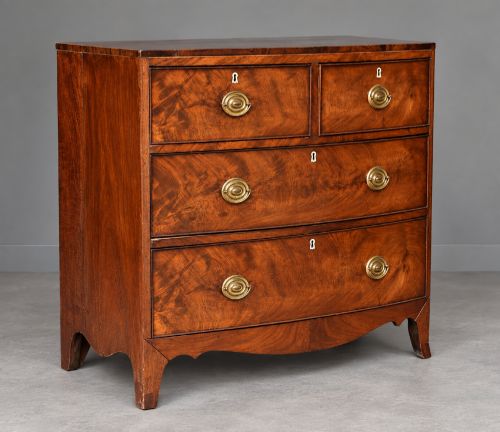
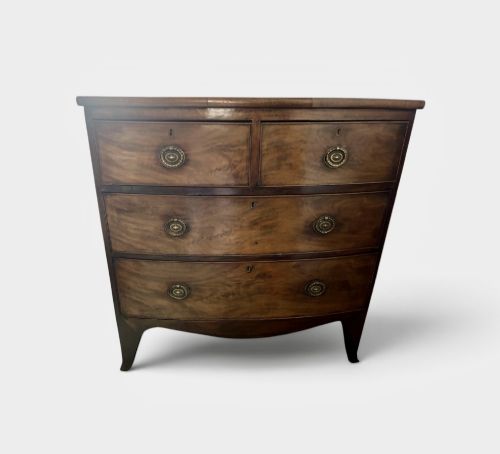
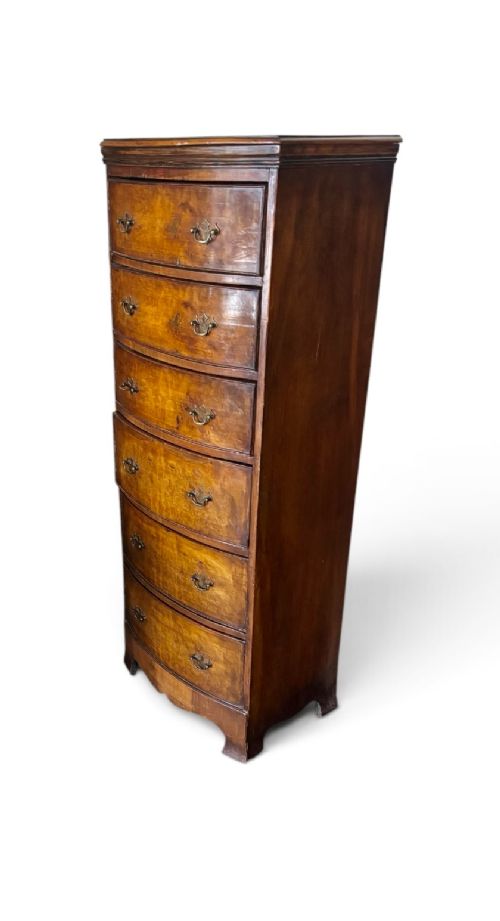
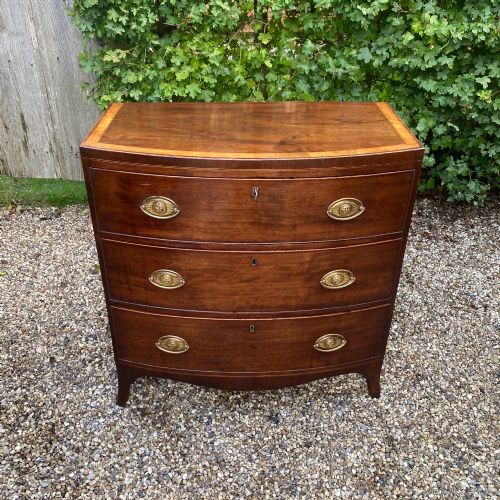
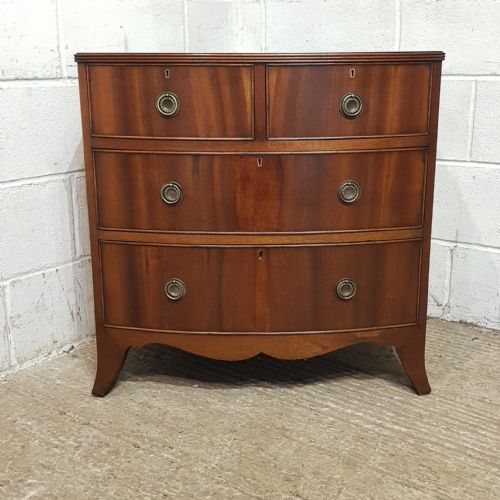
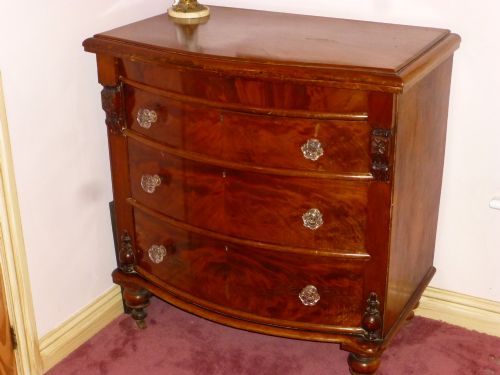
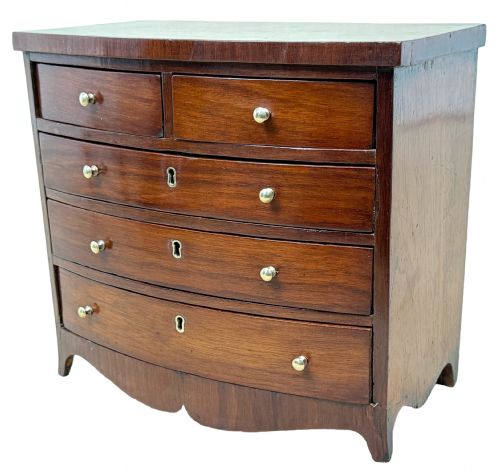
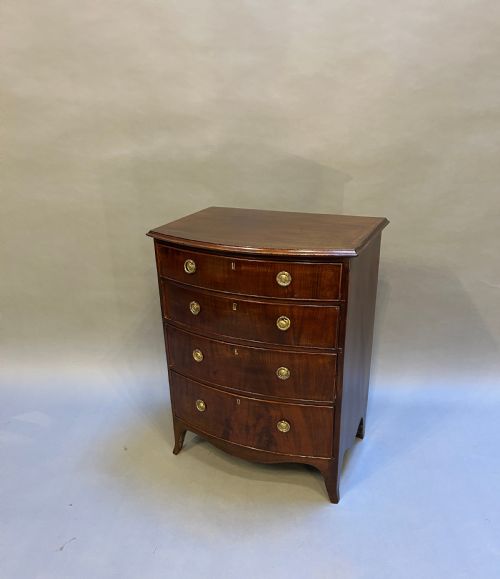
A small bowfront chest drawers brings sculptural presence and compact storage to a room through its curved protruding front.
Small Bowfront Chest Drawers
A small bowfront chest drawers presents a convex curved front that softens the corners of a room while offering practical drawer space. These pieces emerge predominantly in Georgian, Regency, and Victorian periods, often taking the form of compact bedroom furniture or diminutive apprentice pieces.
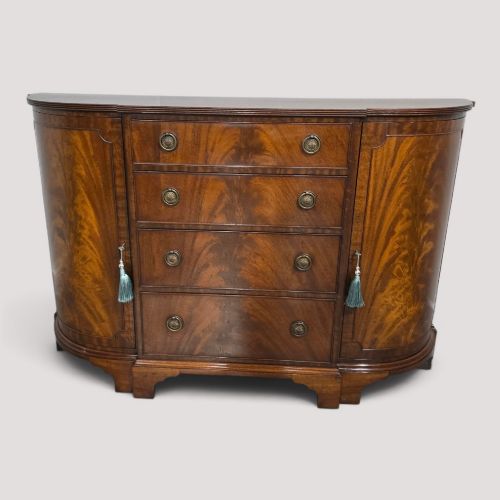
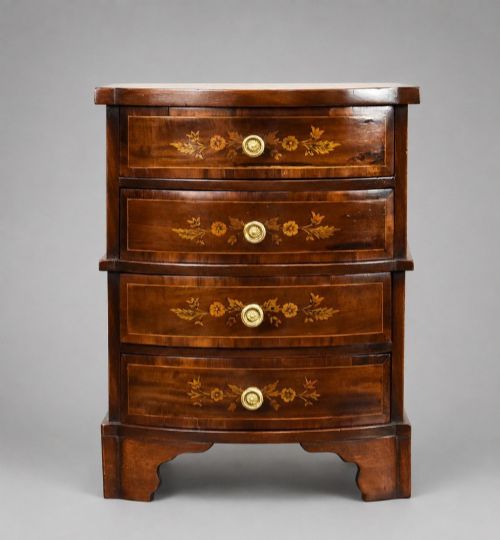
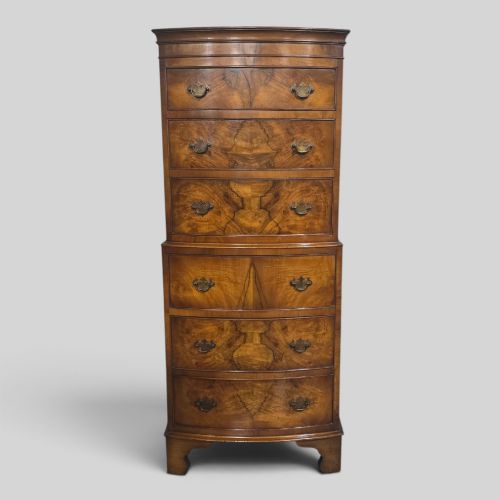
Buyers frequently encounter mahogany examples alongside walnut, burr walnut, and satinwood variations spanning the eighteenth through the early twentieth centuries. The selection ranges from full-scale bedside chests and tallboys to miniature chests of drawers and commodes.
Materials and Technique
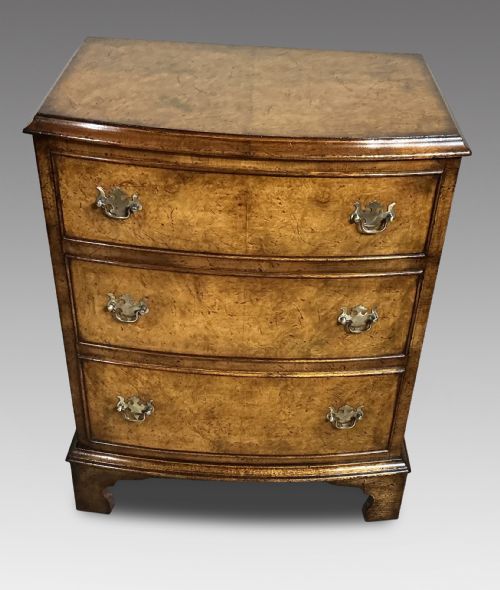
Cabinetmakers constructed these pieces primarily using solid and veneered mahogany, walnut, and satinwood, applying figured timber to the curved drawer fronts to catch the light. Inlaid wood lines, brass handles, and occasionally marquetry further defined the decorative surface.
The curved frame required specialised joinery to bend or shape the timber for the bow front while maintaining structural integrity across the drawer tiers.
Listings feature eighteenth, nineteenth, and early twentieth-century periods, utilising mahogany, walnut, satinwood, and brass.
Quality and Proportion
The fineness of the timber figuring on the curved drawer fronts dictates much of the visual distinction between standard examples and superior pieces. Selection of grain patterns and the crispness of inlaid wood lines show the maker's hand.
Proportion and scale drive the desirability of a small bowfront chest drawers, where balanced dimensions and original brass hardware elevate the piece.
Edwards and Roberts
The Small Bowfront Chest Drawers Glossary
- Bowfront
- A furniture front that curves outward in a convex arc. This shape gained popularity during the Georgian and Regency periods.
- Brushing slide
- A pull-out shelf positioned above the top drawers. It provided a surface for folding clothes or grooming.
- Caddy top
- A tabletop with a raised or moulded edge resembling the lid of a tea caddy. It frequently appears on eighteenth and nineteenth-century chests.
- Tallboy
- A tall chest of drawers made in two stacked sections. This form maximises vertical storage space.
- Marquetry
- Decorative veneer patterns formed by fitting together small pieces of different woods. It appears on select Edwardian pieces.
Small Bowfront Chest Drawers: Frequently Asked Questions
How do I date a bowfront chest?
Dating relies on timber choice, construction methods, and hardware styles across the Georgian, Regency, and Victorian periods. Mahogany and satinwood point toward earlier eras, while walnut and specific revival styles often indicate later nineteenth or early twentieth-century manufacture.
Secondary woods inside the drawers and the style of the dovetails provide further clues to the decade of creation.
Where should I place a small chest?
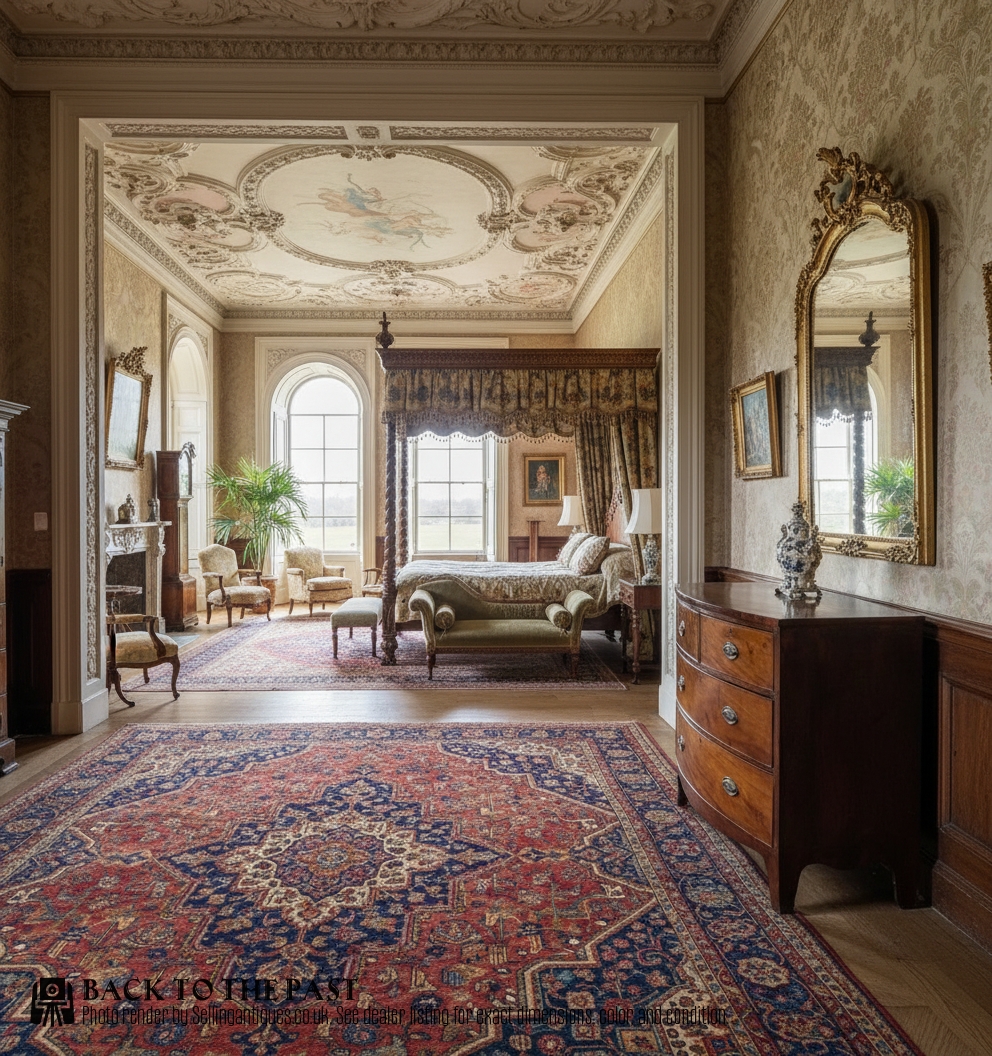
These compact chests suit entryways, bedrooms, or living rooms where floor space is limited. Their curved fronts prevent sharp corners from jutting into narrow pathways.
They function well as bedside tables or standalone accent pieces beneath a mirror or artwork.
What is a bachelors chest?
A bachelors chest is a compact drawer unit typically featuring a pull-out brushing slide for writing or sorting. These versatile pieces served multifunctional purposes in smaller domestic spaces.
They combine the storage capacity of a standard chest with an integrated work surface.