
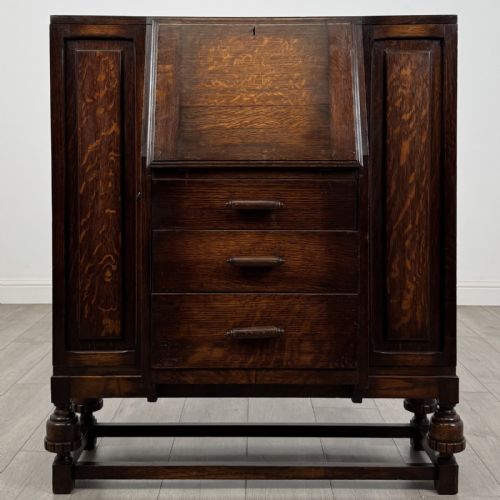
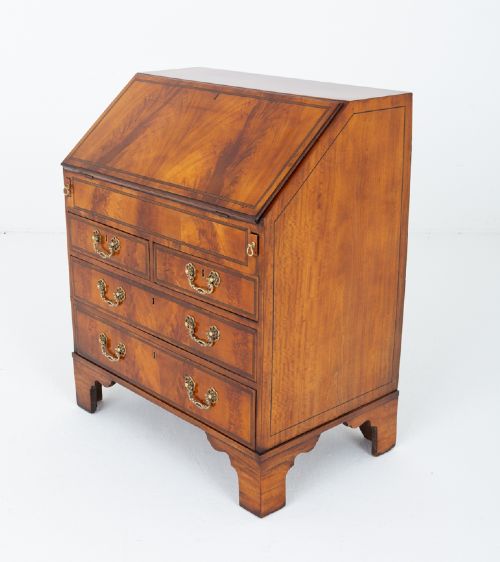
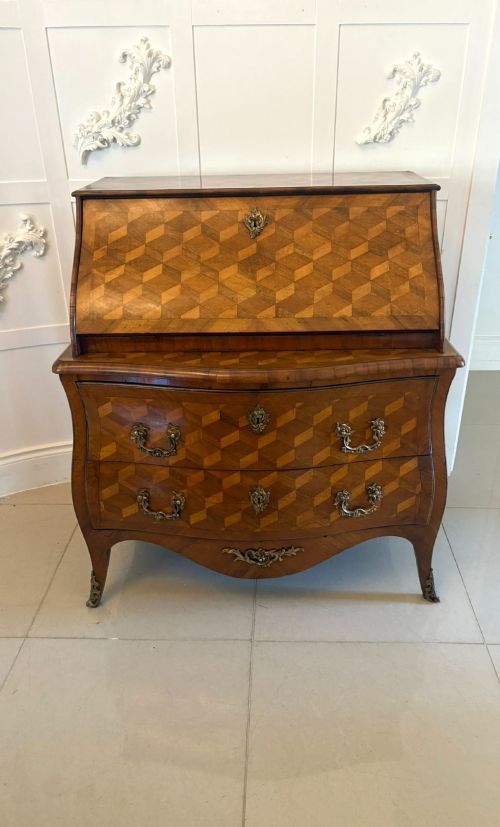
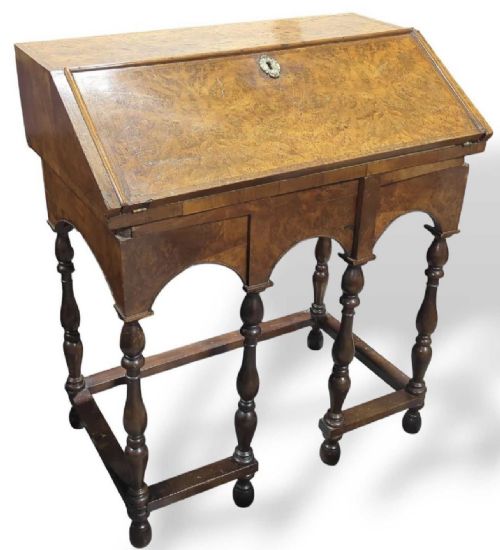

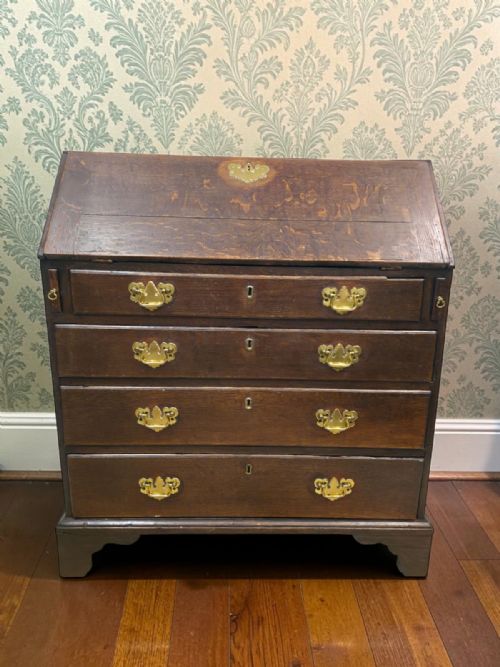
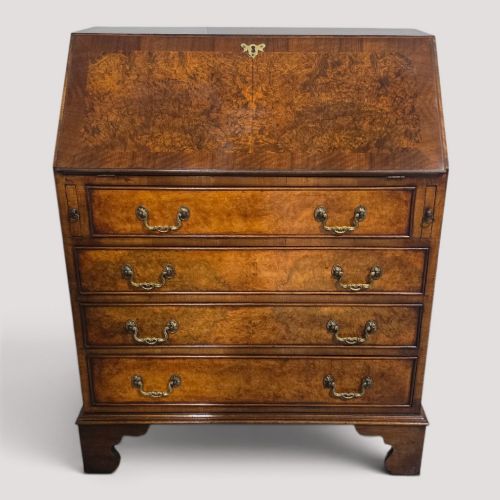
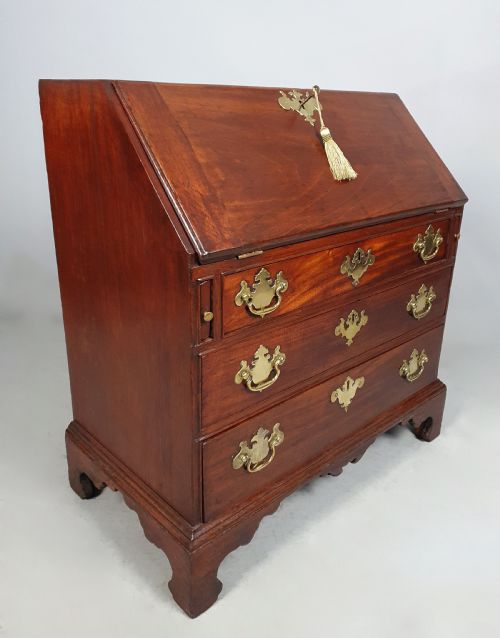
Sloping Fall Front Desk
A sloping fall front desk offers a hinged writing flap that opens to reveal internal compartments, combining workspace with concealed storage.
Sloping Fall Front Desk
A sloping fall front desk provides a practical writing surface that folds down when needed and conceals paperwork when closed.
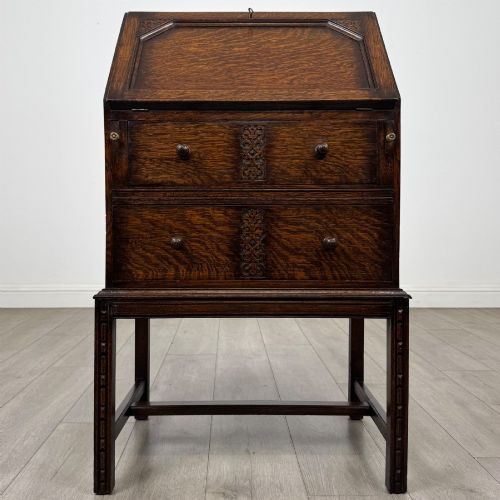
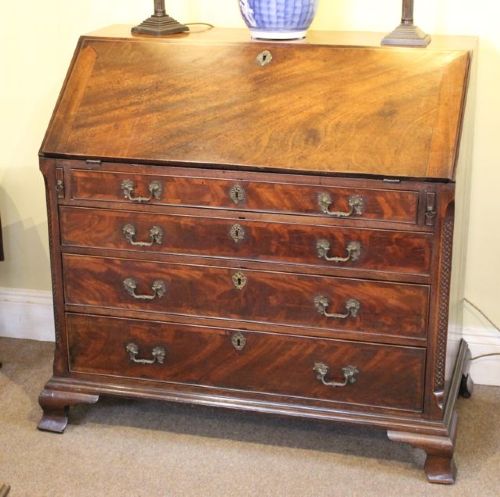
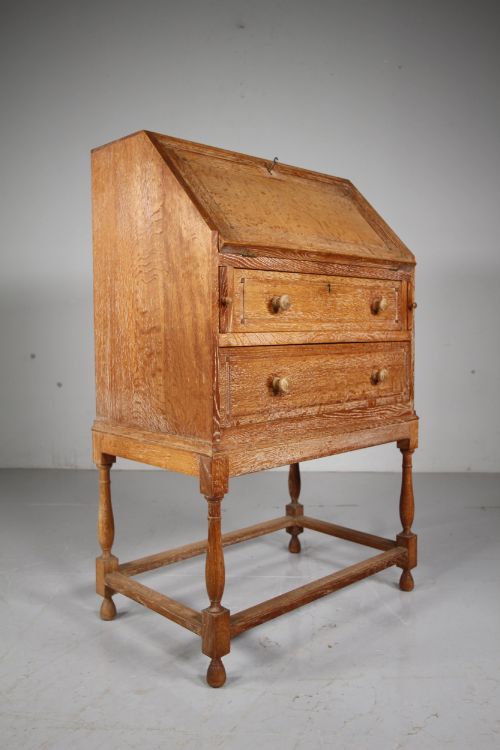
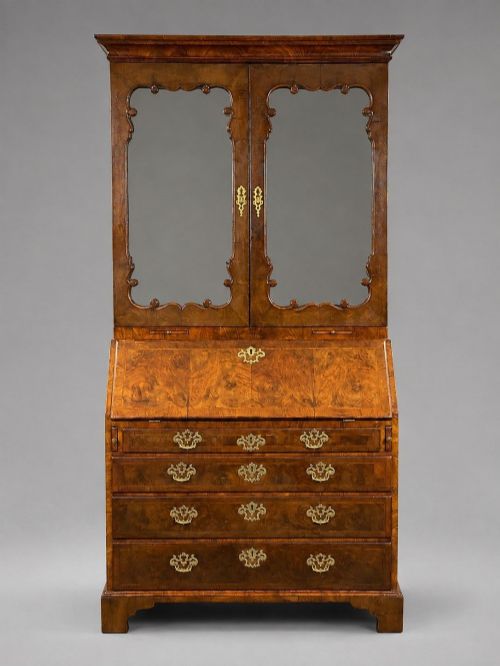
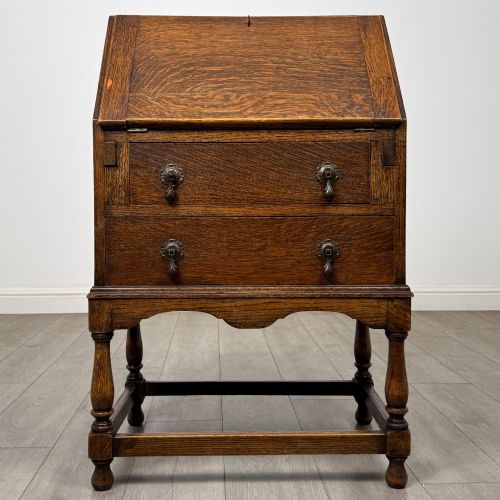
These pieces appear across several eras, with forms ranging from compact oak examples to large mahogany and walnut bureau bookcases.
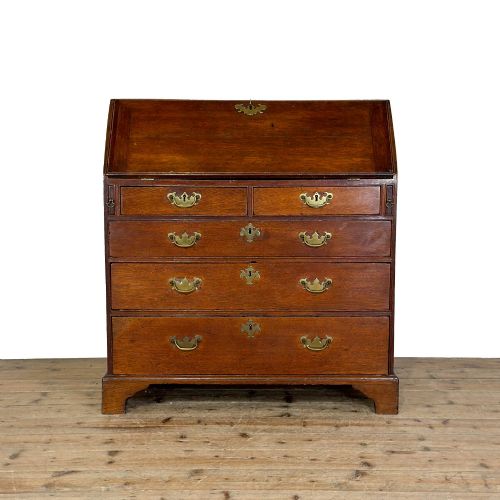
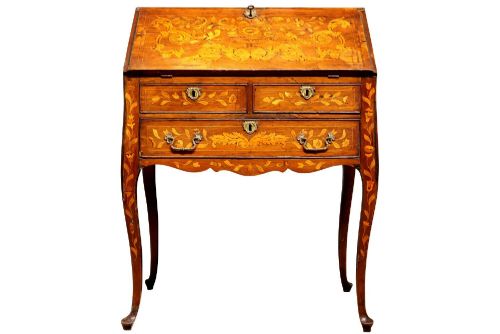
The selection includes regional variations such as Dutch marquetry pieces alongside traditional English Georgian designs.
Construction and Materials
Cabinetmakers utilised dense timbers including mahogany, walnut, oak, and fruitwood, often selecting figured veneers for the exterior surfaces.
Internal components relied on traditional joinery, incorporating small drawers, pigeonholes, and occasionally secret compartments behind sliding panels.
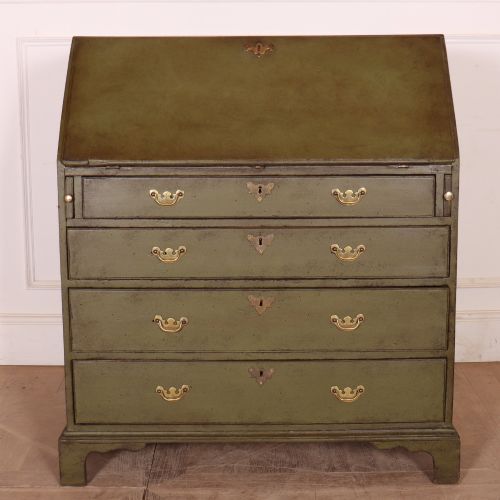
Brass handles, escutcheons, and hinges provided functional reinforcement, while specialised pieces incorporated floral marquetry or painted decoration.
Some miniature desks were built as detailed apprentice pieces to demonstrate advanced joinery skills before full qualification.
Assessing Quality
The choice of timber grain and the precision of the veneer matching dictate the visual hierarchy among these writing desks.
Superior examples maintain original internal fittings, drawer linings, and hardware, whereas altered pieces show inconsistency in timber or mismatched replacement elements.
Heals of London
The Sloping Fall Front Desk Glossary
- Bureau
- A sloping fall front desk used for writing and storing papers. It typically contains internal compartments beneath the folding lid.
- Fall front
- The hinged writing flap that drops down to form a horizontal desk surface. It conceals the fitted interior when closed.
- Marquetry
- Inlaid wood veneers arranged in decorative patterns or floral motifs. It is frequently found on Dutch and Georgian cabinet work.
- Bureau bookcase
- A taller form combining a sloping desk base with upper shelving enclosed by doors. It provides both workspace and display capacity.
- Escutcheon
- A protective brass plate surrounding a keyhole. It serves both a functional and decorative purpose on drawer fronts and fall flaps.
Sloping Fall Front Desk: Frequently Asked Questions
How do I use a sloping fall front desk?
Lower the hinged writing flap to create a stable surface for correspondence or laptop use. The internal pigeonholes and small drawers provide organised storage for stationery and documents.
Close and lock the flap when finished to keep the workspace tidy and secure the contents out of sight.
Where should I place this desk at home?
Position the desk against a sturdy wall in a study, living room, or bedroom where natural light reaches the workspace. Ensure there is adequate clearance in front of the piece for a chair when the writing flap is open.
Keep wooden pieces away from direct heat sources and strong sunlight to protect the polished timber and veneer.
How do I distinguish Georgian from Edwardian desks?
Georgian desks generally exhibit heavier proportions, dense timbers like mahogany and walnut, and distinct cabinetmaker construction details. Edwardian examples often feature lighter golden oak, painted satinwood finishes, or revival styling.
Examining the secondary timbers inside the drawers and the style of the internal fitments helps confirm the manufacturing era.
What is the difference between a bureau and a bureau bookcase?
A standard bureau consists of the desk base with a sloping writing flap and lower drawers. A bureau bookcase adds an upper section designed for storing and displaying books behind glazed or panelled doors.
Both share the same fall front mechanism, but the bookcase variant offers significantly greater vertical storage capacity.