


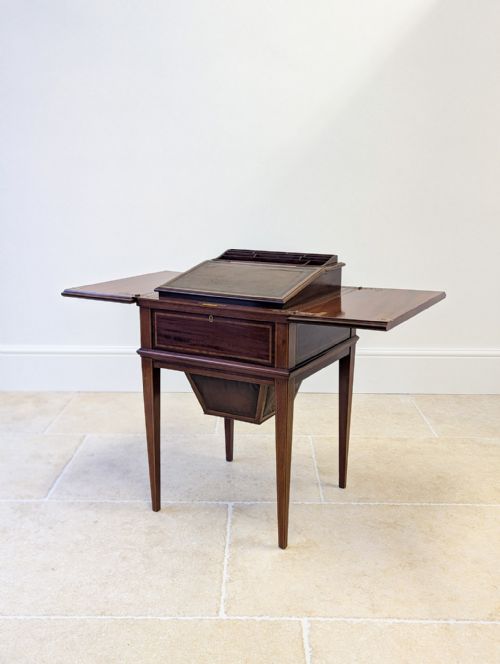
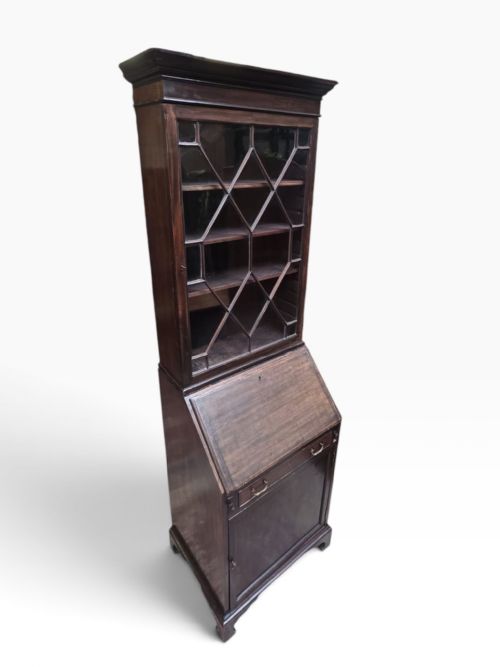
Sloped Desk Cabinet
A sloped desk cabinet combines a writing surface with compartmentalised storage, offering a traditional solution for correspondence across periods from the eighteenth century to the Edwardian era.
Sloped Desk Cabinet
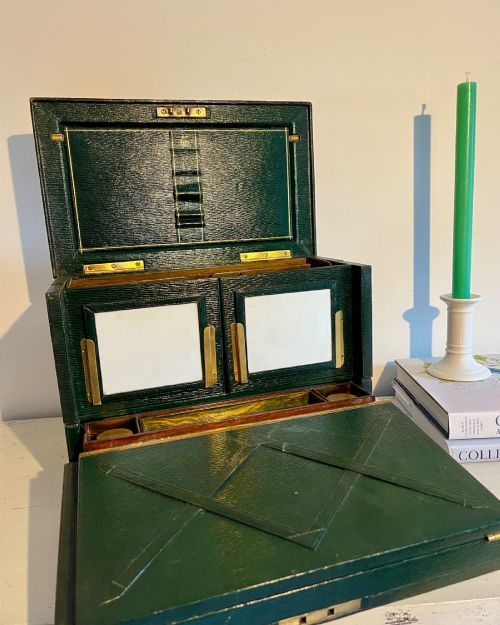
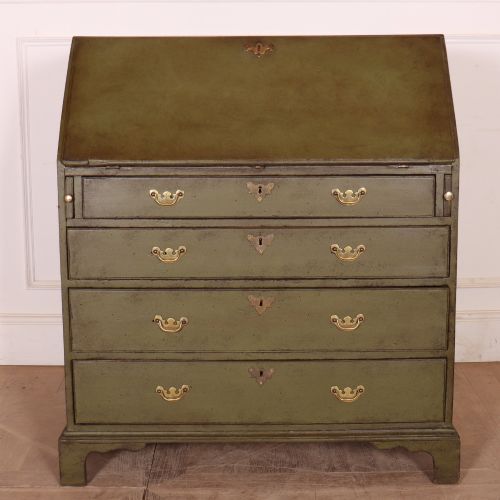
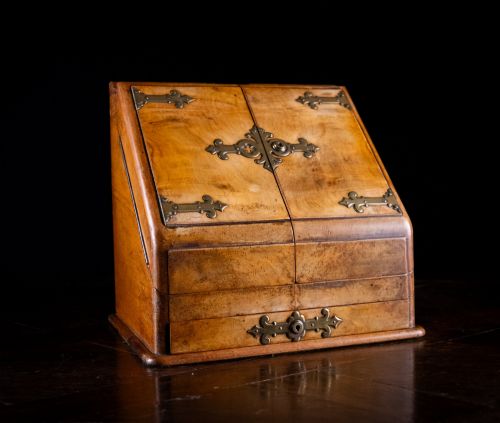
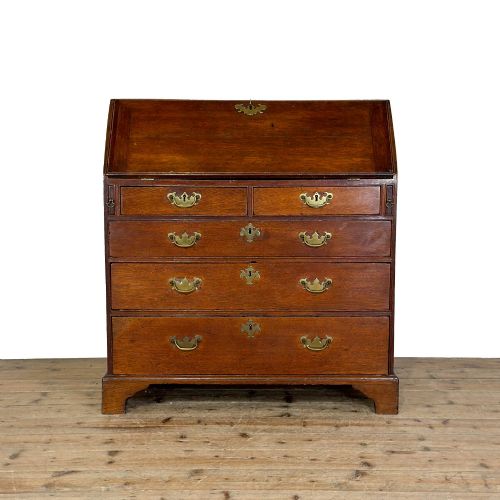
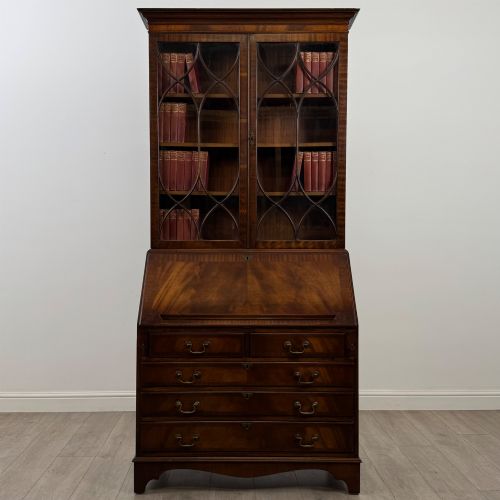
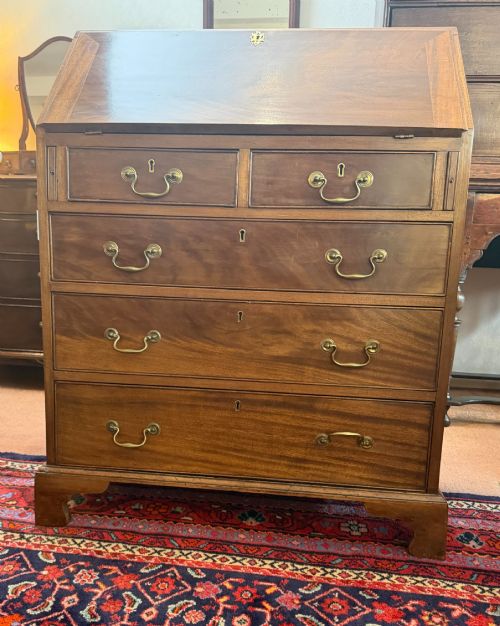
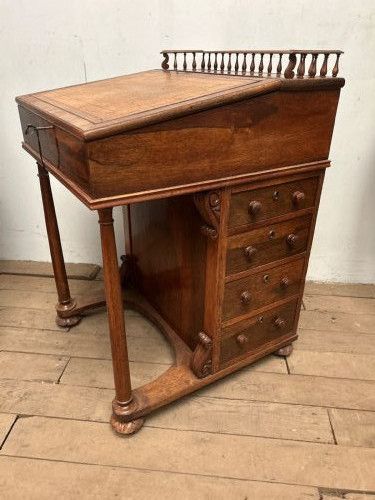
When searching for a sloped desk cabinet, buyers encounter forms that merge a writing box or fall-front writing surface with vertical stationery storage. These pieces range from compact desk boxes and stationery cabinets to substantial bureau bookcases and freestanding Davenports.
The examples seen on this page span several centuries, with particular representation from the Georgian, Victorian, and Edwardian periods. Oak, mahogany, and walnut dominate the structural forms, occasionally supplemented by rosewood, amboyna, and papier-mâché.
Styles stretch from restrained English Country and Queen Anne designs to elaborate Arts and Crafts carving and Regency brass mounts. The sloped writing surface remains the defining characteristic, whether hinged for a lap desk or integrated into a larger cabinet.
How they were made
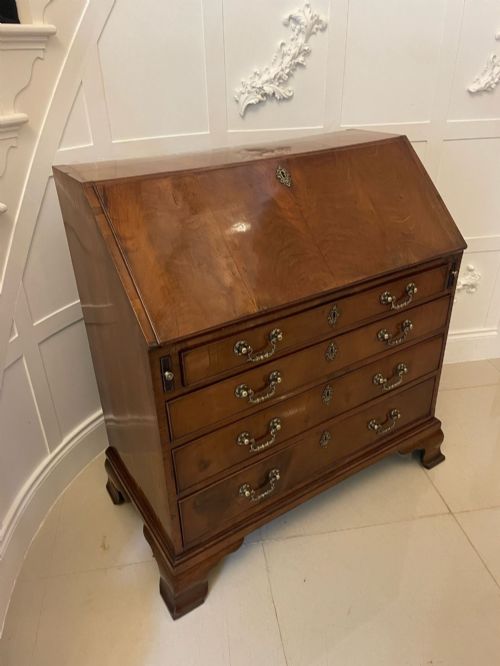
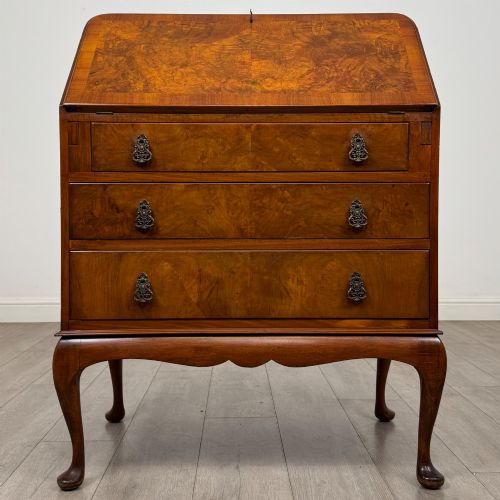
Cabinetmakers utilised dense hardwoods such as mahogany, oak, and walnut for the primary carcases, frequently selecting burr walnut veneers or figured mahogany to create patterned surfaces on the fall fronts and lids. Secondary timbers lined the internal drawers and stationery partitions.
Brass fittings, including carrying handles, hinges, and escutcheons, provided functional reinforcement and decorative contrast against the dark wood. Leather inserts frequently surfaced the writing slopes, while specialised inlays of satinwood or ebonised wood added linear detail.
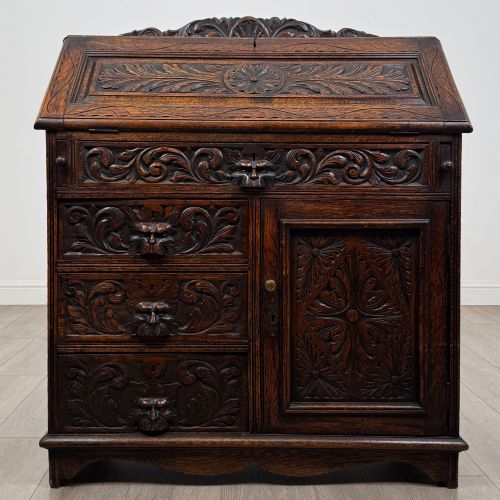
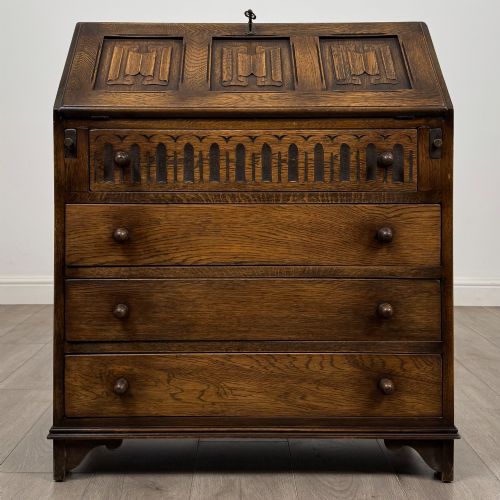
Green man carvings peer out from Victorian oak surfaces, keeping a watchful wooden eye over centuries of ink and paper.
What varies in quality
The sophistication of the internal stationery arrangement and secret compartments dictates the level of craftsmanship in a sloped desk cabinet. Superior pieces integrate complex pigeonholes and small drawers behind the fall front with tight dovetail joinery.
The choice of timber figure, such as highly burr-figured walnut or matched mahogany veneers, distinguishes standard utility pieces from fine cabinet work. Carved detailing, whether geometric linenfold or figurative green man motifs, reveals the hand of skilled artisans.
Gillows of Lancaster·Gillow and Co·Stanley Webb Davies
The Sloped Desk Cabinet Glossary
- Bureau
- A writing desk with a sloping flap that covers pigeonholes and small drawers. It often sits upon chest drawers or a desk stand.
- Davenport
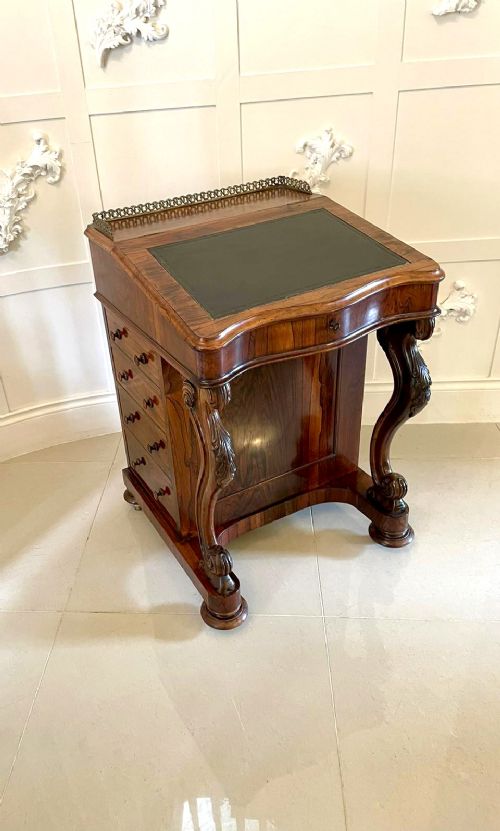
- A small compact writing desk featuring a sloping top hinged to lift, usually with drawers opening to one side.
- Stationery box
- A tabletop cabinet designed to hold writing paper, envelopes, and ink bottles, often featuring a sloped or domed lid.
- Fall front
- A hinged panel that drops forward to serve as a writing surface, concealing internal compartments when closed.
- Figured walnut
- Timber cut from walnut trees with irregular grain patterns that create decorative, rippling effects across furniture surfaces.
Sloped Desk Cabinet: Frequently Asked Questions
What is a sloped desk cabinet?
A sloped desk cabinet is a piece of furniture designed for writing and correspondence, featuring an angled writing surface combined with storage for paper and ink.
These items range from tabletop stationery boxes and compact Davenport desks to full-size bureau bookcases spanning the Georgian to Edwardian eras.
How were these desks used?
Owners used them for private correspondence, storing letters, and keeping account books in an era before widespread digital communication.
The sloping lid provided a comfortable surface for handwriting while concealing the inkwells and documents kept inside.
Where did Davenport desks originate?
Davenport desks originated during the Regency period as compact writing tables equipped with side drawers and a sloped top.
They gained popularity throughout the Victorian era due to their efficient use of space in smaller domestic interiors.
How do I identify a Georgian bureau?
Georgian bureaux typically feature solid mahogany or figured walnut construction with heavy brass hardware and refined internal drawer arrangements.
They emphasise proportion and timber grain rather than the heavy carving seen on later Victorian or Arts and Crafts examples.