

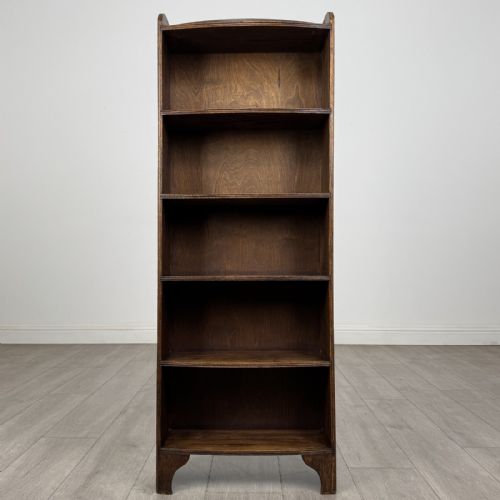
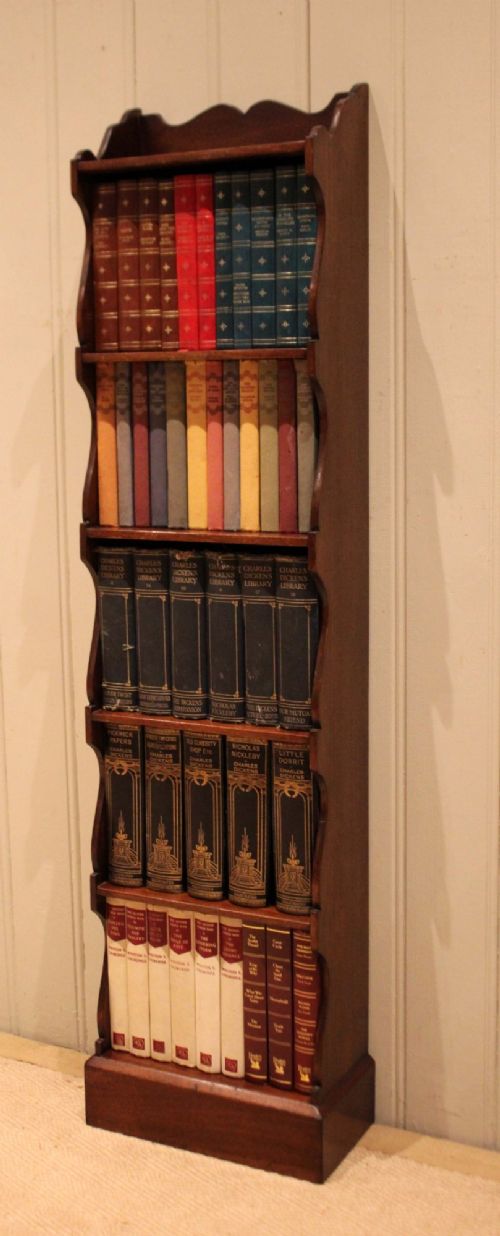
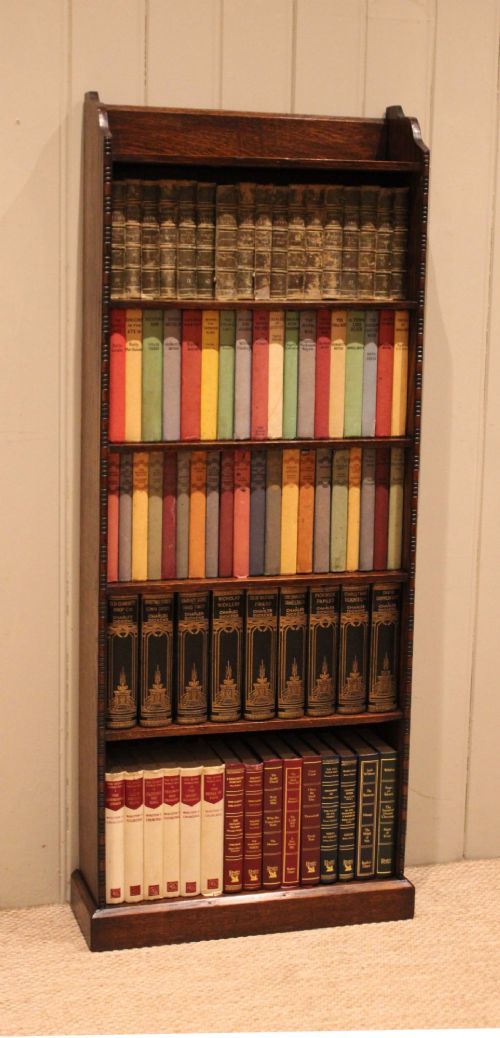

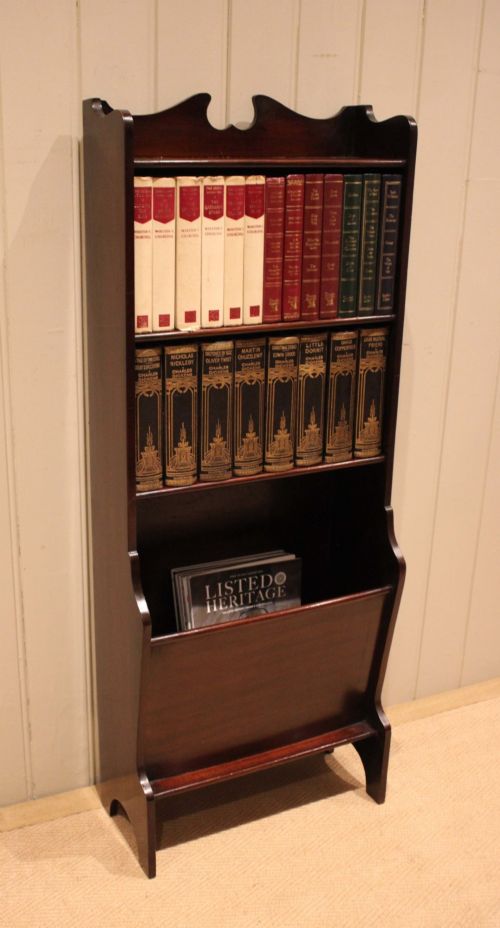


Slim Wood Bookcase
A slim wood bookcase is a compact storage piece built to hold volumes in tight domestic spaces.
Slim Wood Bookcase
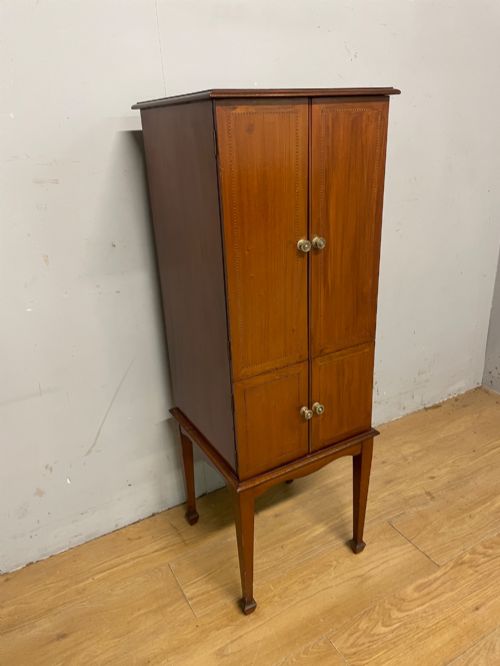
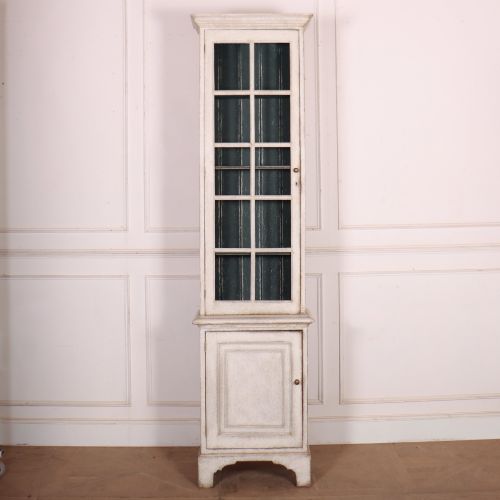
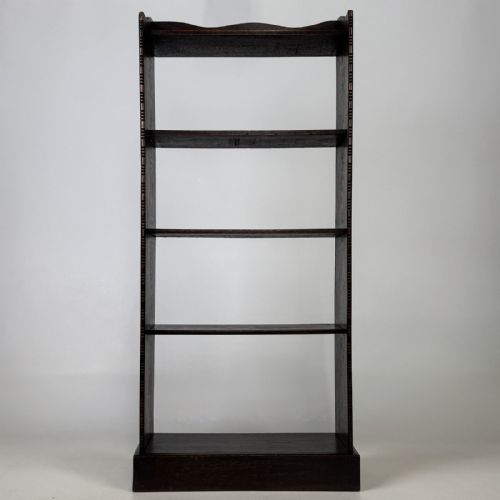
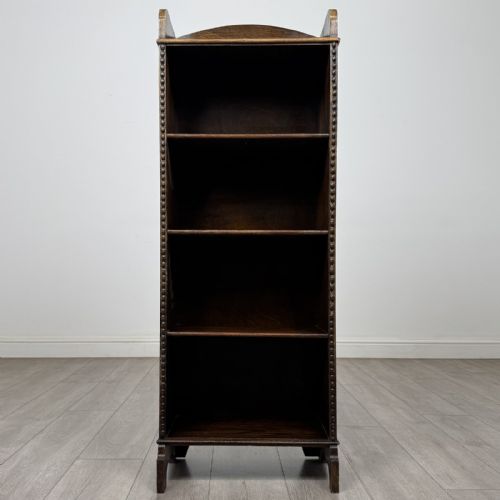
A slim wood bookcase provides vertical shelving designed specifically for narrow wall spaces and smaller rooms. These pieces appear in formats such as open shelf units, revolving designs, and tall narrow cabinets.
The selections recorded on this page span from the late nineteenth century through to the early decades of the twentieth century. Examples include Arts and Crafts designs, Victorian pieces, and Edwardian items.
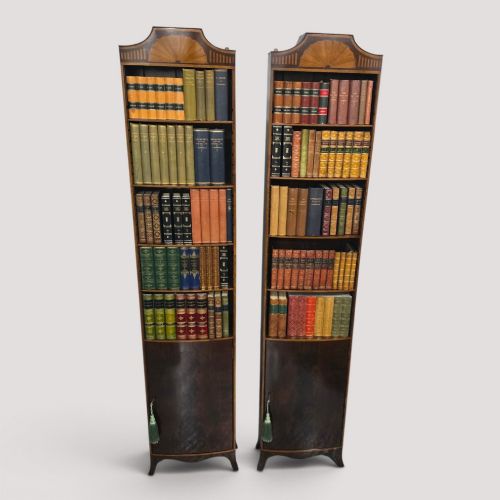
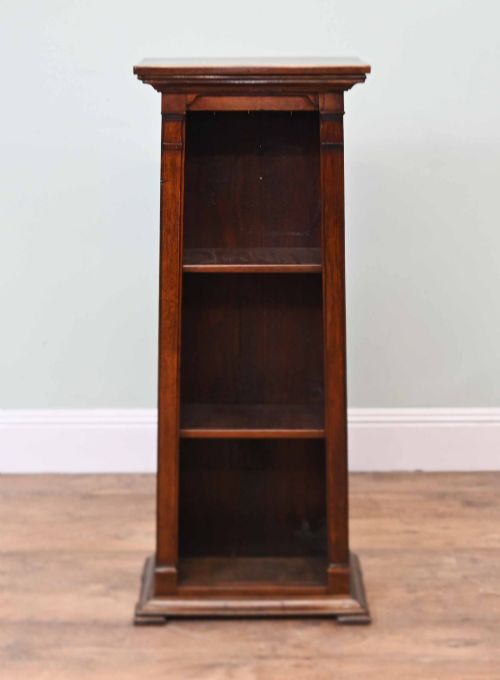
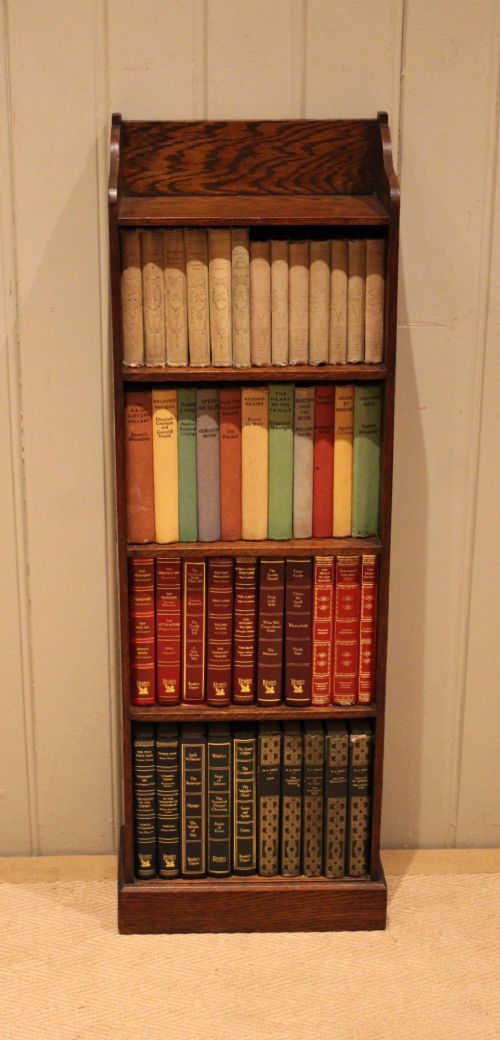
Common forms on display include open oak shelving, mahogany secretaire units, and walnut cabinets with period revival details. Buyers encounter everything from simple freestanding boards to detailed inlaid furniture.
Materials and construction
Cabinet makers utilised dense hardwoods such as oak, mahogany, and walnut to build a rigid frame capable of supporting heavy rows of books. Selected pieces incorporate burr walnut veneers or delicate satinwood inlay to provide visual contrast on the exterior surfaces.
Joinery methods rely on traditional framing techniques to ensure stability across tall and narrow proportions. Brass hardware appears on moving parts such as revolving mechanisms and cabinet doors, while glass panels protect enclosed sections.
Slim Wood Bookcase Retail Price Guide 2026
Typical asking prices for slim wood bookcase among the pieces listed under this phrase on Sellingantiques today, from the lower quarter to the upper quarter. They describe what is for sale here now, not the wider market.
Some Victorian revolving bookcases have spun around to face different corners of the room for well over a century.
Variations in quality
Quality rests upon the selection of timber and the precision of the decorative inlay. Cabinets built from heavily figured burr walnut or featuring crisp satinwood banding sit above plain utilitarian shelving.
The sophistication of the period style dictates the finesse of the finished object. Pieces displaying deliberate Arts and Crafts construction or refined Queen Anne revival proportions demonstrate higher workmanship than standard production furniture.
The Slim Wood Bookcase Glossary
- Secretaire
- A desk fitted with a pull-down writing flap concealing small drawers and pigeonholes. This hybrid form allows a bookcase to double as a compact workstation.
- Revolving bookcase
- A low shelving unit mounted on a rotating pivot base. This mechanism lets a reader access books from all sides while occupying a minimal floor footprint.
- Satinwood inlay
- Contrasting light wood veneers set into the surface of a darker timber to create geometric patterns. This decorative technique defines the Sheraton Revival aesthetic.
- Burr walnut
- Timber taken from the gnarled growth of a walnut tree, yielding a swirling grain pattern. Cabinet makers used these highly figured veneers on prominent panel surfaces.
Slim Wood Bookcase: Frequently Asked Questions
Where should I place a slim wood bookcase?
These narrow units fit easily into alcoves, hallways, and small studies where standard furniture proves too wide. Their modest footprint allows them to utilise awkward corners effectively.
Positioning them away from direct sunlight and heat sources protects the timber and veneer from drying out over time.
How do I identify an Edwardian bookcase?
Edwardian pieces generally date from the early twentieth century and often show lighter construction influenced by Sheraton revival tastes. They frequently utilise oak or mahogany with subtle decorative inlay.
Comparing the proportions and secondary woods to pieces from the earlier Victorian period helps establish the correct decade of manufacture.
What is the difference between an open and enclosed bookcase?
Open bookcases provide immediate access to volumes and create a lighter visual presence in a room. Enclosed versions feature doors or cupboards that keep dust away from the contents.
Some hybrid designs combine open upper shelving with a lower enclosed cupboard for concealed storage.
How do revolving bookcases function?
Revolving bookcases rest on a hidden ball-bearing or pivot mechanism housed beneath the base. This allows the entire vertical stack of books to spin freely with gentle pressure.
They were designed for tabletop or floor use beside a desk or armchair to keep reference volumes close at hand.