



Slim Drawers
Slim antique drawers are compact storage solutions offering traditional character for tight spaces.
Slim Drawers
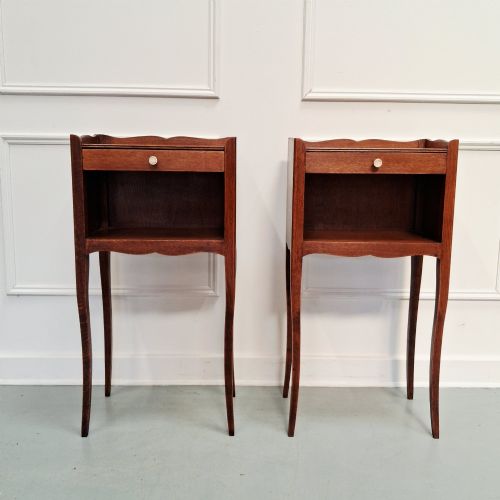
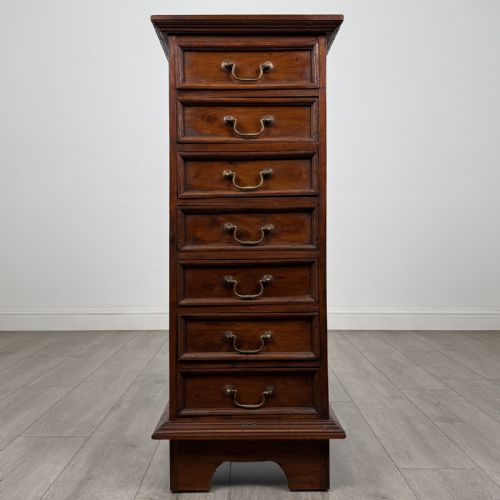
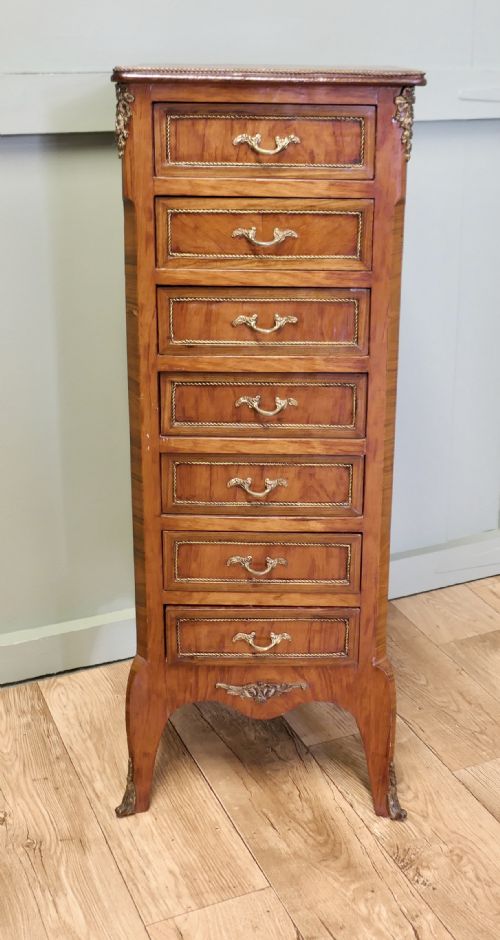
Slim antique drawers comprise narrow chests, bedside tables, tall cabinets, and specialised banks originating from periods spanning the Georgian era through to the 1930s. These pieces provide practical vertical storage with minimal floor footprints, suiting modern rooms that require period character.
How they were made
Cabinet makers utilised dense hardwoods including mahogany, oak, and walnut, often pairing timber construction with brass hardware, glass panels, and lead details.
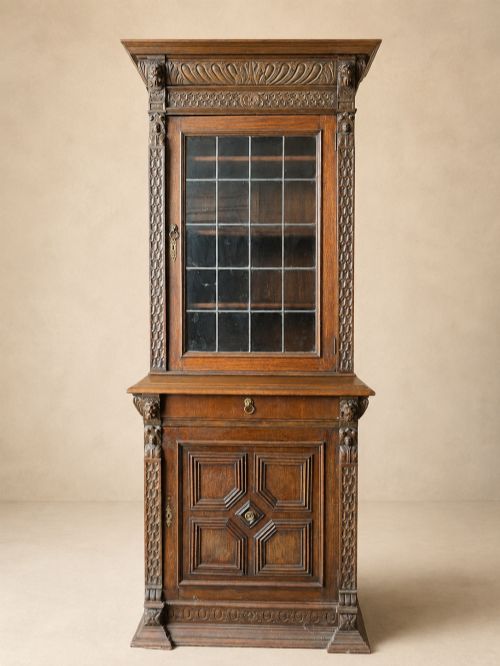
Construction techniques visible across these items range from carved decoration and multi-part modular builds to specialised watchmaker drawer banks and fitted stationery interiors.
Slim Drawers Retail Price Guide 2026
Typical asking prices for slim drawers among the pieces listed under this phrase on Sellingantiques today, from the lower quarter to the upper quarter. They describe what is for sale here now, not the wider market.
A watchmaker once entrusted their tiny parts to a tall bank of nine drawers.
What varies in quality
Quality rests upon the selection of timber and the restraint of decorative carving, where pieces executed in solid mahogany or figured walnut display superior grain alignment compared to simpler utility items.
Fine construction is evident in the proportion of the carcass and the integration of specialised elements such as bun handles, fitted internal stationery compartments, and locking mechanisms.
Simpson Halifax
The Slim Drawers Glossary
- Wellington chest
- A tall, narrow chest of drawers secured by a locking hinged vertical side flap. This specific form was designed for secure personal storage in nineteenth century bedrooms.
- Ormolu
- Gilded bronze mounts applied to furniture for decorative effect. It appears frequently on pieces influenced by French styling.
- Bun handle
- A small, rounded wooden knob attached to drawer fronts. These turned pulls are typical of Edwardian and revival cabinetry.
Slim Drawers: Frequently Asked Questions
How were narrow chests used?
Narrow chests and tall drawer banks served practical domestic and trade purposes, from bedside storage to housing delicate tools in workshops. Tall variants provided ample vertical capacity without extending far into the room.
Specialised forms like watchmaker banks kept small components organised, while bedside cabinets held nighttime necessities.
How do I style them at home?
Integrate slim antique drawers into hallways, alcoves, or bedrooms where standard furniture proves too bulky. Their modest widths allow them to fit awkward gaps while adding rich wood tones to the interior.
Pair mahogany or oak chests with complementary vintage or contemporary furnishings to let the period grain and brass details stand out.
How do I identify periods?
Period identification relies on observing timber choices, structural forms, and decorative details like carved oak motifs or French revival styling. Georgian and Victorian pieces often display heavier mahogany construction.
Edwardian items and later 1930s examples tend toward lighter oak builds, simpler hardware, and functional compact layouts.