
Slatted Wooden Stand
A slatted wooden stand organises luggage, books, and plants with simple utility across Georgian, Victorian, and Edwardian rooms.
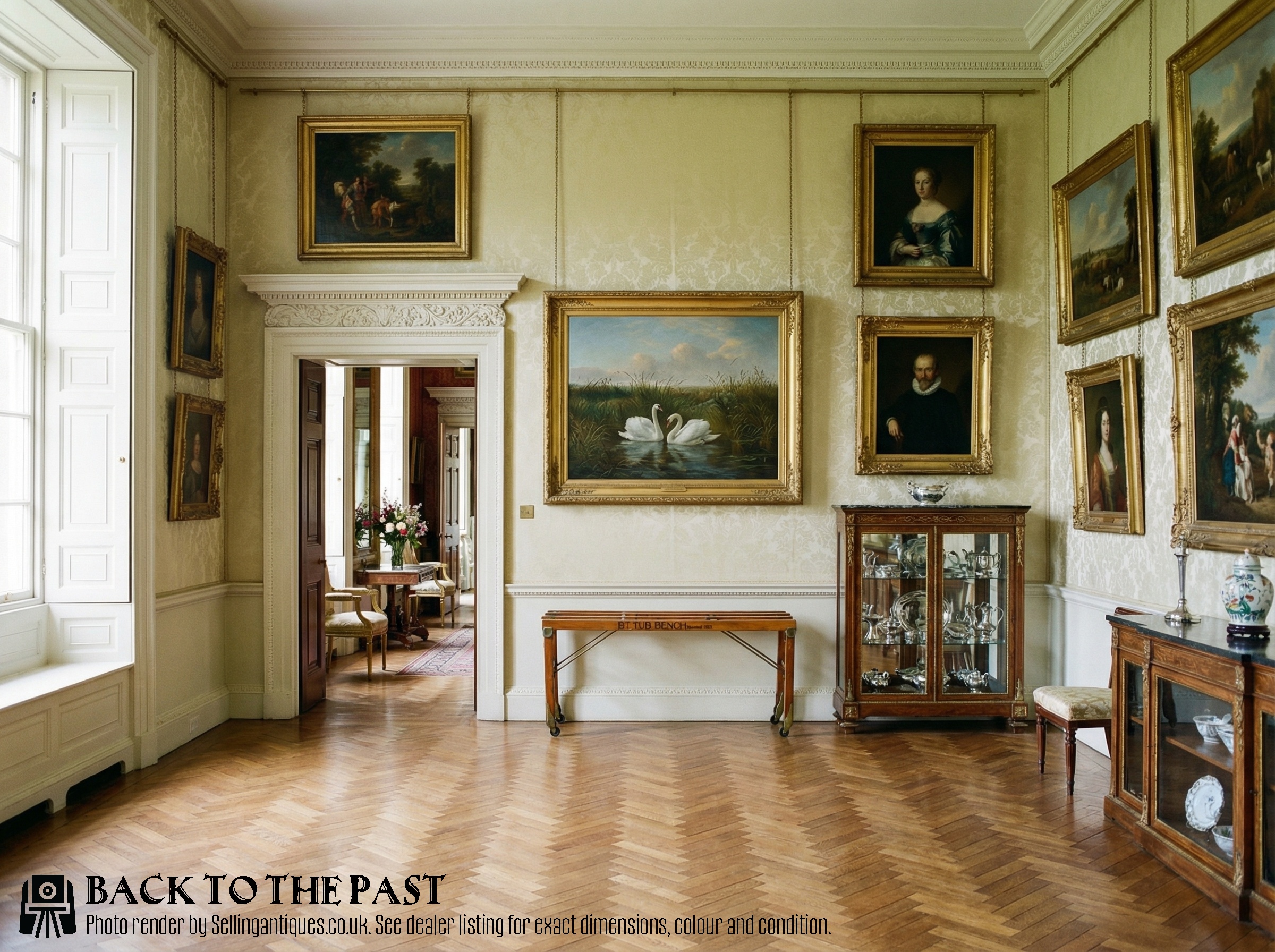
Slatted Wooden Stand
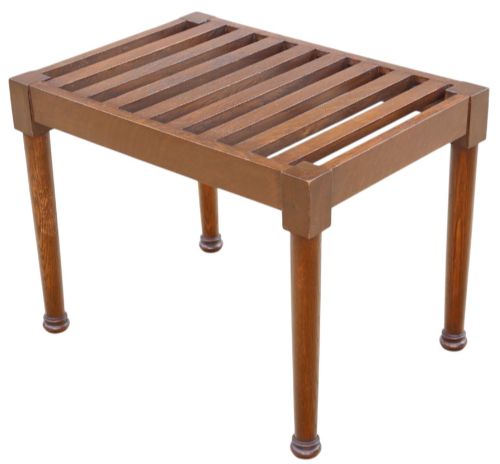
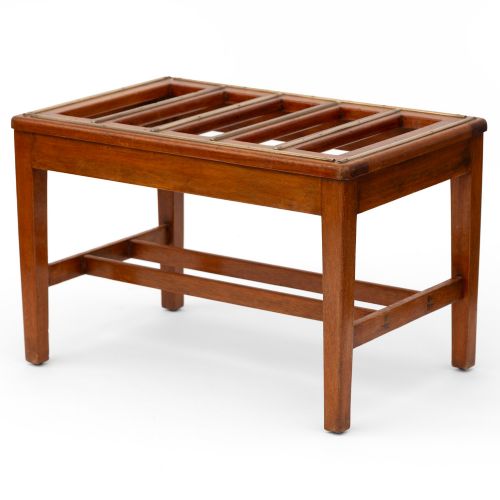
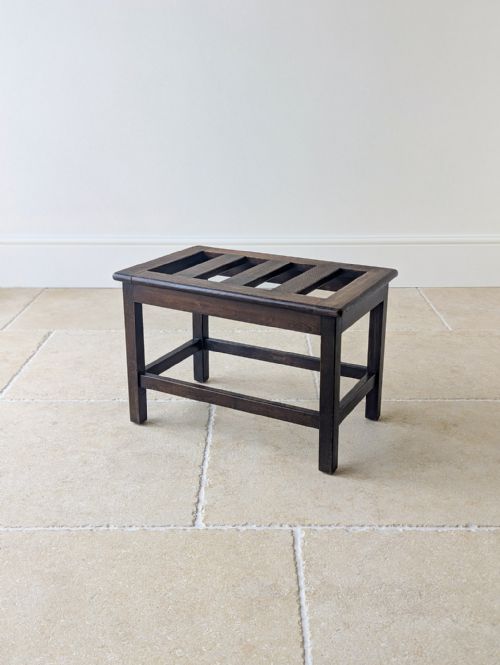
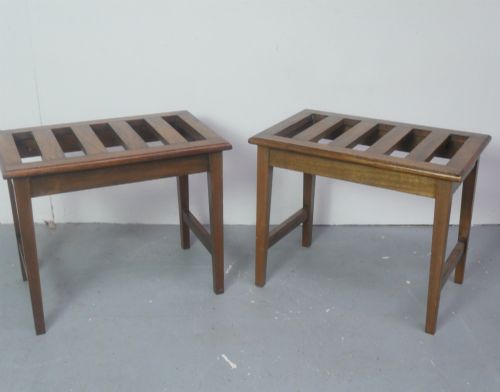
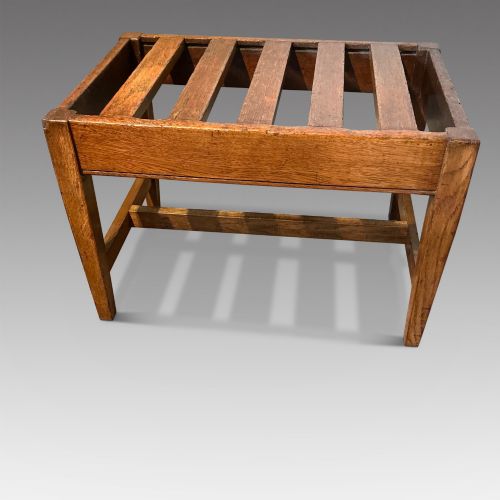
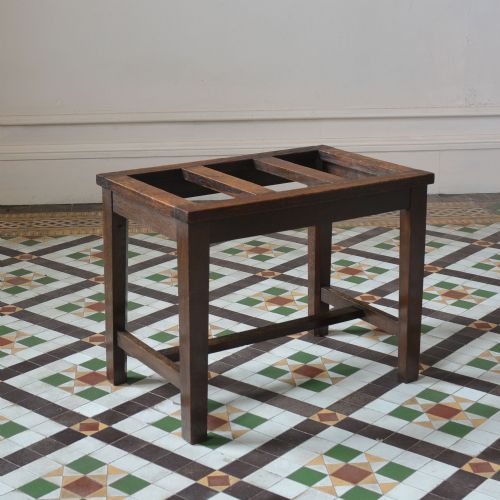
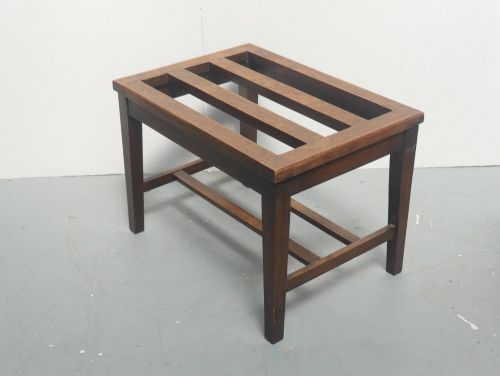
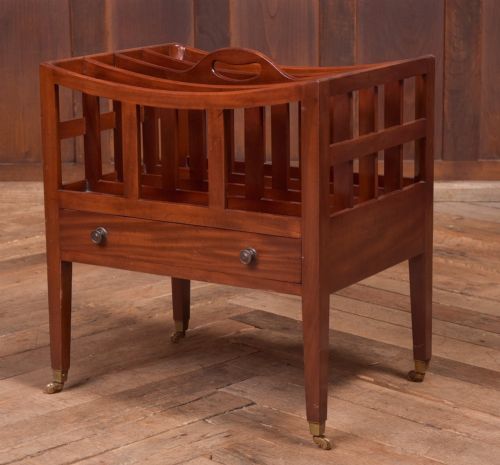
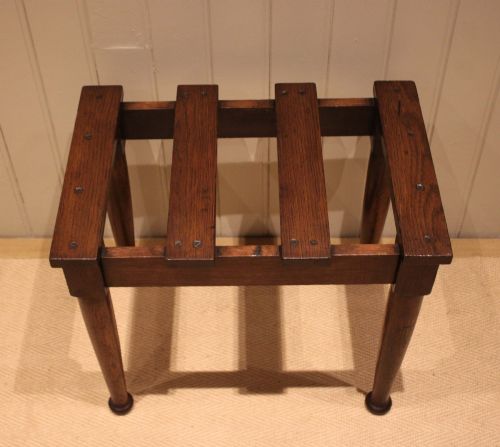
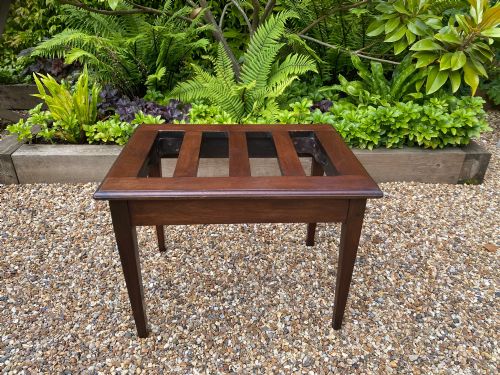
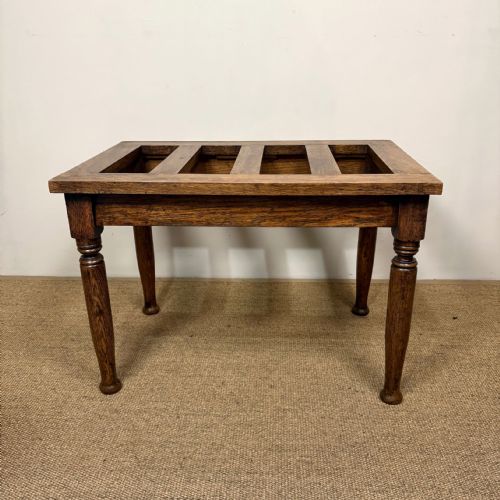
A slatted wooden stand primarily takes the form of a luggage rack, folding bench, or canterbury designed for domestic convenience.
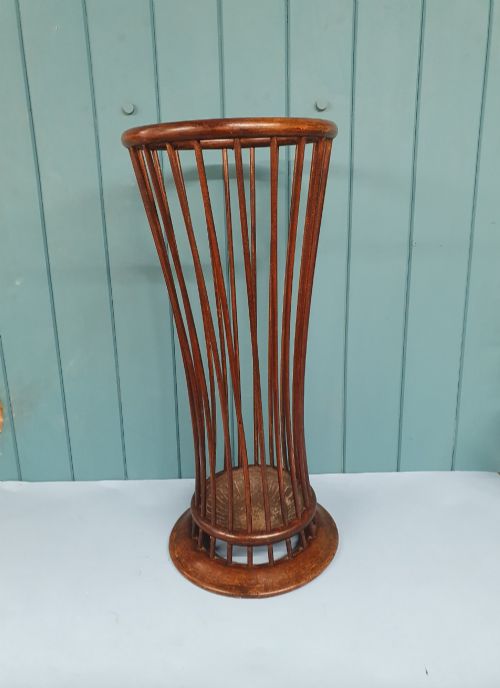
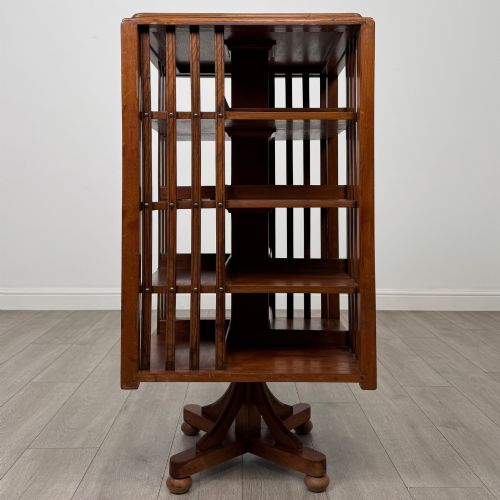
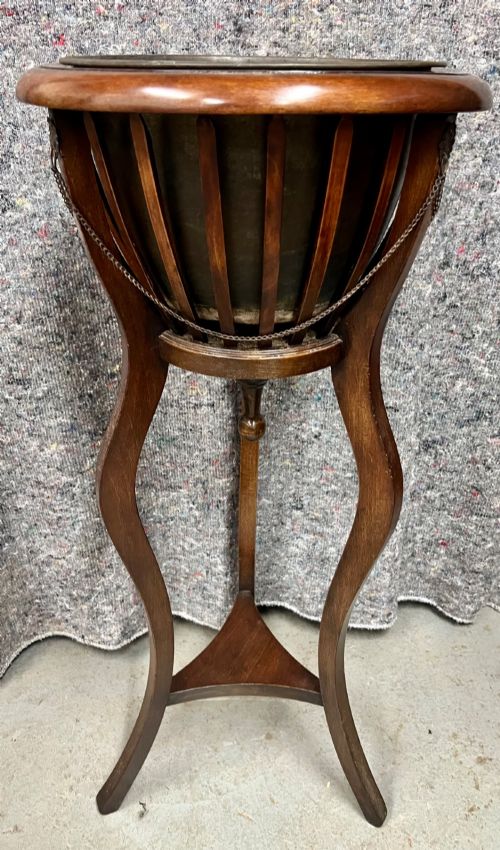
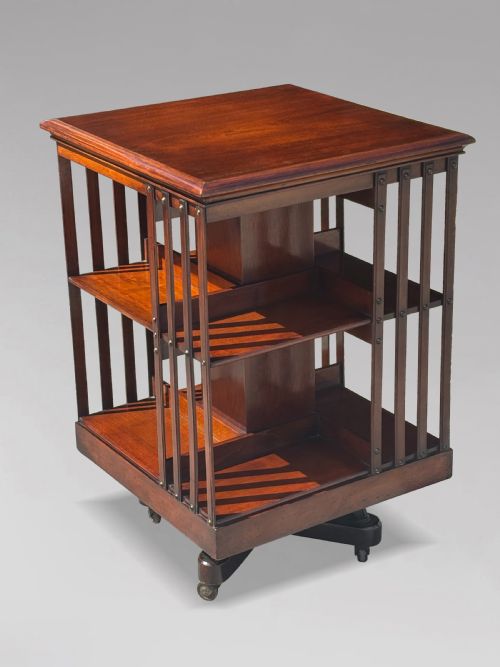
Beyond luggage stands, related functional furnishings include revolving bookcases, umbrella stands, and jardiniere plant holders.
Materials and construction
Carpenters utilised durable hardwoods like mahogany, oak, and walnut, frequently combining them with supportive pine and structural metal or brass elements.
Slats were fitted into sturdy frames to provide a reliable surface for heavy trunks or folded garments while maintaining a balanced weight.
Some luggage stands doubled as impromptu seats, testing the patience of guests and the strength of the slats alike.
What separates the grades
Quality rests upon the selection of timber, the integrity of the slatted construction, and the presence of original maker stamps or fitted metal drip trays.
Refined examples display sophisticated styling, such as Regency boat shapes or George III detailing, alongside robust folding mechanisms and polished finishes.
Beatty Bros Fergus Canada·Brown & Lamont·Waring & Gillow·Louis Vuitton
The Slatted Wooden Stand Glossary
- Canterbury
- A low, partitioned stand used for holding sheet music, books, or magazines, often fitted with castors.
- Jardiniere
- An ornamental stand or container specifically designed to hold potted plants and flowers.
- Luggage rack
- A folding or rigid bench featuring parallel slats, utilised in guest bedrooms for holding trunks and travel bags.
- Revolving bookcase
- A freestanding tiered shelf assembly mounted on a rotating pivot for easy access to volumes from any angle.
- Upstand
- A raised barrier at the rear of a stand designed to prevent items from sliding off the back.
Slatted Wooden Stand: Frequently Asked Questions
What is a slatted wooden stand used for?
These pieces served practical roles in domestic spaces, primarily holding luggage in guest rooms or organising books and magazines in libraries.
Over time, their utility expanded to include plant displays and umbrella storage in hallways.
How do I date an antique luggage stand?
Dating relies on identifying timber choices, stylistic markers, and construction methods characteristic of Georgian, Victorian, or Edwardian periods.
Maker marks and stamps from firms also help pinpoint the exact era of production.
Are these stands suitable for modern homes?
Their compact footprints and functional designs make them ideal for modern bedrooms, hallways, and living spaces as versatile accent furniture.
They offer practical surface area without dominating a room.
What woods were commonly used for these stands?
Cabinet makers predominantly selected durable hardwoods such as mahogany, oak, and walnut for visible surfaces.
Pining and secondary metals were often integrated for structural reinforcement and hardware.