
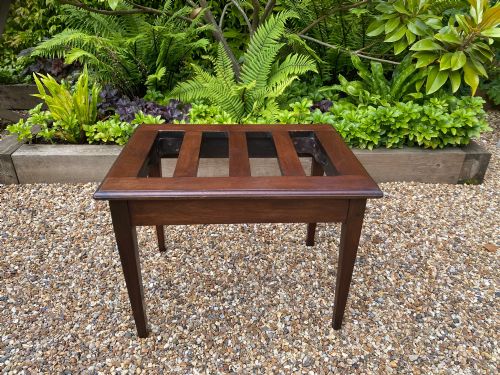


Slatted Wood Suitcase Bench
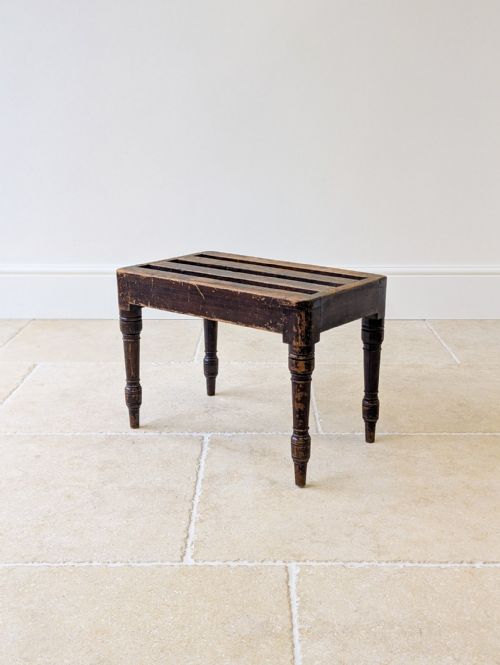
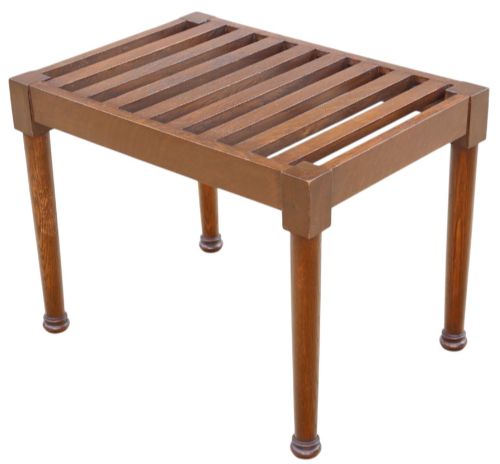
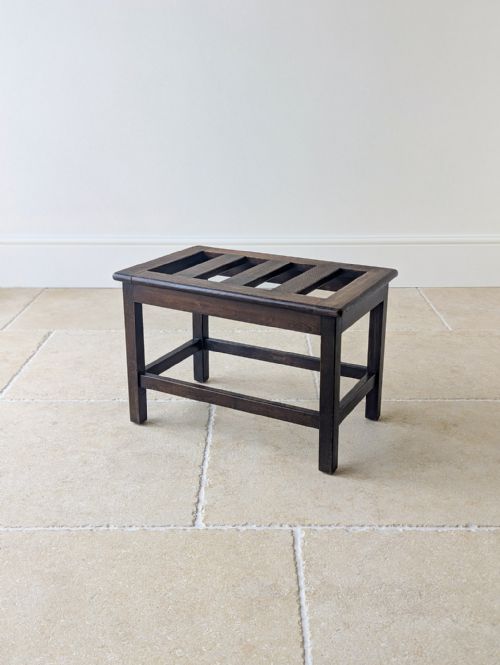
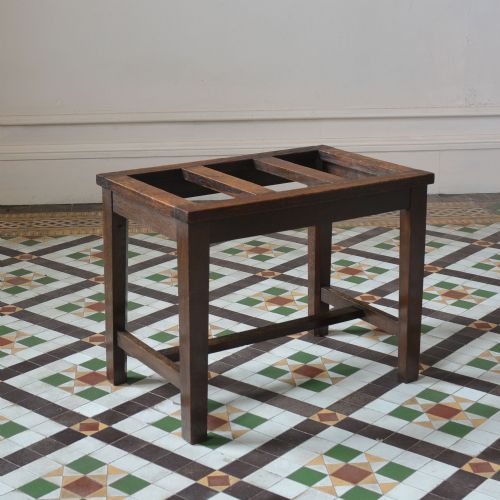
A slatted wood suitcase bench provides a sturdy, elevated surface for holding luggage, combining practical utility with traditional craftsmanship.
Slatted Wood Suitcase Bench
A slatted wood suitcase bench is typically encountered as a luggage stand or rack dating from the Victorian, Edwardian, and early twentieth-century periods. These items serve the functional purpose of supporting travel cases at a convenient height, removing the need to bend down to the floor.
Makers utilised a variety of durable timbers for these stands, producing items that balance utility with period character. Buyers searching for a slatted wood suitcase bench will find forms reflecting Victorian, Edwardian, and mid-century modern styling.
How they were made
Makers constructed these stands using robust hardwoods such as mahogany, oak, ash, teak, and yew wood. These dense timbers provide the structural strength required to bear the heavy weight of traditional travel luggage.
Metal fittings such as brass appear alongside the wooden framework to secure joints and folding mechanisms. The slatted top surface allows air circulation while maintaining a rigid platform for suitcases.
Travel trunks were once so heavy that these sturdy stands were considered an absolute necessity rather than a mere luxury.
What varies in quality
The choice of timber creates a distinct difference across the range, with dense hardwoods like mahogany and yew wood representing the more substantial end of production compared to standard utility woods. Grain selection and timber figuring also distinguish finer examples from plain utilitarian versions.
The integrity of the construction and the quality of the brass hardware separate standard pieces from superior items. Robust joinery ensures the stand remains stable under heavy loads over decades of use.
The Slatted Wood Suitcase Bench Glossary
- Luggage stand
- A low folding or fixed table designed specifically to hold a suitcase off the floor. These items were standard furnishings in traditional guest bedrooms.
- Slatted top
- A surface constructed from parallel strips of wood with gaps between them. This design reduces weight while providing a strong support grid.
- Victorian period
- The era spanning the reign of Queen Victoria, characterised by sturdy construction and diverse revival styles. Pieces from this time often utilise ash or mahogany.
- Edwardian period
- The decade following the Victorian era, known for lighter domestic furniture forms and refined proportions. Oak frequently appears in items from this time.
- Hardwood
- Timber derived from broad-leaved trees, including oak, mahogany, ash, teak, and yew wood. These dense materials ensure long-term durability for furniture subject to regular weight.
Slatted Wood Suitcase Bench: Frequently Asked Questions
What is a slatted wood suitcase bench used for?
These stands were originally placed in guest bedrooms to hold travelling trunks and suitcases at a comfortable height for unpacking. Today, they function similarly in homes or serve as distinctive accent tables.
Their sturdy slatted surfaces also lend themselves well to holding extra blankets or folded textiles at the end of a bed.
How do I identify a Victorian luggage stand?
Victorian examples generally feature heavier timbers like ash or mahogany and substantial framing built to withstand the weight of heavy nineteenth-century luggage. Their proportions and joinery reflect the robust manufacturing standards of that era.
Looking at the wood density and hardware style helps distinguish these nineteenth-century pieces from later twentieth-century productions.
Are these stands foldable?
Many traditional luggage racks incorporate folding mechanisms designed for easy storage when not in use. This practical feature allowed households to deploy extra furniture only when guests arrived.
Examining the pivot points and brass hinges reveals how the mechanism operates and whether it remains structurally sound.
What woods were commonly used?
Maker workshops utilised a range of durable timbers including oak, mahogany, ash, teak, and yew wood. Each wood brings a distinct colour and grain pattern to the finished stand.
Hardwoods were chosen specifically for their strength, ensuring the frame would not warp or buckle under heavy travel cases.