
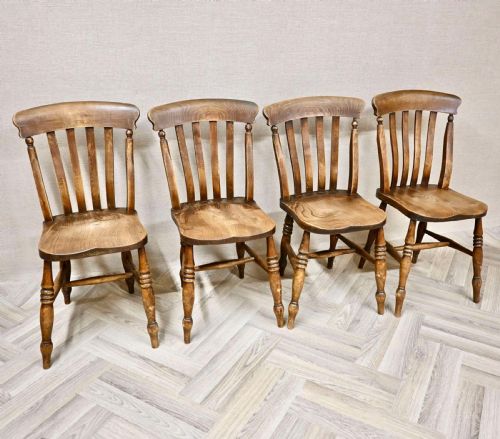
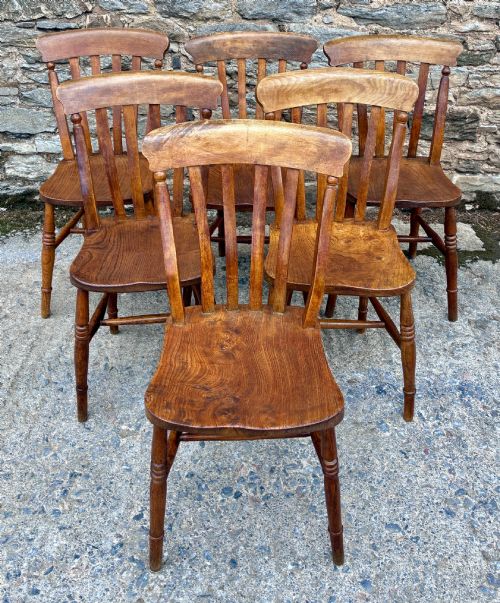
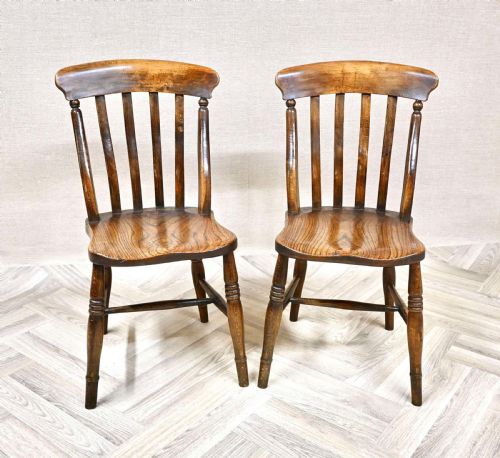
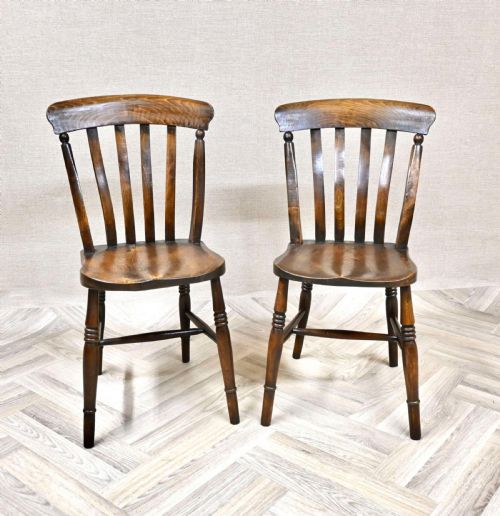
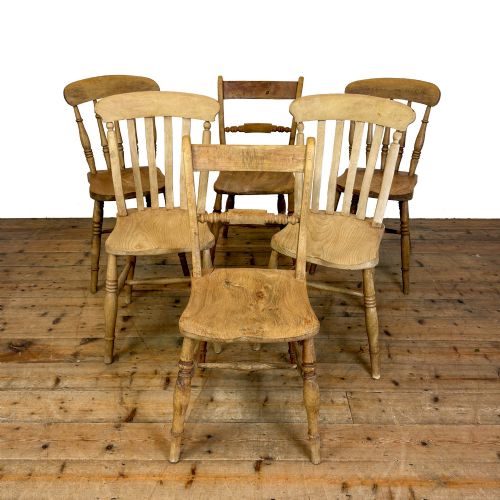
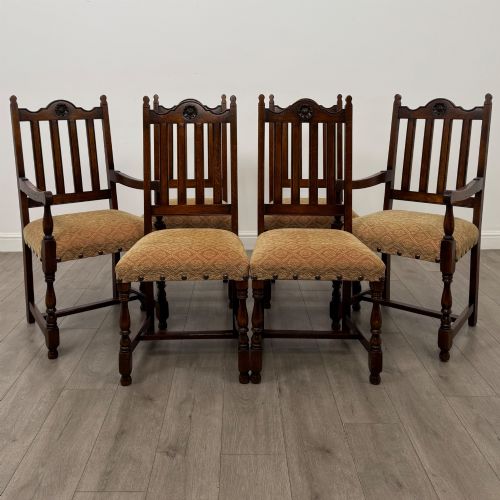
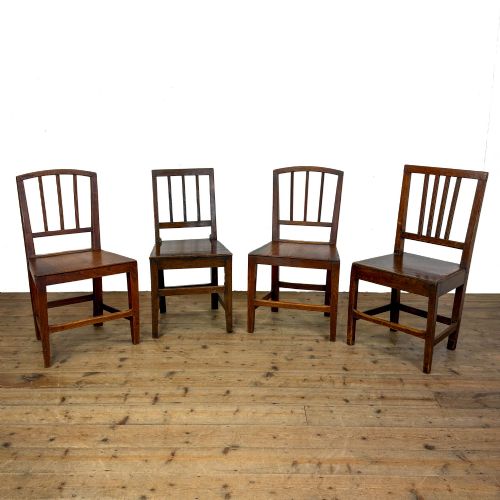
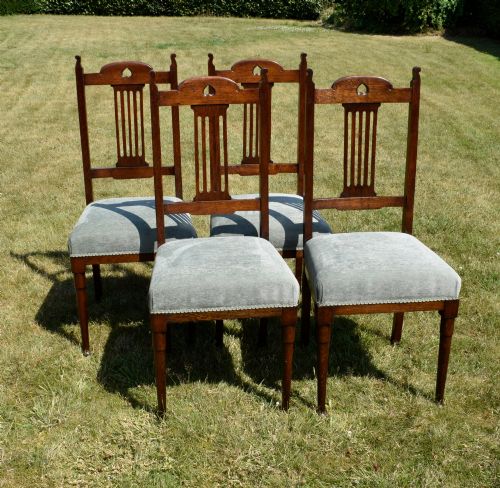
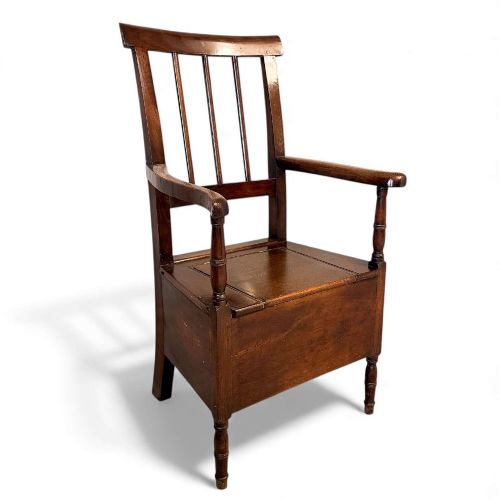


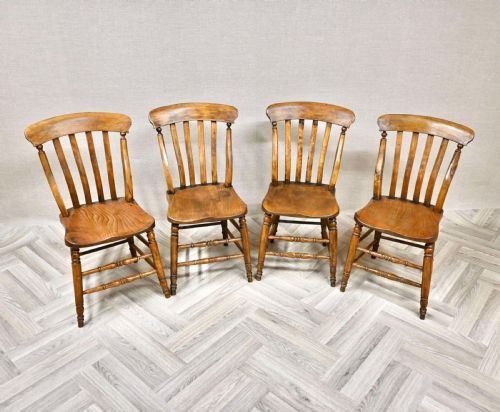

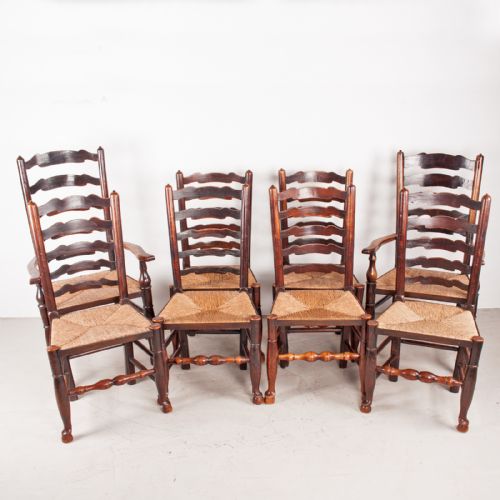

Slatted Seat Oak Chairs
Slatted seat oak chairs are sturdy vernacular and formal seats that bring rich grain and honest construction to any dining table or study.
Slatted Seat Oak Chairs
Slatted seat oak chairs encompass a diverse range of vernacular, country and formal seating found primarily across the nineteenth and twentieth centuries. Buyers search for these pieces to anchor a dining space or study with robust timber construction and traditional joinery.
The selections available lean heavily toward nineteenth-century country kitchen windsors, lathetacks and Edwardian dining sets, alongside earlier seventeenth and eighteenth-century examples. Forms vary from simple side chairs and carvers to office desk chairs with revolving bases.
Regional variations span English country and farmhouse traditions, alongside distinct styles such as Arts and Crafts, Jacobean Revival and Early Georgian. These chairs offer practical daily use coupled with centuries of woodworking heritage.
Materials and construction methods
Makers utilised solid oak for frames, legs and backs, frequently combining it with elm, beech, ash or pine for seats and structural components. This mixed-timber approach provided resilience in high-stress farmhouse and kitchen environments.
Traditional construction relied upon mortise and tenon joints, steam-bent components for Windsor backs, and turned elements including twist legs and spindles. Seats were shaped directly from solid timber slabs or woven from rush and cane.
Surface finishes developed naturally through decades of use, preserving the open grain of the oak and the contrasting tones of secondary woods such as elm and beech.
Seating variations include solid wood slats, rush, cane, and fabric drop-in pads.
Differentiating quality in timber seating
Quality rests upon the integrity of the timber selection, the crispness of the turning on legs and stretchers, and the survival of original surface patination. Denser oak boards and well-figured elm seats distinguish finer workshop output from utility furniture.
Structural honesty dictates longevity, marked by tight joints, minimal replacement timber, and the balanced proportions of backs and arms. The handling of steam-bent elements and carved slats reveals the competence of the original maker.
Heals
The Slatted Seat Oak Chairs Glossary
- Lathe back
- A chair back featuring vertical wooden slats turned on a lathe. These provide robust support while maintaining a lighter profile than solid panels.
- Windsor
- A traditional chair construction where legs and back spindles are wedged directly into a solid sculpted seat. This method creates a remarkably rigid frame.
- Carver
- An armchair designed for the head of a table or formal use. It typically mirrors the design of accompanying side chairs but includes armrests.
- Twist leg
- A structural support turned in a spiral or barley-sugar form. This decorative technique appears frequently on seventeenth-century revival and Edwardian pieces.
- Rush seat
- A seating surface woven from dried marsh grasses around a wooden frame. It yields a flexible, textured platform for daily sitting.
- Harlequin set
- A collection of chairs that share a similar period or style but were not originally manufactured together. They offer a gathered, historic appearance around a dining table.
Slatted Seat Oak Chairs: Frequently Asked Questions
How do I care for antique oak chairs?
Clean surfaces with a dry or barely damp cloth, avoiding modern silicone polishes that degrade historic finishes. Feed the dry timber occasionally with traditional beeswax to maintain the grain.
Keep these chairs away from direct heat sources and drastic humidity shifts to prevent the solid oak and secondary timbers from splitting or warping over time.
Can I mix different slatted oak chairs?
Historic dining spaces often utilised harlequin sets assembled from chairs sharing similar periods, heights and materials. Mixing regional country styles adds character to a modern dining room.
Ensure the seat heights remain consistent relative to your table so guests sit comfortably at an even level.
Are these chairs suitable for daily dining?
Solid oak and elm construction makes these chairs exceptionally durable for everyday meals. Their traditional joinery is engineered to withstand constant movement and weight.
Adding appropriate seat pads can improve comfort during extended dinner parties without altering the historic timber frame.