




Six Drawer French Chest
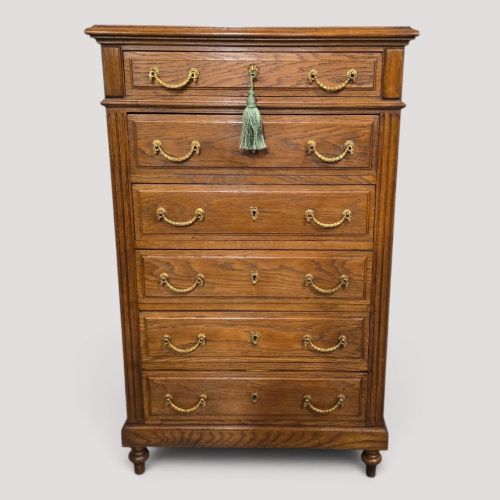
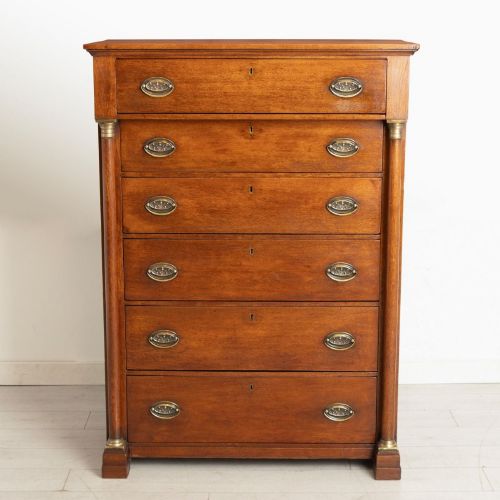
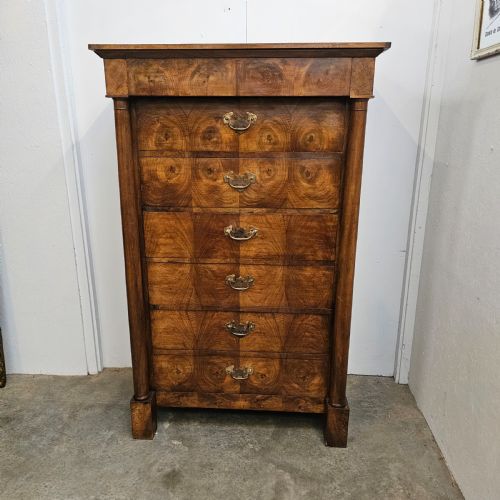
A six drawer french chest brings architectural presence and deep storage to a room through fine timber work and classic proportions.
Six Drawer French Chest
A six drawer french chest provides substantial vertical storage while maintaining the balanced proportions characteristic of continental cabinetmaking. When you search for this phrase, you encounter pieces spanning the nineteenth century alongside early twentieth century interpretations.
The selections on this page demonstrate distinct regional character, from provincial oak to polished mahogany and rosewood surfaces. Tall proportions dominate the pieces seen here, often rising with six full drawers or incorporating secretaire compartments.
Makers drew on traditions including French Empire, French Provincial, and Dutch Neoclassical styles to shape these storage pieces. Each example reflects the period preference for figured grain and disciplined vertical lines.
How they were made
Cabinetmakers built these chests using a foundation of solid timber like oak and pine, frequently applying veneers of mahogany, walnut, or rosewood across the primary surfaces. Bookmatched grain arrangements create symmetrical patterns on drawer fronts and panels.
Many examples incorporate decorative details such as brass inlays and cast mounts to accent the timber frames. Heavy white or grey marble slabs top certain nineteenth century mahogany and walnut pieces, adding a cool stone surface above the drawer tiers.
Painted finishes appear on provincial forms, offering an alternative to polished wood through muted tones applied directly to the timber. Drawer construction relies on traditional joinery designed to support heavy contents over generations of daily use.
A secretaire drawer hides your private notes behind unassuming mahogany.
What varies in quality
Quality rests primarily on the selection of timber veneers and the precision of their arrangement across the carcass. Bookmatched walnut and finely inlaid rosewood represent a higher tier of decorative ambition than plain painted or utility pine surfaces.
The integration of heavy marble tops and cast brass mounts distinguishes more substantial metropolitan commissions from simpler provincial work. Crisp execution of brass inlay and the depth of the timber figuring elevate the visual impact of the piece.
The Six Drawer French Chest Glossary
- Bookmatched
- A method of arranging veneer sheets cut from the same flitch to mirror one another, creating symmetrical patterns across drawer fronts.
- Secretaire
- A cabinet form featuring a fitted writing drawer that drops down to reveal small compartments and a leather or wood writing surface.
- Provincial
- Describing furniture made in the regions outside major design centres, often simpler in ornament and sturdier in construction.
- Veneer
- A thin layer of figured hardwood applied to a secondary wood foundation to provide a decorative exterior surface.
Six Drawer French Chest: Frequently Asked Questions
How do I style a six drawer french chest?
These tall chests anchor a bedroom or hallway by providing significant storage without consuming excessive floor space. Their vertical presence makes them ideal for holding folded linens or clothing while offering a surface for a lamp or mirror.
Pairing a marble topped version with minimal surrounding decor lets the stone and timber grain stand out. In a hallway, a narrow rosewood or mahogany piece adds a refined continental touch against plain walls.
What periods do these chests come from?
The pieces available range from mid nineteenth century examples up to pieces made around nineteen twenty. Nineteenth century items often feature rich mahogany or walnut veneers alongside classical revival styles.
Later pieces from the early twentieth century continue these traditions with narrower proportions and brass inlaid details. Each period brings distinct material preferences that help date the cabinetwork.
Are marble tops original to these chests?
Marble slabs frequently top nineteenth century mahogany and walnut chests, providing a durable and decorative surface. These stone tops were integrated into the original design to offer a contrasting texture to the polished timber below.
Checking the fit against the wooden carcass helps confirm the relationship between the marble and the chest beneath. They add considerable weight to the furniture piece.
How do I maintain rosewood and mahogany surfaces?
Polished hardwood surfaces require gentle dusting with a dry, soft cloth to prevent the accumulation of grit. Avoiding direct sunlight protects the warm tones of rosewood and mahogany from fading over time.
Periodic application of appropriate wax nourishes the timber and maintains a subtle lustre on the grain. Keep moisture away from the wood to preserve the polished finish.