



Single Strand Necklace
A single strand necklace is a classic length of beads or pearls secured by a precious metal clasp, prized for its versatile elegance.
Single Strand Necklace
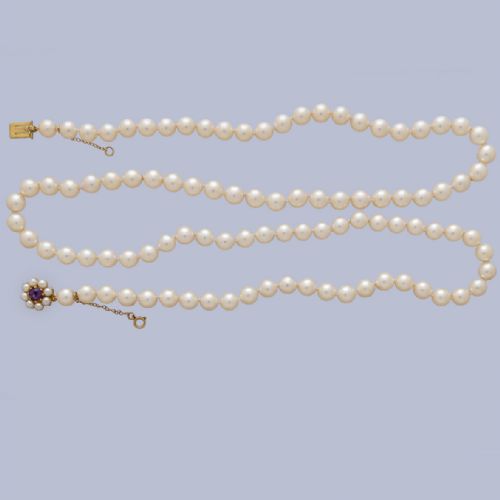
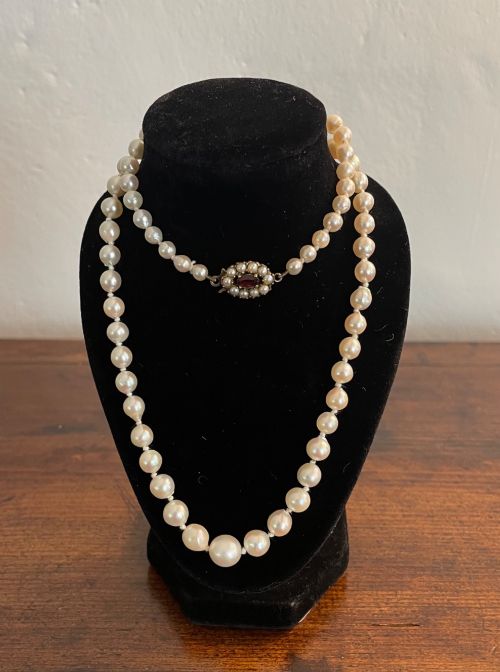
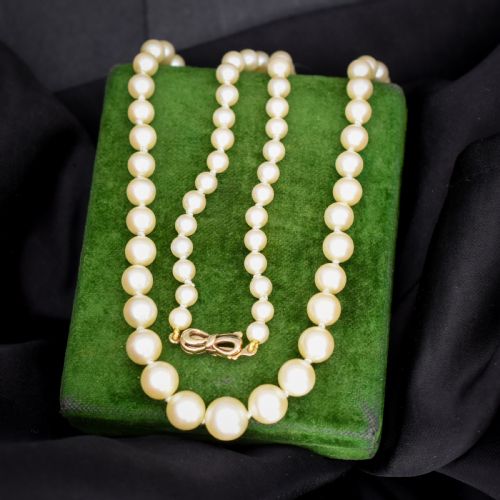
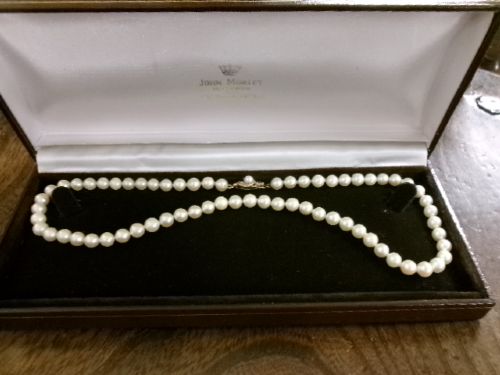
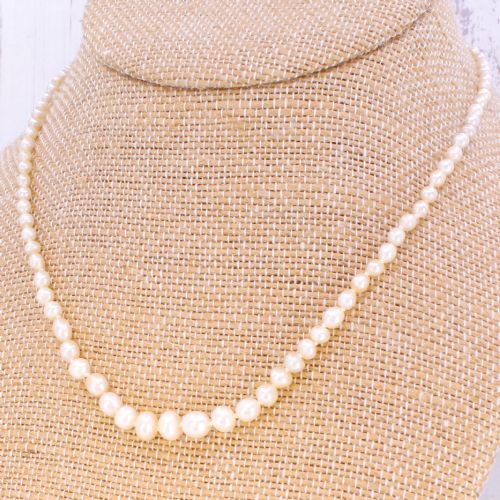
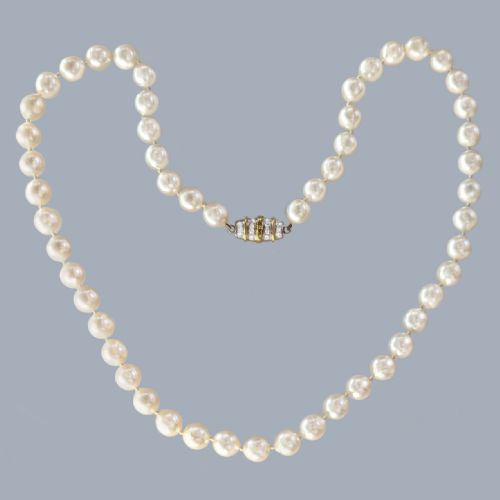
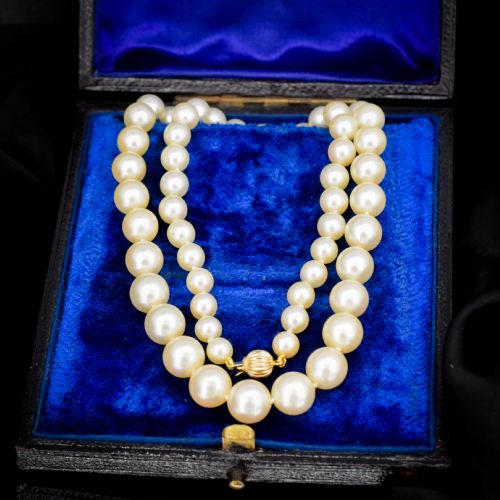
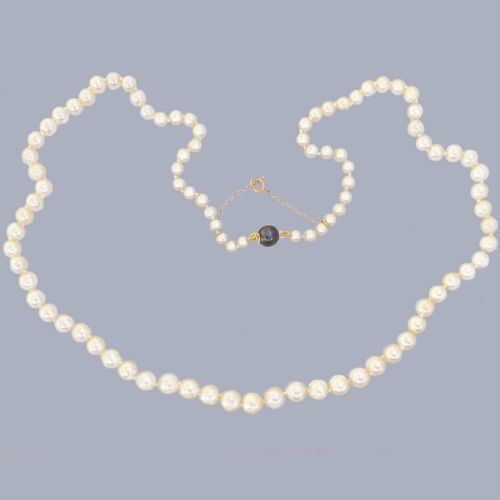
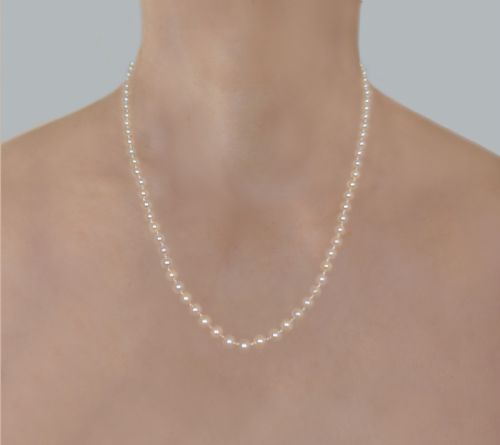
A single strand necklace presents a continuous line of pearls or beads resting along the collarbone or extending downwards as a longer rope. The form relies on simplicity, drawing the eye directly to the uniformity or graduation of the beads and the craftsmanship of the fastening.
Beyond pearls, the selection encompasses beaded designs utilising salmon coral, rose quartz, and paste stones alongside emeralds and diamonds. Lengths vary from standard sixteen-inch styles to fifty-one-inch strands, accommodating both traditional necklines and layered arrangements.
How they were made
Construction typically involves threading pearls or beads onto strong silk or specialised cord, with individual knotting between each pearl to prevent loss if the strand breaks. Clasps are soldered from precious metals including platinum, nine-carat gold, fourteen-carat gold, and eighteen-carat white gold, integrating box, spring ring, or decorative floral mechanisms.
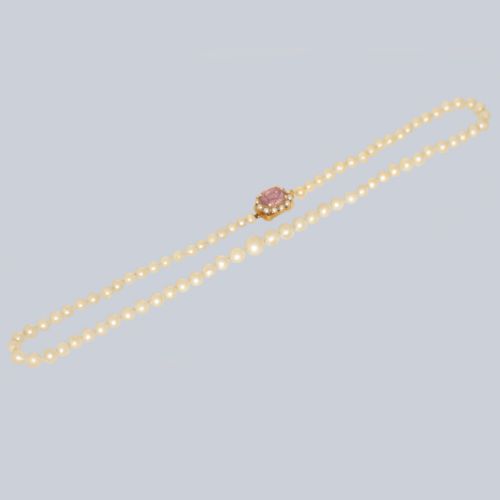
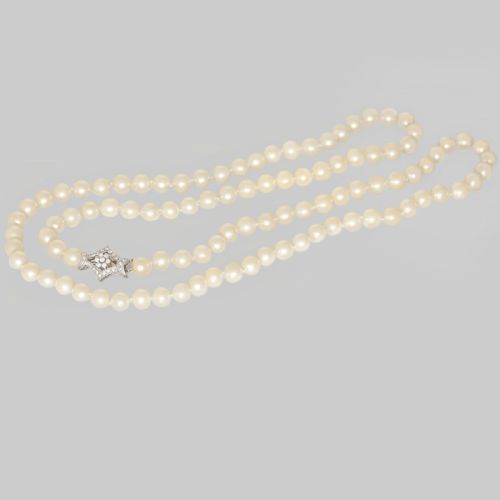
Gemstones set within the clasps, such as old-cut diamonds, rubies, and sapphires, are secured using traditional claw, bezel, or flush settings characteristic of their respective periods. Metal components often bear hallmarks indicating the city of assay and the fineness of the gold or platinum.
Single Strand Necklace Retail Price Guide 2026
Typical asking prices for single strand necklace among the pieces listed under this phrase on Sellingantiques today, from the lower quarter to the upper quarter. They describe what is for sale here now, not the wider market.
A fifty-one-inch salmon coral strand listed here stretches longer than an average interior doorway.
What varies in quality
Quality in a single strand necklace is determined by the lustre, orient, and surface cleanliness of the pearls, as well as the symmetry of their graduation. Top-tier examples display deep iridescence and minimal natural blemishes across every bead.
The artistry and material quality of the clasp elevate the piece significantly, with fine platinum mountings and matched old-cut diamonds distinguishing master jeweller work from standard production. The integrity of the stringing and the neatness of the silk knots likewise indicate the level of care maintained over time.
The Single Strand Necklace Glossary
- Cultured pearl
- A pearl formed by the introduction of a irritant into an oyster by human intervention, resulting in layers of nacre. These form the primary component of most mid-century strands.
- Graduated
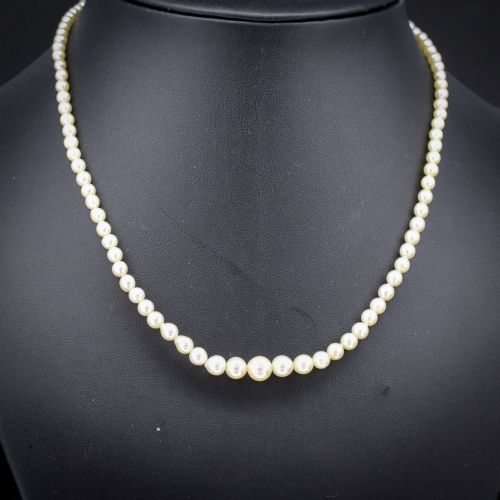
- A string of pearls or beads arranged intentionally from smaller diameters at the ends to the largest bead at the centre. This technique creates a balanced visual weight along the collarbone.
- Old-cut diamond
- A diamond cut by hand before the mid-twentieth century, featuring a small table, high crown, and large culet. These stones catch candlelight with a softer glow than modern brilliant cuts.
- Silk
- The traditional natural fibre thread used for stringing pearls. Silk allows the strand to drape gracefully while providing enough friction to hold knots securely between each bead.
- Saltwater pearl
- A pearl produced by marine pearl oysters in ocean environments. They typically exhibit superior lustre and orient compared to freshwater varieties.
Single Strand Necklace: Frequently Asked Questions
How do I care for a pearl necklace?
Wipe pearls gently with a soft, damp cloth after wearing to remove oils and cosmetics, avoiding harsh chemical cleaners or ultrasonic baths.
Store them flat in a soft pouch away from other jewellery to prevent scratching the delicate nacre surfaces.
How often should pearls be restrung?
Pearls benefit from professional restringing every few years, especially if worn frequently, to prevent the silk cord from fraying and snapping.
Inspection of the knots between each pearl reveals whether the thread has stretched or weakened over time.
What does graduated mean?
Graduation refers to the deliberate sizing of beads or pearls so that the smallest diameters sit near the clasp and the largest rests at the front centre.
This layout distributes visual weight evenly and creates a traditional silhouette against the neckline.
How can I tell the period of a clasp?
Clasp styles, metal purities, and gemstone cuts offer clear indicators of date, such as platinum settings and old-cut diamonds pointing to Edwardian or Art Deco origins.
Maker's marks, hallmarks, and specific box clasp mechanisms also help pinpoint the decade of manufacture.