
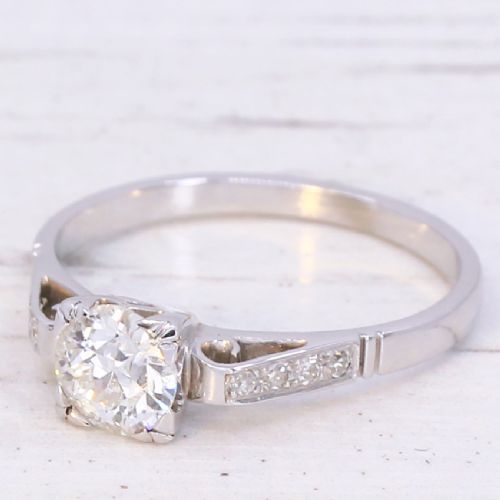
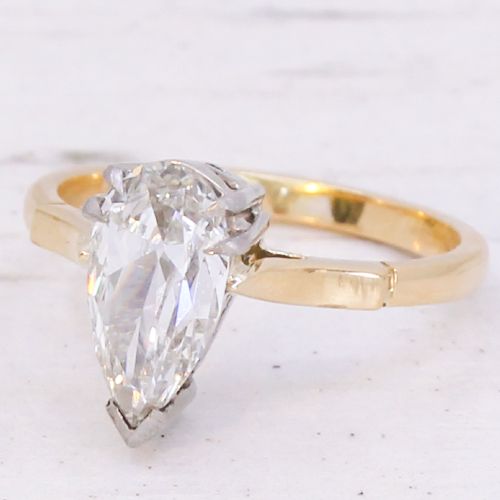
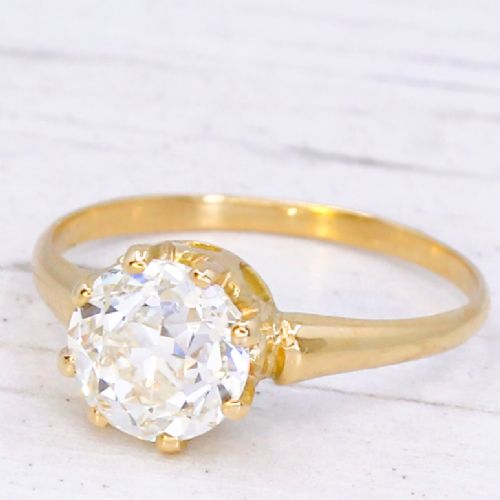
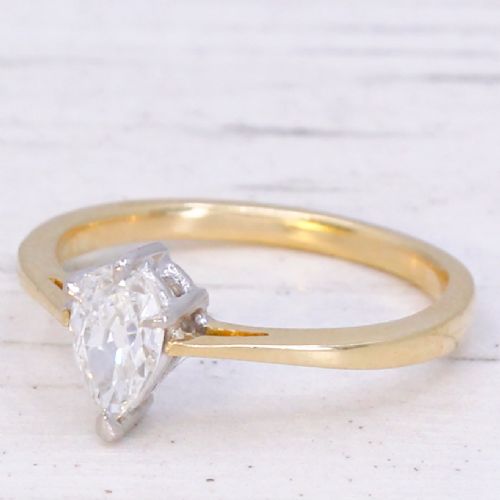
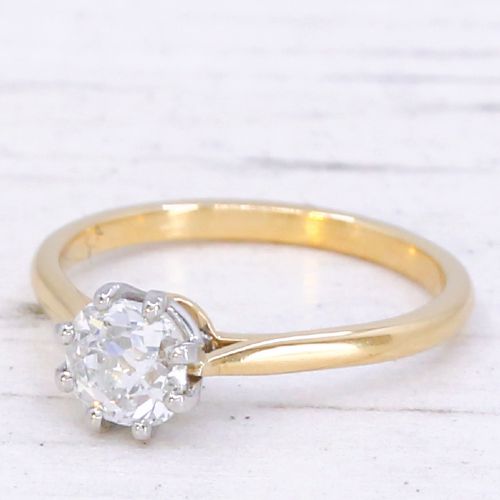


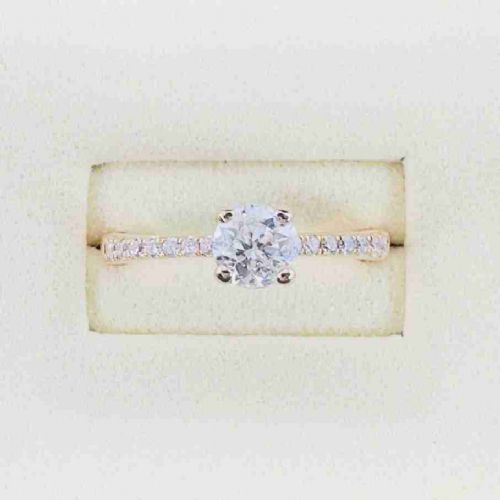

Single Cut Diamond Ring
A single cut diamond ring brings together historical cutting styles and precious metals, offering a classic solitaire presence for daily wear.
Single Cut Diamond Ring
When browsing for a single cut diamond ring, buyers encounter pieces primarily spanning from the Victorian and Edwardian eras through the Art Deco, mid-century and vintage periods. These jewellery items typically function as engagement rings or traditional solitaire rings, centring on a single principal stone secured within a durable metal mounting.
The most common examples on this page date from the 1920s and 1930s Art Deco period alongside mid-century interpretations. These designs frequently pair early stone cuts with white or yellow gold settings, capturing the distinct aesthetic preferences of their respective decades.
How they were made
Makers constructed these pieces using platinum and various grades of gold, including 18ct yellow gold, rose gold, and white gold, often combining platinum with gold to enhance the security of stone settings. Jewelers shaped these precious metals into slender bands and geometric galleries designed to elevate the central diamond.
Stones were hand-set into the metal using claw, bezel or flush techniques suited to the specific facets of old European, old mine, cushion, and transitional diamond cuts. This manual construction method ensured that each mount accommodated the unique dimensions of hand-faceted gems.
Early diamonds were faceted by hand to catch the flicker of gaslight and candlelight, meaning your ring spent its youth glowing in very different rooms.
What varies in quality
The standard of a piece depends on the precision of the metalwork and the preservation of the original setting over decades of wear. Finer examples display crisp geometric lines in Art Deco mountings and robust, well-maintained claw work that protects the girdle of the diamond.
Quality also relates to the harmony between the stone and its mounting, where well-proportioned designs balance the carat weight of the diamond with a suitably substantial band and gallery. The presence of independent gemological reports further establishes the specific characteristics of the central stone.
The Single Cut Diamond Ring Glossary
- Solitaire
- A ring featuring a single diamond or gemstone as the primary focus. This setting style concentrates visual attention entirely on the central stone.
- Old European cut
- An early round brilliant diamond cut characterised by a small table, high crown, and a large open culet. These facets produce a distinctive pattern of light return compared to modern brilliant cuts.
- Art Deco
- A design style prevalent during the 1920s and 1930s defined by geometric symmetry, clean lines, and frequent use of platinum. This aesthetic remains highly sought after in vintage jewellery.
- Transition cut
- A diamond cutting style used roughly from the 1920s to the 1940s that bridges the gap between old cut stones and modern brilliant cuts. It retains high crown proportions while introducing a smaller culet.
- Culet
- The small facet at the bottom of a diamond where the pavilion facets meet. Older stones often feature a visible flat facet here rather than a pointed tip.
Single Cut Diamond Ring: Frequently Asked Questions
How do I care for my ring?
Clean your jewellery gently using warm water, mild detergent, and a soft brush to remove everyday oils from beneath the setting. Avoid harsh chemical cleaners and ultrasonic baths, particularly with antique pieces.
Have a professional jeweller inspect the claws and settings periodically to ensure the diamond remains secure within the mounting. Regular checks prevent accidental loss of the original stone.
What is an old cut diamond?
Old cut diamonds are stones shaped by hand before modern symmetrical standards were established in the mid-twentieth century. These gems typically exhibit smaller tables and deeper pavilions.
Because they were shaped by hand under candlelight or early electric light, these stones display a softer, blockier pattern of light refraction than modern brilliant cuts.
Can I resize a vintage ring?
Most gold and platinum bands can be adjusted by a skilled jeweller experienced in working with vintage pieces. The feasibility depends on the band's thickness and the integrity of any shoulder details.
Intricate Art Deco gallery work or continuous engraving around the band may complicate the adjustment process. Consult a specialist to determine the safest approach for your specific mounting.
How do I identify Art Deco style?
Art Deco jewellery relies on strong geometric motifs, architectural symmetry, and stark contrasts between white metals and stones. Platinum was heavily favored during this period for its strength and bright finish.
Look for stepped shoulders, symmetrical arrangements of smaller calibré-cut stones, and linear engravings that reflect 1920s and 1930s design principles.